Corporate Restructuring: Definition, Types, and Strategy
Understanding corporate restructuring: strategies, methods, and business transformation.

What Is Corporate Restructuring?
Corporate restructuring refers to the process of reconfiguring a company’s hierarchy, internal structure, or operational procedures to achieve strategic business objectives. While the term often conjures images of mass layoffs and financial distress, corporate restructuring encompasses a diverse range of organizational initiatives undertaken for various legitimate business reasons. Companies restructure to enhance competitiveness, respond to market changes, improve operational efficiency, or prepare for significant corporate transactions.
The restructuring process represents a fundamental reimagining of how a company operates, organizing its resources, personnel, and processes to better align with its strategic vision. Whether driven by external market pressures or internal optimization goals, restructuring initiatives require careful planning, substantial financial resources, and coordinated execution across multiple organizational levels.
Why Companies Undertake Restructuring
Organizations pursue restructuring initiatives for numerous compelling reasons. Understanding these motivations helps explain why even successful companies may undergo significant organizational changes.
Cost Reduction and Operational Efficiency
One of the most common motivations for restructuring is achieving cost reduction. Companies pursue this objective through several methods:
Eliminating redundant processes: Organizations often develop overlapping functions and duplicate workflows over time. Restructuring allows companies to consolidate these redundancies, streamlining operations and reducing unnecessary expenditures. By identifying and eliminating inefficiencies, companies can maintain output while reducing operational costs.
Consolidating debt: Financial restructuring allows companies to manage debt more effectively by combining multiple debt obligations into consolidated arrangements, potentially negotiating lower interest rates and more favorable repayment terms.
Streamlining routine operations: Restructuring initiatives often focus on optimizing core business processes to operate more efficiently, reducing waste and improving resource allocation.
Preparation for Mergers and Acquisitions
Companies frequently restructure in anticipation of acquisition or merger activities. This proactive reorganization facilitates smoother integration with a new partner organization. By clarifying organizational structures and eliminating redundancies before combination, companies can integrate more efficiently and extract greater synergistic value from the transaction.
Responding to Market Changes
Dynamic market conditions require organizational adaptability. Restructuring enables companies to realign their operations with evolving market demands, competitive pressures, and shifting customer preferences. Real-world examples illustrate this principle—General Motors underwent corporate restructuring in 2009 to shed debt, cut operating costs, and enhance competitiveness during challenging economic conditions.
How Corporate Restructuring Works
Successful restructuring initiatives typically require several months to complete, involving complex coordination among internal and external stakeholders. Understanding the fundamental steps involved in restructuring provides insight into how organizations approach these transformations.
Step 1: Identify Your Objectives
Before implementing any restructuring initiative, organizations must articulate their specific objectives. Clear goal identification ensures that restructuring efforts remain focused and measurable. Companies should evaluate their current performance, identify areas requiring improvement, and establish specific targets for the restructuring initiative. This foundational step prevents unfocused reorganization efforts and provides a benchmark against which to measure success.
Step 2: Financial Considerations
Financial considerations drive strategic restructuring decisions and determine implementation feasibility. Companies require sufficient liquidity to maintain operations during transitional periods, often necessitating additional capital through debt financing, asset divestiture, or equity issuance. Credit arrangements become increasingly complex during restructuring, as lenders typically impose higher interest rates and stricter covenants when assessing elevated risk profiles. Comprehensive financial modeling and scenario analysis become essential tools for evaluating restructuring alternatives and supporting executive decision-making throughout the process.
Step 3: Implementation and Execution
Once objectives are clarified and financial arrangements established, organizations execute their restructuring plan. This phase involves communicating changes to stakeholders, reorganizing roles and responsibilities, implementing new processes, and monitoring outcomes. Effective change management and clear communication become critical success factors during implementation.
Types of Corporate Restructuring
Organizations can pursue multiple restructuring approaches depending on their specific needs and objectives. Each restructuring type addresses different organizational challenges and strategic priorities.
Organizational Restructuring
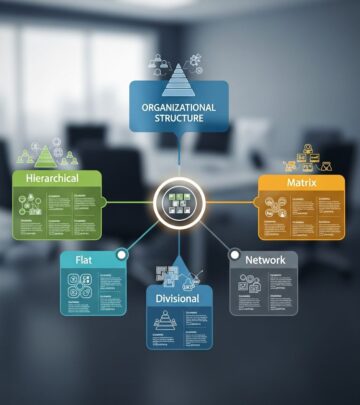
Organizational restructuring involves changing a company’s internal hierarchy and reporting structures. This type of restructuring may result in elimination of certain roles, merging of departments, or creation of new teams. Companies may establish new business units while eliminating others, potentially causing significant changes in working relationships and departmental responsibilities. Organizations typically undertake these changes with the end goal of enhancing productivity, efficiency, and communication across the enterprise.
Divestitures
A divestiture involves the sale or spinning off of underperforming or non-core assets, subsidiaries, or divisions. This restructuring type allows companies to raise capital and refocus on core competencies. Divestitures may include selling heavy machinery, real estate, intellectual property, or entire business divisions. For example, a company operating in multiple markets may spin off certain departments to focus on its primary business offering, enhancing operational efficiency in remaining operations.
Mergers and Acquisitions (M&A)
The mergers and acquisitions process involves two parties joining to create a single company. One or both parties commonly restructure to accommodate the new combined business. Organizations may merge, reduce, or eliminate departments and roles with similar functions to eliminate redundancy and streamline operations. Following M&A transactions, companies typically reorganize internal hierarchies to ensure smooth and profitable integration of the combined entities.
Financial Restructuring
Financial restructuring seeks to enhance a company’s financial health and improve its balance sheet structure. Common methods include:
Debt restructuring: A company consolidates its debt or negotiates lower interest payments with creditors, improving cash flow and reducing financial burden.
Debt for equity swaps: A company sells equity in exchange for debt reduction from its creditors, converting debt obligations into ownership stakes.
Equity financing: A company issues new equity to raise capital, strengthening its financial position without increasing debt obligations.
Legal Restructuring
Legal restructuring involves modifying a company’s legal framework to optimize liability management, enhance regulatory compliance, or achieve tax advantages. Organizations may establish new subsidiaries, consolidate existing legal entities, or transition between corporate forms. This approach facilitates entity consolidation or creation to segregate distinct business operations. Companies establish holding company structures to maximize tax efficiency and operational flexibility. Legal restructuring also ensures compliance alignment when regulatory requirements evolve across different jurisdictions.
Real-World Examples of Successful Restructuring
General Motors (2009)
General Motors underwent significant corporate restructuring in 2009 to shed its accumulated debt, cut operating costs, and enhance competitive positioning in a challenging automotive market. This restructuring initiative allowed the company to emerge from financial difficulties and refocus on core vehicle production capabilities.
Procter & Gamble (2012-2015)
Procter & Gamble executed a major restructuring initiative between 2012 and 2015 with the intention of recentering its efforts on core business holdings, divesting non-core brands and streamlining product portfolios. This strategic restructuring allowed the company to concentrate resources on its most profitable and strategically important business segments.
IBM (2010s-Present)
IBM has executed multiple restructuring initiatives over two decades, systematically divesting from lower-margin operations. The company sold its personal computer division to Lenovo and subsequently divested server hardware operations. Most recently, IBM spun off its infrastructure services division. Each restructuring phase repositioned IBM toward higher-margin business segments, transitioning from manufacturing operations to software and consulting services, demonstrating how sustained restructuring can fundamentally transform a company’s business model.
Benefits and Challenges of Corporate Restructuring
Key Benefits
When executed effectively, corporate restructuring delivers significant organizational benefits. Companies achieve improved operational efficiency, reduced costs, enhanced competitive positioning, and better alignment with strategic objectives. Restructuring can unlock hidden value by eliminating inefficiencies and reallocating resources to higher-value activities. Successfully restructured organizations often experience improved employee engagement when changes enhance clarity and opportunity.
Implementation Challenges
Despite potential benefits, restructuring initiatives present substantial challenges. Employee morale may suffer during organizational uncertainty, potentially leading to talent retention issues. Restructuring requires significant financial investment and management attention diverted from core business operations. Unexpected complications can extend timelines and increase costs. Additionally, poorly communicated or executed restructuring can damage organizational culture and employee trust.
Frequently Asked Questions (FAQs)
Q: What is the primary difference between restructuring and downsizing?
A: While restructuring encompasses a broad range of organizational changes aimed at improving efficiency and strategic alignment, downsizing specifically refers to reducing workforce numbers. Restructuring may include downsizing as one component, but restructuring also encompasses organizational redesign, financial restructuring, and other changes not necessarily involving headcount reduction.
Q: How long does a typical corporate restructuring take?
A: Corporate restructuring typically requires several months to complete, though complex restructuring initiatives may extend over multiple years. The timeline depends on the restructuring scope, organizational size, regulatory requirements, and execution complexity.
Q: Can a profitable company undergo restructuring?
A: Yes, profitable companies frequently undertake restructuring initiatives to enhance competitiveness, prepare for growth, or optimize operations further. Restructuring is not limited to struggling companies; many successful organizations use restructuring as a strategic tool for continuous improvement.
Q: What role does communication play in successful restructuring?
A: Clear, transparent communication is critical to restructuring success. Employees and stakeholders need regular updates about changes, rationales, and expectations. Effective communication reduces uncertainty, maintains morale, and increases engagement with restructuring objectives.
Q: How do companies measure restructuring success?
A: Companies typically measure restructuring success against predetermined objectives established during the planning phase. Key metrics may include cost reduction achieved, improved operational efficiency, revenue growth, customer satisfaction improvements, and employee retention rates.
Key Takeaways
Corporate restructuring represents a strategic organizational process that extends far beyond simple layoffs or financial distress responses. Companies undertake restructuring to improve competitiveness, enhance operational efficiency, reduce costs, and prepare for significant corporate transactions. The restructuring process requires careful objective identification, thorough financial analysis, and deliberate implementation across multiple organizational dimensions.
Multiple restructuring approaches exist, including organizational restructuring, divestitures, mergers and acquisitions, financial restructuring, and legal restructuring. Each approach addresses specific organizational challenges and strategic priorities. Real-world examples from companies like General Motors, Procter & Gamble, and IBM demonstrate how sustained restructuring initiatives can fundamentally transform business models and competitive positioning.
Successfully executed restructuring delivers substantial benefits through improved efficiency, cost reduction, and strategic alignment. However, restructuring initiatives present significant implementation challenges requiring careful change management, transparent communication, and strategic planning. Organizations considering restructuring should approach these initiatives as strategic investments requiring substantial resources, expertise, and sustained leadership commitment.
References
- What Is Corporate Restructuring? A Comprehensive Guide — Santa Clara University Online Degrees. 2024. https://onlinedegrees.scu.edu/media/blog/what-is-corporate-restructuring
- Restructuring — Investopedia. 2024. https://www.investopedia.com/terms/r/restructuring.asp
- Debt and Restructuring — International Monetary Fund (IMF). 2024. https://www.imf.org/
- Corporate Restructuring and Change Management — Harvard Business School. 2024. https://www.hbs.edu/
Similar Articles








Read full bio of Sneha Tete