Corporate Cards And Credit Scores: What Professionals Need
Discover how corporate credit cards influence personal and business credit profiles without risking individual financial standing.

Corporate credit cards serve as essential tools for managing business expenses, but many users wonder about their implications for personal finances. These cards typically shield individual credit profiles from company spending activities, focusing instead on bolstering organizational creditworthiness. This separation allows employees and executives to handle high-volume transactions without personal financial exposure.
Understanding the Fundamentals of Corporate Credit Cards
Corporate cards differ fundamentally from personal or small business variants by placing full liability on the issuing company. Employees receive cards for specific business purposes, such as travel, supplies, or client entertainment, with the organization handling all repayments. This structure ensures that routine usage does not infiltrate personal credit reports maintained by major bureaus like Equifax, TransUnion, and Experian.
Issuers often conduct a preliminary personal credit review during application, especially for key personnel, resulting in a minor, short-term score reduction of a few points. This inquiry fades from reports within months, leaving no lasting mark. Once activated, all transactions feed into business credit systems, not individual ones.
Personal Credit Protection: The Core Advantage
The hallmark benefit lies in complete isolation from personal credit. Whether charging substantial amounts for conferences or equipment, cardholders face no repercussions on their FICO or VantageScore metrics. This protection proves invaluable for maintaining eligibility for personal loans, mortgages, or auto financing.
- No liability for balances: Companies settle statements directly, eliminating reimbursement delays and personal outlays.
- Absence from consumer reports: Spending patterns remain invisible to personal lenders reviewing credit histories.
- High-volume flexibility: Employees can maximize usage during peak periods without utilization ratio concerns on personal profiles.
For business owners juggling dual roles, this firewall preserves personal borrowing capacity. A firm with extensive card debt poses no threat to the owner’s home equity line or credit limits elsewhere.
Business Credit Building Through Strategic Card Usage
While personal scores stay insulated, corporate cards directly shape company credit profiles tracked by specialized bureaus like Dun & Bradstreet, Experian Business, and Equifax Business. Positive habits elevate these scores, unlocking better loan rates and supplier terms.
| Factor | Positive Impact | Negative Impact |
|---|---|---|
| Payment History | On-time payments (35% weight) | Late payments or defaults |
| Credit Utilization | Low ratios under 30% | High balances nearing limits |
| Account Age | Long-term consistent use | New accounts with heavy activity |
| Inquiries | Few business-specific pulls | Excessive applications |
Companies starting with thin credit files find cards an accessible entry point. Regular, full payments establish reliability, contrasting with riskier small business options that blend personal guarantees.
Corporate vs. Small Business Cards: Critical Differences
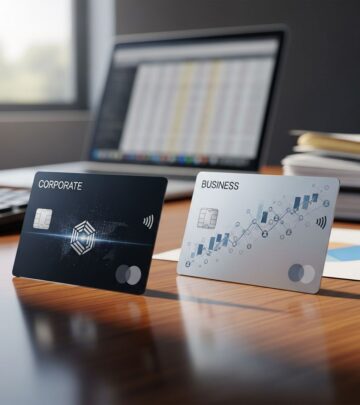
Not all company cards operate identically. Corporate variants target larger entities with established revenue, avoiding personal backing. Small business cards, however, often demand owner guarantees, routing activity to both business and personal reports.
- Corporate Cards: Company-only liability; business bureaus only.
- Small Business Cards: Personal guarantee common; dual reporting possible.
- Charge Cards: Full monthly payoff required; enhances discipline without revolving debt.
This distinction matters profoundly for solopreneurs versus corporate teams. Owners of small operations must scrutinize reporting policies to avoid unintended personal hits.
Potential Exceptions and Risk Scenarios
Though rare, certain conditions bridge the gap to personal credit. If a card mandates personal guarantees—uncommon in true corporate programs—delinquencies could spill over. Employer bankruptcy or legal disputes might also trigger secondary liability reviews.
Authorized user status on non-corporate accounts poses another risk, as those activities appear on personal reports. Always verify program terms: pure corporate setups confirm company sole responsibility.
Operational Perks Beyond Credit Isolation
Corporate cards streamline workflows, reducing administrative burdens that indirectly safeguard credit health. Integrated platforms offer real-time tracking, automated reconciliations, and spending controls.
- Elevated limits scaled to revenue, improving utilization metrics.
- Cash flow optimization via extended terms without personal strain.
- Compliance features ensuring policy adherence and timely payments.
These efficiencies minimize errors like overlooked bills, preserving pristine business scores.
Best Practices for Employees and Managers
Cardholders should adhere to guidelines to maximize benefits. Submit expenses promptly, stay within budgets, and report lost cards immediately. Managers benefit from monitoring aggregate usage, setting alerts, and reviewing statements monthly.
Businesses can leverage cards for credit maturation by diversifying accounts and maintaining low utilization. Annual credit report audits from business bureaus reveal progress and flag issues early.
Frequently Asked Questions
Will my corporate card show on my personal credit report?
No, standard corporate cards report exclusively to business bureaus, keeping personal profiles unaffected.
Does applying for a corporate card trigger a hard inquiry?
Possibly a soft or hard pull initially, causing temporary dips that recover quickly.
Can corporate cards help my company qualify for loans?
Yes, consistent positive activity builds business credit, aiding financing access.
What if my company misses payments on the corporate card?
It impacts business credit only, not personal, assuming no guarantees.
How do corporate cards differ from procurement cards?
Procurement cards emphasize purchase controls; both shield personal credit similarly.
Navigating Credit Implications in a Corporate Environment
Professionals entering executive roles or joining firms with card programs should inquire about reporting practices upfront. For startups scaling up, transitioning to corporate structures prevents personal credit entanglement.
Financial advisors recommend viewing corporate cards as strategic assets: deploy them for growth spending while cultivating business credit independence. This approach fortifies the enterprise without compromising individual financial goals.
In dynamic markets, where expansion demands robust spending power, these cards enable agility. Owners retain personal credit reserves for opportunistic investments, while teams operate without reimbursement friction.
References
- Do corporate cards affect someone’s credit score? — Chase. 2023. https://www.chase.com/personal/credit-cards/education/basics/do-corporate-cards-affect-credit-score
- Does My Company Credit Card Affect My Credit Score? — Experian. 2024-01-15. https://www.experian.com/blogs/ask-experian/does-my-company-credit-card-affect-my-credit-score/
- Does a corporate card affect your credit score? — Brex. 2024-05-20. https://www.brex.com/spend-trends/corporate-credit-cards/does-a-corporate-card-affect-your-credit-score
- Do Corporate Cards Affect Your Credit Score? — Ramp. 2024-03-10. https://ramp.com/blog/does-applying-for-a-charge-card-affect-your-credit-score
- How Company Credit Cards Affect Your Credit Score — Happay. 2023-11-05. https://happay.com/blog/impact-of-company-credit-cards-on-credit-scores/
- Corporate Credit Cards: How They Work — LendingTree. 2024-02-28. https://www.lendingtree.com/credit-cards/articles/corporate-credit-cards/
Similar Articles








Read full bio of Sneha Tete