Cornell University: Complete Profile, Rankings & Data
Explore Cornell's acceptance rates, costs, financial aid, and post-grad outcomes.
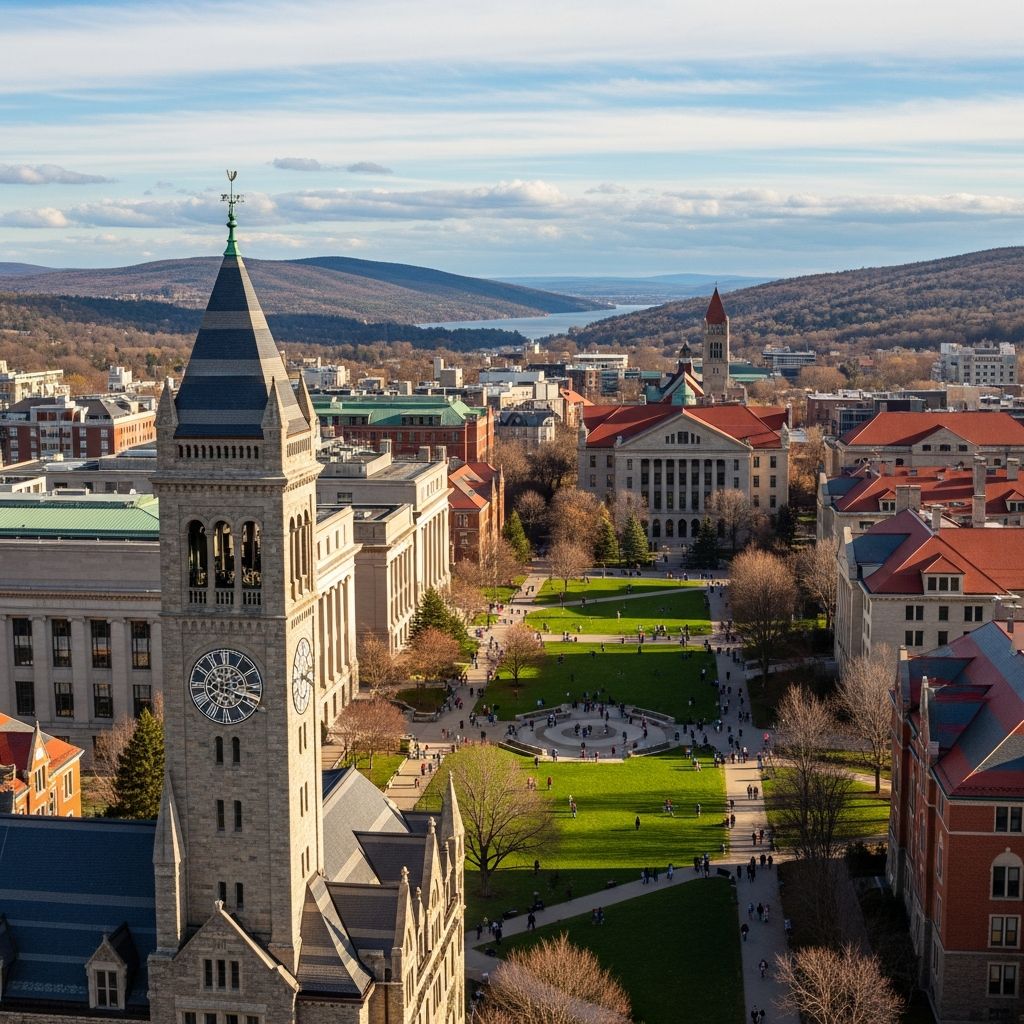
Cornell University: A Comprehensive Profile
Cornell University stands as one of the most prestigious institutions in the United States, earning recognition as an Ivy League school with a distinctive character among its peer institutions. Located in Ithaca, New York, Cornell maintains a reputation as the largest and typically the least selective of the Ivy League universities, though admission remains highly competitive. The university’s unique position in American higher education reflects its commitment to accessibility, academic excellence, and practical education across its diverse schools and colleges.
Acceptance Rate and Enrollment
Cornell University accepts approximately 7.5% to 9% of applicants, making it one of the most selective universities in the country, though slightly more accessible than some of its Ivy League counterparts. The university enrolls approximately 15,000 to 16,000 undergraduate students across its 16 different schools and colleges, creating a diverse academic community with opportunities spanning engineering, agriculture, business, arts and sciences, and many other disciplines. This substantial undergraduate population distinguishes Cornell from many peer institutions and contributes to its vibrant campus culture.
Academic Structure and Strengths
Cornell’s academic reputation rests on several pillars of excellence. The university’s private side includes a highly respected College of Arts & Sciences, which serves as the foundation for liberal arts education at the institution. Beyond this core college, Cornell houses specialized programs that rank among the best in their respective fields.
Signature Programs
The architecture program at Cornell enjoys national recognition and attracts students seeking rigorous training in design and built environments. The hotel administration program represents another area of exceptional strength, consistently ranked among the top programs in hospitality management worldwide. These specialized schools, combined with engineering, agriculture, and business programs, create a comprehensive educational ecosystem that balances theoretical knowledge with practical application.
Financial Overview
Cost of Attendance
According to Money Magazine’s 2025 Best Colleges rankings, Cornell’s total cost of attendance is approximately $84,100 to $91,470 annually, depending on the specific college or school within the university. This comprehensive figure includes tuition, fees, room and board, and other direct expenses associated with attending the institution. The variation in costs reflects differences between Cornell’s various schools, with some specialized programs carrying different price tags than others.
Financial Aid Distribution
Cornell demonstrates significant commitment to making education accessible through robust financial aid programs. The average financial aid package available to students is approximately $26,000 to $28,100 annually. This substantial aid commitment reflects the university’s dedication to supporting students from diverse socioeconomic backgrounds. The average net price after financial aid is approximately $63,370 to $64,790 per year, representing the actual out-of-pocket cost for many families.
Graduation Rates and Student Success
Cornell maintains an impressive graduation rate of approximately 95%, indicating strong student retention and completion rates. This high graduation rate reflects the university’s commitment to student success, robust academic support systems, and the overall quality of education provided to undergraduates. The 95% graduation rate places Cornell among the top institutions nationally and demonstrates the effectiveness of its academic and social support structures.
Post-Graduate Outcomes and Earnings
Career Success
Cornell graduates enjoy exceptional career prospects following their undergraduate education. Recent graduates from Cornell tend to secure high-paying positions, reflecting the prestige of the institution and the quality of education provided. The median annual salary for Cornell alumni 10 years after enrolling is approximately $98,300 to $104,000, demonstrating strong return on investment for the educational experience.
Return on Investment
When considering the cost of attendance relative to post-graduate earnings, Cornell presents a compelling financial proposition for students. The net price of approximately $63,000 to $65,000 annually, coupled with median salaries exceeding $100,000 a decade after graduation, indicates that the university delivers substantial value. This financial outcome reflects the strong professional network, educational quality, and reputation that Cornell graduates carry into the job market.
Ranking Recognition
Money Magazine’s 2025 Best Colleges rankings recognize Cornell as a five-star institution, placing it among the elite universities in the United States. The university ranks second among schools with top-ranked business programs, with the Dyson School of Applied Economics and Management earning particular recognition. This prestigious ranking reflects Money Magazine’s comprehensive evaluation methodology, which weighs quality of education (30%), affordability (40%), and student outcomes (30%) in determining institutional rankings.
Financial Aid Percentage
Approximately 95% of Cornell students receive some form of financial aid, making the institution accessible to students across the socioeconomic spectrum. This high percentage of aid recipients demonstrates Cornell’s commitment to need-blind admissions and financial accessibility. The university’s substantial endowment and commitment to meeting full demonstrated need for admitted students contributes to this impressive financial aid distribution rate.
Why Choose Cornell University?
Distinctive Features
Cornell’s position as the largest Ivy League institution offers unique advantages. Students benefit from a comprehensive range of academic programs while maintaining access to resources typically associated with prestigious universities. The combination of liberal arts education through the College of Arts & Sciences with specialized professional schools creates opportunities for interdisciplinary learning and diverse career pathways.
Campus Experience
Located in Ithaca, New York, Cornell offers a distinctive college town experience. The natural beauty of the region, combined with the university’s commitment to community engagement and student life, creates a vibrant residential college community. Students benefit from numerous student organizations, athletic programs, and cultural activities that complement their academic experiences.
Admission Requirements and Competitiveness
As a highly selective institution, Cornell maintains rigorous admission standards. The 7.5% to 9% acceptance rate indicates that admission is extremely competitive. Successful applicants typically demonstrate exceptional academic achievement, strong standardized test scores, meaningful extracurricular involvement, and compelling personal narratives. The university seeks students who will contribute to the intellectual and social life of the campus.
Comparison with Peer Institutions
| University | Acceptance Rate | Total Cost | Avg Financial Aid | Net Price | Graduation Rate |
|---|---|---|---|---|---|
| Cornell University | 7.5%-9% | $84,100-$91,470 | $26,000-$28,100 | $63,370-$64,790 | 95% |
| Dartmouth College | 6% | $85,400 | $25,800 | N/A | 94% |
| University of Pennsylvania | 1% | $92,390 | $27,600 | $64,790 | 96% |
| Georgetown University | 4% | $92,510 | $28,200 | $64,310 | 95% |
Academic Programs and Schools
Cornell’s 16 schools and colleges offer comprehensive educational opportunities across numerous disciplines. The Dyson School of Applied Economics and Management provides exceptional business education, consistently ranking among the top business schools nationally. Engineering programs at Cornell rank among the finest in the country, offering rigorous curricula and strong placement outcomes for graduates. The College of Agriculture and Life Sciences represents another area of distinction, combining traditional agricultural education with modern life sciences research and application.
Financial Aid and Support Services
Cornell’s approach to financial aid emphasizes accessibility and support for students from all backgrounds. The university meets 100% of demonstrated financial need for admitted students, eliminating financial barriers to enrollment. Beyond direct financial aid, Cornell provides numerous support services including career counseling, academic tutoring, and mental health services designed to support student success throughout their undergraduate years and beyond.
Alumni Network and Career Services
Cornell graduates benefit from membership in a prestigious and extensive alumni network spanning the globe. The university’s career services office provides comprehensive support for students and recent graduates, facilitating connections with employers across industries and geographies. This strong alumni network and career support infrastructure contributes significantly to the exceptional post-graduate earnings reported by Cornell graduates.
Frequently Asked Questions
Q: What is Cornell University’s acceptance rate?
A: Cornell University accepts approximately 7.5% to 9% of applicants, making it one of the most selective universities in the United States while remaining slightly more accessible than some peer Ivy League institutions.
Q: What is the total cost of attendance at Cornell?
A: The total cost of attendance at Cornell ranges from approximately $84,100 to $91,470 annually, including tuition, fees, room, board, and other direct expenses. However, the average net price after financial aid is approximately $63,370 to $64,790 per year.
Q: How much financial aid does Cornell provide?
A: Cornell provides an average financial aid package of $26,000 to $28,100 annually. Approximately 95% of students receive some form of financial aid, and the university meets 100% of demonstrated financial need for admitted students.
Q: What is the median salary for Cornell graduates?
A: The median annual salary for Cornell alumni 10 years after enrolling is approximately $98,300 to $104,000, reflecting strong career prospects and return on investment in a Cornell education.
Q: What is Cornell’s graduation rate?
A: Cornell maintains a 95% graduation rate, indicating high levels of student retention and completion and reflecting the university’s commitment to student success and academic support.
Q: How many undergraduate students attend Cornell?
A: Cornell enrolls approximately 15,000 to 16,000 undergraduate students across its 16 different schools and colleges, making it the largest of the Ivy League universities.
Q: What are Cornell’s most renowned programs?
A: Cornell’s most respected programs include the College of Arts & Sciences, the architecture program, the hotel administration program, engineering, and the Dyson School of Applied Economics and Management, all of which rank among the best in their respective fields.
Q: How does Cornell rank among business schools?
A: The Dyson School of Applied Economics and Management at Cornell ranks second among schools with top-ranked business programs according to Money Magazine’s 2025 Best Colleges rankings.
Q: What percentage of Cornell students receive financial aid?
A: Approximately 95% of Cornell students receive some form of financial aid, demonstrating the university’s commitment to financial accessibility and need-blind admissions policies.
Q: Is Cornell considered a good investment for higher education?
A: Yes, Cornell represents a strong investment, with median alumni salaries exceeding $100,000 a decade after graduation and a net price around $63,000-$65,000 annually after financial aid, indicating substantial return on educational investment.
References
- Money Magazine’s 2025 Best Colleges For Top-Ranked Business Programs — Poets & Quants for Undergrads. 2025. https://poetsandquantsforundergrads.com/news/money-magazines-2025-best-colleges-for-top-ranked-business-programs/
- Money Magazine Rewards 34 Colleges with 5-Star Ranking — University Business. 2025. https://universitybusiness.com/money-magazine-rewards-34-colleges-with-5-star-ranking-prioritizing-roi-and-graduation-rates/
- Cornell University, New York – Complete Profile, Rankings and Data — Money Magazine. 2024. https://money.com/best-colleges-2024/profile/cornell-university/
- Cornell University, NY – Complete Profile, Rankings and Data — Money Magazine. 2025. https://money.com/best-colleges/profile/cornell-university/
- College Rankings: Money Magazine Weighs In — Top Tier Admissions. 2025. https://toptieradmissions.com/college-rankings-money-magazine-weighs-in/
Similar Articles








Read full bio of Sneha Tete