Core Inflation: Essential Investment Strategies For Portfolios
Learn how underlying price trends shape portfolio decisions and long-term wealth building strategies.
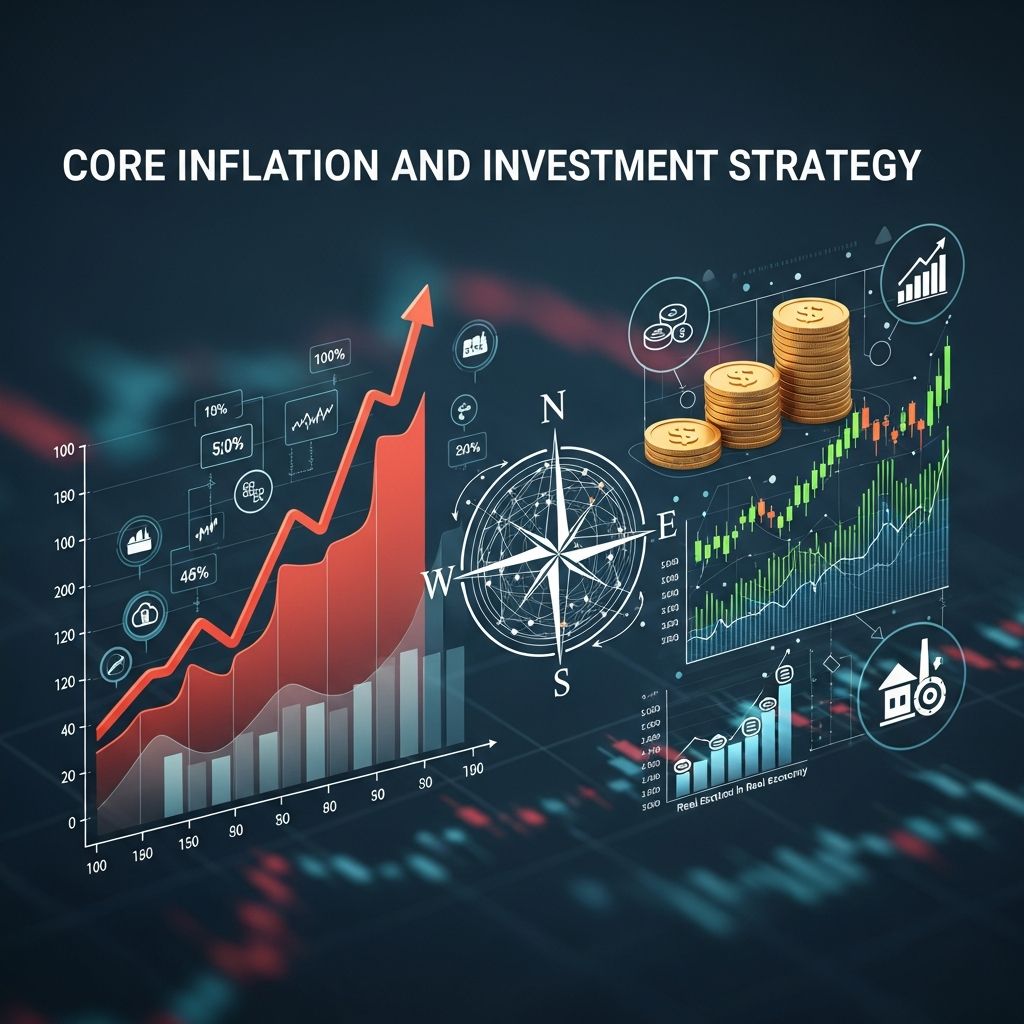
Understanding inflation dynamics is essential for anyone managing investments or planning for long-term financial security. While many people hear about inflation in news headlines, the concept of core inflation provides a more nuanced and actionable perspective for investors seeking to make informed decisions. This comprehensive guide explores what core inflation measures, why it matters for your portfolio, and how you can strategically respond to inflationary pressures.
Defining Core Inflation and Its Measurement
Core inflation represents a refined approach to measuring price changes across the economy by excluding categories that experience extreme volatility. Rather than looking at all consumer prices equally, core inflation focuses on the underlying and persistent trends in how much goods and services cost over time. This targeted measurement provides policymakers and investors with a clearer picture of lasting inflation pressures rather than temporary spikes.
The calculation of core inflation typically excludes food and energy prices, which are subject to dramatic fluctuations due to seasonal factors, weather conditions, and global supply disruptions. By removing these volatile elements, analysts can observe the fundamental growth trajectory of production costs and the balance between supply and demand in the broader economy. Additionally, core inflation measurements often exclude government-controlled prices such as utilities, tobacco taxes, and other items subject to policy intervention.
The Federal Reserve and other central banks monitor core inflation using specific indices. The most widely recognized measure is the core Personal Consumption Expenditures (PCE) price index, which tracks the prices that U.S. consumers pay for goods and services while excluding food and energy. The core PCE index captures inflation trends across a diverse range of consumer expenses and reflects shifts in spending behavior, making it a comprehensive tool for understanding economic health.
Core Inflation Versus Headline Inflation: Understanding the Distinction
A fundamental concept in inflation analysis is the difference between core and headline inflation. Headline inflation measures price changes across all consumer categories, including the highly volatile food and energy sectors. In contrast, core inflation provides a filtered view that emphasizes persistent price pressures.
Consider a scenario where oil prices surge due to geopolitical tensions. This shock would immediately appear in headline inflation figures, potentially showing a dramatic monthly increase. However, the underlying trend in manufacturing costs, wages, and service prices—captured by core inflation—might remain relatively stable. For investors, this distinction matters because monetary policy decisions are typically based on core inflation trends rather than temporary shocks.
The volatility difference between these measures is substantial. Research shows that while core inflation measures might change modestly month-to-month, energy prices can swing from declining nearly 20 percent to increasing almost 24 percent annually. This extreme volatility in energy prices would distort the signal sent by headline inflation, making core inflation a more reliable indicator for long-term planning.
Why Core Inflation Matters for Your Purchasing Power
The relationship between core inflation and personal finance is direct and consequential. Core inflation measures the trend in how much more expensive goods and services become relative to your income over time. When core inflation rises faster than wages and salaries, your purchasing power—the amount of goods and services you can afford with your money—declines.
Consider these practical implications:
- If core inflation increases at 3 percent annually while your salary grows at 1 percent, you lose 2 percent of purchasing power each year
- Over a decade, this compounds into meaningful loss of economic well-being and reduced ability to maintain your standard of living
- Fixed-income investments and savings accounts become less valuable in real terms when inflation outpaces returns
Conversely, when wages and salaries increase faster than core inflation, your purchasing power rises, and you can afford more goods and services. This dynamic highlights why investors must consider inflation when evaluating whether their returns truly represent gains or merely offset price increases.
Core Inflation’s Impact on Economic Growth and Business Cycles
When core inflation accelerates significantly, it constrains the broader economy in multiple ways. Rapid price increases reduce consumer purchasing power, meaning households have less discretionary spending available to fuel economic activity. When consumers spend less, businesses experience reduced demand, which can lead to slower growth and reduced hiring.
The Federal Reserve closely monitors core inflation because it serves as a critical input into monetary policy decisions. The Fed targets a core inflation rate of approximately 2 percent, viewing this level as consistent with stable prices and maximum sustainable employment. When core inflation is perceived to be trending above this target, the Federal Reserve may implement contractionary monetary policy tools to cool economic activity.
The primary tool used is adjusting the federal funds rate—the interest rate at which banks lend to each other overnight. When the Fed raises this rate, it influences the broader interest rate environment, making borrowing more expensive for consumers and businesses. Higher interest rates on credit cards, auto loans, mortgages, and business loans reduce borrowing and spending, which theoretically slows demand and eventually moderates inflation.
Strategic Investment Considerations During Different Inflation Regimes
Investors must recognize that core inflation environments create different opportunities and challenges for various asset classes. A comprehensive investment strategy accounts for where core inflation stands relative to historical norms and where it appears to be heading.
Low Core Inflation Environment
When core inflation is stable and low, traditional bond investments become more attractive because they preserve purchasing power. Stocks may trade at higher valuations since investors expect stable economic conditions. However, real estate and other inflation-hedging assets may underperform because there is less urgency to seek protection against rising prices.
Rising Core Inflation Environment
As core inflation accelerates, investors typically face headwinds in traditional fixed-income investments because bond prices decline when interest rates rise. Conversely, commodities, real estate, and inflation-protected securities (TIPS) may offer better protection. Companies with pricing power—those able to raise prices without losing customers—may outperform during this period.
High but Stable Core Inflation Environment
Even when core inflation is elevated, if it stabilizes at a new level and the Fed signals it will maintain rates at current levels, markets can adjust accordingly. Investors in this environment often seek assets that generate returns exceeding the inflation rate by a comfortable margin.
How Investment Returns Must Account for Inflation
A critical insight for investors is distinguishing between nominal returns (the actual percentage gain) and real returns (the gain after accounting for inflation). If your investment portfolio gains 5 percent in a year but core inflation rises 3 percent, your real return is only 2 percent. This distinction becomes more important in higher inflation environments.
For example, consider two scenarios:
| Scenario | Nominal Return | Core Inflation | Real Return |
|---|---|---|---|
| Low Inflation | 6% | 2% | 4% |
| High Inflation | 6% | 5% | 1% |
In the high inflation scenario, your portfolio gained the same percentage nominally, but your real economic improvement was substantially less. This emphasizes why investors must ensure their expected returns sufficiently exceed core inflation forecasts.
Asset Allocation Strategies Responsive to Core Inflation
Different investment vehicles respond differently to core inflation dynamics:
- Stocks: Equities can provide inflation hedges if companies successfully pass increased costs to consumers, but sectors vary significantly in this ability
- Bonds: Traditional fixed-rate bonds suffer in rising inflation environments as their fixed payments become worth less in real terms
- Treasury Inflation-Protected Securities (TIPS): These bonds automatically adjust principal and interest based on inflation, providing direct protection
- Real Estate: Property values and rents often rise with inflation, providing a natural hedge
- Commodities: Raw materials often experience price increases during inflationary periods, though with higher volatility
- Cash and Money Markets: While safe, these typically underperform during inflation unless rates are raised sufficiently
Monitoring Core Inflation for Portfolio Adjustments
Effective investors track core inflation data releases and understand how these figures might influence Fed policy. The core PCE price index is released monthly and provides timely information about inflation trends. By monitoring these releases, you can anticipate potential changes in monetary policy and adjust your portfolio positioning accordingly.
Key indicators to watch include whether core inflation is accelerating, decelerating, or remaining stable. Accelerating inflation often prompts Fed tightening, which typically pressures stock valuations and raises bond yields. Decelerating inflation might suggest the Fed could pause rate increases or eventually cut rates, benefiting stock investors and existing bondholders.
Long-Term Wealth Building in Inflationary Contexts
Building wealth over decades requires accounting for core inflation’s cumulative effects. A long-term investment strategy should target real returns—gains above inflation—rather than merely matching nominal benchmarks. This often means accepting some volatility in exchange for assets historically capable of outpacing inflation over extended periods.
Diversification becomes particularly important because different asset classes perform differently depending on the inflation regime. A portfolio concentrated solely in bonds may struggle in rising inflation environments, while one overly weighted toward growth stocks may suffer during periods of deflation or stagnation.
Frequently Asked Questions About Core Inflation and Investing
How often is core inflation data released?
Core inflation data, particularly the core PCE price index, is released monthly by the Bureau of Economic Analysis, providing timely information for investors and policymakers.
Why doesn’t the Federal Reserve target headline inflation instead of core inflation?
The Federal Reserve focuses on core inflation because temporary food and energy price shocks don’t reflect persistent inflationary pressures that monetary policy can effectively address. Core inflation better represents trends the Fed can influence through policy adjustments.
Can investors directly invest in inflation protection?
Yes, Treasury Inflation-Protected Securities (TIPS) are specifically designed to protect purchasing power. Additionally, certain stocks, real estate, and commodities provide inflation hedges, though with varying levels of protection and volatility.
What core inflation rate should investors target as a benchmark?
The Federal Reserve targets 2 percent core inflation as consistent with price stability. Investors should ensure their portfolio’s expected real returns exceed anticipated core inflation by their desired margin.
How does core inflation affect retirement planning?
Core inflation reduces the purchasing power of savings over time. Retirement plans must account for expected inflation to ensure that accumulated assets generate sufficient real income throughout retirement.
References
- Core Inflation — LendingClub. 2024. https://www.lendingclub.com/glossary/c/core-inflation
- Definition – Core inflation — INSEE (Institut National de la Statistique et des Études Économiques). 2024. https://www.insee.fr/en/metadonnees/definition/c1481
- What is Core Inflation, and Why Do Economists Use It Instead of Headline Inflation — Federal Reserve Bank of San Francisco. 2004. https://www.frbsf.org/research-and-insights/publications/doctor-econ/2004/10/core-inflation-headline/
- Core Inflation: A Measure of Inflation for Policy Purposes — Bank for International Settlements. https://www.bis.org/publ/bisp05d.pdf
- Inflation: Prices on the Rise – Back to Basics — International Monetary Fund. 2023. https://www.imf.org/en/publications/fandd/issues/series/back-to-basics/inflation
- What Is Inflation, and How Does the Fed Measure Rising Prices — Invesco. 2024. https://www.invesco.com/us/en/insights/what-is-inflation-fed-measure.html
Similar Articles








Read full bio of Sneha Tete