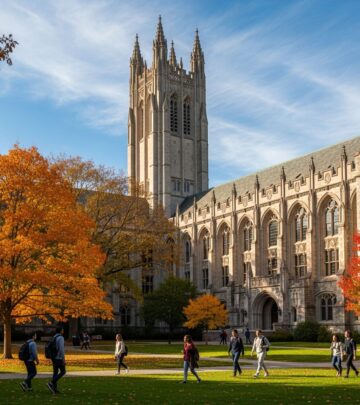
Cooper Union: Elite STEM Education in NYC
Discover Cooper Union's prestigious programs in architecture, art, and engineering with exceptional scholarships.

Cooper Union for the Advancement of Science and Art: A Premier Institution
The Cooper Union for the Advancement of Science and Art stands as one of America’s most prestigious institutions of higher learning, offering exceptional education in three distinct disciplines: architecture, art, and engineering. Located in Manhattan’s vibrant East Village at 30 Cooper Square in New York City, Cooper Union has maintained its commitment to academic excellence and student accessibility since its founding in 1859. The institution distinguishes itself not only through rigorous academic programs but also through its remarkable financial aid policy, providing all admitted undergraduate students with a half-tuition scholarship valued at $22,275 per school year for the 2024-2025 academic year.
Admission and Selectivity
Cooper Union maintains one of the most competitive admission processes among specialized institutions in the United States. For the 2024-2025 academic year, the institution reported an overall acceptance rate of 13% based on the total number of completed Common Applications submitted for fall 2024. However, this overall figure masks significant variation across the three schools. The School of Architecture admits only 4% of applicants, making it the most selective program. The School of Art follows with a 9% acceptance rate, while the School of Engineering is relatively more accessible at 23% acceptance rate. These exceptionally low acceptance rates reflect the institution’s commitment to maintaining extraordinary academic standards and enrolling only the most talented and dedicated students in each discipline.
The highly selective admissions process ensures that Cooper Union attracts exceptional students from around the world who are passionate about their chosen fields. Prospective students must demonstrate not only outstanding academic achievement but also significant artistic talent, technical aptitude, or architectural vision, depending on their intended program of study.
Financial Aid and Scholarships
One of the most distinctive features of Cooper Union is its commitment to making elite education affordable. All enrolled undergraduate students automatically receive a half-tuition scholarship currently valued at $22,275 per school year. This guaranteed financial assistance significantly reduces the barrier to entry for talented students from all socioeconomic backgrounds, making a Cooper Union education accessible to deserving candidates regardless of their family’s financial circumstances.
Beyond the universal half-tuition scholarship, students may qualify for additional aid through the institution’s need-based financial aid program. After the half-tuition scholarship is applied, students can apply for supplementary need-based financial aid to help cover the remaining tuition, room and board, and other related educational expenses. Additionally, the institution offers limited merit scholarships for selected students who demonstrate exceptional achievement or special talents in their respective fields. This multi-tiered approach to financial support ensures that financial constraints do not prevent qualified students from pursuing their educational goals at Cooper Union.
Academic Programs and Schools
School of Architecture
The School of Architecture represents one of Cooper Union’s most prestigious divisions, offering comprehensive training in architectural design, theory, and practice. With only a 4% acceptance rate, admission to the architecture program is extraordinarily selective, ensuring enrollment of only the most talented architectural students. The program combines rigorous design studios with courses in architectural history, theory, sustainable design, and professional practice, preparing graduates to become innovative leaders in the architectural profession.
School of Art
The School of Art provides an intensive education in visual arts, including painting, sculpture, printmaking, photography, and digital media. Accepting 9% of applicants, the School of Art maintains exceptionally high standards for artistic excellence and creative vision. Students benefit from small classes, direct mentorship from accomplished faculty, and access to world-class studio facilities in the heart of New York City’s vibrant art scene.
School of Engineering
The School of Engineering offers rigorous programs in civil, mechanical, and electrical engineering, as well as chemical engineering. With a 23% acceptance rate, the engineering school maintains competitive admissions while being somewhat more accessible than the architecture and art programs. Engineering students receive comprehensive training in fundamental engineering principles, advanced technical skills, and professional practice, preparing them for careers in technology, infrastructure, energy, and innovation-driven industries.
Institutional Accreditation and Recognition
Cooper Union maintains full institutional accreditation from the Middle States Commission on Higher Education (MSCHE), a recognized accrediting body for colleges and universities in the northeastern United States. The institution’s accreditation was originally granted in 1946 and was most recently reaffirmed in 2018, with the next self-study evaluation scheduled for 2026-2027. This accreditation status confirms that Cooper Union meets rigorous standards for educational quality, institutional governance, financial stability, and support for student learning and development.
As a private, not-for-profit institution, Cooper Union is classified by the Carnegie Foundation for the Advancement of Teaching as having a special focus on technology, engineering, and sciences. The institution maintains accreditation for postsecondary awards, bachelor’s degrees, and master’s degrees, reflecting its comprehensive offerings across multiple credential levels.
Enrollment and Student Body
Cooper Union’s relatively small student body ensures personalized attention and close relationships between students and faculty. The institution’s compact size is one of its defining strengths, enabling faculty members to provide individualized mentorship and enabling students to form meaningful academic and social connections. Small class sizes mean that students receive substantial direct feedback from instructors and opportunities for meaningful classroom participation. This intimate learning environment contrasts sharply with large university settings where undergraduate students may find themselves in lecture halls with hundreds of peers.
Location and Campus Resources
Located at 30 Cooper Square in Manhattan’s Lower East Side, Cooper Union benefits from its position in one of the world’s most vibrant cultural and intellectual centers. Students have direct access to world-class museums, galleries, performance venues, and cultural institutions. The proximity to New York City’s thriving art scene, major engineering firms, and innovative technology companies provides unparalleled opportunities for internships, collaboration, and professional development. The institution’s location places students at the heart of cultural and economic innovation, offering networking opportunities and real-world learning experiences unavailable at institutions in more isolated settings.
Faculty Excellence and Support
Cooper Union attracts accomplished faculty members who are leaders in their respective fields. Faculty members engage in research, creative practice, and scholarly work while maintaining a strong commitment to teaching. The institution’s focus on undergraduate education means that students benefit from direct access to faculty expertise rather than being taught primarily by graduate teaching assistants. Faculty members maintain office hours and are accessible for student consultation, creating opportunities for mentorship beyond the classroom.
Continuing Education
Beyond its degree-granting programs, Cooper Union offers continuing education courses to working professionals and lifelong learners in the New York City area. These programs allow the institution to extend its educational mission to broader audiences while generating additional revenue to support its core academic mission. Continuing education offerings reflect the institution’s commitment to making quality instruction available to diverse populations throughout its surrounding community.
Financial Sustainability and Institutional Health
As a private, not-for-profit institution, Cooper Union has faced periodic challenges regarding financial sustainability and operational viability. The institution’s commitment to providing generous financial aid to all undergraduate students creates structural financial pressures that require careful management of institutional resources. Cooper Union’s endowment and fundraising efforts are critical to maintaining the institution’s financial health and ability to support its generous scholarship program while investing in facilities, faculty, and academic programs.
Career Outcomes and Alumni Success
Cooper Union graduates have established themselves as leaders in architecture, art, engineering, and numerous other fields. The institution’s rigorous training, emphasis on creative problem-solving, and location in New York City position graduates well for competitive job markets and graduate education opportunities. Alumni networks provide ongoing professional connections and support throughout graduates’ careers. The reputation and prestige associated with a Cooper Union degree open doors for professional opportunities globally.
Institutional Governance and Leadership
Cooper Union is led by Dr. Steven McLaughlin, who serves as President of the institution. The institution maintains a governance structure that includes faculty, staff, and administrative leadership committed to advancing its educational mission. The Accreditation Liaison Officer, Dr. Antoinette Torres, coordinates the institution’s engagement with accrediting bodies and ensures compliance with accreditation standards.
Research and Creative Practice
Faculty members at Cooper Union engage in research and creative practice across their disciplines. Engineering faculty pursue research in areas such as chemical engineering, while art and architecture faculty develop innovative creative work. These scholarly and creative activities enrich the educational environment and expose students to cutting-edge developments in their fields. Recent recognition of faculty achievements, such as Fulbright awards to faculty members, demonstrates the institution’s commitment to supporting faculty excellence.
Comparison with Peer Institutions
| Characteristic | Cooper Union | Typical Elite STEM Colleges |
|---|---|---|
| Overall Acceptance Rate | 13% | 15-25% |
| Half-Tuition Scholarship | All undergraduates | Selective merit aid |
| Primary Focus | Architecture, Art, Engineering | Broader STEM + Liberal Arts |
| Location | Manhattan, NYC | Varies |
| Accreditation | MSCHE (Last Reaffirmed 2018) | Regional accreditation |
Frequently Asked Questions About Cooper Union
Q: What makes Cooper Union different from other engineering and architecture schools?
A: Cooper Union’s combination of exceptional selectivity, guaranteed half-tuition scholarships for all undergraduates, small class sizes, location in Manhattan, and integration of art, architecture, and engineering distinguishes it from peer institutions.
Q: How selective is Cooper Union’s admissions process?
A: Cooper Union is extremely selective with an overall 13% acceptance rate, but acceptance varies by school: 4% for Architecture, 9% for Art, and 23% for Engineering.
Q: What financial aid does Cooper Union provide?
A: All admitted undergraduate students receive a half-tuition scholarship valued at $22,275 annually. Additional need-based aid and limited merit scholarships are also available.
Q: Is Cooper Union regionally accredited?
A: Yes, Cooper Union holds institutional accreditation from the Middle States Commission on Higher Education (MSCHE), with accreditation reaffirmed in 2018 and the next evaluation scheduled for 2026-2027.
Q: What is the typical class size at Cooper Union?
A: Cooper Union maintains small class sizes that enable close interaction between students and faculty, facilitating mentorship and personalized feedback.
Q: Where is Cooper Union located?
A: Cooper Union is located at 30 Cooper Square in Manhattan’s East Village, placing students in the heart of New York City’s vibrant cultural and professional communities.
Q: What career support does Cooper Union provide?
A: Cooper Union’s location in NYC, faculty connections, internship opportunities, and strong alumni networks provide comprehensive career development support and professional networking opportunities.
References
- Data Feedback Report 2024 — National Center for Education Statistics (NCES). 2024. https://nces.ed.gov/ipeds/dfr/2024/ReportHTML.aspx?unitId=190372
- Institutional Accreditation Profile — Middle States Commission on Higher Education (MSCHE). 2024. https://www.msche.org/institution/0300/
- Admissions Facts 2024-2025 — The Cooper Union for the Advancement of Science and Art. 2024. https://cooper.edu/admissions/facts
- About Cooper Union — The Cooper Union for the Advancement of Science and Art. 2024. https://cooper.edu
- Student Reviews and Experiences — Niche. 2024. https://www.niche.com/colleges/the-cooper-union-for-the-advancement-of-science-and-art/reviews/
- Faculty Recognition and Awards — The Cooper Union for the Advancement of Science and Art News. 2024. https://cooper.edu/about/news/all/2024
Similar Articles








Read full bio of Sneha Tete