Convertible Bonds: Definition, Features, and Investment Guide
Complete guide to convertible bonds: hybrid securities combining debt and equity features for investors.
Convertible Bonds: Definition and Overview
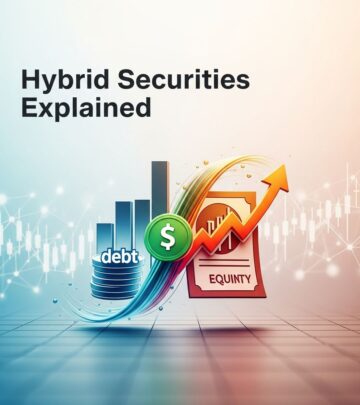
A convertible bond is a type of hybrid security that combines characteristics of both debt and equity instruments. It represents a fixed-income investment that grants bondholders the option to convert their bond holdings into a predetermined number of shares of the issuing company’s common stock. This unique dual nature makes convertible bonds an attractive option for investors seeking a balance between the stability of bond income and the growth potential of equity appreciation.
Convertible bonds are issued by companies as a financing mechanism that offers lower interest rates compared to traditional bonds, making them cost-effective for issuers while providing investors with added upside potential. The conversion feature essentially grants bondholders a call option on the company’s stock, creating a security with built-in equity exposure without the volatility typically associated with direct stock ownership.
How Convertible Bonds Work
Convertible bonds operate on a straightforward mechanism that combines regular bond characteristics with an embedded equity option. Here’s how the conversion process typically works:
- Bond Component: Investors receive periodic coupon payments at a fixed interest rate, usually lower than conventional bonds due to the conversion feature.
- Par Value: The bond has a principal amount (typically $1,000) that the investor receives upon maturity if they choose not to convert.
- Conversion Ratio: This specifies the number of shares an investor receives upon conversion. For example, a conversion ratio of 20 means one bond converts into 20 shares of common stock.
- Conversion Price: This is calculated by dividing the par value by the conversion ratio. If a $1,000 bond has a conversion ratio of 20, the conversion price is $50 per share.
- Conversion Premium: This represents the percentage by which the conversion price exceeds the stock’s current market price at issuance, typically ranging from 20% to 30%.
Investors can exercise the conversion option at any time during the bond’s life, though most do so when the stock price rises above the conversion price, making conversion economically beneficial. If the stock price never reaches the conversion price, bondholders can simply hold the bond to maturity and receive their principal back along with accrued interest.
Key Features of Convertible Bonds
Coupon Payments and Yields
Convertible bonds typically offer lower coupon rates than non-convertible bonds of similar credit quality and maturity. This reduced yield compensates investors for the conversion feature but still provides regular income. The coupon is usually paid semi-annually and is calculated as a percentage of the par value. Even if conversion never occurs, bondholders benefit from this steady income stream throughout the bond’s life.
Conversion Protection and Provisions
Convertible bonds include several protective provisions for investors:
- Call Protection: Many convertibles include call protection periods during which the issuer cannot force conversion by calling the bond.
- Anti-Dilution Provisions: These protect convertible bondholders from dilution in conversion rights due to stock splits, dividends, or other corporate actions.
- Put Options: Some convertibles allow bondholders to sell the bond back to the issuer at par value under certain conditions, typically during periods of market stress.
Credit Quality and Risk Assessment
The credit quality of a convertible bond depends primarily on the issuer’s creditworthiness. Investors should evaluate the company’s financial health, debt levels, and business prospects. Convertible bonds typically carry lower credit ratings than traditional bonds from the same issuer, reflecting the additional risks associated with the conversion feature and the issuer’s financial structure.
Advantages of Convertible Bonds
Convertible bonds offer several compelling benefits for investors:
- Income Generation: Regular coupon payments provide predictable income regardless of stock performance.
- Upside Potential: If the company’s stock price appreciates significantly, bondholders can convert and participate in equity gains.
- Downside Protection: The bond component provides a safety net, with a defined maturity value if conversion is not attractive.
- Lower Volatility: Convertible bonds typically exhibit less price volatility than common stocks, making them suitable for conservative investors.
- Lower Entry Cost: The conversion feature allows investors to gain equity exposure with lower prices than direct stock purchase.
- Diversification: Convertibles provide a distinct asset class that can reduce overall portfolio risk through diversification.
Disadvantages and Risks of Convertible Bonds
Despite their advantages, convertible bonds present several risks investors must consider:
- Interest Rate Risk: Like all bonds, convertible prices decline when interest rates rise, potentially resulting in capital losses if sold before maturity.
- Equity Dilution: For equity investors, convertible issuance dilutes existing shareholder ownership and earnings per share.
- Call Risk: Issuers may call convertible bonds when stock prices rise significantly, forcing conversion at potentially inopportune times.
- Credit Risk: If the issuer faces financial difficulties, the bondholder faces potential default, losing both interest payments and principal.
- Conversion Risk: If stock prices fall below the conversion price, the conversion option becomes worthless, leaving investors with just a bond paying below-market rates.
- Liquidity Risk: Some convertible bonds trade infrequently, making them difficult to sell quickly without price concessions.
Valuation of Convertible Bonds
Valuing convertible bonds requires a dual approach, considering both debt and equity components. The bond floor represents the minimum value based on the straight bond value (present value of cash flows if never converted). The conversion value represents the stock value if converted immediately. The market price typically trades between these two values, reflecting investor expectations about future stock performance.
More sophisticated valuation methods include option pricing models that assess the embedded call option on the stock. The value of a convertible bond can be expressed as: Convertible Bond Value = Straight Bond Value + Value of Embedded Option. This framework helps investors understand what portion of the bond price comes from income protection versus equity upside potential.
Convertible Bonds vs. Traditional Bonds
Convertible bonds differ fundamentally from traditional corporate bonds in several ways:
| Feature | Convertible Bonds | Traditional Bonds |
|---|---|---|
| Coupon Rate | Lower (typically 3-6%) | Higher (reflects credit risk) |
| Upside Potential | Yes (through conversion) | No (fixed income only) |
| Downside Protection | Bond floor provides support | Based on creditworthiness |
| Volatility | Moderate to High | Lower (interest rate dependent) |
| Investor Profile | Growth-oriented income seekers | Conservative income investors |
Tax Considerations
Convertible bond investors should understand the tax implications of their investments. Coupon payments are taxable as ordinary income at the bondholder’s marginal tax rate. When conversion occurs, the difference between the conversion value and the adjusted basis may create a taxable gain or loss. At maturity or sale, any capital gains or losses are subject to capital gains tax treatment. Investors should consult tax professionals to optimize their positions based on individual circumstances.
Market Dynamics and Convertible Bond Pricing
Convertible bond prices are influenced by multiple factors including stock price movements, interest rate changes, credit spreads, and implied volatility. When underlying stock prices rise significantly, convertibles behave increasingly like equity. Conversely, when stock prices fall, convertibles typically maintain value closer to their bond floor. This asymmetric payoff profile makes convertibles attractive during uncertain market environments where investors seek both income and growth exposure.
Frequently Asked Questions
Q: What happens to my convertible bond when the company goes bankrupt?
A: In bankruptcy, convertible bondholders are treated as creditors and rank above equity holders but below secured lenders. Your recovery depends on remaining assets available after paying higher-priority claims. The equity value of conversion rights typically becomes worthless in bankruptcy scenarios.
Q: Can I lose money investing in convertible bonds?
A: Yes, you can experience losses if the company’s credit quality deteriorates, interest rates rise significantly, or the company defaults. However, the bond floor provides some downside protection compared to direct equity investment in the same company.
Q: How do I know when to convert my convertible bond?
A: Convert when the stock price substantially exceeds the conversion price and you believe further appreciation is limited. If the issuer calls the bond while the conversion value exceeds par, you’ll be forced to convert. Some investors convert proactively to capture dividends on the converted shares.
Q: Are convertible bonds suitable for retirement portfolios?
A: Convertible bonds can be suitable if you seek moderate growth with income stability. They’re generally less volatile than stocks but more volatile than traditional bonds. Your suitability depends on your risk tolerance, time horizon, and portfolio composition.
Q: How are convertible bonds affected by interest rate changes?
A: Rising interest rates typically lower convertible bond prices as the fixed coupon becomes less attractive relative to market rates. However, if rising rates coincide with stock price appreciation, the conversion feature may offset these losses.
Q: What is a “busted convertible”?
A: A busted convertible is a bond trading near its bond floor where the stock price has fallen significantly below the conversion price, making conversion economically unattractive. These securities behave primarily as bonds with limited equity upside.
Investing in Convertible Bonds
Investors can access convertible bonds through direct purchase in the bond market or through convertible bond mutual funds and exchange-traded funds. Individual bond purchases require larger minimum investments and direct market participation, while funds provide diversification and professional management. When selecting convertible bonds, investors should evaluate the issuer’s credit quality, conversion terms, maturity, liquidity, and the underlying stock’s growth prospects. A balanced approach incorporating convertibles as part of a diversified portfolio can enhance returns while managing risk exposure.
References
- What is a Convertible Bond? — U.S. Securities and Exchange Commission (SEC). Office of Investor Education and Advocacy. https://www.sec.gov/investor/alerts/ia_convertiblebonds.pdf
- Convertible Bonds: A Comprehensive Investment Guide — Financial Industry Regulatory Authority (FINRA). 2024. https://www.finra.org
- Understanding Bond Valuation and Pricing — The CFA Institute. 2023. https://www.cfainstitute.org
- Fixed Income Securities: Characteristics and Pricing — International Capital Market Association (ICMA). 2024. https://www.icmagroup.org
- Convertible Bond Market Analysis and Trends — Bloomberg Finance L.P. 2025. https://www.bloomberg.com
Similar Articles








Read full bio of medha deb