Converting 401(k) to Roth IRA: Complete Guide
Learn how to convert your 401(k) to a Roth IRA and maximize tax-free retirement savings.
Converting Your 401(k) to a Roth IRA: A Comprehensive Guide
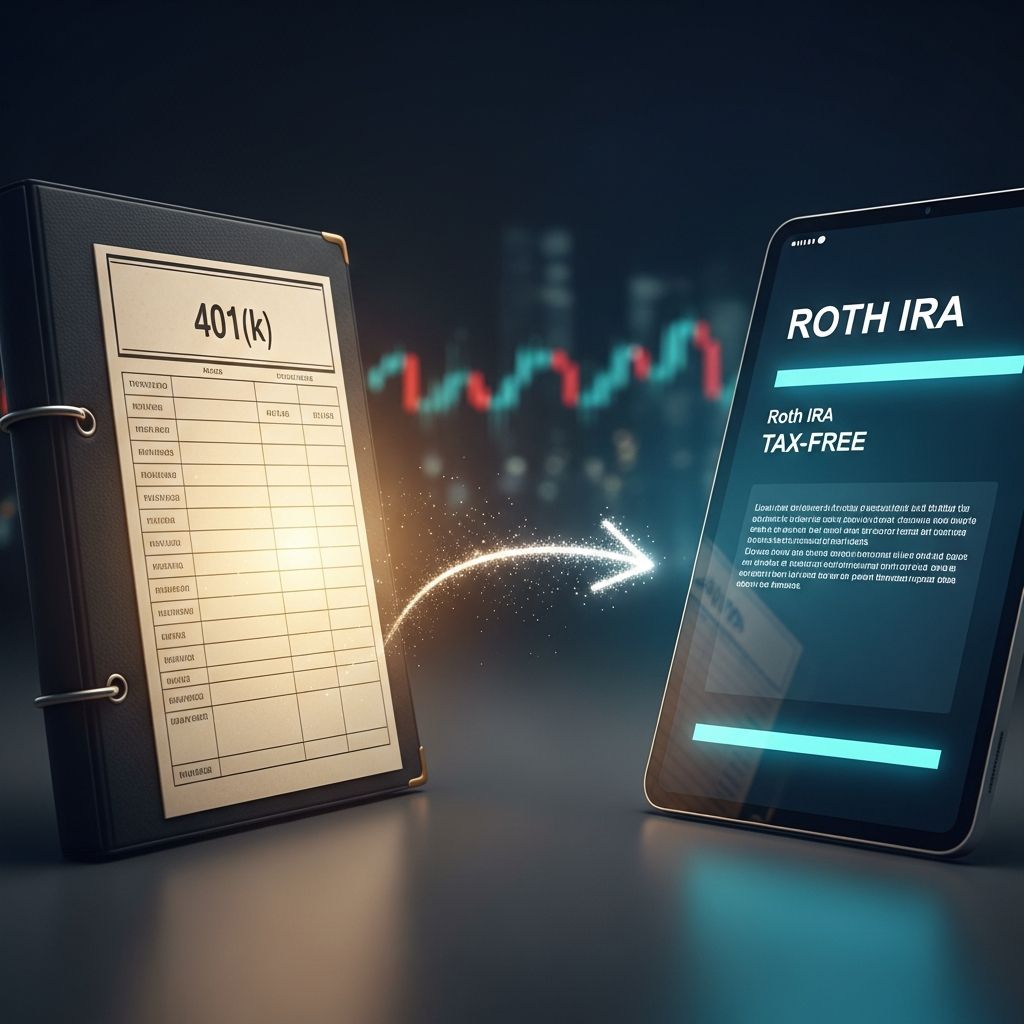
Converting a traditional 401(k) to a Roth IRA represents one of the most powerful wealth-building strategies available to retirement savers today. This financial maneuver allows individuals to move pre-tax retirement assets into a tax-free account, potentially providing significant long-term benefits. Understanding the mechanics, tax implications, and timing considerations of a 401(k) to Roth conversion is essential for anyone seeking to optimize their retirement planning strategy.
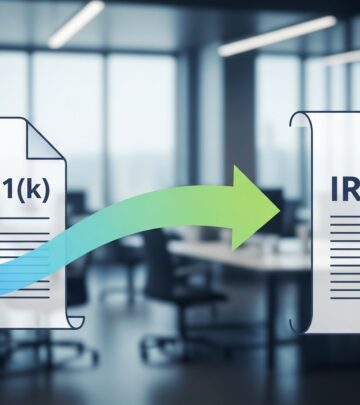
The conversion process involves transferring funds from a qualified 401(k) plan into a Roth IRA account. While straightforward in concept, the execution requires careful planning to minimize tax consequences and maximize long-term benefits. This guide explores the essential aspects of 401(k) conversions, helping you make informed decisions about your retirement finances.
Understanding 401(k) to Roth Conversion Basics
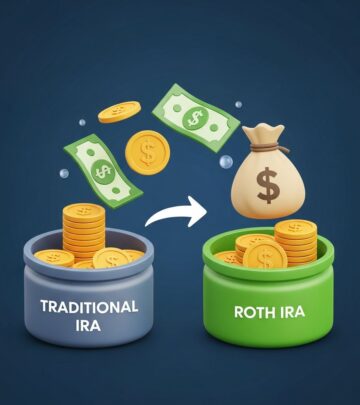
A 401(k) to Roth conversion involves moving money from your traditional 401(k) plan into a Roth IRA. The fundamental difference between these accounts lies in their tax treatment. Traditional 401(k) contributions are typically made with pre-tax dollars, reducing your current taxable income. Roth IRAs, conversely, allow tax-free growth and withdrawals during retirement, provided specific conditions are met.
When you convert 401(k) funds to a Roth IRA, the converted amount becomes taxable income in the year of conversion. This tax bill must be paid from your personal funds rather than from the retirement account itself, ensuring the maximum amount remains invested for future growth. The ability to convert has become more accessible since the elimination of income restrictions on Roth conversions in 2010.
The conversion process involves requesting a distribution from your 401(k) plan administrator and then depositing those funds directly into a Roth IRA within 60 days. Many investors prefer direct transfers to avoid the 60-day rollover window, though this method requires coordination between financial institutions.
Who Can Benefit From a 401(k) Conversion?
Certain individuals and circumstances make 401(k) conversions particularly advantageous. High earners who exceed income limits for direct Roth IRA contributions find conversions especially valuable. For 2025, single taxpayers earning $165,000 or more, and married-filing-jointly taxpayers earning $246,000 or more, cannot contribute directly to a Roth IRA, making conversions their primary avenue to Roth savings.
Individuals in lower-income years benefit significantly from conversions. Periods of reduced income, such as between jobs, sabbaticals, or early retirement before Social Security begins, present ideal conversion opportunities. By converting during low-income years, you pay taxes at lower rates, maximizing the long-term benefit of tax-free Roth growth.
Those expecting significant tax rate increases in retirement should consider converting while in lower tax brackets. Similarly, individuals whose current tax rates exceed expected future rates gain substantial advantages through timely conversions. Business owners, freelancers, and self-employed professionals can strategically plan conversions around profitable or slower business years.
The Mega Backdoor Roth Strategy
The mega backdoor Roth represents an advanced conversion strategy for those seeking maximum tax-advantaged savings. This approach allows individuals to contribute significantly more to Roth accounts than traditional contribution limits would permit, making it particularly attractive for high-income earners.
How the Mega Backdoor Roth Works
The mega backdoor Roth strategy involves two primary steps. First, you make after-tax contributions to your 401(k) or workplace retirement plan beyond the annual contribution limits for pre-tax and Roth contributions. Second, you convert these after-tax contributions to either a Roth IRA or Roth 401(k).
After-tax contributions differ fundamentally from both Roth and pre-tax contributions. They allow you to save within your workplace retirement plan beyond standard contribution limits. For 2025, the maximum 401(k) contribution limit totals $70,000 for individuals under 50 years old (including employee and employer contributions). This means if you’ve already contributed $23,500 in pre-tax and Roth contributions and received $11,750 in employer matching, you could contribute an additional $34,750 in after-tax contributions.
The conversion process involves transferring these after-tax contributions to a Roth IRA through either an in-plan conversion or a rollover distribution. Some employers offer automatic conversion features, allowing periodic transfers of after-tax contributions to Roth accounts without requiring manual intervention.
Contribution Limits for Mega Backdoor Roth
Understanding contribution limits is crucial for maximizing the mega backdoor Roth strategy. The 2025 contribution framework includes:
| Category | Age Under 50 | Age 50-59 | Age 60-63 |
|---|---|---|---|
| Pre-tax and Roth Contributions | $23,500 | $31,000 | $34,750 |
| Maximum Total Contributions | $70,000 | $77,500 | $81,250 |
After-tax contributions fill the gap between your pre-tax/Roth contributions plus employer contributions and the overall limit. For example, a 35-year-old with $23,500 in personal contributions and $11,750 in employer matching could contribute $34,750 in after-tax amounts.
Tax Implications of Converting 401(k) to Roth
Understanding the tax consequences of 401(k) conversions is essential for proper planning. When you convert 401(k) funds to a Roth IRA, the converted amount becomes taxable income during that tax year. This includes the principal amount converted and any earnings attributable to your after-tax contributions.
However, the principal portion of after-tax contributions you convert typically doesn’t trigger additional taxes, as those amounts were already taxed before contributing to your 401(k). Only the earnings component incurs taxation upon conversion. This distinction becomes critical when calculating actual tax liability from conversions.
Converting large amounts in a single year can trigger significant tax consequences, potentially moving you into higher tax brackets. Strategic, multi-year conversion plans often make more financial sense than converting entire account balances immediately. Additionally, conversions can affect other tax items, such as Medicare premiums, which base calculations partly on Modified Adjusted Gross Income.
Planning Your 401(k) Conversion Strategy
Successful 401(k) conversions require comprehensive planning addressing multiple variables and considerations. Begin by assessing your current and expected future tax rates. If you anticipate higher tax rates in retirement, converting now at current rates provides substantial advantages. Conversely, if you expect lower future rates, conversions may offer limited benefits.
Evaluate your income timing carefully. Converting during years when you have lower-than-normal income maximizes the benefit of converting at reduced tax rates. Job transitions, sabbaticals, or variable business income create natural opportunities for strategic conversions.
Consider the sequence of conversions across multiple years. Rather than converting your entire balance immediately, spreading conversions over several years typically results in lower overall taxes by avoiding higher marginal rates. This approach requires coordinating your conversion schedule with other income sources and tax planning objectives.
Ensure you can pay conversion taxes from non-retirement account funds. If you withdraw money from the retirement account to pay the conversion tax, you lose that investment potential and may trigger early withdrawal penalties if you’re under 59½. Ideally, reserve sufficient liquidity outside retirement accounts to cover all tax consequences of your planned conversions.
Required Minimum Distributions and Conversions
The interaction between required minimum distributions (RMDs) and conversions deserves particular attention, especially for older account holders. Once you reach age 73, you must withdraw specific minimum amounts from traditional 401(k) accounts annually. These RMDs must be taken regardless of your financial situation or retirement needs, making them a crucial planning consideration.
Converting funds strategically can help minimize or manage RMD impacts on your tax situation. By converting portions of your 401(k) before RMDs begin, you reduce the account balance subject to RMD calculations in later years. This approach can help lower future RMD amounts and their associated tax burden.
Important Considerations Before Converting
Several critical factors warrant consideration before executing a 401(k) conversion. First, verify that your plan allows conversions, as not all employers permit this option. Contact your 401(k) plan administrator to confirm available conversion methods and any restrictions on conversion amounts or timing.
Evaluate whether you’re under 59½, which would trigger early withdrawal penalties on conversions if you access funds improperly. While Roth IRA conversions generally avoid early withdrawal penalties, distributions of earnings before age 59½ may still incur penalties under certain circumstances.
Consider the pro-rata rule, which applies when you have multiple traditional IRAs, SEP IRAs, or SIMPLE IRAs. This rule requires that conversions treat all pre-tax IRAs as a single account for tax calculation purposes, potentially increasing your tax liability if you hold any pre-tax IRA accounts alongside your conversion.
Assess the impact on your health insurance costs if you’re younger than 65 and receiving employer coverage or subsidized marketplace insurance. Conversions increase your Modified Adjusted Gross Income, potentially affecting premium calculations or subsidy eligibility.
Executing Your 401(k) Conversion
The actual conversion process involves several steps. First, contact your 401(k) plan administrator and request information about conversion procedures, including whether your plan permits conversions. If your plan allows conversions, request either a rollover distribution or direct transfer to a Roth IRA.
For a rollover distribution, the plan will issue you a check for the conversion amount, typically with 20% withholding. You’ll have 60 days to deposit the full amount (including the withheld 20%) into a Roth IRA. If you fail to deposit the entire amount within this window, the shortfall becomes taxable and potentially subject to early withdrawal penalties.
Direct transfers prove simpler and avoid withholding complications. Contact both your 401(k) plan administrator and Roth IRA custodian, providing instructions for a direct trustee-to-trustee transfer. This method ensures funds transfer directly between institutions without passing through your hands.
Key Advantages of 401(k) to Roth Conversions
401(k) to Roth conversions provide several compelling advantages for retirement planning. The primary benefit is tax-free growth and withdrawals in retirement, allowing your converted assets to compound without tax drag for decades. This advantage grows increasingly valuable as your time horizon extends and investment returns accumulate.
Conversions eliminate future required minimum distributions, providing greater control over your retirement income. You withdraw funds according to your needs rather than being forced to take distributions and associated tax bills at a predetermined pace. This flexibility becomes increasingly valuable in managing your overall tax situation.
A Roth IRA offers superior estate planning advantages, as heirs inherit tax-free balances. The continued tax-free growth potential for beneficiaries creates additional wealth-building benefits across generations. Additionally, no age restrictions limit Roth IRA contributions after conversion, allowing continued wealth accumulation throughout retirement.
Potential Drawbacks and Risks
While conversions offer substantial benefits, several potential drawbacks warrant consideration. The most immediate disadvantage is the immediate tax liability triggered by conversions. Converting large amounts can result in substantial tax bills that must be paid from non-retirement funds.
Conversions may increase your tax bracket in the conversion year, potentially affecting other tax items like Social Security benefits taxation, Medicare premiums, or investment income treatment. These secondary effects can amplify the actual tax cost of conversions beyond the direct tax on the converted amount.
If your financial situation changes significantly, such as substantial income increases or unexpectedly high medical expenses, you cannot simply undo a conversion. While tax law allows recharacterizing conversions in limited circumstances, the process is complex and generally unavailable for most conversions completed in recent years.
Frequently Asked Questions About 401(k) Conversions
Q: Can I convert my entire 401(k) to a Roth IRA at once?
A: Yes, you can convert your entire balance if your plan permits conversions. However, converting large amounts in a single year typically results in higher taxes. Most individuals benefit from multi-year conversion strategies spreading the conversion across several tax years to minimize tax consequences.
Q: Will converting trigger early withdrawal penalties?
A: Conversions themselves don’t trigger early withdrawal penalties. However, if you’re under 59½ and must access funds to pay the conversion tax, those withdrawals may incur penalties. This is why experts recommend paying conversion taxes from non-retirement accounts.
Q: How long does a 401(k) conversion take?
A: Direct trustee-to-trustee transfers typically complete within 7-10 business days. Rollover distributions may take 2-4 weeks, depending on your financial institutions and mail delivery time. You have 60 days from distribution to complete the rollover deposit to your Roth IRA.
Q: Can I convert my 401(k) after I leave my job?
A: Yes, you can convert after employment termination. In fact, leaving your job often presents an ideal opportunity for conversions, particularly if your income drops significantly in the transition year, putting you in a lower tax bracket.
Q: Does my 401(k) plan need to offer a Roth option to convert?
A: No, you don’t need a Roth 401(k) option to convert. You can always roll your 401(k) into a traditional IRA and then convert to a Roth IRA. Alternatively, if your plan offers in-plan conversions to a Roth 401(k), you can convert directly within your existing plan.
Q: What happens to employer matching contributions when I convert?
A: Employer matching contributions are typically made with pre-tax dollars. When you convert, these matching contributions become subject to taxation. Some strategies involve converting only after-tax contributions while leaving employer matches in pre-tax accounts to minimize tax consequences.
Q: Can I still contribute to my 401(k) after converting?
A: Yes, conversions don’t prevent future contributions. You can continue making pre-tax, Roth, and after-tax contributions to your 401(k) after a conversion. This flexibility allows strategic, multi-year conversion plans alongside ongoing regular contributions.
Conclusion
Converting a 401(k) to a Roth IRA represents a sophisticated retirement planning strategy that can significantly enhance long-term wealth accumulation. By understanding the mechanics, tax implications, and strategic considerations of conversions, you can make informed decisions aligned with your unique financial circumstances and retirement objectives.
The decision to convert should be based on your current and expected future tax rates, financial situation, and long-term retirement planning goals. Consider consulting with a qualified tax professional or financial advisor to develop a personalized conversion strategy. With careful planning and proper execution, 401(k) conversions can provide substantial tax-free retirement income while offering greater flexibility in managing your overall tax situation throughout your retirement years.
References
- What is a mega backdoor Roth? IRA conversion — Fidelity Investments. 2025. https://www.fidelity.com/learning-center/personal-finance/mega-backdoor-roth
- 2025 401(k) contribution limits — Internal Revenue Service. 2024. https://www.irs.gov/retirement-plans/401k-plans
- Roth IRA income limits for 2025 — Internal Revenue Service. 2024. https://www.irs.gov/retirement-plans/roth-iras
- Roth conversion and pro-rata rule guidance — Internal Revenue Service. 2024. https://www.irs.gov/publications/p590b
- Modified Adjusted Gross Income and tax credits — Internal Revenue Service. 2024. https://www.irs.gov/credits-deductions/individual/magi
Similar Articles








Read full bio of Sneha Tete