Conventional Loans: 5 Essential Steps To Secure Approval
Discover the essentials of conventional loans, from eligibility to benefits, and how they compare to government-backed options for homebuyers.

Conventional loans represent the most common form of home financing in the United States, offered by private lenders without government insurance or guarantees. These mortgages appeal to borrowers with solid credit profiles who seek flexible terms for purchasing primary residences, second homes, or investment properties.
Defining Conventional Mortgages
A conventional loan is a home loan provided by banks, credit unions, or mortgage companies that lacks backing from federal agencies like the FHA, VA, or USDA. Unlike government-supported programs designed for specific groups such as first-time buyers or veterans, these loans rely on the lender’s assessment of the borrower’s financial stability.
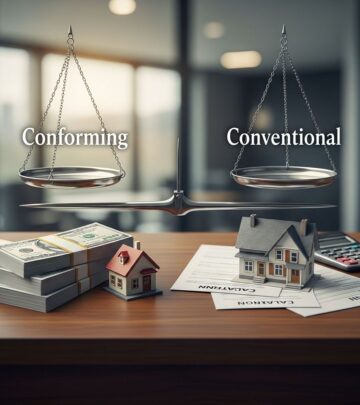
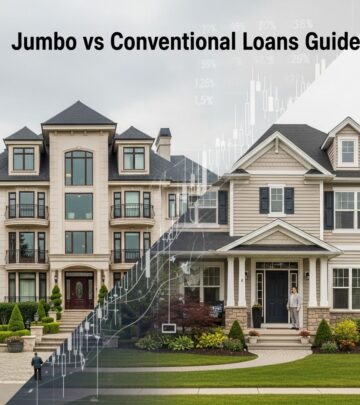
They fall into two categories: conforming and non-conforming. Conforming loans meet guidelines set by Fannie Mae and Freddie Mac, government-sponsored enterprises that purchase qualifying mortgages to provide liquidity to lenders. These adhere to limits on loan amounts, which vary by location—for instance, higher in expensive areas. Non-conforming loans, often called jumbo loans, exceed these limits and carry stricter requirements due to higher risk.
Key Features and Loan Structures
Conventional loans offer versatility in structure. Borrowers can select fixed-rate options, where the interest rate remains constant throughout the term, ensuring predictable payments. Common terms include 15 or 30 years. Alternatively, adjustable-rate mortgages (ARMs) start with a fixed introductory period, then adjust periodically based on market indices plus a lender margin.
For a practical illustration, consider a $400,000 home purchase with a 20% down payment ($80,000), resulting in a $320,000 loan at 6.95% interest over 30 years. Monthly principal and interest payments would total about $2,118, excluding taxes and insurance.
Eligibility Criteria for Approval
Lenders evaluate several factors to approve conventional loans:
- Credit Score: Minimum of 620, with scores above 750 often securing better rates.
- Debt-to-Income (DTI) Ratio: Ideally under 36%, though up to 45-50% may be acceptable with compensating factors.
- Down Payment: As low as 3% for first-time buyers of primary homes, 5% for others, rising to 10% for second homes and 15-20% for investments.
- Income and Employment: Verifiable, stable income sufficient to cover payments.
- Reserves: Cash on hand for closing costs and potentially 6 months of payments, especially for larger loans.
Properties must be appraised, and borrowers need hazard insurance. Title searches confirm seller ownership.
Advantages of Choosing Conventional Financing
These loans provide several benefits for eligible applicants:
- Low Entry Barriers: 3% down payments make homeownership accessible without draining savings; funds can come from gifts or grants.
- Temporary Insurance Costs: Private mortgage insurance (PMI) applies below 20% down but can be canceled once equity reaches 20%, unlike permanent FHA premiums.
- Property Flexibility: Suitable for primary homes, vacation properties, or rentals, with higher loan limits than many government options.
- Rate and Term Choices: Fixed or adjustable rates, various durations.
- Streamlined Process: Often faster approval without government-mandated inspections.
Potential Drawbacks to Consider
Despite strengths, challenges exist:
- Stricter Standards: Higher credit thresholds exclude those with scores under 620.
- PMI Requirement: Adds costs for smaller down payments.
- Larger Reserves Needed: Especially for jumbo or investment loans.
Comparing to Government-Backed Alternatives
Conventional loans differ markedly from FHA (3-3.5% down, 580 score, lifelong insurance), VA (0% down for veterans, no PMI), and USDA (rural areas, 0% down). Use this table for a clear overview:
| Feature | Conventional | FHA | VA | USDA |
|---|---|---|---|---|
| Down Payment | 3-20% | 3.5% | 0% | 0% |
| Min Credit Score | 620 | 580 | None | 640 |
| PMI/MIP | Cancellable | Lifelong | None | Annual fee |
| Property Types | Flexible | Primary only | Primary | Rural |
| Loan Limits | High (conforming) | Lower | High | Area-based |
Conventional suits stronger profiles, while government options aid lower-credit or specialized buyers.
Steps to Secure a Conventional Loan
- Check Credit: Review and improve your score if needed.
- Calculate Affordability: Use calculators for payments based on price, down payment, and rates.
- Gather Documents: Income proofs, assets, debts.
- Get Pre-Approved: Shop multiple lenders for best terms.
- Appraisal and Closing: Finalize with property valuation and legal checks.
Frequently Asked Questions
What credit score is needed for a conventional loan?
Typically 620 or higher; higher scores yield better rates.
Can I avoid PMI with a conventional loan?
Yes, by putting 20% down or requesting cancellation at 20% equity.
Are jumbo loans conventional?
Yes, if non-conforming, they exceed Fannie Mae/Freddie Mac limits.
How do ARMs work in conventional loans?
Fixed initial rate, then adjusts per index; suitable for short-term plans.
Who qualifies for the lowest down payments?
First-time buyers often get 3% options on primary residences.
Strategic Tips for Borrowers
To maximize advantages, boost your credit early, save for at least 5-10% down to minimize PMI duration, and compare lenders. Timing matters—shop during rate dips. For investments, expect tougher scrutiny but higher limits.
Conventional loans empower financially stable buyers with broad options, balancing accessibility and lender protections.
References
- Conventional Loans: Everything You Need To Know — Bankrate. 2023. https://www.bankrate.com/mortgages/what-is-a-conventional-loan/
- What Is a Conventional Loan? — PNC Insights. 2024. https://www.pnc.com/insights/personal-finance/borrow/what-is-a-conventional-loan.html
- What is a Conventional Home Loan? — NFM Lending. 2023. https://nfmlending.com/financing-your-home/education/blog/what-is-a-conventional-home-loan/
- What is a Conventional Mortgage? — Robinhood. 2024. https://robinhood.com/us/en/learn/articles/190P0ObgJFv0wnbnTVdrVw/what-is-a-conventional-mortgage/
- Get to Know the Types of Mortgage Loans — Fannie Mae. 2024. https://yourhome.fanniemae.com/buy/get-know-types-mortgage-loans
- Agency Conventional Loans — Amres Corporation. 2023. https://www.amres.com/program-categories/conventional-loans
- What is a conventional loan? — Consumer Financial Protection Bureau. 2024-02-06. https://www.consumerfinance.gov/ask-cfpb/what-is-a-conventional-loan-en-117/
Similar Articles








Read full bio of Sneha Tete