Contribution Margin: Definition, Formula & Calculation
Master contribution margin analysis to optimize pricing, profitability, and strategic business decisions.

What is Contribution Margin?
Contribution margin (CM) is a financial metric that represents the amount of revenue remaining after a company covers its variable costs. This leftover amount is available to contribute toward covering fixed costs and ultimately generating profit. In essence, contribution margin measures how much a specific product, service, or business unit contributes to your company’s profitability before accounting for fixed expenses.
The contribution margin can be expressed in three different ways: as a total dollar amount for all products sold, on a per-unit basis, or as a percentage of sales revenue (known as the contribution margin ratio). Each representation provides valuable insights for different types of financial analysis and decision-making.
Understanding contribution margin is crucial for business managers, accountants, and financial analysts because it reveals the true profitability potential of individual products and helps identify which offerings generate the most value for the organization.
Contribution Margin Formula and Calculation
Calculating contribution margin is straightforward and involves subtracting total variable costs from total sales revenue. The basic formula is:
Contribution Margin = Total Sales Revenue − Total Variable Costs
For a more granular analysis, you can also calculate contribution margin on a per-unit basis:
Contribution Margin per Unit = Selling Price per Unit − Variable Cost per Unit
Once you have the per-unit contribution margin, multiply it by the total number of units sold to determine the total contribution margin for a product line or the entire company.
Contribution Margin Ratio
The contribution margin ratio (CMR) expresses the contribution margin as a percentage of revenue, providing a normalized metric for comparing products or companies of different sizes. The formula for contribution margin ratio is:
Contribution Margin Ratio = (Contribution Margin ÷ Total Sales Revenue) × 100
Alternatively, you can calculate it using the per-unit approach:
Contribution Margin Ratio = (Contribution Margin per Unit ÷ Selling Price per Unit) × 100
Contribution Margin Example
Let’s walk through a practical example to illustrate how contribution margin works in real-world scenarios.
Suppose a mobile phone manufacturer sells 50,000 units of its latest smartphone model in the first half of the fiscal year. Here are the key financial metrics:
- Selling price per unit: $100
- Variable manufacturing costs per unit: $30
- Variable selling and administrative expenses per unit: $10
- Total variable cost per unit: $40
Using the contribution margin formula:
Contribution Margin per Unit = $100 − $40 = $60
Total Contribution Margin = $60 × 50,000 units = $3,000,000
Contribution Margin Ratio = ($60 ÷ $100) × 100 = 60%
This means that for every smartphone sold, $60 is available to cover fixed costs and contribute to profit, representing 60% of the revenue generated.
Multi-Level Contribution Margin Example
For more comprehensive analysis, particularly in e-commerce and retail sectors, companies often calculate three levels of contribution margin:
Consider a company with the following financial data:
- Units sold: 3,000
- Revenue per unit: $55
- Cost of goods sold per unit: $27
- Delivery costs for period: $24,000
- Marketing cost for period: $36,000
Contribution Margin 1 (CM1): Sales − Cost of Goods Sold
(3,000 units × $55) − (3,000 units × $27) = $165,000 − $81,000 = $84,000 or 51%
Contribution Margin 2 (CM2): CM1 − Logistics and Variable Costs
$84,000 − $24,000 = $60,000 or 36%
Contribution Margin 3 (CM3): CM2 − Sales & Marketing Costs
$60,000 − $36,000 = $24,000 or 15%
Contribution Margin vs. Gross Profit Margin
While both metrics assess profitability, contribution margin and gross profit margin serve different analytical purposes and are calculated differently.
Contribution Margin focuses exclusively on variable costs, highlighting how much revenue from each sale is available to cover fixed expenses and generate profit. It provides insight into the direct contribution each product makes toward covering overhead.
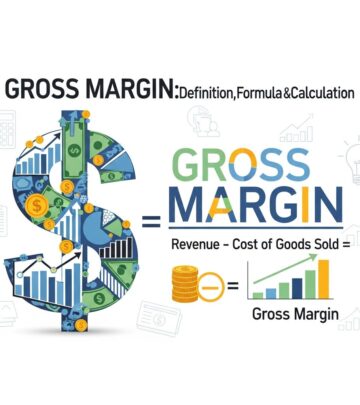
Gross Profit Margin is calculated by subtracting the total cost of goods sold (COGS) from revenue. COGS includes both fixed and variable production costs, making it broader in scope than contribution margin.
Consider this comparison: A company sells a product for $100 with variable costs of $60 per unit. The contribution margin per unit is $40. However, if COGS includes allocated fixed manufacturing overhead totaling $15 per unit, the gross profit per unit would be $25, which is significantly lower than the contribution margin of $40.
This distinction is important because contribution margin provides a clearer picture of how each product contributes to covering fixed costs and generating profit, while gross profit margin reflects overall production profitability including allocated overhead.
Understanding Variable Costs vs. Fixed Costs
To effectively use contribution margin analysis, you must clearly distinguish between variable costs and fixed costs.
Variable Costs are expenses that fluctuate directly with the volume of production or sales. Examples include raw materials, direct labor, shipping costs, and sales commissions. If you produce no units, variable costs are zero; if production doubles, variable costs double as well.
Fixed Costs remain constant regardless of production or sales volume. These include rent, salaries, insurance, and depreciation. Whether your company produces 1,000 or 10,000 units, fixed costs remain the same.
Understanding this distinction is critical because contribution margin focuses solely on covering variable costs, while the remaining contribution must cover fixed costs before the company can achieve profitability.
What is a Good Contribution Margin?
There is no universal standard for what constitutes a “good” contribution margin, as acceptable levels vary significantly across industries and business models.
Industry Benchmarking: Different industries have inherently different cost structures. Retail businesses typically operate with lower contribution margins (20-40%), while software companies often maintain much higher margins (70-90%). It’s essential to compare your contribution margin against direct competitors and industry standards rather than absolute values.
Business Life Cycle Stage: Early-stage, high-growth companies may deliberately maintain low or even negative contribution margins to acquire customers rapidly and build market share. Mature companies, conversely, typically prioritize higher margins to maximize profitability.
Fixed Cost Structure: A company with minimal fixed costs requires a lower contribution margin to reach profitability than a capital-intensive business with substantial fixed overhead. For example, a digital service provider with low fixed costs might profit with a 30% contribution margin, while a manufacturing facility with significant fixed expenses might require 50% or higher.
Strategic Considerations: Some businesses intentionally sacrifice contribution margin to achieve other strategic objectives, such as market penetration, customer retention, or competitive positioning. What matters most is ensuring that CM3 (or the final contribution margin level) remains positive, as this is the amount truly contributing to covering fixed costs and generating profit.
Generally speaking, higher contribution margins are preferable to lower ones, as they provide greater flexibility to cover fixed costs and absorb unexpected expenses.
Contribution Margin and Breakeven Analysis
Contribution margin is essential for calculating your breakeven point—the sales volume at which total revenue equals total costs, resulting in zero profit or loss.
The breakeven point in units can be calculated using:
Breakeven Point (Units) = Total Fixed Costs ÷ Contribution Margin per Unit
Consider a company with fixed costs of $20,000 and a contribution margin per unit of $40:
Breakeven Point = $20,000 ÷ $40 = 500 units
This means the company must sell 500 units to cover all fixed and variable costs. At this point, total revenue equals total costs, and no profit is generated. Any sales beyond the breakeven point contribute directly to profit.
Similarly, you can calculate the breakeven point in dollars by dividing fixed costs by the contribution margin ratio:
Breakeven Point (Dollars) = Total Fixed Costs ÷ Contribution Margin Ratio
Can Contribution Margin Be Negative?
Yes, contribution margin can be negative, and this situation deserves serious attention. A negative contribution margin occurs when variable costs exceed sales revenue for a particular product or service.
When contribution margin is negative, each unit sold actually loses money before considering fixed costs. This situation indicates that the product is unsustainable at the current price and cost structure.
Management typically faces two options when encountering negative contribution margins:
- Discontinue the product: If the product cannot be made profitable, the company should consider eliminating it from the product portfolio to stop the financial bleeding.
- Keep selling for strategic reasons: In some cases, companies maintain negative-margin products to attract customers, bundle with profitable offerings, or achieve strategic objectives like market presence or competitive positioning. However, this should be a deliberate choice with clear strategic justification, not an oversight.
Practical Applications of Contribution Margin Analysis
Pricing Decisions: Understanding contribution margin helps determine optimal pricing strategies. Products with high contribution margins can support aggressive promotion and competition, while low-margin products require careful pricing to maintain profitability.
Product Line Decisions: By analyzing contribution margins for each product, management can identify which offerings are most profitable and which may be dragging down overall performance. This information guides decisions about which products to emphasize, promote, or discontinue.
Cost Control: Contribution margin analysis highlights which variable costs have the greatest impact on profitability, enabling management to focus cost-reduction efforts where they’ll have maximum effect.
Sales Strategy: Sales teams can use contribution margin to prioritize high-margin products, direct marketing efforts toward profitable customer segments, and adjust sales tactics accordingly.
Investment Decisions: Investors use contribution margin to assess a company’s operational efficiency and profitability potential. A healthy contribution margin suggests the company can effectively cover fixed costs and generate sustainable profits.
Frequently Asked Questions
Q: How does contribution margin differ from profit?
A: Contribution margin represents the revenue available after covering variable costs, which contributes toward fixed costs. Profit, conversely, is what remains after all costs—both variable and fixed—are subtracted from revenue. Contribution margin is an intermediate calculation used to analyze product profitability, while profit is the final bottom-line result.
Q: Why do businesses operate at negative contribution margins?
A: Fast-growing e-commerce and technology companies sometimes operate at negative or very low contribution margins to acquire customers rapidly and build market share. This is typically a deliberate short-term strategy with the expectation that margins will improve as the company scales and matures.
Q: Can I use contribution margin for service-based businesses?
A: Absolutely. Contribution margin analysis applies to any business with variable and fixed costs, including service providers. For consulting firms, the “selling price” might be the billable rate, and variable costs would include direct labor and materials.
Q: What’s the relationship between contribution margin and cash flow?
A: While related, contribution margin and cash flow are different concepts. Contribution margin is an accounting measure of profitability, while cash flow reflects actual money moving in and out of the business. Non-cash expenses like depreciation don’t affect contribution margin but impact cash flow differently.
Q: How frequently should I calculate contribution margin?
A: Contribution margin should be calculated regularly—typically monthly or quarterly—to track performance trends, identify changing profitability patterns, and make timely management decisions.
References
- What is contribution margin? — Flinder. 2025. https://www.flinder.co/insights/what-is-contribution-margin
- Contribution Margin: Definition, Calculation & Examples — Tipalti. 2025. https://tipalti.com/resources/learn/contribution-margin/
- Contribution Margin: What it is and How to Calculate — The Finance Weekly. 2025. https://www.thefinanceweekly.com/post/contribution-margin-what-it-is-and-how-to-calculate
- Contribution Margin – Overview, Guide, Fixed Costs, Variable Costs — Corporate Finance Institute. 2025. https://corporatefinanceinstitute.com/resources/accounting/contribution-margin-overview/
Similar Articles








Read full bio of medha deb