Contractionary Policy: Definition and Economic Impact
Understanding contractionary policies and their role in controlling inflation and managing economic growth.

What Is Contractionary Policy?
Contractionary policy is a macroeconomic strategy used by governments and central banks to reduce the money supply in the economy and slow down economic growth. The primary objective of contractionary policy is to combat inflation when it reaches levels that threaten economic stability and erode purchasing power. When inflation spirals out of control, basic products become more expensive, making them harder to purchase and ultimately eroding standards of living for consumers. What may seem helpful in small doses becomes counterproductive in larger quantities, necessitating intervention through contractionary measures.
The Federal Reserve, as the central bank of the United States, and Congress work in tandem to implement contractionary policies, each using different tools and mechanisms. Understanding how these policies function is essential for investors, business owners, and individuals seeking to navigate economic cycles effectively.
Types of Contractionary Policy
There are two primary forms of contractionary policy: contractionary fiscal policy and contractionary monetary policy. Each approach targets inflation through different mechanisms and is controlled by different governmental bodies.
Contractionary Fiscal Policy
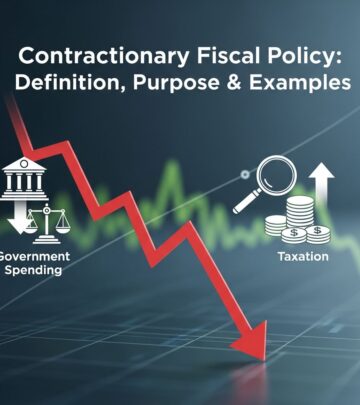
Contractionary fiscal policy is implemented by Congress and involves changes to government spending and taxation. When policymakers pursue a contractionary fiscal approach to cool down an overheated economy, they have several tools at their disposal.
Raising Taxes: One method Congress can employ is increasing both direct and indirect taxes. Direct taxes are paid straight from individuals or businesses to the government and include personal income taxes at federal and state levels, as well as corporate income taxes. Whether direct or indirect, taxes effectively pull money out of the economy and slow business activity by reducing the disposable income available for consumption and investment.
Cutting Government Spending: Another approach involves reducing government appropriations for goods, services, and hiring. By decreasing spending, Congress aims to slow the rate at which the economy grows. However, this method faces significant political challenges, as lawmakers depend on pleasing their constituents and voters who generally prefer politicians promising more benefits rather than fewer.
Contractionary Monetary Policy
Contractionary monetary policy is a more commonly employed approach to cooling an excessively inflationary economy and is managed by the Federal Reserve. The Fed has multiple tools available to implement contractionary measures.
Raising Interest Rates: The most prominent tool is raising interest rates to make borrowing money more expensive. When rates increase, both consumers and businesses are discouraged from borrowing. Businesses become less focused on expansion and are therefore less likely to hire employees, develop new products, or expand operations. On the consumer side, higher borrowing costs lead to reduced demand for goods and services. As demand falls, businesses may adjust pricing downward to maintain sales, which helps reduce inflation.
Selling Treasury Securities: Another mechanism involves the Federal Reserve selling Treasury securities to other banks. When banks purchase these Treasurys, they have less cash in reserve and consequently less money available for lending. These banks can compensate by raising their own interest rates, either in coordination with Federal Reserve actions or independently. Regardless of the approach, higher interest rates achieved through this method produce the same effect: borrowing becomes more expensive, discouraging both individuals and businesses from taking on debt.
Increasing Reserve Requirements: A third tool available to the Fed is raising reserve requirements across the banking system. This involves increasing the minimum amount of money banks must keep on hand, thereby reducing the amount of capital available for lending to the public.
Effects of Contractionary Policies
While the primary goal of contractionary policies is to combat inflation, these measures produce several other significant economic effects that influence various stakeholders differently.
Positive Effects
Price Stabilization: As inflation drops due to contractionary measures, prices begin to stabilize across the economy. This stabilization benefits those with fixed incomes or savings, as the purchasing power of their money increases. In other words, your money becomes worth more in a contractionary environment, allowing consumers to maintain or improve their standard of living despite lower nominal incomes.
Reduced Burden of Spending: With inflation controlled, the burden of purchasing goods and services decreases for everyday consumers. People can maintain their current lifestyles without experiencing the continuous price pressures characteristic of high-inflation periods.
Negative Effects
Impact on Lower-Income Populations: For those with a high marginal propensity to consume—particularly lower-income individuals—contractionary policies create significant hardship. These populations find it increasingly difficult to purchase necessary items or maintain balances on credit cards, as tightened credit availability and higher borrowing costs restrict their financial options.
Rising Unemployment: As demand for goods and services falls during contractionary periods, businesses may reduce staffing to compensate for declining revenue. This can result in higher unemployment rates, particularly affecting workers in industries most sensitive to contractionary pressures. Job security becomes uncertain for those in cyclical industries during these economic phases.
Timing and Implementation of Contractionary Policies
Contractionary policies can be implemented either proactively or reactively, depending on the economic circumstances and timing of their deployment. Proactive implementation occurs when policymakers identify potential inflationary threats before they materialize, allowing them to prevent excessive inflation before it takes hold. Reactive implementation happens after inflation has already risen to problematic levels, requiring more aggressive measures to bring it under control.
The decision to implement contractionary policies involves careful consideration of economic indicators and forecasts. Policymakers must balance the desire to control inflation against the risk of slowing the economy too much, which could trigger recession or unnecessary unemployment. This balancing act remains one of the central challenges of modern monetary and fiscal policy.
Key Indicators of Contractionary Policy
Several economic markers signal that contractionary policies are in effect or being implemented:
– Rising interest rates set by the Federal Reserve- Increasing unemployment rates as businesses contract- Higher taxes on individuals and corporations- Reduced government spending on programs and services- Tightened credit availability from financial institutions- Declining money supply in the broader economy- Moderating inflation rates as the policy takes effect
Investing During Contractionary Periods
Economic trends and government policies significantly impact investment performance and strategy. Understanding how contractionary policies affect various asset classes and economic sectors is crucial for protecting and growing wealth during these periods. A number of economic indicators react to monetary policy and can help investors determine how to protect their investments, including gross domestic product (GDP), consumer price index (CPI), and unemployment numbers.
During contractionary periods, investors may shift toward defensive assets, bonds with shorter maturities, and stocks in less cyclical industries that perform well regardless of economic conditions. Understanding the stage of contractionary policy implementation allows investors to make more informed decisions about portfolio allocation and risk management.
The Bottom Line
Contractionary fiscal and monetary policies serve as essential tools for managing economic growth and controlling inflation when it threatens to spiral out of control. Whether implemented proactively or reactively, these policies aim to slow economic activity when growth becomes dangerously excessive. Rising interest rates, increasing unemployment, and higher taxes are all characteristic indicators of contractionary policy in action.
While these policies successfully combat inflation and protect purchasing power for savers and those on fixed incomes, they also create challenges for borrowers, lower-income populations, and workers in cyclical industries. Understanding the mechanisms and effects of contractionary policies helps individuals and businesses prepare for and navigate these economic phases more effectively.
Frequently Asked Questions
What is the main goal of contractionary policy?
The primary objective of contractionary policy is to slow economic growth and reduce inflation when it becomes dangerously excessive or threatens to spiral out of control, thereby protecting purchasing power and economic stability.
Who implements contractionary fiscal policy?
Congress implements contractionary fiscal policy through changes in government spending and taxation. These tools directly influence the money supply and economic activity in the broader economy.
How does the Federal Reserve implement contractionary monetary policy?
The Federal Reserve implements contractionary monetary policy through three primary mechanisms: raising interest rates to make borrowing more expensive, selling Treasury securities to reduce bank reserves, and increasing reserve requirements to limit lending capacity.
What are the negative effects of contractionary policy?
Negative effects include rising unemployment as businesses reduce staffing, increased difficulty for lower-income individuals to access credit, reduced consumer spending, and potential economic slowdown or recession if the policy is too aggressive.
How does contractionary policy affect savers?
Contractionary policy benefits savers by increasing purchasing power as inflation declines. This means the money they have saved is worth more, allowing them to maintain or improve their standard of living without earning higher nominal returns.
What economic indicators should investors monitor during contractionary periods?
Key indicators include the Federal Reserve’s interest rate decisions, unemployment rates, inflation measurements such as the consumer price index (CPI), GDP growth, and credit availability. These metrics help investors understand the intensity and trajectory of contractionary measures.
Is contractionary policy the same as recession?
While contractionary policy can potentially lead to recession if implemented too aggressively, they are not the same. Contractionary policy is an intentional measure to control inflation, whereas recession is a period of negative economic growth that may result from overly restrictive policies or other economic shocks.
References
- Understanding Contractionary Fiscal & Monetary Policy — SmartAsset. 2025. https://smartasset.com/financial-advisor/contractionary-fiscal-monetary-policies
- The Federal Reserve’s Role in Monetary Policy — Board of Governors of the Federal Reserve System. 2024. https://www.federalreserve.gov/
- Fiscal Policy and Government Spending — U.S. Department of the Treasury. 2024. https://home.treasury.gov/
Similar Articles








Read full bio of Sneha Tete