Contingent Offers: Failure Rates and Risks
Discover how often contingent offers fail, key reasons behind collapses, and proven strategies for buyers and sellers to minimize risks in today's market.

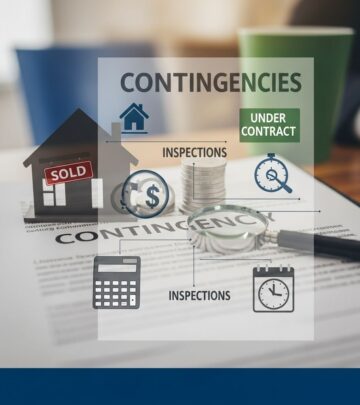
Contingent offers represent a standard protective measure in real estate transactions, allowing buyers to back out under specific unmet conditions without penalty. These clauses cover aspects like financing approval, property inspections, and appraisals. While they safeguard buyers, they introduce uncertainty for sellers. Data indicates that approximately 4% to 6% of such agreements ultimately fail to close, though rates fluctuate with market dynamics.
Understanding Contingencies in Modern Home Purchases
At their core, contingencies are contractual provisions that must be satisfied for the deal to proceed. Buyers commonly include them to mitigate risks associated with unforeseen property defects or financial hurdles. In competitive markets, sellers may push for fewer or waived contingencies to expedite sales, but this can heighten buyer caution.
The prevalence of these clauses remains high: recent surveys show that 80% of buyers insist on inspection contingencies, reflecting widespread concern over hidden issues. Meanwhile, waivers are rare, with only 18-20% of buyers forgoing inspections or appraisals in recent periods.
Current Statistics on Offer Failures
Reliable industry reports provide a clear picture of failure frequencies. The National Association of Realtors (NAR) documents that only about 5-6% of accepted contracts are terminated, with 13% experiencing delays. Independent analyses align closely, estimating 1.4% to 4.3% overall sales fallout, averaging around 4%.
Recent trends signal an uptick. For instance, in August 2025, cancellations hit 15.1% of under-contract homes, the highest since 2017, driven by economic pressures. These figures underscore that while most deals succeed—over 94%—the minority that collapse can disrupt plans significantly.
| Source | Failure Rate | Time Period |
|---|---|---|
| NAR | 5-6% | 2024-2025 |
| Zillow/Homego | 3.9-4.3% | Recent years |
| Redfin | 15.1% (Aug 2025 peak) | 2025 |
Primary Causes of Contingent Offer Breakdowns
Several recurring issues trigger deal terminations. Understanding these helps both parties prepare effectively.
- Inspection and Repair Problems: Top culprit at 70.4% of recent cancellations. Buyers discover structural flaws, mold, or outdated systems that sellers refuse to fix, prompting exits.
- Financing Shortfalls: Accounting for 27.8% of failures, these arise from job changes, credit dips, or rate hikes during underwriting.
- Buyer Home Sale Delays: 21% of cases involve the buyer’s property not selling timely, stalling the chain.
- Appraisal Gaps: Common in hot markets (6% delay rate), where values fall short of sale prices, forcing renegotiations.
- Title and Ownership Disputes: Less frequent but severe, involving liens or legal clouds that delay resolution.
Market Influences on Contingency Outcomes
Housing conditions profoundly affect reliability. Seller-favored markets see fewer contingencies as buyers waive them for edge—yet low inventory and bidding wars inflate appraisals risks. Conversely, buyer-leaning environments with ample supply encourage more protections, elevating failure odds amid caution.
Higher interest rates and inventory shifts since 2024 have amplified selectivity, boosting cancellations. Local factors like competition (average 2.2 offers per listing) also play roles, with waived contingencies more common in high-demand areas.
Strategies for Sellers to Safeguard Deals
Sellers face heightened vulnerability during contingency periods. Proactive steps reduce fallout risks:
- Prioritize offers with minimal contingencies, especially avoiding sale-dependent ones that hinge on buyer liquidity.
- Secure backup offers immediately upon acceptance; these activate if primaries falter.
- Invest in pre-listing inspections to preempt surprises, building buyer trust.
- Price realistically based on comps to sidestep appraisal shortfalls.
- Negotiate tight timelines (30-60 days typical) for contingency resolutions.
Buyer Tactics to Strengthen Contingent Offers
Buyers can enhance acceptance chances and smooth closings:
- Obtain pre-approvals from lenders to demonstrate financing readiness.
- List current homes early if sale-contingent, or explore bridge loans.
- Budget flexibly for potential appraisal gaps or repairs.
- Conduct preliminary walkthroughs to flag issues pre-offer.
- Be prepared to waive non-essential contingencies in competitive bids, but retain critical ones like financing.
Navigating Failed Offers: Next Steps
When deals collapse, timelines matter. Buyers recover earnest money if contingencies trigger legally; sellers relist promptly, often with backups ready. Delays average minor impacts since 94%+ succeed, but emotional tolls warrant agent guidance.
Sellers should communicate transparently during inspections or appraisals to foster concessions. If viable, renegotiate rather than terminate.
Timeline Expectations for Contingencies
Most clauses resolve within 30-60 days: inspections in days, financing/appraisals in weeks, sales in months. Extensions are negotiable but rare post-deadline.
FAQ: Contingent Offers Essentials
What defines a contingent property listing?
A home under contingent status has an accepted offer pending contingency fulfillment, not yet final.
Can sellers pursue backups on contingent deals?
Yes, backups are standard and executable if the primary fails or misses deadlines.
How frequent are all-cash, no-contingency offers?
About 28% of sales are all-cash, often waiving contingencies for speed.
Do market shifts increase failures?
Yes, rising rates and buyer leverage have pushed rates higher recently.
What’s the top failure reason today?
Inspection/repair issues dominate at over 70%.
Future Outlook for Contingent Transactions
With ongoing rate volatility and inventory adjustments, expect continued selectivity. NAR data suggests stable waiver trends, implying persistent but manageable risks. Technology like virtual tours aids decisions, with 5% of buys sight-unseen.
Agents recommend hybrid strategies: balanced contingencies with strong pre-qualifications. This equilibrium supports 95%+ success amid flux.
References
- How Often Do Contingent Offers Fall Through? — Trelora Real Estate. 2024. https://www.trelora.com/blog/how-often-do-contingent-offers-fall-through/
- How Often Do Contingent Offers Fall Through? — Redfin. 2025-08. https://www.redfin.com/blog/how-often-do-contingent-offers-fall-through/
- How Often Do Contingent Offers Fall Through? — FastExpert. 2024. https://www.fastexpert.com/blog/how-often-do-contingent-offers-fall-through/
- How often do contingent offers fall through? — Rocket Mortgage. 2024. https://www.rocketmortgage.com/learn/how-often-do-contingent-offers-fall-through
- REALTORS® Confidence Index Report — National Association of REALTORS®. 2025. https://www.nar.realtor/research-and-statistics/research-reports/realtors-confidence-index
Similar Articles








Read full bio of medha deb