Contactless Credit Cards: Essential Guide For 2025
Discover how tap-to-pay technology revolutionizes secure, speedy transactions with contactless cards in everyday spending.
Contactless Credit Cards Guide
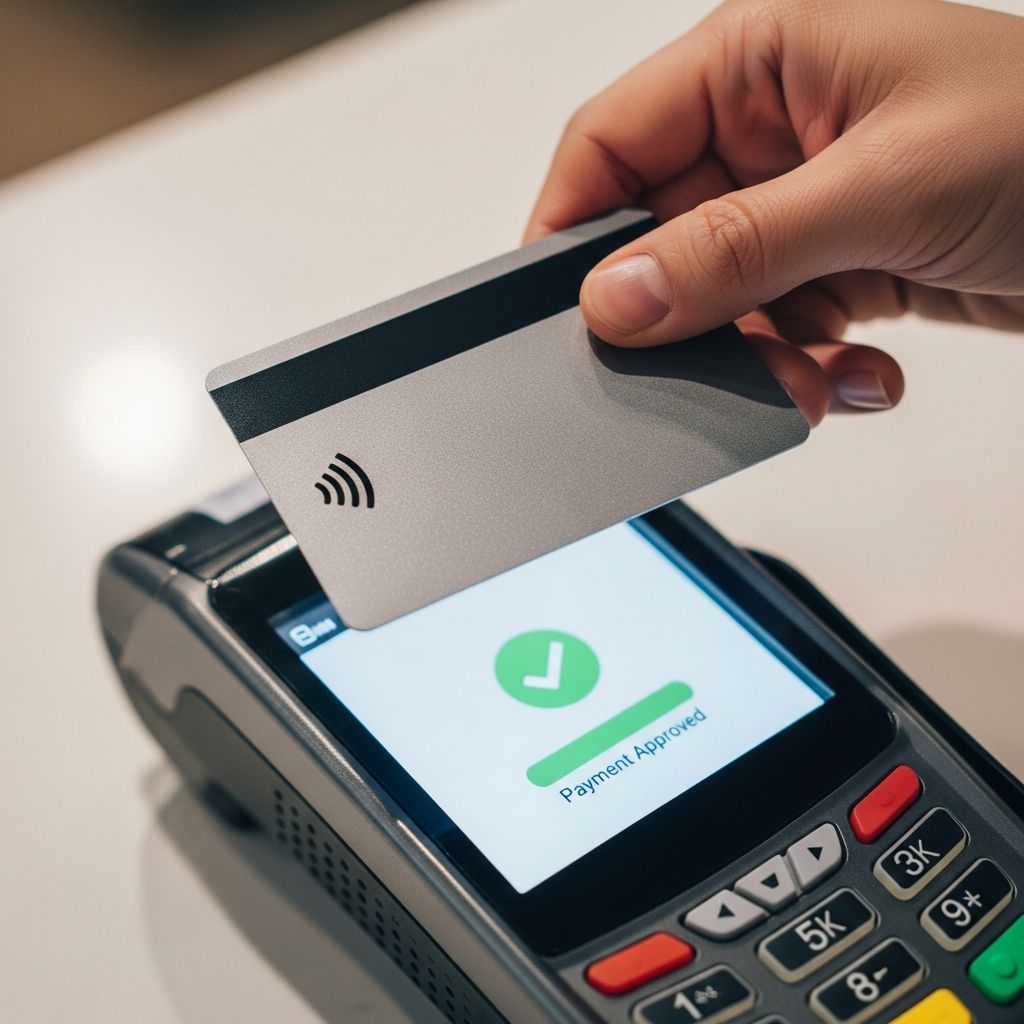
Contactless credit cards enable quick payments by tapping the card on a reader, using near-field communication (NFC) technology for secure, touch-free transactions.
Understanding the Core Technology Behind Tap Payments
The foundation of contactless payments lies in radio-frequency identification (RFID) and near-field communication (NFC), which allow cards to exchange data wirelessly with payment terminals over very short distances, typically 1-2 inches. This embedded chip generates a unique, one-time code for each transaction, ensuring that sensitive information like the full card number is never fully transmitted or stored by the reader.
Unlike traditional magnetic stripe swipes, which expose static data vulnerable to skimming, NFC creates dynamic encryption that authenticates the cardholder in real-time. The process involves the terminal sending transaction details to the card network, which forwards them to the issuer for verification before approval—all in under a second.
Spotting a Contactless-Enabled Card
Identification is straightforward: look for the international contactless symbol, resembling four curved lines akin to a sideways Wi-Fi icon, usually on the front or back of the card. This mark confirms NFC compatibility. Many cards also retain EMV chips and magnetic stripes as backups for non-contactless terminals.
- Front placement: Often near the chip or logo.
- Back placement: Beside the signature strip.
- Digital equivalents: Smartphones or watches via mobile wallets like Apple Pay display similar icons.
Step-by-Step: Making a Tap-to-Pay Transaction
- Locate the contactless reader on the terminal, marked by the same symbol.
- Hold or tap your card within 1-2 inches—no need for precise contact.
- The NFC chip communicates encrypted data, including a dynamic code.
- Terminal relays info to the processor and issuer for instant approval.
- Confirmation beeps or lights up; transaction completes in seconds.
This method supports both credit and debit cards, integrating seamlessly with existing networks.
Key Advantages of Adopting Contactless Payments
Contactless technology offers multiple benefits, transforming checkout experiences.
| Benefit | Description | Impact |
|---|---|---|
| Speed | Transactions finish up to 10x faster than chip insertion or cash. | Reduces lines at busy stores, airports. |
| Hygiene | Minimizes physical touch with shared surfaces. | Lowers germ transmission risks. |
| Security | One-time codes prevent replay attacks; no full data exposure. | Outperforms swiping against skimming. |
| Convenience | No PIN for low amounts; works internationally. | Ideal for travel, quick buys. |
| Durability | Less wear on chips and stripes from insertion. | Extends card lifespan. |
Navigating Transaction Limits and Rules
Most regions impose per-transaction caps to enhance security, often $50-$100 without PIN, varying by issuer and country. Exceeding this prompts chip insertion or PIN entry. Merchants may set lower limits. Always check your card’s terms, as networks like Visa and Mastercard standardize but issuers customize.
- Cumulative daily limits may apply after multiple taps.
- PIN fallback ensures higher-value security.
- International variations: Higher in Europe, evolving in the US.
Security Myths and Real Protections
Concerns about remote scanning persist, but NFC’s short range (under 2 inches) and encryption make unauthorized reads impractical without specialized, close-proximity equipment. Each tap uses a unique cryptogram, useless for duplicates.
Best practices include RFID-blocking wallets for extra caution, though data shows fraud rates lower for contactless than non-chip methods. Monitor statements via apps and enable alerts.
Integration with Mobile Wallets and Wearables
Contactless extends beyond plastic: Link cards to Apple Pay, Google Pay, or Samsung Wallet for phone-based taps, secured by device biometrics like Face ID. This generates virtual numbers, adding layers of tokenization.
Wearables like smartwatches enable hands-free payments during runs or drives. Activation often involves tapping the physical card to the device.
Merchant and Terminal Compatibility
Adoption surges: Most US retailers, transit systems, and vending machines now support contactless. Look for the symbol on readers. Legacy terminals require chip/swipe fallbacks.
Globally, over 80% of terminals accept NFC, per network reports.
Comparing Contactless to Traditional Methods
| Method | Speed | Security Level | Contact Required |
|---|---|---|---|
| Contactless Tap | <1 second | High (dynamic codes) | Minimal |
| Chip Insert | 2-3 seconds | High | Yes |
| Magnetic Swipe | 1-2 seconds | Low | Yes |
| Cash | 5+ seconds | Medium | High |
Future Trends in Contactless Evolution
By 2026, expect biometrics-embedded cards, broader wearable integration, and Tap-to-Everything for loyalty programs. Networks push for 100% adoption, reducing cash reliance.
Frequently Asked Questions
Are contactless payments safe from hacking?
Yes, tokenized data and short-range NFC make them among the safest, with fraud rates below traditional methods.
Do I need a new card for contactless?
Many newer cards include it; check for the symbol or request an upgrade from your issuer.
Can I use contactless abroad?
Widely accepted globally, but confirm limits and symbols.
What if the tap fails?
Retry, or use chip/swipe; ensure proximity.
Does it cost extra?
No fees for users; same as other card payments.
References
- What Is a Contactless Credit Card? Tap-to-Pay Explained — Citi. 2025. https://www.citi.com/credit-cards/understanding-credit-cards/what-is-a-contactless-credit-card
- What Is a Contactless Card & How Does It Work? — Capital One. 2025. https://www.capitalone.com/learn-grow/privacy-security/contactless-credit-cards/
- Tapping into the future: A guide to contactless payments — Marqeta. 2025. https://www.marqeta.com/blog/tapping-into-the-future-a-guide-to-contactless-payments
- What Is a Contactless Card? — Experian. 2025. https://www.experian.com/blogs/ask-experian/what-is-contactless-card/
- Contactless payment — Wikipedia. 2026-02-06. https://en.wikipedia.org/wiki/Contactless_payment
- What is a Contactless Credit Card — Chase. 2025. https://www.chase.com/personal/credit-cards/education/basics/what-is-a-contactless-credit-card
Similar Articles








Read full bio of Sneha Tete