Consumer Surplus: Definition, Formula, and Examples
Understanding how consumer surplus measures the economic benefit shoppers gain from purchasing below willingness-to-pay price.
Understanding Consumer Surplus
Consumer surplus represents one of the most fundamental concepts in economics, serving as a key indicator of economic welfare and market efficiency. At its core, consumer surplus is the difference between the maximum price a consumer is willing to pay for a good or service and the actual price they pay. This economic benefit demonstrates the value that consumers receive when they purchase products at prices below their reservation price.
For example, imagine a consumer values a digital subscription at $15 per month but finds it available for only $9.99. The consumer surplus in this transaction is $5.01—the additional value the consumer receives. This concept extends far beyond individual transactions and provides insights into how markets function, how businesses should price their products, and the overall health of an economy.
The Foundations of Consumer Surplus
Historical Context and Economic Importance
Economists have studied consumer surplus for decades because it offers critical insights into consumer behavior and market dynamics. The concept helps businesses understand pricing strategies, economists evaluate economic welfare, and policymakers assess the prosperity levels of particular regions or groups. Economic welfare—the measure of how well-off a population is economically—depends significantly on the aggregate consumer surplus in markets.
Consumer surplus gained prominence as economists recognized that different consumers value the same products differently. In unregulated markets, this variation in valuations creates opportunities for both consumer and producer surpluses to exist simultaneously, reflecting the natural diversity of preferences and production costs across the marketplace.
Core Characteristics
Several key characteristics define consumer surplus:
- It measures the subjective benefit consumers derive from purchases
- It exists only when actual prices fall below a consumer’s maximum willingness to pay
- It can be visualized graphically using demand curves
- It influences both individual purchasing decisions and broader market behavior
- It relates directly to consumer satisfaction and economic efficiency
How Consumer Surplus Works
Demand Curves and Market Equilibrium
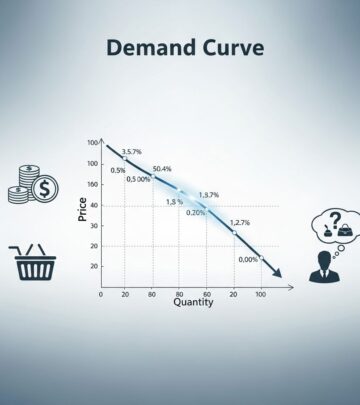
Economists utilize demand curves to visualize and calculate consumer surplus. A demand curve is a graphical representation showing the relationship between price and the quantity of a good that consumers are willing to purchase. Typically, demand curves slope downward and to the right, illustrating the inverse relationship between price and quantity demanded—as prices fall, more consumers enter the market and purchase larger quantities.
The y-axis of a demand curve represents the price of the good, while the x-axis shows the quantity supplied or demanded at each price level. As prices decrease along the y-axis, the demand extends further to the right on the x-axis, reflecting increased consumer participation in the market. This downward slope occurs because lower prices attract price-sensitive consumers who previously found the product unaffordable.
The Reservation Price
A critical concept in understanding consumer surplus is the reservation price—the highest price at which a consumer will purchase a good. If a product’s market price exceeds an individual’s reservation price, that consumer will not purchase it. The demand curve effectively begins at the reservation price because that represents the threshold where consumers first enter the market.
Reservation prices vary dramatically across consumers for identical products. One person might reserve a maximum willingness to pay of $50 for a concert ticket, while another might value it at $150. These differences create the foundation for consumer surplus—those willing to pay more than the market price experience greater surplus, while those at the lower end of the reservation price spectrum experience minimal surplus.
Market Equilibrium
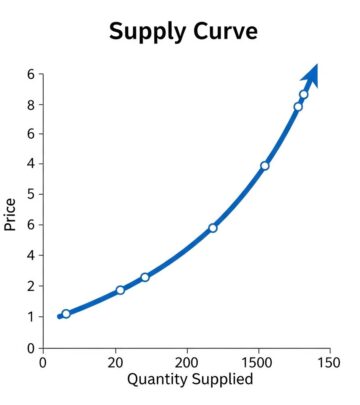
The point where the demand curve intersects with the supply curve represents the market equilibrium price. At this intersection, the quantity consumers want to purchase equals the quantity producers want to sell. The equilibrium price represents the optimal market price where both consumers and producers find the arrangement mutually beneficial. In truly competitive, unregulated markets, prices tend to gravitate toward equilibrium over time.
Calculating Consumer Surplus
Graphical Method
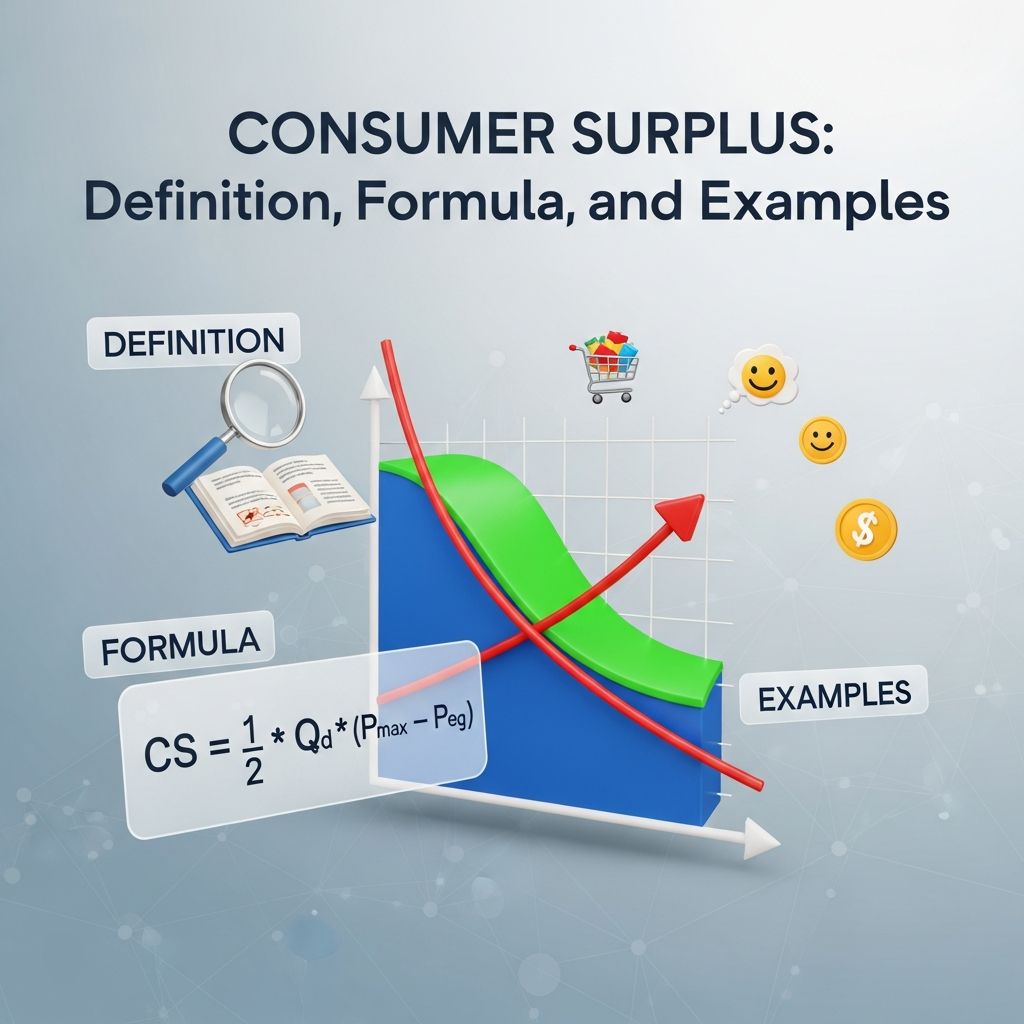
The most intuitive way to understand consumer surplus involves visual representation on a demand curve graph. Imagine a demand curve intersecting a horizontal line representing the market price. The area between the demand curve and the price line, bounded on the left by the y-axis and on the right by the quantity purchased, forms a triangle.
To calculate this consumer surplus, economists apply the basic formula for the area of a triangle: Area = 1/2 × base × height. In the context of a demand curve, the base represents the quantity of goods sold, and the height represents the difference between the reservation price (the starting point of the demand curve on the y-axis) and the market price. This calculation yields the total consumer surplus for the market at that price point.
Step-by-Step Calculation Example
Consider a practical example:
- Scenario: A bakery sells cupcakes at $4 each
- Maximum willing-to-pay prices: Customer A reserves $8, Customer B reserves $6, Customer C reserves $5, Customer D reserves $3
- Purchases: Customers A, B, and C buy cupcakes; Customer D does not
- Individual surpluses: A gains $4 ($8-$4), B gains $2 ($6-$4), C gains $1 ($5-$4)
- Total consumer surplus: $7 ($4 + $2 + $1)
Real-World Examples and Applications
E-Commerce and Dynamic Pricing
Consumer surplus plays a crucial role in online retail. When an online retailer offers a product at a discount, shoppers who were prepared to pay full price experience significant consumer surplus. For instance, if someone planned to purchase a laptop for $1,200 but finds it on sale for $900, they gain $300 in consumer surplus—value they can redirect toward other purchases or savings.
Airline Ticket Pricing
The airline industry demonstrates consumer surplus dynamics clearly. Different passengers hold vastly different reservation prices for the same flight. Business travelers might reserve $800 for a cross-country flight, while leisure travelers might reserve $400. When an airline prices tickets at $500, business travelers gain $300 in surplus while leisure travelers gain minimal surplus. However, the airline captures some of what could have been consumer surplus through their pricing strategy.
Subscription Services
Streaming platforms, software subscriptions, and membership services generate substantial consumer surplus. Many subscribers would willingly pay more than their monthly fee if forced to choose. A consumer who reserves $20 per month for a streaming service but pays $9.99 enjoys $10.01 in monthly consumer surplus, or $120.12 annually.
Consumer Surplus and Business Strategy
Pricing Implications
Businesses view consumer surplus from a different perspective than consumers. While consumers celebrate surplus as a benefit, producers often see it as potential lost revenue. Savvy businesses employ various strategies to capture more consumer surplus, including:
- Price discrimination: Offering different prices to different customer segments
- Bundling: Combining products to increase overall willingness to pay
- Tiered pricing: Creating premium versions to capture higher willingness-to-pay segments
- Dynamic pricing: Adjusting prices based on demand fluctuations
- Psychological pricing: Using pricing tactics to influence perceived value
Market Segmentation
Understanding consumer surplus helps businesses segment their markets effectively. By identifying consumers with higher reservation prices, companies can develop premium product lines or exclusive offerings. Meanwhile, budget-conscious consumers with lower reservation prices represent a different market segment requiring different pricing approaches.
Consumer Surplus and Economic Welfare
Measuring Economic Health
Economists study aggregate consumer surplus to assess the overall health of an economy. High consumer surplus indicates that markets are delivering substantial value to consumers relative to prices paid. This surplus contributes to overall economic welfare and consumer satisfaction. When consumer surplus increases across markets, it typically signals improving economic conditions and market efficiency.
Spending Patterns and Economic Behavior
When consumers realize surplus from one purchase, they often redirect that savings toward other consumption. A person who saves money on groceries might spend it on entertainment or savings. Economists recognize that consumer surplus doesn’t mean consumers have additional money in their accounts—rather, it represents better value allocation. This redirected spending stimulates various economic sectors and contributes to overall economic activity.
Consumer vs. Producer Perspective
In unregulated markets without price controls, both consumer and producer surpluses typically coexist. Different consumers have different valuations, and different producers have different production costs. Market prices naturally settle near equilibrium, where both surpluses remain relatively modest. This balance reflects the competitive nature of free markets, where neither consumers nor producers can extract excessive surplus.
Factors Affecting Consumer Surplus
Price Changes
Consumer surplus increases when prices fall and decreases when prices rise. A sudden price reduction expands the market by attracting price-sensitive consumers while simultaneously increasing the surplus for existing customers. Conversely, price increases compress consumer surplus by eliminating marginal consumers and reducing surplus for remaining buyers.
Market Competition
Competitive markets generate higher consumer surplus by driving prices down toward equilibrium. When many producers compete aggressively, consumer surplus expands. Monopolistic or highly concentrated markets typically result in higher prices and lower consumer surplus as producers exercise pricing power without competitive constraints.
Consumer Preferences and Income
Changes in consumer preferences and income levels shift demand curves, thereby affecting consumer surplus. When consumers’ incomes rise, reservation prices often increase, potentially increasing consumer surplus at existing prices. Conversely, shifting preferences toward alternative products can reduce consumer surplus in declining markets.
Limitations and Criticisms
Measuring Satisfaction
Consumer surplus assumes that willingness to pay accurately reflects consumer satisfaction, an assumption that doesn’t always hold. Some consumers might understate their true willingness to pay due to negotiating tactics or incomplete information about available options.
Aggregation Challenges
Calculating aggregate consumer surplus across entire markets requires substantial data and assumptions about demand curves. Real-world demand curves rarely take the simple linear forms used in textbooks, making precise calculations difficult.
Distributional Concerns
Consumer surplus measures aggregate benefit but says nothing about how that surplus distributes across income levels. Wealthy consumers typically capture more consumer surplus than low-income consumers, raising questions about economic fairness.
Frequently Asked Questions
Q: How does consumer surplus differ from producer surplus?
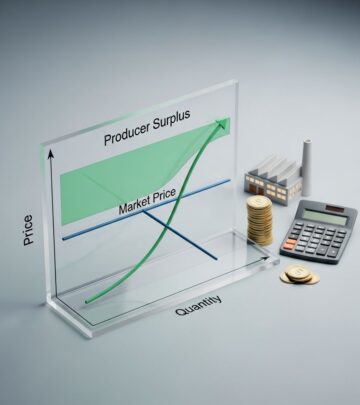
A: Consumer surplus measures the benefit consumers receive when paying less than their maximum willingness to pay. Producer surplus measures the benefit producers receive when selling at prices above their minimum willingness to sell. Together, they comprise total economic surplus in a market.
Q: Can consumer surplus be negative?
A: No, consumer surplus cannot be negative. If a product’s market price exceeds a consumer’s reservation price, the consumer simply won’t purchase it, resulting in zero surplus rather than negative surplus.
Q: How do sales and discounts affect consumer surplus?
A: Sales and discounts increase consumer surplus by reducing prices below consumers’ reservation prices. Existing customers enjoy increased surplus, and new price-sensitive customers enter the market, further expanding aggregate consumer surplus.
Q: Why do businesses try to reduce consumer surplus?
A: Businesses view consumer surplus as forgone revenue. By implementing price discrimination, bundling, or premium product tiers, businesses attempt to capture more of what would otherwise be consumer surplus, converting it into business profit.
Q: Is high consumer surplus always better for an economy?
A: Generally, higher consumer surplus indicates better economic conditions and market efficiency. However, extremely high consumer surplus might indicate underpricing, potential market inefficiencies, or production constraints that prevent meeting demand at higher price points.
References
- Consumer Surplus — EBSCO Research Starters. 2025. https://www.ebsco.com/research-starters/economics/consumer-surplus
- Khan Academy Economics Library — Khan Academy. Accessed 2025. https://www.khanacademy.org/economics-finance-domain/microeconomics/consumer-producer-surplus
- Principles of Microeconomics — U.S. Federal Reserve Education Resources. 2024. https://www.federalreserveducation.org/
Similar Articles








Read full bio of medha deb