Consumer Spending: Definition and Determinants
Understanding consumer spending patterns and the key factors driving household economic behavior.
Understanding Consumer Spending: Definition and Determinants
Consumer spending, formally known as Personal Consumption Expenditures (PCE), represents the total value of goods and services purchased by individuals and households within an economy. This metric serves as a cornerstone of economic analysis, as it reflects the spending decisions made by consumers on everything from groceries and clothing to vehicles and healthcare services. Understanding consumer spending is essential for economists, policymakers, and business leaders, as it provides critical insights into economic health, growth patterns, and potential recessions or expansions.
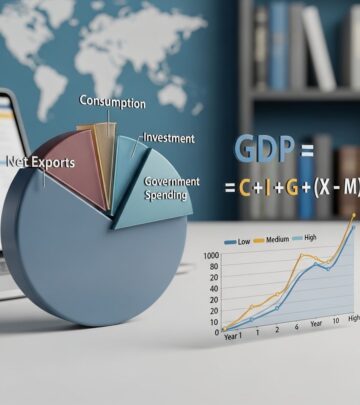
Consumer spending constitutes the largest component of a nation’s Gross Domestic Product (GDP), typically accounting for approximately 70% of total economic output in developed economies. The fundamental formula for GDP incorporates consumer spending as a primary variable: GDP = C + I + G + (X – M), where C represents consumer spending, I is gross private domestic investment, G is government consumption expenditures and investment, and (X – M) represents net exports. This equation demonstrates how central consumer behavior is to overall economic performance and why monitoring spending patterns is crucial for understanding macroeconomic trends.
What is Consumer Spending?
At its core, consumer spending reflects the purchasing power and consumption patterns of households. It encompasses both tangible goods—such as food, clothing, automobiles, and appliances—and intangible services, including healthcare, entertainment, education, and financial services. Consumer spending data helps economists and policymakers understand demand-side pressures, inflation trends, and the trajectory of economic growth.
Consumer spending operates on two fundamental levels. First, there is induced consumption, which varies directly with income levels. When households earn more disposable income, they typically increase their spending on both essential and discretionary items. Second, there is autonomous consumption, which occurs regardless of income levels. Examples of autonomous consumption include regular mortgage or rent payments that households must maintain even during economic downturns.
The distinction between real and nominal consumer spending is particularly important for accurate economic analysis. Nominal consumer spending represents the actual dollar amount spent, while real consumer spending adjusts for inflation to reflect the actual volume of goods and services consumed. For instance, if consumer spending increases from $10 trillion to $10.5 trillion, this represents a 5% nominal increase. However, if inflation rises by 4% during the same period, the real consumer spending growth would be only approximately 1%, indicating that consumers are spending more money but consuming less actual goods and services.
Key Determinants of Consumer Spending
Multiple factors influence consumer spending decisions, and understanding these determinants is essential for predicting economic behavior and formulating effective policy responses.
Income and Disposable Income
Income level represents the most fundamental determinant of consumer spending, as it directly affects the spending capacity of individuals and households. Income is derived from multiple sources, including labor compensation in the form of salaries and wages, capital returns such as dividends and rental income, and remittances from abroad. Disposable income, defined as gross income minus taxes, represents the actual purchasing power available to households for consumption decisions.
When disposable income increases, the demand for goods and services typically rises proportionally. This increased demand motivates manufacturers to expand production to meet consumer needs, which in turn creates more employment opportunities and stimulates broader economic consumption. Conversely, if demand increases but manufacturers fail to expand supply correspondingly, prices rise, potentially creating inflationary pressures in the economy.
Consumer Confidence and Sentiment
Consumer sentiment and confidence represent powerful predictors of economic performance, as they influence how individuals and households allocate their income between spending and saving. When consumers feel confident about job security, economic growth prospects, and future income stability, they are more likely to spend money on both necessities and discretionary items. Conversely, when consumers express pessimism about future economic conditions, they tend to reduce spending and increase savings as a precautionary measure.
The Consumer Confidence Index (CCI) serves as a valuable measurement of consumers’ attitudes regarding present and future economic conditions. This index helps economists and policymakers gauge the general mood of the economy and predict spending patterns. During periods of economic uncertainty, consumers may accelerate purchases of goods and services in anticipation of future price increases, a phenomenon known as defensive buying.
Employment and Job Security
Employment levels and job security directly impact consumer spending patterns throughout the economy. When unemployment is low and workers feel secure in their positions, consumer spending typically increases. Conversely, during periods of high unemployment or widespread job insecurity, households reduce spending and prioritize debt repayment and emergency savings. The availability of employment opportunities affects not only current income levels but also future income expectations, which in turn influence consumption decisions.
Wealth Effects and Asset Values
Changes in asset values, including real estate and investment portfolios, create what economists call wealth effects that influence consumer spending. When home values rise or stock market indices increase, households feel wealthier and are more likely to increase consumption. This phenomenon is sometimes referred to as the positive wealth effect. Conversely, declining asset values create negative wealth effects that reduce consumer spending as households attempt to rebuild savings and restore their financial positions.
Debt Levels and Financial Stress
The amount of debt carried by consumers significantly influences spending behavior. High levels of consumer debt—whether from mortgages, student loans, credit cards, or auto loans—create financial stress on households and reduce their willingness to spend on personal goods and expenses. When consumers dedicate substantial portions of their income to debt service, less disposable income remains for discretionary spending. Conversely, when overall consumer debt decreases, the propensity for consumer spending typically increases.
Expectations About Future Economic Conditions
Consumption patterns are heavily influenced by consumer expectations regarding future income growth and economic conditions. If individuals are confident about upcoming income increases or anticipate economic expansion, they are more likely to spend now rather than save. This forward-looking behavior explains why consumer confidence indices prove valuable for predicting economic trends. When consumers expect inflation to rise in the future, they may accelerate purchases to avoid higher prices, while expectations of deflation may cause them to defer purchases.
Interest Rates and Credit Availability
Interest rates and the availability of credit represent important macroeconomic factors affecting consumer spending. Higher interest rates increase borrowing costs for consumers, reducing the affordability of major purchases like homes and vehicles, which typically require financing. Lower interest rates have the opposite effect, making credit more accessible and affordable, thereby encouraging consumer spending. The availability of credit—determined by banking regulations, lending standards, and overall financial system health—also constrains or facilitates consumer spending patterns.
Taxes and Fiscal Policy
Government tax policies directly influence net consumer spending and consumer confidence. Tax reductions typically increase disposable income and stimulate consumer spending, while tax increases have the opposite effect. Tax policies designed to stimulate consumption during economic downturns represent an important tool in countercyclical fiscal policy. However, the precise impact of specific tax manipulations remains subject to economic debate and depends on various factors including household income levels, expectations about future taxes, and overall economic conditions.
Availability of Goods and Services
The availability and supply of goods and services influence consumer spending patterns. When goods and services are abundant and readily available, consumption typically increases. Conversely, supply shortages or crises that restrict product availability lead to declines in consumer spending. Supply chain disruptions, product recalls, and inventory constraints all affect the volume of goods and services consumers can purchase, regardless of their income or willingness to spend.
The Importance of Consumer Spending in the Economy
Consumer spending drives short-run economic growth and serves as a key indicator of overall economic health. Fluctuations in consumer spending signal shifts in the business cycle, potentially indicating expansions or contractions in economic activity. Rising trends in consumer spending generally indicate a healthy and expanding economy, suggesting consumer confidence and increasing disposable income. Declining consumer spending trends can signal economic contraction or growing consumer apprehension about future prospects.
The composition of consumer spending provides additional insights into economic conditions and consumer psychology. Strong growth in durable goods purchases—such as automobiles and appliances—typically reflects greater consumer confidence and expectations of economic stability. Conversely, shifts toward essential services and basic necessities may indicate consumer caution during periods of economic uncertainty.
The savings rate, which measures the proportion of disposable income saved rather than spent, complements consumer spending analysis and provides perspective on household financial behavior. High savings rates may indicate consumer pessimism or precautionary saving, while low savings rates suggest confidence and higher consumption propensity.
Monitoring and Interpreting Consumer Spending Data
Economists and policymakers analyze consumer spending through multiple lenses to understand economic conditions and forecast future trends. Absolute spending levels provide one perspective, but growth rates and categorical breakdowns offer more nuanced insights into consumer behavior and economic conditions. Central banks, including the Federal Reserve, pay particular attention to the Personal Consumption Expenditures (PCE) price index derived from consumer spending data, as their preferred measure for assessing inflation pressures in the economy. This measure helps guide decisions regarding interest rates and overall monetary policy aimed at achieving price stability and maximum employment.
Businesses rely on consumer spending data to inform critical strategic decisions, including production levels, inventory management, pricing strategies, and marketing efforts. Understanding consumer behavior and spending patterns is essential for navigating supply and demand forces and achieving market equilibrium.
How Consumer Spending Impacts Inflation
Strong consumer spending can contribute to inflationary pressures when demand for goods and services outpaces available supply. This increased demand creates upward pressure on prices as consumers compete for limited goods and services. Conversely, weak consumer spending leads to disinflationary or deflationary pressures as businesses reduce prices to stimulate demand and maintain sales levels. Understanding these relationships is crucial for central banks formulating monetary policy to manage inflation within target ranges.
Real vs. Nominal Consumer Spending Analysis
The distinction between real and nominal consumer spending remains critical for accurate economic analysis and forecasting. Nominal spending reflects the actual dollars spent without adjustment for price level changes, while real spending adjusts for inflation to show actual consumption volume. Policymakers and economists must carefully distinguish between these measures when assessing economic growth, as nominal increases may mask stagnant or declining real consumption when inflation is elevated.
Frequently Asked Questions (FAQs)
Q: What is the difference between consumer spending and personal income?
A: Personal income represents all earnings received by individuals from all sources, while consumer spending is the portion of that income that households choose to spend on goods and services. The difference between personal income and consumer spending, after accounting for taxes, equals personal saving.
Q: Why is consumer spending considered the most important component of GDP?
A: Consumer spending represents approximately 70% of GDP in developed economies and reflects the purchasing decisions of the entire population. It serves as a direct measure of household economic health and future economic growth prospects.
Q: How do interest rate changes affect consumer spending?
A: Higher interest rates increase borrowing costs for consumer credit, reducing the affordability of major purchases financed through loans, thereby decreasing consumer spending. Lower interest rates have the opposite effect, making credit more accessible and encouraging consumption.
Q: What role does consumer confidence play in predicting economic recessions?
A: Consumer confidence serves as a leading indicator of economic trends. Declining consumer confidence often precedes economic recessions, as pessimistic consumers reduce spending and increase savings. Monitoring the Consumer Confidence Index helps economists forecast potential downturns.
Q: How does inflation affect real consumer spending?
A: Inflation reduces the purchasing power of each dollar spent, meaning that nominal increases in consumer spending may not translate to actual increases in goods and services consumed. Real consumer spending adjusts for inflation to show true consumption volume.
Q: What factors can cause consumer spending to decline?
A: Consumer spending declines when disposable income decreases, unemployment rises, consumer confidence falls, debt levels increase, interest rates rise, or supply shortages occur. Economic recessions typically feature declines across multiple factors simultaneously.
References
- Consumption | Determinants, Importance, Stages, Summary — Study Finance. Accessed 2025-11-29. https://studyfinance.com/consumption/
- Consumer spending: Meaning, Criticisms & Real-World Uses — Diversification. Accessed 2025-11-29. https://diversification.com/term/consumer-spending
- FAQ: What Is Consumer Spending? (and Why It’s Important) — Indeed Career Advice. Accessed 2025-11-29. https://www.indeed.com/career-advice/career-development/consumer-spending
- Consumer spending — Wikipedia. Accessed 2025-11-29. https://en.wikipedia.org/wiki/Consumer_spending
- Introduction to U.S. Economy: Consumer Spending — U.S. Congress Research Service. Accessed 2025-11-29. https://www.congress.gov/crs-product/IF11657
- How Consumer Spending Supports the Economy and Markets — Brickley Wealth. Accessed 2025-11-29. https://www.brickleywealth.com/learn/how-consumer-spending-supports-the-economy-and-markets
Similar Articles








Read full bio of Sneha Tete