Consumer Price Index: Definition and Guide
Understanding CPI: The key measure of inflation and purchasing power in the economy.
Consumer Price Index (CPI): Definition and Guide
The Consumer Price Index, commonly abbreviated as CPI, serves as one of the most fundamental measures of economic health in any modern economy. It quantifies the average change in prices that urban consumers pay for a basket of goods and services over time. This metric is critical for understanding inflation trends, assessing changes in purchasing power, and making informed decisions about investments, savings, and economic policy. Governments, central banks, and businesses rely on CPI data to gauge economic conditions and adjust their strategies accordingly.
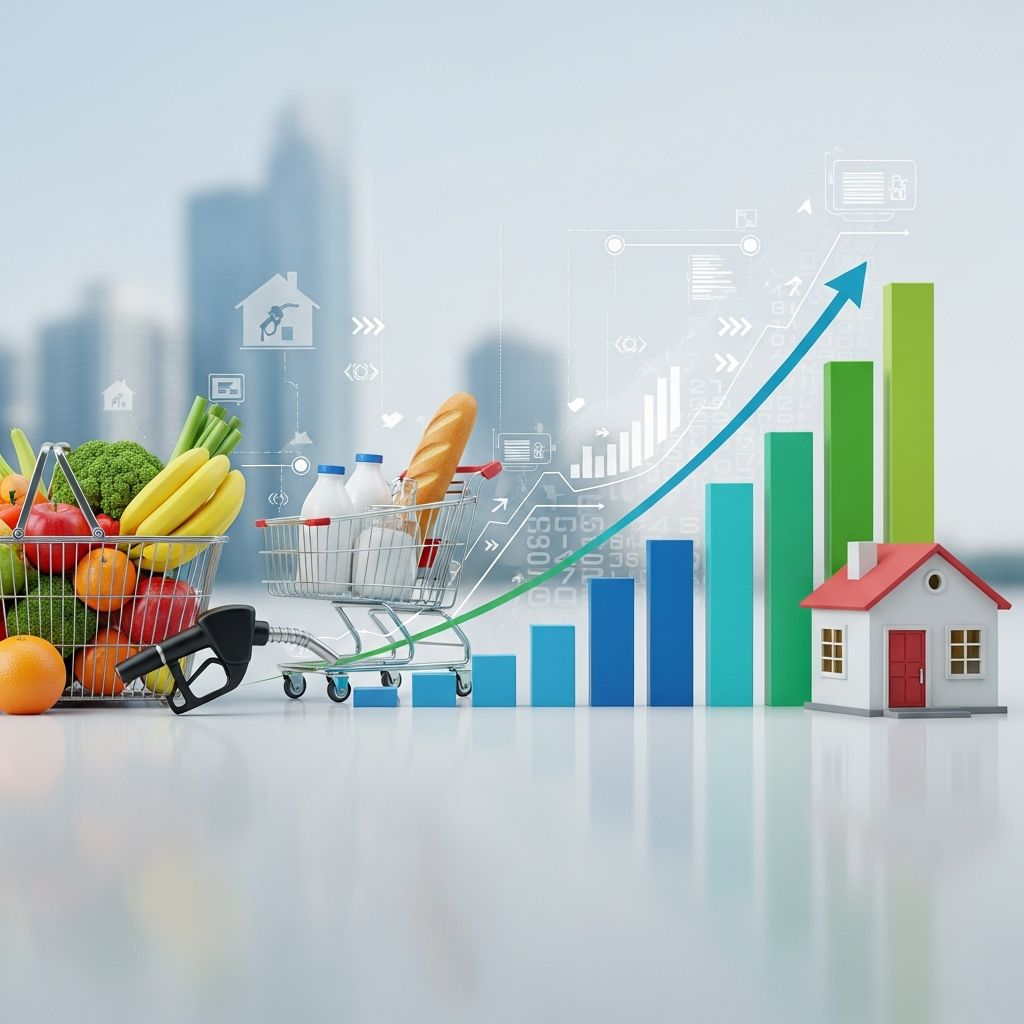
The CPI represents the aggregate price level within an economy by tracking a representative bundle of commonly purchased items. This bundle includes everything from groceries and clothing to housing and transportation costs. By monitoring how these prices change month-to-month or year-over-year, economists and policymakers can determine whether the cost of living is rising or falling for typical households.
What Is the Consumer Price Index?
The Consumer Price Index is fundamentally a measure of inflation expressed as an index number. It tracks the weighted average prices of goods and services that comprise a typical household’s consumption expenditure. Rather than simply listing raw price changes, the CPI expresses these changes relative to a base period, making it easy to understand the magnitude of price movements.
Most CPI series historically use 1982-1984 as the basis for comparison, with an index level set at 100 during this reference period. An index reading of 110 indicates that prices have increased by 10 percent compared to the base period, while an index of 90 suggests a 10 percent decrease. This standardized approach allows for easy interpretation and comparison across different time periods and geographic regions.
The CPI is typically calculated on a monthly or quarterly basis and is based on the consumption patterns of urban residents across all age groups. This ensures that the index reflects the spending habits of the broader urban population rather than any specific demographic segment. The U.S. Bureau of Labor Statistics (BLS), which publishes the official CPI, collects data on approximately 80,000 items each month by contacting retailers, service establishments, rental spaces, and service providers throughout the country.
How the CPI Is Calculated
The calculation of the Consumer Price Index involves a sophisticated methodology that combines detailed expenditure information with representative pricing data. Understanding this process reveals why the CPI is considered such a reliable economic indicator.
Data Collection and Market Basket Development
The foundation of CPI calculation begins with extensive market research to develop a representative market basket. Governments invest considerable resources in gathering detailed expenditure information from surveys targeting individuals, households, and businesses. These surveys establish which goods and services households actually purchase and in what proportions.
The market basket is designed to reflect the actual consumption patterns of urban consumers. Each item in the basket is weighted according to its importance in typical household spending. For example, if housing represents 40 percent of average household expenditure, housing costs will carry proportionally more weight in the CPI calculation than items that represent smaller budget shares.
Item Selection and Representative Products
Items enter the market basket through a systematic initiation process. Rather than tracking every brand or product variant, the BLS selects representative items based on their market share and popularity. Consider the example of bread: if bread type A represents 70 percent of the bread market, bread type B represents 20 percent, and bread type C represents 10 percent, then bread A has a 70 percent probability of being selected as the representative product for monitoring.
Once selected, a representative item’s price is tracked consistently over a four-year period at the same retail location. This consistency is crucial because it allows statisticians to isolate pure price changes from changes that might result from switching to different brands or locations. After four years, the selection process repeats, ensuring the basket remains current with consumer preferences.
The CPI Formula
The CPI is calculated using a weighted average formula that accounts for the relative importance of different categories in household budgets. The basic formula compares the cost of the current market basket to the cost of the same basket during the base period, then multiplies by 100 to create the index.
Current CPI = (Cost of Market Basket in Current Period / Cost of Market Basket in Base Period) × 100
This formula ensures that the CPI reflects both the magnitude of price changes and their relative importance to consumers based on actual spending patterns.
Categories Tracked in the CPI
The Consumer Price Index covers a comprehensive range of goods and services that represent typical household consumption. These categories help provide detailed insights into which sectors are experiencing the most significant price pressures.
Major categories include food and beverages, housing, transportation, medical care, recreation, education, and communication services. Within each broad category, subcategories provide granular detail. For instance, the food category includes subcategories such as cereals and bakery products, meats and poultry, dairy products, fruits and vegetables, and food away from home. This detailed breakdown allows analysts to identify whether inflation is concentrated in specific areas or broadly distributed across the economy.
Energy represents another critical category, encompassing gasoline, electricity, natural gas, and heating oil. Energy prices often experience significant volatility, so the BLS often reports a version of CPI that excludes food and energy (called “core CPI”) to show the underlying inflation trend without these volatile components.
Uses and Applications of the CPI
Measuring Inflation
The primary use of the CPI is measuring inflation, the general increase in the price level of goods and services in an economy. By tracking how the CPI changes over time, economists determine the inflation rate and assess whether inflation is accelerating, decelerating, or remaining stable. This information is vital for understanding economic trends and making predictions about future economic conditions.
Adjusting for Cost of Living
The CPI serves as the basis for cost-of-living adjustments (COLAs) in many contracts and programs. Social Security benefits, pension payments, and some employment contracts are adjusted annually based on CPI changes to ensure that recipients’ purchasing power doesn’t erode due to inflation. This application directly impacts millions of households that depend on these income sources.
Informing Monetary Policy
Central banks, including the Federal Reserve, use CPI data to make critical decisions about interest rates and monetary policy. When inflation rises above target levels, central banks may raise interest rates to cool the economy. Conversely, when inflation falls below desired levels, they may lower rates to stimulate economic activity. The CPI provides essential data for these momentous decisions.
Economic Research and Analysis
Economists and researchers use detailed CPI data to analyze economic trends, understand consumer behavior, and conduct research on inflation dynamics. Academic studies frequently employ CPI data to examine how different demographic groups experience inflation differently or how sectoral price changes affect various industries.
Business Decision-Making
Businesses use CPI data to plan pricing strategies, forecast costs, and make investment decisions. Understanding inflation trends helps companies anticipate how their input costs will change and adjust their pricing accordingly to maintain profit margins.
Key Differences: CPI vs. Other Inflation Measures
While CPI is the most widely recognized inflation measure, other indices provide different perspectives on price changes. The Producer Price Index (PPI) measures price changes from the perspective of producers rather than consumers, tracking prices at the wholesale level before goods reach retail shelves. The Personal Consumption Expenditures (PCE) index, another inflation measure used by the Federal Reserve, differs from CPI in methodology and weighting but generally produces similar results.
Understanding these differences helps analysts and policymakers select the most appropriate inflation measure for their specific needs. The CPI remains the standard for consumer-focused inflation analysis and cost-of-living adjustments.
Recent CPI Data and Trends
As of July 2025, the Consumer Price Index for all urban consumers increased 0.2 percent on a seasonally adjusted basis and rose 2.7 percent over the previous 12 months. The index for all items excluding food and energy increased 0.3 percent in July and reached 3.1 percent year-over-year.
Within specific categories, notable changes include meats, poultry, and fish prices increasing 5.2 percent year-over-year, while fruits and vegetables showed minimal price pressure at only 0.2 percent growth. Energy prices declined 1.6 percent year-over-year, reflecting decreases in energy commodities of 9.0 percent and gasoline prices down 9.5 percent. However, natural gas prices surged 13.8 percent year-over-year, indicating significant sectoral variation in inflation pressures.
Limitations of the CPI
Despite its widespread use, the CPI has several limitations that analysts should understand. The index uses a fixed market basket that may not perfectly reflect current consumption patterns, especially as consumer preferences evolve. Quality improvements in products can be difficult to account for accurately, potentially causing the CPI to overstate or understate true inflation. Additionally, the CPI focuses on urban consumers and may not accurately represent the price experiences of rural populations or non-mainstream consumer segments.
Substitution bias represents another challenge: when prices of certain items rise sharply, consumers typically switch to cheaper alternatives, but the fixed-basket CPI doesn’t immediately capture this behavior. This can result in the CPI overstating inflation during periods of significant relative price changes.
Frequently Asked Questions
What does a CPI reading of 250 mean?
A CPI reading of 250 indicates that the market basket of goods and services costs 2.5 times as much as it did during the base period (1982-1984). In other words, prices have increased 150 percent compared to the base period. This would suggest significant cumulative inflation over the decades since the base period was established.
How often is CPI released?
The Consumer Price Index is released monthly by the U.S. Bureau of Labor Statistics, typically around the 12th of the month following the reference month. This monthly release schedule provides regular updates on inflation trends and allows policymakers and analysts to track economic conditions closely.
What is core CPI?
Core CPI refers to the Consumer Price Index excluding the volatile food and energy components. Because food and energy prices fluctuate significantly based on weather, geopolitical events, and commodity market dynamics, core CPI provides a clearer picture of underlying inflation trends. The Federal Reserve often focuses on core CPI when making monetary policy decisions because it better reflects persistent inflation pressures.
How does CPI affect interest rates?
When CPI indicates that inflation is rising, the Federal Reserve typically responds by raising interest rates to reduce borrowing and spending, thereby cooling inflation. Conversely, when inflation falls, the Fed may lower rates to encourage economic activity. This relationship between CPI and interest rates has profound implications for borrowers, savers, and investors.
Who calculates the CPI?
The U.S. Consumer Price Index is calculated and published by the Bureau of Labor Statistics (BLS), a division of the U.S. Department of Labor. Most countries have their own national statistics agencies that calculate similar consumer price indices for their economies.
Can CPI predict recessions?
While CPI alone cannot predict recessions, rapid changes in CPI can indicate economic stress that might precede a recession. Significant deflation or rapidly accelerating inflation often prompts policy responses that can influence the likelihood of recession. Economists typically use CPI alongside other indicators like unemployment, GDP growth, and consumer confidence to assess recession risk.
Conclusion
The Consumer Price Index remains an indispensable tool for understanding economic conditions and measuring inflation. Its comprehensive approach to tracking price changes across thousands of goods and services provides policymakers, businesses, and investors with critical insights into the economy’s direction. While it has limitations, the CPI’s consistent methodology, regular updates, and broad applicability make it the standard inflation measure for most analyses. Whether you’re evaluating investment returns, planning for retirement, or assessing overall economic health, understanding the CPI and what it reveals about price changes and purchasing power is essential to making informed financial and economic decisions.
References
- Consumer Price Index (CPI) – Definition, How to Calculate, Uses — Corporate Finance Institute. 2024. https://corporatefinanceinstitute.com/resources/economics/consumer-price-index-cpi/
- CPI Home: U.S. Bureau of Labor Statistics — U.S. Bureau of Labor Statistics, U.S. Department of Labor. 2025. https://www.bls.gov/cpi/
Similar Articles








Read full bio of medha deb