Consumer Goods: Definition, Types, and Market
Understanding consumer goods: Essential products defining modern economies.

Consumer goods represent tangible products purchased by the general public for personal or household consumption rather than for business purposes. These items form a fundamental component of every economy and reflect the purchasing power and lifestyle choices of consumers worldwide. Understanding consumer goods is essential for investors, economists, retailers, and anyone seeking to comprehend market trends and economic health indicators.
What Are Consumer Goods?
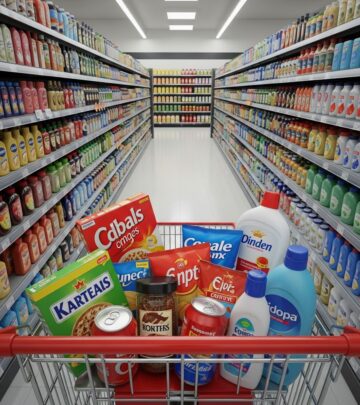
Consumer goods, also known as final goods or finished products, are items manufactured and sold directly to consumers for personal use. Unlike intermediate goods used in manufacturing or capital goods used for production, consumer goods represent the end-stage products in the economic supply chain. These products span a vast range of categories, from food and beverages to clothing, electronics, and household items.
The consumer goods sector constitutes a significant portion of most economies and serves as a barometer for consumer confidence and economic vitality. When consumer spending on these goods increases, it typically signals economic strength and rising consumer confidence. Conversely, declining consumer goods purchases may indicate economic slowdown or tightening consumer budgets.
Classification of Consumer Goods
Consumer goods are broadly classified into two primary categories based on their durability and consumption patterns:
Durable Goods
Durable goods are products designed to last for extended periods, typically three years or longer. These items represent significant purchases that consumers make infrequently but use repeatedly over many years. Durable goods require substantial capital investment and are often financed through credit arrangements such as loans or payment plans.
- Automobiles and Vehicles: Cars, trucks, motorcycles, and recreational vehicles represent major durable goods purchases
- Home Appliances: Refrigerators, washing machines, ovens, dishwashers, and air conditioning units
- Electronics: Television sets, computers, laptops, smartphones, and audio equipment
- Furniture: Sofas, beds, tables, chairs, and other household furnishings
- Tools and Equipment: Power tools, gardening equipment, and household maintenance items
- Sporting Goods: Bicycles, exercise equipment, and recreational gear
Durable goods sales serve as an important economic indicator. The Durable Goods Orders report, released monthly by the U.S. Census Bureau, tracks new orders received by manufacturers for durable goods and provides insights into future economic activity and consumer spending patterns.
Non-Durable Goods
Non-durable goods, also called consumable goods or soft goods, are products with a short lifespan, typically lasting less than three years. These items are consumed quickly and require frequent repurchasing, generating consistent revenue streams for manufacturers and retailers.
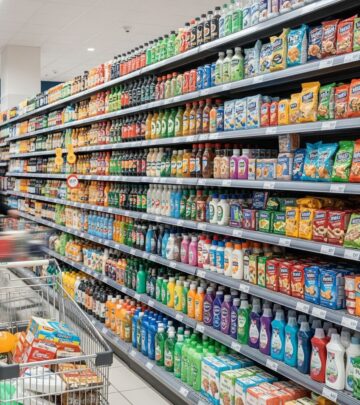
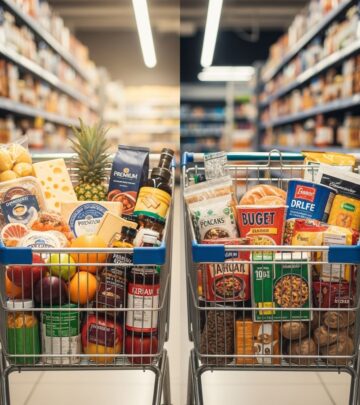
- Food and Beverages: Groceries, snacks, dairy products, meat, fruits, vegetables, and beverages
- Clothing and Apparel: Shirts, pants, dresses, shoes, socks, and seasonal wear
- Personal Care Products: Shampoo, soap, toothpaste, deodorant, cosmetics, and hygiene items
- Household Cleaning Supplies: Detergents, disinfectants, paper products, and cleaning solutions
- Pharmaceuticals: Over-the-counter medications, vitamins, and supplements
- Tobacco and Vaping Products: Cigarettes and electronic nicotine delivery systems
Non-durable goods represent the largest segment of consumer spending by frequency, though typically with lower individual transaction values compared to durable goods. The consistent demand for these products provides stability in consumer goods sectors and enables predictable revenue forecasting for companies in this space.
The Consumer Goods Market Landscape
The global consumer goods market represents a multi-trillion dollar industry encompassing millions of products and thousands of manufacturers, distributors, and retailers. This vast market operates across both developed and emerging economies, serving diverse consumer needs and preferences.
Market Size and Growth
The consumer goods sector encompasses numerous industries including food and beverage, clothing and apparel, personal care, household products, and consumer electronics. Market growth varies by region and product category, influenced by factors such as population growth, urbanization, rising disposable incomes, and changing consumer preferences.
Emerging markets in Asia, Africa, and Latin America have demonstrated rapid growth in consumer goods consumption as middle-class populations expand and purchasing power increases. Conversely, mature markets in North America and Western Europe exhibit slower but more stable growth, often driven by product innovation and premiumization trends.
Distribution Channels
Consumer goods reach end consumers through multiple distribution channels:
- Retail Stores: Traditional brick-and-mortar stores including supermarkets, department stores, and specialty retailers
- E-commerce Platforms: Online marketplaces and direct-to-consumer websites enabling digital shopping
- Wholesalers and Distributors: Intermediaries supplying goods to retailers and small businesses
- Direct Sales: Manufacturer-to-consumer sales bypassing traditional retail
- Convenience Channels: Gas stations, convenience stores, and vending machines
Economic Significance of Consumer Goods
Consumer goods spending represents the largest component of gross domestic product (GDP) in most developed economies, typically accounting for 60-70% of total economic output. This makes consumer goods consumption a critical driver of economic growth and employment.
Consumer Confidence Indicator
Consumer goods purchasing patterns serve as a proxy for consumer confidence and economic sentiment. The Consumer Confidence Index tracks consumer perceptions about current economic conditions and future expectations. Strong consumer goods sales suggest households feel secure about their finances and employment prospects, while declining purchases may signal economic concerns or uncertainty.
Employment and Manufacturing
The consumer goods sector provides employment for millions of workers globally across manufacturing, distribution, retail, and logistics functions. Manufacturing facilities producing consumer goods employ skilled and unskilled workers, while retail establishments create service sector jobs. The interconnected supply chains supporting consumer goods distribution generate additional employment throughout the economy.
Trends Shaping Consumer Goods Industries
Several contemporary trends are reshaping how consumer goods are produced, distributed, and consumed:
- Sustainability and Eco-Consciousness: Consumers increasingly demand environmentally-friendly products with minimal packaging, driving companies to adopt sustainable practices
- Digital Transformation: E-commerce growth, mobile shopping, and data analytics are revolutionizing retail and direct-to-consumer models
- Health and Wellness Focus: Rising demand for organic, natural, and health-oriented products reflects changing consumer priorities
- Premiumization: Consumers in developed markets show willingness to pay higher prices for superior quality and exclusive brands
- Personalization: Advanced technologies enable customized product recommendations and personalized shopping experiences
- Supply Chain Resilience: Companies are reshoring production and diversifying supplier bases to mitigate supply chain disruptions
Consumer Goods Companies and Brands
Major multinational corporations dominate the consumer goods industry, operating across multiple product categories and geographic markets. These companies benefit from economies of scale, established distribution networks, and powerful brand recognition. Examples include:
- Procter & Gamble (household and personal care products)
- Nestlé (food and beverages)
- Coca-Cola (beverages)
- Unilever (personal care, food, and beverage products)
- PepsiCo (snacks and beverages)
- General Mills (packaged foods)
- Colgate-Palmolive (personal care)
Additionally, countless small and medium-sized enterprises produce and distribute consumer goods regionally or nationally, competing through specialization, differentiation, or niche market focus.
Investment Considerations in Consumer Goods
Investors evaluating consumer goods companies typically consider several factors:
- Brand Strength: Powerful brand recognition and consumer loyalty provide competitive advantages and pricing power
- Dividend History: Many established consumer goods companies maintain consistent dividend payments, attracting income-focused investors
- Competitive Advantages: Barriers to entry, proprietary formulas, or exclusive distribution arrangements protect market position
- International Exposure: Geographic diversification reduces dependence on single market performance
- Innovation Pipeline: Companies introducing successful new products maintain growth momentum
- Cost Management: Efficient operations and supply chain management support profitability and resilience during inflationary periods
Frequently Asked Questions
Q: What is the primary difference between durable and non-durable consumer goods?
A: Durable goods are designed to last three years or longer and include items like automobiles, appliances, and electronics. Non-durable goods are consumed quickly, typically within three years, and include food, clothing, personal care products, and household supplies. Non-durable goods require more frequent repurchasing, generating consistent revenue streams.
Q: Why are consumer goods sales important economic indicators?
A: Consumer goods sales reflect consumer confidence, purchasing power, and economic health. Strong consumer spending signals economic vitality, while declining sales may indicate economic slowdown. Durable goods orders particularly provide forward-looking insights into future economic activity since they represent major consumer expenditures.
Q: How has e-commerce affected the consumer goods industry?
A: E-commerce has transformed consumer goods distribution by enabling direct-to-consumer sales, expanding market reach, and changing purchasing behaviors. Online platforms have challenged traditional retail while creating new opportunities for companies to reach consumers efficiently and gather valuable purchasing data.
Q: What factors drive consumer goods spending?
A: Consumer goods spending depends on disposable income, employment conditions, interest rates, inflation, consumer confidence, and changing lifestyle preferences. During economic expansions, consumers typically increase discretionary spending on non-essential consumer goods. During recessions, spending may shift toward necessities and away from luxury items.
Q: How do consumer goods companies maintain competitive advantages?
A: Companies maintain competitive advantages through strong brand recognition, product innovation, efficient distribution networks, customer loyalty programs, and economies of scale. Established companies leverage their market position and resources to compete against smaller competitors and adapt to changing consumer preferences.
Q: What role do consumer goods play in GDP calculations?
A: Consumer goods spending represents the consumption component of GDP, typically comprising 60-70% of total economic output in developed economies. This makes consumer goods spending the primary driver of GDP growth and economic performance.
Conclusion
Consumer goods represent essential products that satisfy personal and household needs, forming the foundation of modern economies. The classification into durable goods, lasting multiple years, and non-durable goods requiring frequent repurchasing reflects different consumption patterns and economic significance. The consumer goods market operates through diverse distribution channels and comprises numerous manufacturers and retailers serving global consumers.
Understanding consumer goods dynamics provides valuable insights into economic health, consumer behavior, and investment opportunities. As economic, technological, and social trends continue evolving, the consumer goods sector adapts through innovation, sustainability initiatives, and digital transformation. Whether as a consumer, investor, or economist, comprehending consumer goods fundamentals remains essential for navigating contemporary economic landscapes and making informed decisions in an interconnected global marketplace.
References
- Understanding Consumer Goods and Their Economic Impact — U.S. Census Bureau, Bureau of Economic Analysis. 2025-01-15. https://www.bea.gov/data/gdp/gdp-by-industry
- Durable Goods Orders Report — U.S. Census Bureau, Economics and Statistics Administration. 2025-01-10. https://www.census.gov/manufacturing/m3/
- Consumer Confidence Index Methodology — The Conference Board, Inc. 2024-12-20. https://www.conference-board.org/topics/consumer-confidence-survey
- Global Consumer Goods Market Trends and Analysis — OECD Statistics Database. 2024-11-30. https://stats.oecd.org/
- Sustainability in Consumer Goods Manufacturing — International Organization for Standardization (ISO). 2024-06-15. https://www.iso.org/standards/environment-sustainability-sustainable-consumption-production.html
- E-Commerce and Retail Distribution Channels — U.S. Department of Commerce, Census Bureau. 2025-01-08. https://www.census.gov/retail/
Similar Articles








Read full bio of medha deb