Conforming vs Non-Conforming Loans Guide
Discover the key differences between conforming and non-conforming loans to choose the best mortgage option for your home purchase.
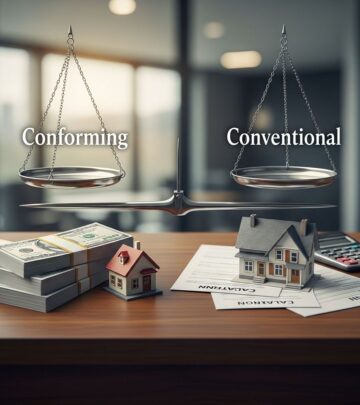
Conforming loans meet the guidelines set by Fannie Mae and Freddie Mac, overseen by the Federal Housing Finance Agency (FHFA), while non-conforming loans exceed these standards, often due to higher loan amounts known as jumbo loans.
Understanding the Basics of Mortgage Loan Types
In the world of home financing, mortgages fall into two primary categories: conforming and non-conforming. These distinctions arise from regulations designed to standardize lending practices and manage risk in the housing market. Conforming loans align with specific criteria that allow government-sponsored enterprises (GSEs) like Fannie Mae and Freddie Mac to purchase them from lenders, providing liquidity and keeping interest rates competitive.
Non-conforming loans, by contrast, deviate from these rules, typically because they surpass established loan limits or fail other underwriting standards. This category includes jumbo loans for luxury properties and other specialized products tailored to unique borrower situations.
What Defines a Conforming Loan?
A conforming loan is a conventional mortgage that satisfies the FHFA’s annual guidelines on maximum loan amounts, credit qualifications, and debt-to-income (DTI) ratios. These loans can be sold to Fannie Mae or Freddie Mac, which bundle them into securities for investors, reducing lender risk and enabling lower rates for borrowers.
Key features include adherence to county-specific loan limits, a minimum credit score around 620, and DTI up to 50%. Down payments can start as low as 3% for eligible first-time buyers, though private mortgage insurance (PMI) often applies for amounts below 20%.
Current FHFA Conforming Loan Limits
The FHFA adjusts loan limits yearly based on housing market data. For 2025, the baseline limit stands at $806,500 for most U.S. counties, rising to $1,209,750 in high-cost areas. These figures support single-family homes; multi-unit properties have higher thresholds.
Buyers in expensive regions like parts of California or New York benefit from these elevated limits, ensuring more properties qualify as conforming.
Exploring Non-Conforming Loans in Detail
Non-conforming loans do not qualify for GSE purchase, primarily because their balances exceed FHFA limits or they involve alternative underwriting. Jumbo loans dominate this space, financing homes in premium markets where standard limits fall short.
These loans demand stronger borrower profiles: credit scores often above 660-700, DTI below 43%, and down payments of 10-20% or more to offset lender risk. While rates are typically higher, they provide access to high-value real estate.
Types of Non-Conforming Loans
- Jumbo Loans: Exceed local FHFA limits, ideal for luxury homes.
- Non-QM Loans: For self-employed borrowers or those with non-traditional income.
- High-Balance Loans: Slightly above conforming limits in certain areas.
Key Differences: A Side-by-Side Comparison
Understanding the contrasts helps buyers select the right path. The table below highlights critical factors based on standard industry benchmarks.
| Feature | Conforming Loan | Non-Conforming Loan |
|---|---|---|
| Loan Limit (2025 Baseline) | Up to $806,500 | Exceeds $806,500 (lender-dependent) |
| Minimum Credit Score | 620+ | 660-700+ |
| Down Payment | 3-5% (PMI possible) | 10-20%+ |
| DTI Ratio Max | 50% | 43% or lower |
| Interest Rates | Lower, more competitive | Higher due to risk |
| Best For | Standard homes, first-time buyers | High-value properties |
Note: Limits and requirements vary by location and lender. Always verify current FHFA figures.
Advantages and Challenges of Conforming Loans
Pros
- Accessibility: Easier approval with moderate credit and income.
- Affordable Rates: GSE backing keeps costs down.
- Flexible Terms: Options for fixed or adjustable rates, low down payments.
Cons
- Loan Caps: Cannot finance ultra-luxury homes.
- PMI Costs: Required for smaller down payments.
- Strict Guidelines: Must fit FHFA borrower profiles.
Pros and Cons of Non-Conforming Loans
Pros
- Higher Limits: Funds expensive properties without constraints.
- Customization: Tailored for complex financial situations.
- Market Access: Essential in high-cost urban areas.
Cons
- Higher Costs: Elevated rates and fees.
- Tougher Qualifications: Demands excellent credit and reserves.
- Limited Availability: Fewer lenders offer them.
FHFA’s Role and Annual Limit Updates
The FHFA, as regulator of Fannie Mae and Freddie Mac, establishes conforming limits using national home price indices. This ensures the secondary market supports broad homeownership without excessive risk. For 2026, expect updates reflecting inflation and regional trends, potentially raising baselines further.
High-cost areas receive baseline multipliers up to 150%, accommodating diverse U.S. markets.
Qualification Strategies for Each Loan Type
For conforming loans, focus on boosting credit scores above 620, maintaining DTI under 50%, and saving for at least 5% down. Documentation like W-2s and tax returns is standard.
Non-conforming applicants should aim for 700+ credit, substantial down payments, and liquid reserves covering 6-12 months of payments. Lenders scrutinize assets closely for jumbo approvals.
Interest Rate and Cost Implications
Conforming loans benefit from GSE liquidity, often yielding rates 0.25-0.5% lower than jumbos. Over a 30-year term, this saves thousands. Non-conforming rates reflect added risk but can be shopped competitively among portfolio lenders.
When to Choose Conforming Over Non-Conforming
Opt for conforming if your target home falls under local limits, you have solid but not elite credit, or seek minimal upfront costs. It’s the go-to for 80% of U.S. mortgages.
Select non-conforming for properties exceeding limits, like $1.5M estates, or when needing flexible income verification.
Navigating the Application Process
Start by checking FHFA limits for your county via official tools. Prequalify with multiple lenders to compare rates. For non-conforming, target banks specializing in jumbos. Gather docs early: pay stubs, bank statements, tax returns.
Frequently Asked Questions
What is the 2026 conforming loan limit?
Exact 2026 limits are announced late 2025 by FHFA, building on 2025’s $806,500 baseline.
Can I get a conforming loan with bad credit?
Typically no; minimum 620 score required, though some programs offer flexibility.
Are jumbo loans always non-conforming?
Yes, by definition, as they exceed FHFA limits.
Do non-conforming loans have PMI?
Rarely, due to high down payments; instead, higher rates compensate risk.
How do loan limits vary by location?
Higher in costly areas like San Francisco; check FHFA site for specifics.
Steps to Decide Your Ideal Loan
- Assess home price and location against FHFA limits.
- Review your credit score, income, and savings.
- Compare rates from 3-5 lenders.
- Consult a mortgage advisor for personalized guidance.
This structured approach ensures informed choices.
References
- What is a conforming loan? A non-conforming loan? — Rate.com. 2024. https://www.rate.com/mortgage/resource/conforming-vs-non-conforming-loans
- Conforming vs. Non-Conforming Mortgages: Which is Right for You? — Business Insider. 2025. https://www.businessinsider.com/personal-finance/mortgages/conforming-loans
- Conforming and Non-Conforming Loan Differences — Zillow. 2025. https://www.zillow.com/learn/conforming-vs-non-conforming-loans/
- A guide: Conforming versus non-conforming home loans — BOK Financial. 2025-07. https://thestatement.bokf.com/articles/2025/07/conforming-versus-non-conforming-home-loans
- What are Conforming and non-Conforming loans — Guild Mortgage. 2025. https://www.guildmortgage.com/blog/what-are-conforming-and-non-conforming-loans/
- Difference Between a Conforming and Non-Conforming Loan — AFBank. 2025. https://www.afbank.com/article/what-is-the-difference-between-a-conforming-and-non-conforming-loan
- Conforming Loan Limits 2026 — NerdWallet. 2026. https://www.nerdwallet.com/mortgages/learn/conforming-loan-limits
Similar Articles








Read full bio of Sneha Tete