Conflict of Interest: Definition, Examples, and Management
Understanding conflicts of interest: Recognition, prevention, and ethical workplace practices.
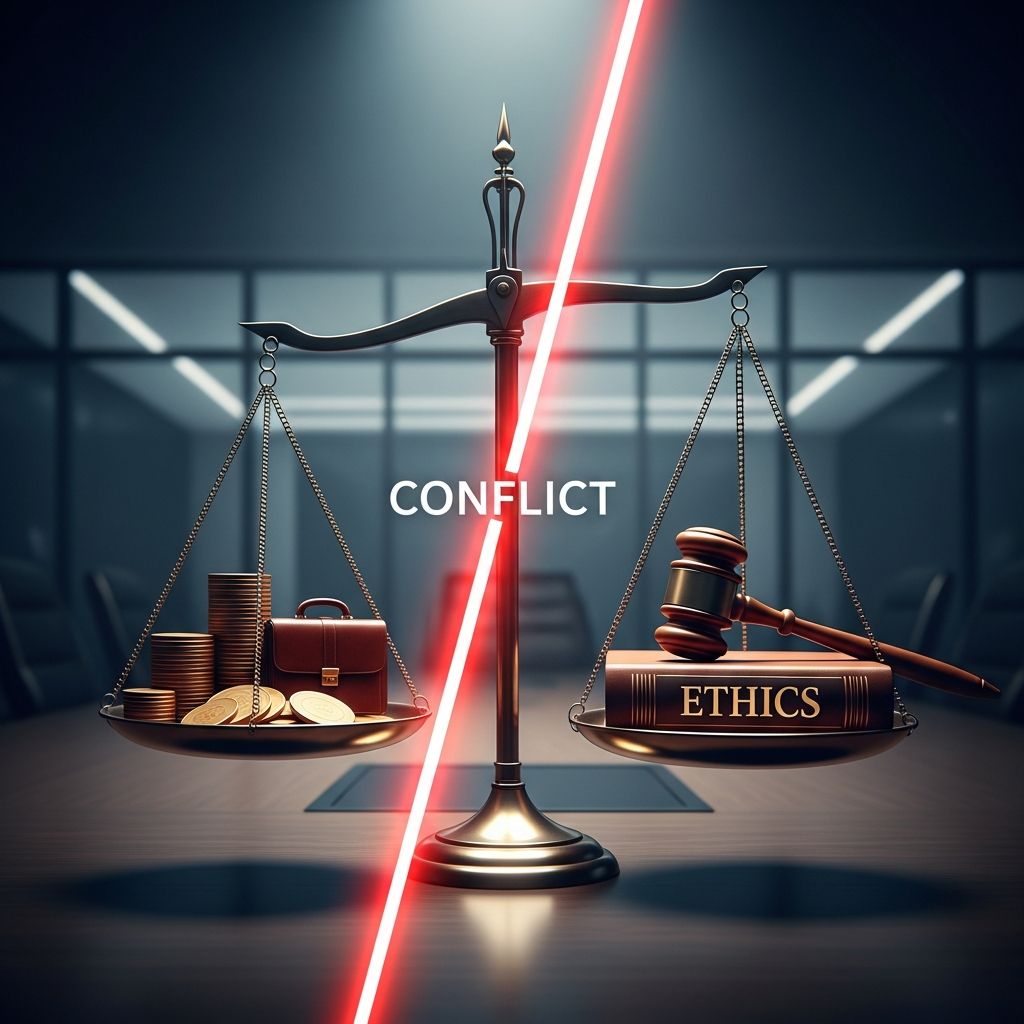
What Is a Conflict of Interest?
A conflict of interest occurs when an individual’s personal interests—whether financial, familial, or social—potentially compromise their ability to make objective professional decisions. This situation arises when someone stands to gain personally by leveraging their position in one context to benefit themselves at the expense of another party or organization. In essence, a conflict of interest represents a clash between an employee’s duty to their employer and their personal incentives, creating a scenario where impartial judgment becomes compromised.
Conflicts of interest are not necessarily illegal, but they can undermine trust, damage organizational reputation, and lead to biased decision-making that harms the company and its stakeholders. The critical element is that the individual’s personal interest could reasonably be expected to influence their professional judgment, even if it does not actually do so.
Understanding the Core Concept
The fundamental principle behind conflict of interest concerns the appearance or reality that someone cannot act impartially because of competing interests. Whether apparent or actual, a conflict of interest must be identified and disclosed to maintain organizational integrity and public trust. This applies across various sectors including corporate business, government, nonprofit organizations, educational institutions, and professional services.
Types of Conflicts of Interest
Conflicts of interest manifest in several distinct forms, each presenting unique challenges for organizations:
Financial Conflicts
Financial conflicts arise when an individual can make monetary gains through decisions that benefit themselves rather than their employer or clients. This includes situations where employees own stakes in competing companies, accept gifts that could influence business decisions, or make investment decisions based on inside information rather than organizational benefit.
Personal Conflicts
Personal conflicts involve relationships—familial or otherwise—that cloud professional judgment. These include hiring relatives regardless of qualifications, promoting friends over more deserving candidates, or showing favoritism to individuals with whom one has close personal connections.
Organizational Conflicts
Organizational conflicts occur when an employee has interests in other organizations that compete with their primary employer. This includes serving on boards of competing companies, owning part of a business that provides similar services, or maintaining employment relationships with competing firms simultaneously.
Gifting Conflicts
Gifting conflicts arise when individuals receive gifts, favors, or preferential treatment that could influence their professional decisions or loyalty. These range from accepting valuable gifts from clients to enjoying perks that create perceived obligations.
Common Workplace Examples
Conflicts of interest manifest in numerous ways across organizational environments. Understanding these scenarios helps employees and management recognize and address potential problems before they escalate.
Hiring and Promotion Decisions
One of the most common conflicts involves recruitment and advancement processes. A manager might hire an unqualified relative to fill a position without considering other candidates, or promote a friend over more qualified colleagues. A hiring manager might also recommend a job candidate without disclosing a personal relationship with that candidate. An HR representative refusing to investigate complaints against a friend represents another variation of this conflict.
Financial and Investment Conflicts
Financial advisors recommending specific stocks, bonds, or assets based on commission rates rather than client benefit exemplify this conflict. Similarly, executives with access to confidential information telling friends to sell company stock before a major acquisition announcement constitutes insider trading and represents a severe financial conflict. An executive choosing to hire a vendor in which they hold financial interests also falls into this category.
Customer and Client Relationships
Accepting valuable gifts from customers in exchange for discounts and preferential treatment creates conflicts. A financial advisor prioritizing commission-generating investments over client interests demonstrates how financial motivations can undermine professional obligations.
Dual Employment Situations
Employees working part-time at competing companies face inherent conflicts of interest. Starting a personal business that provides services similar to one’s full-time employer creates divided loyalties. A chef using recipes from a previous restaurant to create a menu at a new establishment represents intellectual property and loyalty conflicts.
Information and Confidentiality Breaches
Revealing details about upcoming product releases to competitors allows them to create similar products, causing direct harm. A board member sharing confidential investment information with hedge fund managers for personal gain represents a serious breach of fiduciary duty. An employee revealing employer information to competitors or using company resources for personal benefit violates trust and organizational interests.
Romantic and Personal Relationships
Managers engaging in romantic relationships with subordinates and offering preferential treatment—such as easier shifts and assignments—create conflicts. Dating supervisors or subordinates introduces power dynamics that compromise objectivity.
Supervisory and Reporting Conflicts
A supervisor refusing to report a friend’s wrongdoings to protect them represents a conflict between personal loyalty and professional responsibility. Similarly, a loan officer approving a family member for a loan despite them not meeting qualification standards shows how personal relationships can override professional standards.
Judicial and Legal Conflicts
A judge knowing one of the parties appearing before them but choosing to preside over the case anyway instead of recusing themselves demonstrates conflicts that undermine justice. A lawyer providing information about their client’s case to the opposing side in exchange for money or gifts represents a fundamental breach of professional ethics.
Professional Services Conflicts
A graphic designer using company access to software to offer personalized services to clients represents misuse of organizational resources. A teacher using school curriculum and resources to tutor private clients creates conflicts between institutional and personal interests. A marketing manager neglecting to disclose personal relationships with job candidates while recommending their applications shows how undisclosed relationships compromise hiring integrity.
The Four Primary Categories of Conflict
| Category | Description | Example |
|---|---|---|
| Financial Benefit | Individual gains monetary advantage from biased decisions | Recommending investments based on commission rates |
| Personal Relationship | Judgement affected by family or close personal ties | Hiring or promoting unqualified relatives |
| Organizational Stake | Employee holds interest in competing organization | Owning shares in a vendor company and hiring them |
| Gifting | Individual provides preferential treatment due to gifts or perks | Offering better service to clients who give gifts |
How to Recognize Conflicts of Interest
Recognizing conflicts of interest requires vigilance and honest self-assessment. Individuals should ask themselves whether their personal interests could reasonably affect their professional judgment. Key indicators include undisclosed relationships with business partners, financial interests in organizations with whom you conduct business, opportunities for personal gain through professional decisions, and situations involving close family members or friends in business contexts. Organizations should establish clear policies and provide training to help employees identify these situations before they become problematic.
Managing and Resolving Conflicts of Interest
Addressing conflicts of interest requires proactive organizational approaches and individual responsibility. The primary strategy involves disclosure—informing management or relevant authorities about potential or actual conflicts before making related decisions. Employees should recuse themselves from decision-making processes involving their conflicts. Organizations should implement anonymous whistleblowing systems to encourage reporting without exposing individuals to retaliation.
Training employees to recognize and report significant gifts, establishing clear conflict-of-interest policies, conducting regular audits of employee interests, and maintaining transparent hiring and promotion processes help mitigate these risks. Many organizations require employees to sign conflict-of-interest acknowledgments and disclose outside interests annually.
Consequences of Unmanaged Conflicts
Failing to address conflicts of interest can result in severe consequences. Legal penalties, including substantial fines and imprisonment, may follow insider trading or breach of fiduciary duty. Organizational consequences include damaged reputation, loss of stakeholder trust, and financial losses. Employee consequences involve termination, legal action, and career damage. The case of a board member sharing confidential information resulted in a $13.9 million regulatory fine, $5 million criminal fine, and two years imprisonment.
Organizational Policies and Procedures
Robust conflict-of-interest policies establish clear expectations and procedures. These typically include definitions of conflicts, requirements for disclosure, guidelines for gift acceptance, restrictions on outside employment, and procedures for managing identified conflicts. Policies should specify how employees should report conflicts, whom to contact, and what protections exist against retaliation.
Frequently Asked Questions
Q: What qualifies as a conflict of interest?
A conflict of interest is any situation where someone stands to gain by leveraging their position in one interest against their position in another, to the benefit of one and the detriment of the other. It includes financial gains, personal relationships that affect judgment, organizational stakes in competitors, and gifts that could influence decisions.
Q: What are the four types of conflict of interest?
The four primary types are financial benefit (personal monetary gain), personal conflicts (family or close relationships), organizational conflicts (stakes in competing organizations), and gifting conflicts (preferential treatment due to gifts or perks).
Q: How can I recognize a conflict of interest in the workplace?
Recognizing conflicts involves identifying situations where personal interests might affect professional decisions. Consider whether you have undisclosed relationships with business partners, financial interests in companies you work with, or opportunities for personal gain. Evaluate your objectivity in decisions involving family, friends, or outside financial interests.
Q: What should I do if I identify a conflict of interest?
Disclose the conflict to your management team or relevant authorities. Recuse yourself from decision-making processes related to the conflict, and follow organizational policies and procedures designed to manage such situations. Use anonymous reporting systems if they are available and you have concerns about retaliation.
Q: Are all conflicts of interest illegal?
Not all conflicts of interest are illegal, but they can undermine organizational integrity and trust. Some become illegal when they involve insider trading, breach of fiduciary duty, bribery, or other criminal conduct. The legality depends on specific circumstances and applicable regulations.
Q: How do organizations prevent conflicts of interest?
Organizations establish clear policies requiring disclosure of conflicts, provide employee training on recognition and reporting, implement anonymous whistleblowing systems, conduct regular audits of employee interests, maintain transparent hiring processes, and require annual disclosure of outside interests.
References
- What Is a Conflict of Interest? (Definition and Examples) — Indeed Career Advice. 2025. https://ca.indeed.com/career-advice/career-development/what-is-conflict-of-interest
- 20 Examples of Conflicts of Interest at Work — Workplace Training by Everfi. 2025. https://workplacetraining.everfi.com/blog/workplace-training/conflicts-of-interest-at-work/
- What is Conflict of Interest in the Workplace? — SpeakUp. 2025. https://www.speakup.com/blog/what-is-conflict-of-interest
- 5 Examples of Conflict of Interest — ComplyLog Blog. 2025. https://blog.complylog.com/conflict-of-interest/examples-of-conflict-of-interest/
- Conflict of Interest Policy — Colby Community College. 2025. https://www.colbycc.edu/policies/general-employment-workplace/conflict-of-interest.html
- Conflicts of Interest at Work: 25 Examples and Mitigation Techniques — Pollack Peacebuilding Center. 2025. https://pollackpeacebuilding.com/blog/conflicts-of-interest-at-work-examples-mitigation-techniques/
- Understanding Conflict of Interest — University Compliance and Ethics, University of Central Florida. 2025. https://compliance.ucf.edu/understanding-conflict-of-interest/
Similar Articles








Read full bio of medha deb