Condominium: Definition, Types, Pros and Cons
Complete guide to condominiums: ownership structure, types, benefits, drawbacks, and FAQs.
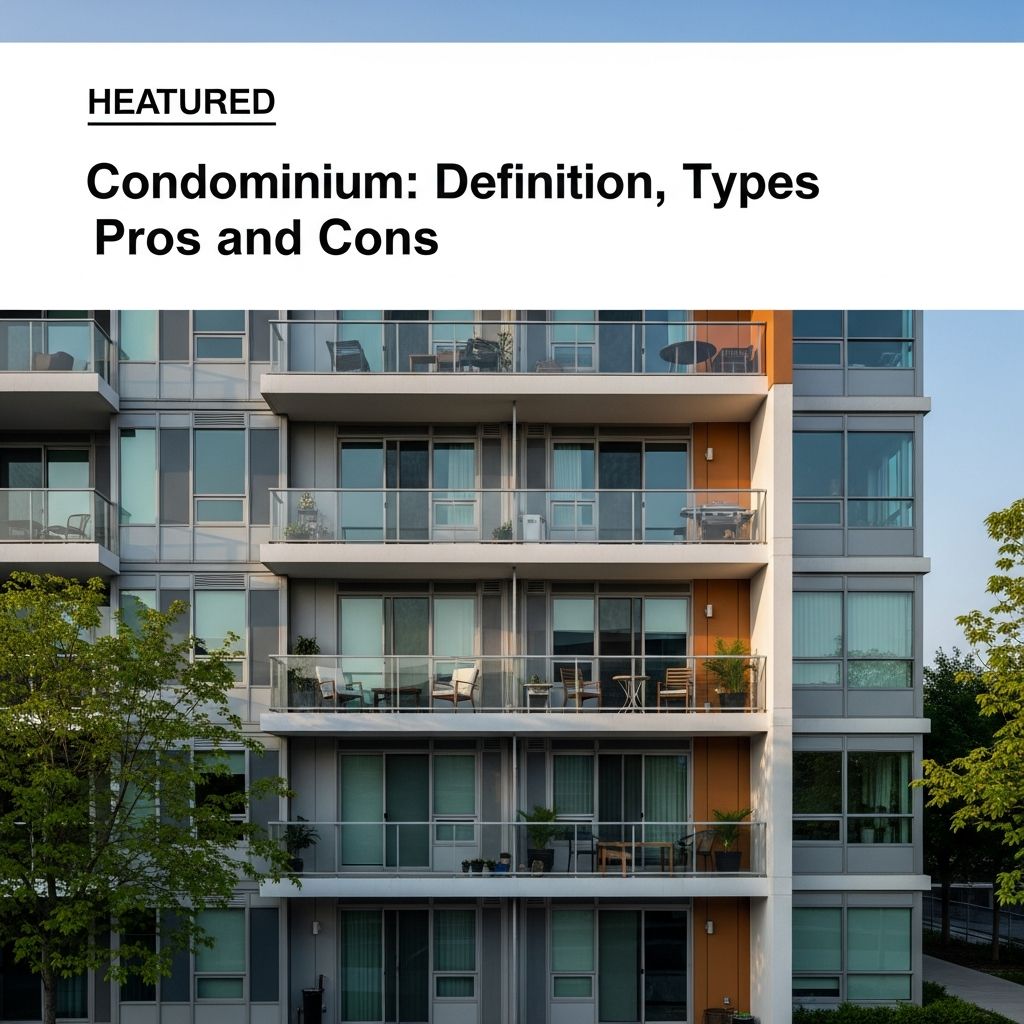
What Is a Condominium?
A condominium, commonly referred to as a condo, is a distinctive form of property ownership in which a building or group of buildings is divided into multiple individual units that are separately owned by different individuals. Unlike traditional apartment buildings where a single entity owns the entire structure and rents units to tenants, each condominium unit owner holds the title to their specific unit. The defining characteristic of a condominium is the legal ownership structure rather than the physical appearance of the building.
In a condominium arrangement, while individual owners hold exclusive ownership of their interior unit space—often described legally as ownership of the air space within the unit’s boundaries—they also collectively own and share responsibility for common areas. These shared spaces typically include exterior building walls, roofs, lobbies, hallways, elevators, parking areas, landscaping, and recreational facilities. The boundaries and specifications of each unit are documented in a legal declaration filed with local authorities, establishing the precise terms of ownership and the rights and responsibilities of all unit owners.
The term “condominium” is predominantly used in the United States and Canada, though similar ownership structures exist in other countries under different names, such as “strata title schemes” in Australia and “housing cooperatives” in Finland.
How Condominiums Work
The operational structure of a condominium relies on a governing association, typically called a homeowners association (HOA) or condominium association, which manages common areas and enforces community rules. Every unit owner automatically becomes a member of this association upon purchase. The association collects monthly or quarterly fees from all owners to cover maintenance, repairs, insurance, property taxes, and utilities for common areas.
Association fees vary significantly based on the size of the complex, the quality of amenities, and regional market conditions. These fees are typically mandatory and can increase over time as maintenance needs arise or inflation affects operating costs. The association also enforces community bylaws, architectural guidelines, and usage restrictions to maintain property standards and ensure harmonious living conditions.
Unit owners are responsible for maintaining and repairing the interior of their own units, while the association handles exterior maintenance, structural repairs, and common area upkeep. Major repairs or capital improvements may require special assessments beyond regular HOA fees, which all owners must contribute to proportionally.
Types of Condominiums
Condominium developments come in several distinct styles, each catering to different lifestyle preferences and market demands:
Garden Condominiums
Garden condominiums consist of low-rise residential buildings, typically two to four stories, set within landscaped grounds. This style emphasizes open space and natural surroundings, making it popular in suburban and semi-rural areas. Garden condos often feature ground-level entrances, outdoor patios or balconies, and ample green space, creating a more residential feel compared to high-rise alternatives.
Townhouse Condominiums
Townhouse condominiums are designed as multi-floor, semi-detached homes that provide more privacy and square footage than traditional garden condos. In townhouse condo arrangements, owners typically hold title to the interior living space and building structure, while the condominium corporation retains ownership of the land, common roadways, and shared amenities. This configuration appeals to buyers seeking single-family home characteristics within a community setting.
High-Rise Condominiums
High-rise condominiums are apartment-style buildings with numerous units stacked vertically, commonly found in urban centers. These properties often feature amenities such as fitness centers, rooftop terraces, concierge services, and enhanced security. High-rise condos maximize land utilization in densely populated areas and are particularly popular among young professionals and downsizers seeking urban lifestyle benefits.
Freehold Condominiums
In freehold condominium arrangements, particularly common in Canada, owners hold complete title to both the building structure and the underlying land of their unit. Rather than owning only air space, freehold condo owners have fee simple ownership of their property, similar to detached home ownership. However, the condominium corporation still manages common shared areas like roadways and amenities, and owners pay HOA fees for these services.
Advantages of Condo Ownership
Condominium ownership offers numerous benefits that appeal to a wide range of homebuyers:
Lower Maintenance Responsibility: Condo owners are relieved from extensive exterior maintenance and landscaping tasks. The association handles roof repairs, exterior painting, lawn care, and structural maintenance, allowing owners to focus on interior improvements and personal enjoyment rather than property upkeep.
Amenities and Services: Many condominiums provide amenities typically unavailable in single-family homes, including fitness centers, swimming pools, community centers, business lounges, and security services. These shared facilities enhance lifestyle quality without requiring individual investment.
Affordability and Accessibility: Condominiums generally offer lower purchase prices compared to detached homes in the same geographic area, making homeownership more accessible to first-time buyers, young professionals, and retirees. Lower prices mean smaller down payments and reduced mortgage obligations.
Security Features: Many condo buildings feature security personnel, surveillance systems, controlled access points, and intercom systems, providing residents with enhanced safety and peace of mind compared to standalone homes.
Community Environment: Condominium living fosters community interaction through shared spaces and organized events. This social structure appeals to individuals seeking built-in social connections and reduces isolation, particularly for single residents and retirees.
Appreciation Potential: Like single-family homes, condominiums can appreciate in value over time, building equity for owners and providing solid long-term investment returns.
Disadvantages of Condo Ownership
Despite their advantages, condominiums present certain drawbacks that prospective buyers should carefully consider:
HOA Fees and Special Assessments: Monthly or quarterly HOA fees can be substantial and increase annually. Additionally, unexpected major repairs may trigger special assessments that require immediate payment from all owners, straining personal finances unpredictably.
Limited Autonomy: Condominium associations enforce strict rules regarding renovations, pet ownership, noise levels, and exterior appearance. Owners have less freedom to customize their units or properties compared to single-family home owners, and rule violations can result in fines or legal action.
Resale Challenges: Condominiums often appreciate more slowly than single-family homes in the same market. Additionally, lenders may be reluctant to finance condos with high vacancy rates, problematic HOAs, or excessive litigation, limiting buyer pools and complicating sales.
Shared Wall Issues: Many condominiums feature shared walls with neighbors, potentially resulting in noise disturbances, pest problems, and water damage from adjacent units. These issues can significantly impact quality of life and prove difficult to resolve.
Association Problems: Poorly managed associations, unethical board members, or financial mismanagement can lead to deteriorating property conditions, excessive fee increases, and legal disputes. Poor governance directly affects property values and resident satisfaction.
Financing Difficulties: Some lenders impose stricter lending criteria for condominiums than for single-family homes, requiring larger down payments or higher credit scores, and mortgage rates may be slightly higher.
Condominium vs. Apartment: Key Differences
While condominiums and apartments may appear architecturally identical, they differ fundamentally in ownership structure. In an apartment building, a single owner or corporation retains ownership of the entire structure and rents individual units to tenants. Apartment dwellers are renters without ownership equity and have no say in management decisions or property improvements.
Conversely, in a condominium, individual unit owners hold title to their properties and collectively own common areas through the association. This ownership structure means condo residents build equity, can customize their units within guidelines, vote on association decisions, and benefit from property appreciation. The distinction is entirely legal and financial rather than architectural, meaning identical buildings could be marketed as either condominiums or apartments depending on the ownership model employed.
Condo Ownership Around the World
Condominium-style ownership arrangements exist globally under varying names and structures. In Australia, similar properties are called “strata title schemes” or “community title schemes,” where individual units are owned separately but common property is jointly owned by all residents. Canada recognizes both regular condominiums and freehold condominiums, with the latter providing greater ownership autonomy. Russia defines condominiums as associations of residential premises owners with joint ownership of common building systems and shared areas. Various countries have adapted the condominium concept to align with local property laws, cultural preferences, and real estate market dynamics.
Purchasing a Condominium: Key Considerations
Prospective condo buyers should evaluate several critical factors before purchasing:
HOA Financial Health: Review the association’s financial statements, reserve funds, recent fee increases, and pending special assessments. A well-funded reserve indicates responsible management and protects against surprise assessments.
Association Rules and Governance: Obtain and thoroughly review the condo declaration, bylaws, and rules and regulations. Ensure policies align with your lifestyle and that governance practices are transparent and democratic.
Resale Potential: Research historical property appreciation rates in the specific complex and comparable neighborhoods. Consider market conditions, occupancy rates, and buyer demand for condos in the area.
Professional Inspections: Hire qualified inspectors to examine your specific unit and common areas for structural issues, deferred maintenance, and necessary repairs. Professional evaluations identify potential costly problems before purchase.
Lender Requirements: Verify that potential lenders are willing to finance condos in the complex and confirm mortgage terms, rates, and down payment requirements before making an offer.
Frequently Asked Questions
Q: How are HOA fees determined?
A: HOA fees are calculated based on the budget required for maintaining common areas, amenities, insurance, reserves, and administrative costs. Fees are typically divided among units proportionally or equally, depending on association bylaws. The board establishes annual budgets and assesses fees accordingly.
Q: Can I rent out my condo unit?
A: Many condominiums allow rentals, though some impose restrictions such as minimum rental periods, owner occupancy requirements, or limits on the percentage of units that can be rented. Review your condo’s declaration and HOA rules before purchasing if rental income is important to your investment strategy.
Q: What happens if I don’t pay HOA fees?
A: Non-payment of HOA fees can result in liens against your property, legal action by the association, foreclosure proceedings, and significant financial penalties. These consequences can damage your credit and lead to loss of your property.
Q: Are HOA fees tax-deductible?
A: Generally, HOA fees are not tax-deductible for primary residences. However, if you use your condo as a rental property, a portion of fees attributable to common areas may be deductible as a business expense. Consult a tax professional for specific situations.
Q: What is the difference between a condo and a townhouse?
A: While townhouse condominiums are common, not all townhouses are condos. A townhouse condo involves shared ownership of common areas managed by an HOA. A freehold townhouse involves complete individual ownership with no HOA. The distinction depends on the ownership structure and governance model.
References
- Condominium — Wikipedia. Accessed November 2025. https://en.wikipedia.org/wiki/Condominium
Similar Articles








Read full bio of Sneha Tete