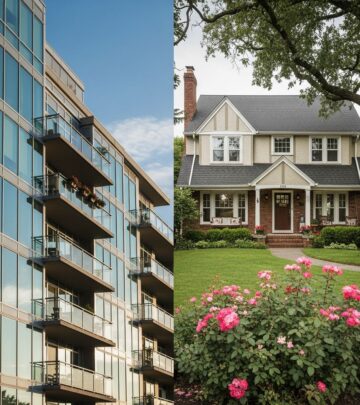
Condo vs. Apartment: Which Is Best For You?
Explore the key differences between condos and apartments to make the best housing choice.

One of the most significant decisions you’ll make is choosing where to live. For many people, the choice often comes down to renting an apartment or purchasing a condo. While these two housing options may appear similar on the surface—both are typically units within larger residential buildings—they differ substantially in terms of ownership, financial implications, and lifestyle considerations. Understanding these differences is crucial for making an informed decision that aligns with your financial goals and personal circumstances.
Condo vs. Apartment: What’s the Difference?
The biggest difference between a condo and an apartment is ownership. An apartment is generally defined as a residence that is rented, often as part of a larger residential building. A condo can be similar in structure to an apartment—usually a unit within a larger residential building—but condos are owned instead of rented. This fundamental distinction creates a cascade of differences in how each housing type functions and impacts your finances and lifestyle.
Because the structure of condo and apartment communities is similar, they often have comparable amenities and locations. Both kinds of units may come with benefits like a pool, fitness center, trash disposal, manicured green spaces, and more. However, the financial responsibilities and benefits associated with each option are vastly different.
Ownership and Financial Responsibility
When you rent an apartment, you have no ownership stake in the property. The landlord owns the building and is responsible for property taxes. As a tenant, you simply pay rent each month and have the flexibility to leave when your lease ends. Conversely, when you own a condo, you hold title to your unit and often share ownership of common areas with other unit owners. Condo owners pay property taxes on their units, whereas landlords—not tenants—pay property taxes on apartments.
What to Consider When Deciding Between the Two
Making the choice between renting an apartment and buying a condo requires careful consideration of several factors that go beyond just the monthly cost. Let’s explore the key considerations that should guide your decision.
Cost Considerations
The cost of renting an apartment is fairly straightforward. Typically, you pay a security deposit when you begin your lease, and you might also be required to pay the first and last months’ payments upfront. Then, you make monthly payments for the term of your lease agreement. This predictable payment structure makes budgeting simpler for renters.
The costs of buying a condo are considerably more involved and expensive upfront. You’ll have to make a down payment and pay closing costs for your mortgage upfront, as well as monthly mortgage payments. Additionally, condo owners must pay homeowners association (HOA) fees, which vary depending on the amenities and services offered by the community. While these upfront costs are higher, condo ownership comes with the benefit of building equity in a real asset over time.
Maintenance Responsibilities
When you’re renting an apartment and something goes wrong—think a leaky faucet or a broken air conditioner—the repair is typically the landlord’s responsibility. This is one of the primary advantages of renting: you’re freed from the burden of maintaining the property. However, when you’re a condo owner, you’ll foot the bill for home repairs and interior maintenance. This means being prepared for unexpected expenses and taking on the responsibility of coordinating repairs or performing maintenance yourself.
Amenities
Condo and apartment complexes tend to be structured similarly—whether high-rise buildings or just a few floors—and they often come with comparable amenities. Think about what amenities are most important to you, such as a doorman, a pool, a gym, or green space, and compare what the various communities in your area offer. While the physical amenities may be similar, the quality and maintenance of these amenities may differ between rental complexes and condo communities.
Location
Location is an important factor when deciding where to live, no matter what kind of housing you’re looking at. Apartment and condo buildings often have small structural footprints, so you’ll likely find both options in urban cities and densely populated suburbs—though they’re less common in rural areas. Both types of buildings are often situated near offices, shopping, restaurants, and other urban conveniences, making them attractive for those who want access to city life without the maintenance burden of a detached home.
Condo Pros and Cons
A condo is typically a more affordable entry point to homeownership than a single-family home. Understanding the advantages and disadvantages will help you determine if condo ownership aligns with your goals.
Advantages of Owning a Condo
- Building Equity: As a condo owner, you build equity over time with each mortgage payment, creating wealth and a financial asset you can leverage in the future.
- Tax Benefits: Homeowners have access to tax benefits that renters don’t receive, including mortgage interest deductions and property tax deductions.
- Lower Entry Cost Than a House: Condos require less upfront capital than single-family homes, making homeownership more accessible for first-time buyers.
- Predictable Expenses: While HOA fees can increase, they tend to be more predictable than the variable maintenance costs of a single-family home.
- Minimal Exterior Maintenance: Unlike homeowners, condo owners aren’t responsible for exterior maintenance, landscaping, or roofing, as these are typically handled by the HOA.
Disadvantages of Owning a Condo
- HOA Fees: Monthly HOA fees can be substantial and may increase over time, adding to your monthly housing costs.
- Less Control: Condo associations often have strict rules about renovations, pet policies, and rental restrictions, limiting your freedom to modify your space.
- Higher Interest Rates: Lenders tend to charge slightly higher interest rates for condo loans to compensate for elevated risk related to HOA issues.
- Shared Walls: Like apartments, condos typically share walls with neighbors, which can result in noise and privacy concerns.
- Slower Appreciation: Condos typically appreciate in value more slowly than single-family homes.
- Restrictive Rental Policies: If you’re buying as an investment, look carefully at the condo’s rules regarding renting out your unit or listing it on short-term sites like Airbnb, as some communities aim to limit such opportunities.
Apartment Pros and Cons
Renting an apartment offers distinct advantages and disadvantages that make it suitable for certain lifestyles and circumstances.
Advantages of Renting an Apartment
- Flexibility: An apartment is a good option if you don’t plan to put down roots in a particular area long-term. If you only intend to live in a city for a year or two before moving on, renting is probably smarter than tying yourself to a mortgage.
- Low or No Maintenance: In general, your landlord is in charge of maintaining the property while you rent it. All maintenance such as repairing a garbage disposal is conducted by the landlord, sparing you the aggravation of dealing with repairs.
- Lower Upfront Costs: Renting requires minimal upfront costs—typically just a security deposit and first month’s rent—making it accessible for those with limited savings.
- Prime Locations: Like many condo complexes, apartment communities are often located in or near city centers, with easy access to restaurants, shopping, and entertainment.
- Fixed Expenses: Your monthly rent is generally fixed for the lease term, making budgeting predictable and straightforward.
- No Property Tax Burden: As a renter, you don’t pay property taxes, which significantly reduces your housing costs.
Disadvantages of Renting an Apartment
- No Equity Building: If you’re renting an apartment, you’re paying the landlord every month instead of building equity in a major asset, like homeowners do.
- Noise and Privacy Issues: Depending on where you rent, you could find yourself living very close to your neighbors and even to outside foot traffic, which can come with noise and privacy issues.
- Less Sense of Community: While homeowners tend to stay put for a while and have a vested interest in keeping their home a nice place, renters come and go frequently. This could mean less of a community feel and less opportunity to get to know your neighbors.
- Limited Control Over Your Space: As a renter, you’re limited in the changes you can make—think paint colors or fixtures—and the landlord can dictate policies such as whether to allow pets.
- No Tax Benefits: Renters don’t receive the tax deductions and benefits available to homeowners.
- Rent Increases: While your lease rate is fixed for its term, rent can increase significantly when you renew your lease.
Comparing Costs: Condo vs. Apartment
Let’s look at a practical comparison of the typical costs associated with each option:
| Cost Factor | Apartment | Condo |
|---|---|---|
| Upfront Costs | Security deposit + first month’s rent | Down payment + closing costs |
| Monthly Payment | Rent (fixed for lease term) | Mortgage payment + HOA fees |
| Property Taxes | Paid by landlord | Paid by owner |
| Maintenance | Landlord responsible | Owner responsible (interior) |
| Insurance | Not typically required | Condo insurance required |
| Equity Building | None | Yes, over time |
| Tax Deductions | None | Mortgage interest and property tax |
Bottom Line: Making Your Decision
If you can afford the upfront and maintenance costs and plan to stay put for a while, a condo is usually a good investment. It offers the benefits of homeownership without the burden of maintaining a yard and exterior of a single-family home. Condo ownership builds equity, provides tax benefits, and represents a meaningful step toward financial stability through real estate.
On the other hand, apartments are ideal for people who want the flexibility to relocate, aren’t ready to buy a home just yet, or don’t want the responsibilities of ownership. If you plan to move within five years, renting an apartment is likely the more financially prudent choice. Additionally, if you have limited savings and cannot afford a down payment and closing costs, renting provides a pathway to stable housing while you save for future homeownership.
Frequently Asked Questions
Q: Are condos more expensive than apartments?
A: Yes, condos tend to be more expensive than apartments due to the difference in ownership. You need to pay a down payment, closing costs, mortgage payments, property taxes, and HOA fees. However, condos come with the benefit of building equity over time.
Q: Can I rent out my condo if I decide to move?
A: It depends on your condo association’s rules. Some condo communities have restrictive rental policies designed to limit short-term rentals or investor activity. Check your condo’s governing documents before purchasing if this is a consideration for you.
Q: What are HOA fees, and are they required for all condos?
A: HOA fees are monthly charges paid by condo owners to cover the cost of maintaining common areas, amenities, insurance, and property management. Yes, virtually all condo owners are required to pay HOA fees as a condition of ownership.
Q: Do apartment renters pay property taxes?
A: No, renters do not pay property taxes directly. Landlords pay property taxes on rental properties, and these costs are typically factored into the rent charged to tenants.
Q: Is it possible to get an FHA loan for a condo purchase?
A: Yes, FHA-approved condos exist, and they can require a much smaller down payment than conventional condo purchases, making homeownership more accessible for first-time buyers.
Q: What happens if I can’t afford the upfront costs of buying a condo?
A: If you don’t have enough cash to put toward a down payment and closing costs, renting an apartment is a very good choice. Use rent vs. buy calculators to determine which option is better for your financial situation.
References
- Condo vs. Apartment: Which Is Best For You? — Bankrate. 2025. https://www.bankrate.com/real-estate/condo-vs-apartment/
- What Is A Condo? Pros And Cons For Homebuyers — Bankrate. 2025. https://www.bankrate.com/real-estate/what-is-a-condo/
- What Is An Apartment? — Bankrate. 2025. https://www.bankrate.com/real-estate/what-is-an-apartment/
- Apartment Vs. Condo Vs. Townhouse Vs. House — Bankrate. 2025. https://www.bankrate.com/real-estate/buy-house-condo-townhouse-apartment/
- Are Condos A Good Investment? — Bankrate. 2025. https://www.bankrate.com/real-estate/invest-in-condo/
- Condo Vs House: Which Is Best For You? — Bankrate. 2025. https://www.bankrate.com/real-estate/condo-vs-house/
Similar Articles








Read full bio of medha deb