Condo Mortgages Explained
Unlock the essentials of securing a mortgage for your condominium purchase and navigate the unique lending landscape with confidence.

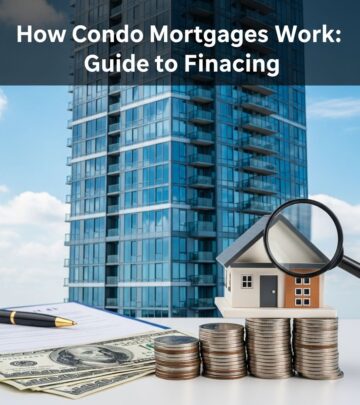
Securing a mortgage for a condominium involves distinct steps compared to financing a single-family home, primarily due to the shared ownership structure and association oversight. Lenders assess both the buyer’s finances and the condo’s community health to mitigate risks.
Key Differences in Condo Financing
Unlike traditional home loans focused solely on individual borrower qualifications, condo mortgages evaluate the entire property complex. This includes reviewing the homeowners association (HOA) financial stability, delinquency rates among owners, and insurance coverage. For instance, conventional loans often limit delinquent dues to no more than 15% of units.
Condo fees, covering maintenance and amenities, factor into debt ratios, potentially raising qualification thresholds. Lenders calculate gross debt service (GDS) and total debt service (TDS) ratios, incorporating 50% of these fees alongside housing costs and other debts. Guidelines typically cap GDS at 39% and TDS at 44%, with stricter 32% GDS and 40% TDS for stress-tested approvals.
Down Payment Requirements
Minimum down payments mirror those for houses in many markets. For properties under $500,000, buyers need 5%; between $500,000 and $1.5 million, it’s 5% on the first $500,000 plus 10% thereafter; and 20% for homes over $1.5 million.
| Property Price Range | Minimum Down Payment |
|---|---|
| $500,000 or less | 5% |
| $500,001 – $1.5M | 5% on first $500K + 10% on rest |
| Over $1.5M | 20% |
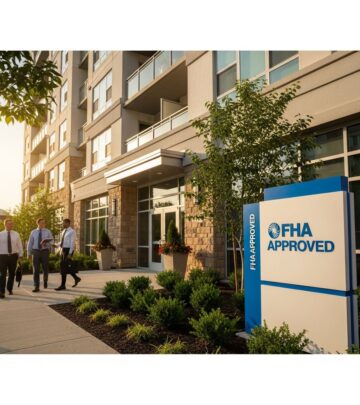
Pre-construction condos may require staged deposits totaling 15-20% during building phases, differing from resale purchases. Government-backed options like FHA demand 3.5% down with a 580+ credit score or 10% for 500-579 scores, but the project must be HUD-approved.
Qualification Criteria for Buyers
Buyers face standard metrics: credit scores of at least 620 for conventional loans, debt-to-income (DTI) ratios up to 43%, and stable income verification. Condo-specific elements amplify scrutiny; high HOA fees can inflate DTI, complicating approvals.
- Credit Score: Minimum 620 for conventional; lower thresholds for FHA/VA with project approval.
- DTI Ratio: Capped at 43%; includes partial HOA fees.
- Income & Employment: Proof of steady earnings via pay stubs and tax returns.
- Reserves: Lenders may require 6-24 months of payments in savings for HOA risks.
Navigating the Underwriting Process
Underwriting intensifies post-offer acceptance, spanning 30-60 days. Lenders verify buyer documents, appraise the unit, and audit the HOA: budget adequacy, litigation status, and owner occupancy limits (often 20-50% max investors).
Warrantable condos meet Fannie Mae/Freddie Mac standards, easing conventional financing. Non-warrantable ones demand specialized lenders, higher rates, or larger down payments. FHA/VA loans mandate full project review; spot approvals exist for FHA single units but require extensive docs.
- Submit application with financials and HOA docs.
- Lender requests condo questionnaire, bylaws, and reserves review.
- Appraisal confirms value; engineering reports for older buildings.
- Conditional approval, followed by final conditions clearance.
Delays arise from incomplete HOA data or issues like pending lawsuits.
Popular Loan Options for Condos
Conventional Loans: Ideal for warrantable condos; 3-5% down possible with strong profiles. Post-2025 updates remove minimum credit scores, shifting to holistic risk assessment.
FHA Loans: Accessible with lower down payments but strict project rules—no more than 15% delinquencies, fully funded reserves.
VA Loans: Zero-down for eligible veterans; entire project must be VA-approved, excluding single-unit options.
Specialty loans for non-warrantable condos offer flexibility at higher costs.
Pre-Approval and Shopping Strategies
Obtain pre-approval early to gauge affordability and strengthen offers. It locks rates temporarily and signals seriousness to sellers. Compare lenders experienced in condos, as not all handle complex projects.
Review personal finances: boost credit, reduce debt, and save reserves. Understand HOA rules via CC&Rs before committing.
Closing Costs and Timelines
Expect elevated costs from HOA doc fees ($200+), plus standard appraisals and titles. Timelines extend to 45+ days due to multi-party involvement.
- HOA estoppel certificate: $200-400
- Appraisal: $500-800
- Underwriting fees: Vary by lender
Pros and Cons of Condo Ownership Financing
| Pros | Cons |
|---|---|
| Amenities included in fees | Higher scrutiny and rates |
| Lower purchase prices | HOA fee impacts on DTI |
| Shared maintenance | Project approval hurdles |
Common Pitfalls to Avoid
Overlook HOA health at your peril—high delinquencies or lawsuits derail loans. Failing to budget full fees leads to qualification shocks. Delaying doc updates prolongs underwriting.
Frequently Asked Questions
Do condo mortgages require larger down payments?
Generally no, same minima as houses apply, but riskier projects may demand more.
Can I use FHA for any condo?
No, it must be HUD-approved; check eligibility upfront.
How do HOA fees affect approval?
They boost DTI ratios, potentially requiring stronger finances.
What’s a warrantable condo?
One meeting Fannie/Freddie guidelines for standard loans.
Are closing times longer for condos?
Yes, often 30-60 days due to extra reviews.
Steps to Secure Your Condo Mortgage
1. Check credit and finances.
2. Get pre-approved.
3. Research condo/HOA status.
4. Apply and supply docs promptly.
5. Review appraisal and conditions.
6. Close with due diligence.
Armed with this knowledge, prospective buyers can approach condo financing strategically, turning potential obstacles into manageable steps toward ownership.
References
- How Does a Condo Mortgage Work? — NerdWallet Canada. 2023. https://www.nerdwallet.com/ca/p/article/mortgages/what-is-a-condo-mortgage
- Understanding the Underwriting Process for Financing a Condo — Homes.com. 2024. https://www.homes.com/learn/understanding-the-underwriting-process-for-financing-a-condo-a-checklist/
- How Does a Condo Mortgage Work? — Owning.com. 2024. https://owning.com/resources/buying-a-condo/how-does-a-condo-mortgage-work/
- How Does A Condo Mortgage Work? — Bankrate. 2025-03-15. https://www.bankrate.com/mortgages/condo-financing/
- How Does Buying A Condo Work — PNC Insights. 2024. https://www.pnc.com/insights/personal-finance/borrow/how-does-buying-a-condo-work.html
- Condo Loans Defined and Explained — Rocket Mortgage. 2025. https://www.rocketmortgage.com/learn/condo-loan
Similar Articles








Read full bio of Sneha Tete