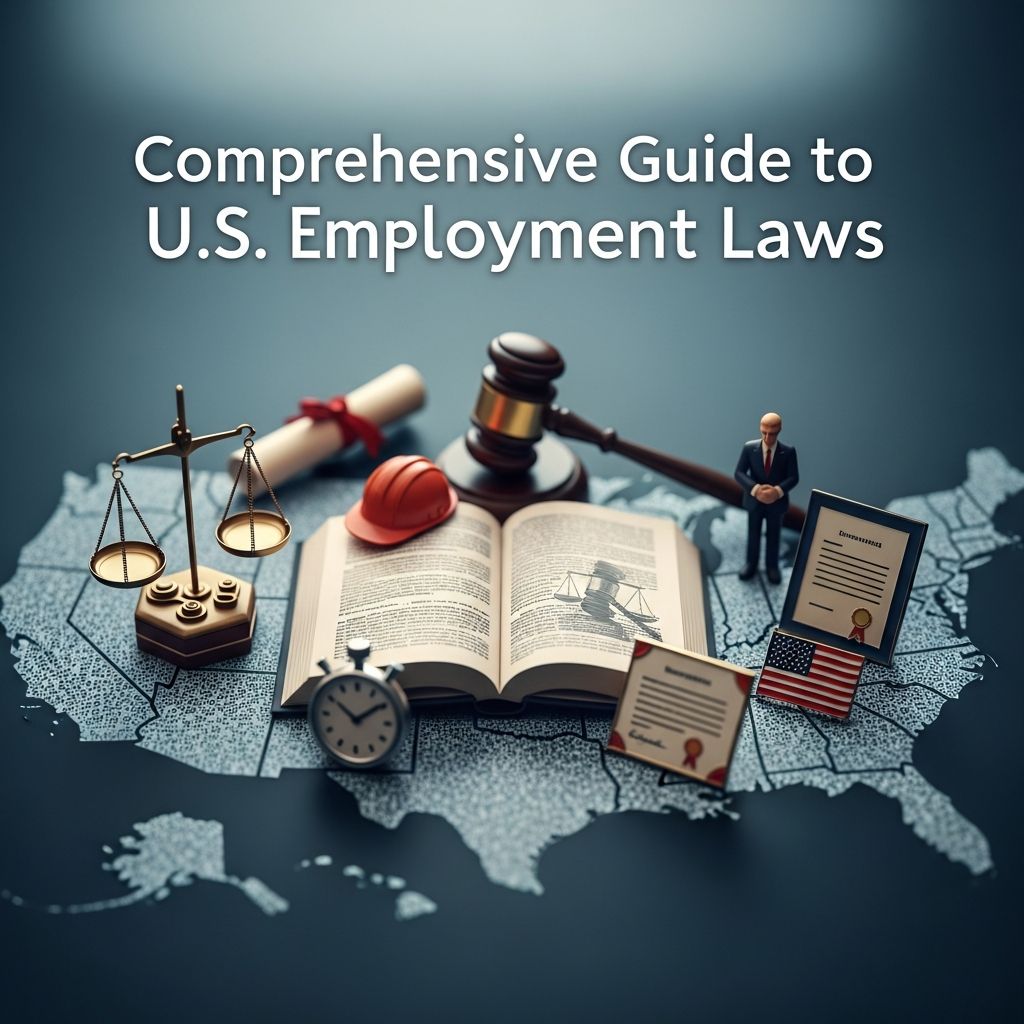
Comprehensive Guide to US Employment Laws
Master essential federal employment laws protecting workers' rights and employer compliance.
Understanding US Employment Laws: A Comprehensive Overview
The United States employment law system is built on a complex framework of federal statutes, regulations, and state-level protections that establish baseline rights for workers and compliance obligations for employers. Unlike many other countries that operate under a unified labor code, the U.S. relies on multiple federal laws administered by different agencies, supplemented by state and local regulations. Understanding these laws is essential for both employers seeking to maintain compliance and employees protecting their rights in the workplace. The Department of Labor administers and enforces over 180 federal laws, while the Equal Employment Opportunity Commission handles discrimination-related matters. This comprehensive guide explores the major employment laws that shape the modern American workplace.
Anti-Discrimination and Equal Employment Opportunity Laws
Among the most significant employment laws are those prohibiting discrimination and harassment in the workplace. These statutes protect employees from unfair treatment based on protected characteristics and ensure equal opportunities regardless of personal attributes.
Title VII of the Civil Rights Act of 1964
Title VII stands as one of the cornerstone civil rights protections in American employment law. This landmark legislation prohibits employment discrimination based on race, color, sex, national origin, and religion. Employers covered by Title VII cannot make hiring, firing, promotion, or compensation decisions based on these protected characteristics. The law also requires reasonable accommodation for religious observance needs and explicitly prohibits retaliation against employees who report discrimination or participate in discrimination investigations. The Equal Employment Opportunity Commission enforces Title VII and investigates complaints from employees alleging violations.
Age Discrimination in Employment Act of 1967 (ADEA)
The ADEA protects workers aged forty and older from employment discrimination based on age. This law applies to hiring, firing, compensation, and other terms and conditions of employment. Like Title VII, ADEA prohibits retaliation against employees who file complaints or participate in agency investigations. The EEOC enforces this statute, and employers must ensure that age-related decisions do not adversely affect older workers who remain capable of performing essential job functions.
Americans with Disabilities Act (ADA)
The ADA provides comprehensive protections for individuals with disabilities in the workplace. The law prohibits employment discrimination against qualified individuals with disabilities who can perform essential job functions with or without reasonable accommodation. Protection extends to individuals with a record of disability, those with perceived disabilities, and even individuals associated with someone who has a disability. Reasonable accommodations might include modifications to work environments, adjusted schedules, or assistive technology. The EEOC enforces employment-related provisions of the ADA.
Equal Pay Act of 1963 (EPA)
The Equal Pay Act requires that men and women receive equal compensation for performing substantially similar work in the same establishment. The comparison focuses on skill, effort, responsibility, and working conditions rather than job titles. Employers may justify pay differences based on seniority systems, merit systems, quality or quantity of production, or other factors not based on sex. The EEOC enforces this statute and investigates pay equity complaints.
Pregnancy Discrimination Act (PDA)
The Pregnancy Discrimination Act prohibits workplace discrimination based on pregnancy, childbirth, or related medical conditions. Employers must treat pregnant employees the same as other employees with similar abilities or limitations regarding employment decisions and benefits. This includes decisions about hiring, firing, assignments, and compensation.
Genetic Information Nondiscrimination Act (GINA)
GINA prohibits employers from discriminating against employees or applicants based on their genetic information or the genetic information of their family members. Employers cannot request, require, or purchase genetic information about employees, nor can they disclose such information. The law applies to hiring, firing, compensation, and other employment decisions.
Wage and Hour Protections
Federal wage and hour laws establish minimum compensation standards and regulate working time to protect workers from exploitation and ensure fair payment for labor.
Fair Labor Standards Act (FLSA)
The FLSA establishes foundational wage and hour protections for American workers. This law requires employers to pay at least the federal minimum wage to covered employees and mandates overtime pay at one and one-half times the employee’s regular rate for all hours worked over forty in a workweek. The FLSA also restricts child labor to protect young workers from exploitation. The law distinguishes between exempt and non-exempt employees, with exemptions typically applying to executive, administrative, and professional positions that meet specific salary thresholds and job duty requirements. Employers must maintain accurate timekeeping and payroll records to demonstrate compliance. The Department of Labor’s Wage and Hour Division administers and enforces the FLSA.
Consumer Credit Protection Act (CCPA)
The CCPA protects employees from discharge based on wage garnishment for a single debt and limits the amount of earnings that may be garnished in any week. This protection prevents employers from firing workers simply because their wages have been garnished.
Workplace Safety and Health
Federal law establishes mandatory safety and health standards to protect workers from hazards and ensure safe working conditions across industries.
Occupational Safety and Health Act (OSHA)
OSHA establishes comprehensive workplace safety and health standards designed to protect employees from hazards that could cause serious injury or death. The Occupational Safety and Health Administration administers this statute and conducts workplace inspections to ensure compliance. Employers must provide safe working conditions, maintain required safety equipment, provide training on hazard recognition, and report serious injuries. Employees have the right to report safety violations without fear of retaliation.
Leave and Time-Off Protections
Federal law guarantees workers certain leave rights for medical, family, and military purposes.
Family and Medical Leave Act (FMLA)
The FMLA entitles eligible employees to up to twelve weeks of unpaid, job-protected leave during a twelve-month period. Covered reasons include the birth or adoption of a child, caring for a family member with a serious health condition, the employee’s own serious health condition, or qualifying military exigency. Employers covered by FMLA must maintain health insurance during leave and restore employees to their same or an equivalent position upon return. The Department of Labor administers this law, and employers must post FMLA notices in accessible workplace locations.
Employee Benefits and Retirement Protection
Federal law regulates employer-provided benefits and protects workers’ retirement savings and healthcare coverage.
Employee Retirement Income Security Act (ERISA)
ERISA provides protections for participants and beneficiaries in employee benefit plans, including pension plans, health plans, and other welfare benefits. The law guarantees access to plan information, requires proper disclosure of plan terms and conditions, and imposes fiduciary duties on individuals who manage benefit plans. The Department of Labor’s Employee Benefits Security Administration enforces ERISA provisions.
Consolidated Omnibus Budget Reconciliation Act (COBRA)
COBRA requires employers with fifty or more employees to offer continued health insurance coverage to employees and dependents after employment ends, allowing workers to maintain health coverage during transitions. While employees must pay the full premium plus an administrative fee, COBRA provides continuity of coverage during periods of unemployment or life changes.
Affordable Care Act (ACA)
The ACA imposes employer shared responsibility rules on employers with fifty or more full-time equivalent employees. Employers must provide affordable health insurance coverage meeting minimum value standards or potentially face penalties.
Labor Relations and Collective Bargaining
Federal law protects workers’ rights to organize and engage in collective bargaining to negotiate working conditions and compensation.
National Labor Relations Act (NLRA)
The NLRA protects employees’ rights to organize and join unions, act in concert to protest or attempt to change working conditions, and engage in collective bargaining with employers. The National Labor Relations Board enforces this statute and protects workers from retaliation for union activities. Employers are prohibited from interfering with, restraining, or coercing employees exercising NLRA rights.
Military and Immigration Protections
Specialized federal laws protect military service members and workers authorized to work in the United States.
Uniformed Services Employment and Reemployment Rights Act (USERRA)
USERRA protects the employment and reemployment rights of individuals who serve in the uniformed services. Service members are entitled to leave for military duty and must be reemployed in their former or equivalent positions upon return from service.
Immigration Reform and Control Act (IRCA)
IRCA prohibits employers from hiring and retaining employees who are not authorized to work in the United States. Employers and employees must complete Form I-9 (Employment Eligibility Verification Form) to document work authorization. Employers must verify identity and employment eligibility but are prohibited from discrimination based on citizenship or national origin during the verification process.
Executive Order 11246
This executive order prohibits discrimination in employment based on race, color, religion, sex, or national origin for federal contractors and subcontractors. It establishes affirmative action requirements for federal contractors to ensure equal employment opportunity.
Federal Employment Laws by Employer Size
The applicability of certain employment laws depends on employer size, measured by the number of employees on payroll.
| Employer Size | Applicable Laws |
|---|---|
| All Employers | Equal Pay Act, Fair Labor Standards Act, Occupational Safety and Health Act, Immigration Reform and Control Act, Employee Retirement Income Security Act |
| Employers with 15+ Employees | Title VII, ADA, ADEA, GINA |
| Employers with 50+ Employees | Family and Medical Leave Act, Affordable Care Act, COBRA |
State and Local Employment Law Variations
States often expand upon federal protections with more stringent requirements. California, New York, Massachusetts, and Washington lead in enacting progressive labor laws. For example, California mandates higher minimum wages, paid sick leave, and broader anti-discrimination rules protecting additional characteristics. When state law conflicts with federal law, the law offering greater employee protection generally prevails. Employers must monitor changes at both federal and state levels to ensure compliance with the most stringent applicable standards.
Poster and Notice Requirements
Employers must display required workplace posters informing employees of their rights under federal law. The “EEO is the Law” poster alerts employees to anti-discrimination protections, while FLSA minimum wage posters inform workers of wage and hour requirements. OSHA requires posting of safety information and injury logs. These postings must be placed in areas accessible to all employees and typically in break rooms or near time clocks.
Compliance Best Practices for Employers
Maintaining compliance with multiple employment laws requires systematic approaches. Employers should implement clear harassment and discrimination policies, establish internal complaint procedures, maintain accurate timekeeping and payroll records, provide equal pay audits, document employment decisions with legitimate, non-discriminatory reasons, offer reasonable accommodations for disabilities and religious needs, ensure workplace safety through training and hazard assessment, maintain confidentiality of genetic information, provide required leave notices and tracking, and stay current on regulatory changes. Regular training for managers and HR personnel on anti-discrimination laws, harassment prevention, and legal compliance reduces legal exposure.
Frequently Asked Questions (FAQs)
Q: Which federal employment laws apply to my small business?
A: All employers, regardless of size, must comply with the Equal Pay Act, Fair Labor Standards Act, Occupational Safety and Health Act, Immigration Reform and Control Act, and Employee Retirement Income Security Act. Employers with 15 or more employees must also comply with Title VII, ADA, ADEA, and GINA. FMLA applies to employers with 50 or more employees.
Q: What should I do if an employee files a discrimination complaint?
A: Take the complaint seriously and conduct a prompt, thorough investigation. Document all findings and remedial actions. Do not retaliate against the employee for filing a complaint. Consult with employment law counsel to ensure proper handling and EEOC compliance.
Q: Am I required to provide health insurance?
A: If you have 50 or more full-time equivalent employees, the Affordable Care Act requires you to provide affordable health insurance meeting minimum value standards or face potential penalties. Smaller employers are not required to provide health insurance but may receive tax credits if they do.
Q: What records must I keep for wage and hour compliance?
A: Under the FLSA, employers must maintain accurate records of hours worked, wages paid, and deductions for each employee. Records should be kept for at least three years. Implement reliable timekeeping systems to prevent wage and hour violations and potential wage theft claims.
Q: How do I know if an employee is exempt from overtime?
A: Exempt status typically requires meeting a minimum salary threshold and performing primarily executive, administrative, professional, outside sales, or computer-related duties. The specific salary thresholds and job duty tests are detailed in FLSA regulations. Misclassification can result in significant liability for unpaid overtime.
Q: What is considered reasonable accommodation under the ADA?
A: Reasonable accommodations vary by individual disability and job requirements. Examples include modified work schedules, accessible facilities, assistive technology, job restructuring, or leave for medical treatment. Employers must engage in an interactive process with the employee to identify effective accommodations.
References
- Federal Employment Laws Summary List — The ILR School, Cornell University. 2024. https://www.ilr.cornell.edu/labor-and-employment-law-program/federal-employment-laws-summary-list
- Labour Laws in the USA: Complete Employer & Employee Guide — Asanify. 2025. https://asanify.com/blog/labour-laws/labour-laws-in-usa-2025/
- Federal Employment Laws by Employer Size — Sullivan Benefits. 2017. https://www.sullivan-benefits.com/federal-employment-laws-by-employer-size/
- Labor Laws and Worker Protection — USAGov. 2024. https://www.usa.gov/labor-laws
- Summary of the Major Laws of the Department of Labor — U.S. Department of Labor. 2024. https://www.dol.gov/general/aboutdol/majorlaws
- Equal Employment Opportunity Laws — U.S. Equal Employment Opportunity Commission. 2024. https://www.eeoc.gov/equal-employment-opportunity-laws
Similar Articles








Read full bio of medha deb