Compound Savings Calculator: Grow Your Money Faster
Master compound interest and watch your savings grow exponentially over time.

Understanding Compound Savings Calculators
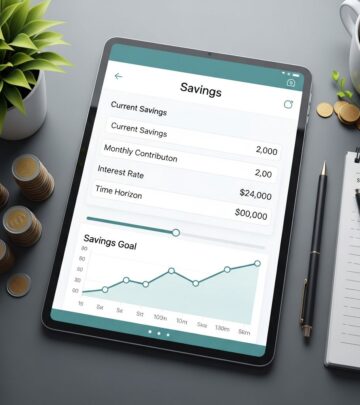
A compound savings calculator is a powerful financial tool that helps you understand how your money grows over time through the magic of compound interest. Whether you’re saving for a house, planning for retirement, or building an emergency fund, knowing how compound interest works can make a significant difference in achieving your financial goals. This calculator takes the guesswork out of financial planning by providing precise projections based on your specific circumstances.
Compound interest represents one of the most powerful concepts in personal finance. Unlike simple interest, which only applies to your initial investment, compound interest earns returns on both your principal and the interest you’ve already accumulated. This creates an exponential growth pattern that accelerates your wealth building over time.
What is Compound Interest?
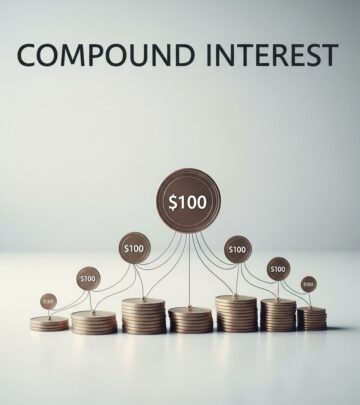
Compound interest occurs when you earn interest not only on your initial deposit but also on the interest you’ve already earned. Think of it as your money making money on your money. This phenomenon creates a snowball effect where your savings grow at an increasingly faster rate as time progresses.
Consider a practical example: suppose you deposit $1,000 at a 5% annual percentage yield (APY). After the first year, you’d earn $50 in interest, which represents 5% of your $1,000 initial investment. In the second year, however, you earn interest on $1,050—your original $1,000 plus the $50 in interest you previously earned. This cycle continues indefinitely, constantly accelerating your money’s growth trajectory. Over decades, this compounding effect can transform modest savings into substantial wealth.
How to Calculate Your Interest
Using a compound savings calculator is straightforward and requires just a few key inputs. Understanding each component ensures you get accurate projections for your financial planning.
Step-by-Step Guide to Using the Calculator
To calculate how much your savings could grow with compound interest, follow these essential steps:
- Enter the amount you currently have in savings, known as your initial deposit or principal
- Select the time period for which you plan to save, whether that’s measured in months or years
- Enter your expected rate of return, typically expressed as an annual percentage yield (APY)
- Add any contributions you plan to make on a regular schedule—weekly, bi-weekly, monthly, or annually
- Choose how often interest compounds—daily, monthly, quarterly, or annually
Once you input these parameters, the calculator displays your final balance, total contributions made, and the interest earned throughout your investment period. This breakdown helps you understand exactly how much of your growth comes from your own contributions versus the power of compound interest.
The Compound Interest Formula
While calculators automate the mathematics, understanding the underlying formula provides insight into how your money grows. The formula for calculating the final value of an investment that’s compounded is:
Amount = P(1 + r/t)^(nt)
Where P represents your initial investment, r is the interest rate expressed as a decimal, t is the number of compounding periods per year, and n is the number of years your money remains invested. This formula demonstrates why more frequent compounding and higher interest rates dramatically accelerate wealth accumulation.
Understanding Compounding Frequencies
One critical factor affecting your savings growth is how frequently interest compounds. Compounding frequency determines how often earned interest gets added back to your principal, creating new interest-earning opportunities.
Comparing Different Compounding Schedules
| Compounding Frequency | $100,000 at 2% APY (1 Year) | $100,000 at 2% APY (30 Years) |
|---|---|---|
| Annual Compounding | $102,000 | $181,136.16 |
| Daily Compounding | $102,020.08 | $182,208.88 |
As this comparison demonstrates, the more frequently interest compounds, the faster your money grows. However, when comparing accounts, focus on the APY rather than the stated interest rate, as APY already accounts for compounding frequency and provides a more accurate representation of your actual returns.
Maximizing Your Savings Through Regular Contributions
One of the most impactful ways to accelerate your savings growth is making regular contributions to your account. Even modest monthly deposits can significantly amplify your final balance over time.
The Impact of Consistent Contributions
Consider this compelling example: if you deposit $5,000 into an account earning 5% APY with monthly compounding, after 10 years your balance will reach $8,235.05. However, if you contributed just an additional $100 each month to that same account, your final balance would grow to $23,763.28—nearly triple the amount. This dramatic difference illustrates the exponential power of consistent saving combined with compound interest.
Regular contributions work synergistically with compound interest. Each deposit becomes part of your principal, earning interest immediately. As that interest compounds, it generates additional interest, creating an accelerating growth pattern. Starting with regular contributions early in your savings journey dramatically enhances your long-term wealth accumulation.
Automating Your Savings Strategy
Perhaps the most effective way to maintain consistent contributions is automating your savings process. Automating your savings means money moves automatically into a savings account without requiring manual action each time.
You can set up automatic savings through two primary methods. First, use split direct deposit, instructing your employer to deposit a portion of your paycheck directly into your savings account while the remainder goes to your checking account. Alternatively, establish a recurring transfer from your checking account to your savings account that executes on a schedule you determine—weekly, bi-weekly, or monthly.
This automation removes the temptation to spend money that would otherwise be saved, and it ensures you never miss a contribution. By making savings automatic, you fundamentally change your financial behavior, making wealth accumulation nearly effortless.
Where to Put Your Money for Optimal Returns
Choosing the right savings vehicle significantly impacts your returns. Different accounts offer varying interest rates and compounding structures, affecting your long-term accumulation.
Comparing Interest Rate Scenarios
Interest rate differences may appear small, but they compound into substantial variations over time. Consider these scenarios with a $1,000 initial deposit over a 10-year period:
- At 0.01% APY, your $1,000 grows to only $1,001 after 10 years
- At 5% APY, that same $1,000 grows to $1,629 after 10 years
- At 5% APY with just $50 monthly contributions, you’d accumulate $9,411 after 10 years
High-yield savings accounts offer significantly better returns than traditional savings accounts. These accounts typically feature rates of 4% or higher, dramatically accelerating your wealth accumulation compared to conventional options earning less than 1% APY.
Long-Term vs. Short-Term Savings Goals
You can deposit money to save for long-term goals—such as purchasing a house 10 years away—or relatively shorter-term objectives, like funding a wedding in two years. The time horizon for your goals influences both the appropriate savings vehicle and the compounding frequency that benefits you most. Longer time horizons allow compound interest more opportunity to work its magic, making even modest interest rates produce impressive results over decades.
Interest Rates and Their Impact on Compounding
The interest rate you earn on your money fundamentally shapes the power of compounding. Higher rates create exponentially greater differences in ending balances, especially over extended periods.
Comparing 2% vs. 5% Interest Rates
| Time Period | 2% APY (Annual) | 2% APY (Daily) | 5% APY (Annual) | 5% APY (Daily) |
|---|---|---|---|---|
| 1 Year | $102,000 | $102,020.08 | $105,000 | $105,126.75 |
| 30 Years | $181,136.16 | $182,208.88 | $432,194.24 | $448,122.87 |
This comparison clearly demonstrates that even small differences in interest rates compound into massive variations over 30 years. A 3% difference in APY more than doubles your final balance—the higher the interest rate, the greater the difference between ending balances based on compounding frequency.
Two Simple Ways to Leverage Compound Interest
While compound interest works automatically, two proven strategies amplify its effects: saving early and monitoring your APY.
Strategy One: Save Early
The timing of your savings profoundly affects your long-term accumulation. Two people who save the same total amount over 40 years will end up with dramatically different balances if one person saved more during their early years. The person who front-loaded their savings—depositing larger amounts when young—accumulates significantly more wealth than someone who saved consistently but delayed their contributions. Even someone saving twice as much total money ($200,000 versus $100,000) but spread over the full 40 years ends up with less money due to fewer compounding periods for early contributions.
Strategy Two: Monitor Your APY
Always prioritize accounts offering the highest APY available. Comparing APY rather than stated interest rates ensures you understand true returns accounting for compounding frequency. Small differences in APY, when compounded over years and decades, produce substantial variations in your final balance.
Practical Examples of Compound Growth
Real-world examples illuminate how compound interest transforms savings over realistic time horizons. A $20,000 investment growing at 7% annually becomes $21,400 in the first year and $22,898 in the second year—gaining almost $2,900 with just $98 in additional compound interest simply by keeping it invested. These seemingly small gains accelerate dramatically over decades.
For larger amounts and longer periods, the effects become staggering. A $10,000 certificate of deposit at 3.68% interest (3.75% APY) held for five years generates approximately $183 more in returns thanks to compounding compared to simple interest calculations.
Frequently Asked Questions About Compound Savings Calculators
Q: How often should I check my compound interest calculations?
A: Review your calculations annually or whenever your circumstances change—such as adjusting contribution amounts or when interest rates shift significantly. Regular monitoring helps ensure your savings strategy remains aligned with your financial goals.
Q: Does the interest rate matter more than compounding frequency?
A: Interest rate has a substantially greater impact than compounding frequency. A higher APY at daily compounding will always outperform a lower APY at annual compounding. Focus primarily on finding the highest available APY for your savings.
Q: Can I use compound interest calculators for different savings goals?
A: Yes, these calculators work for any savings goal—retirement, home purchases, education funding, or emergency funds. Simply adjust the time horizon, contribution amounts, and expected interest rates to match your specific objective.
Q: What’s the difference between APY and interest rate?
A: APY (annual percentage yield) accounts for compounding frequency, providing a more accurate representation of your actual returns. Interest rate represents only the base rate without considering how often interest compounds. Always compare APYs when evaluating savings accounts.
Q: How much should I contribute monthly to reach my savings goal?
A: Use the compound savings calculator by working backwards—enter your target final balance, time horizon, and expected interest rate, then adjust your monthly contribution until you reach your goal. This helps you determine realistic contribution amounts needed.
References
- Compound Interest Calculator — Bankrate. 2025. https://www.bankrate.com/banking/savings/compound-savings-calculator/
- What Is Compound Interest? — Bankrate. 2025. https://www.bankrate.com/banking/what-is-compound-interest/
- Simple Interest Vs. Compound Interest — Bankrate. 2025. https://www.bankrate.com/investing/compound-interest-vs-simple-interest/
- What Is Compound Interest & How Is It Calculated? — PNC Insights. 2025. https://www.pnc.com/insights/personal-finance/save/what-is-compound-interest.html
- Compound Interest Calculator — Investor.gov, U.S. Securities and Exchange Commission. 2025. https://www.investor.gov/financial-tools-calculators/calculators/compound-interest-calculator
Similar Articles








Read full bio of Sneha Tete