Compound Interest For Kids: Easy Activities And A Simple Guide
Teach kids the magic of compound interest with simple explanations, fun examples, and real-world activities to build lifelong saving habits.
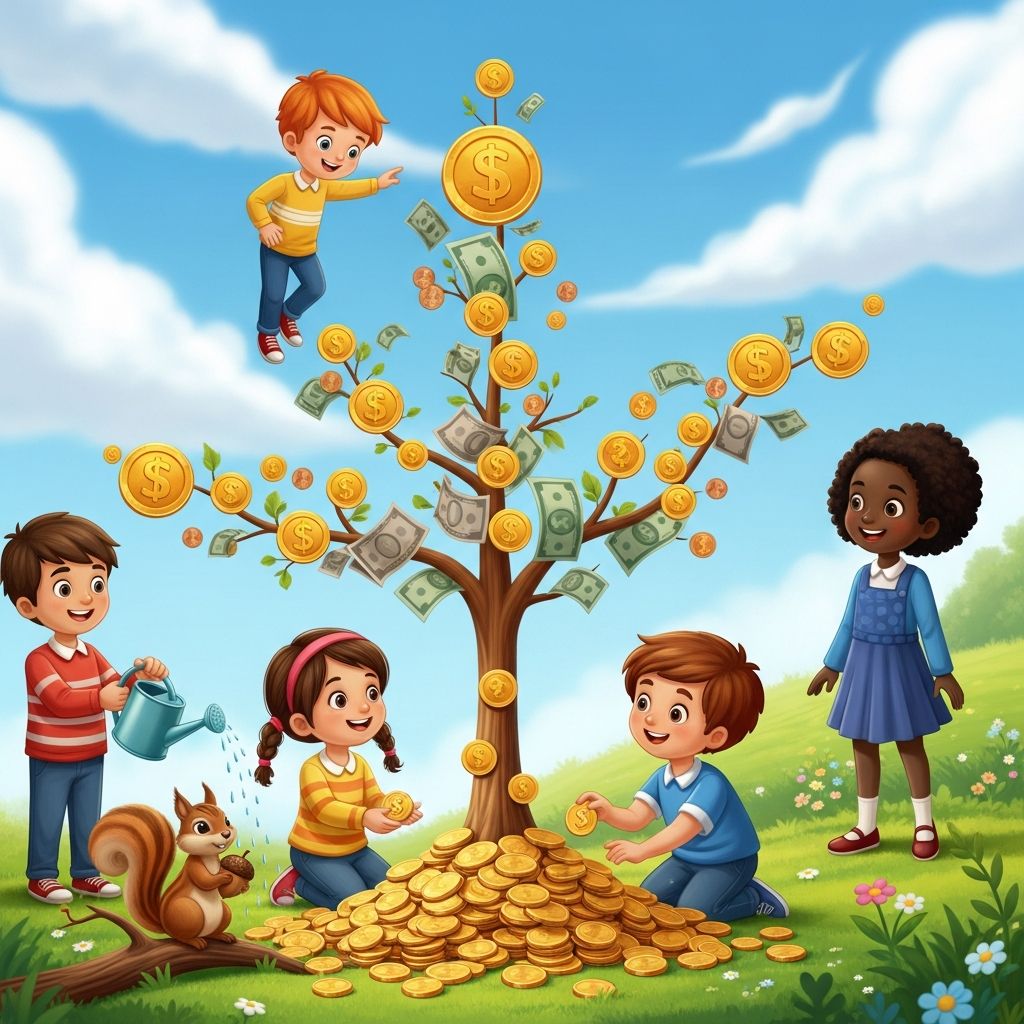
Compound interest is often called the “eighth wonder of the world” because it allows your money to grow on itself over time. Teaching kids about
compound interest
early helps them understand why saving now can lead to big rewards later. This guide breaks it down simply, with examples, activities, and tools to make financial education fun and memorable.What Is Compound Interest?
**Compound interest** is the interest you earn on both your original money (the principal) and the interest that has already been added to it. Unlike simple interest, which only applies to the principal, compounding creates a snowball effect where your money grows faster and faster.
For instance, if you deposit $100 at 5% interest, the first year earns $5, making your total $105. The second year, you earn 5% on $105, which is $5.25, bringing the total to $110.25. That extra 25 cents is interest on interest— the power of compounding in action.
Key terms kids should know:
- Principal: The initial amount of money invested or saved.
- Interest Rate: The percentage earned or paid on the principal, like 5% per year.
- Compounding Frequency: How often interest is added—daily, monthly, or annually. More frequent compounding means faster growth.
According to the Federal Reserve, starting with $1,000 at 3% compounded monthly grows to $1,820.75 in 20 years without additions.
How Does Compound Interest Work? A Step-by-Step Example
Let’s use a kid-friendly example: Imagine depositing $100 in a savings account at 10% annual interest, compounded yearly.
| Year | Starting Balance | Interest Earned | Ending Balance |
|---|---|---|---|
| 1 | $100.00 | $10.00 | $110.00 |
| 2 | $110.00 | $11.00 | $121.00 |
| 3 | $121.00 | $12.10 | $133.10 |
| 8 | – | – | $12,483.58 |
| 18 | – | – | Over $500,000 (with regular additions) |
This table shows explosive growth. Investor.gov illustrates $100 at 5% compounding to $162 in 10 years and nearly $340 in 25 years. Time is the secret ingredient—starting early maximizes the effect.
Why Teach Compound Interest to Kids?
Financial literacy begins young. Kids who grasp compounding are more likely to save, avoid debt, and build wealth. Albert Einstein reportedly called it the “eighth wonder,” noting those who understand it earn it, while others pay it.
Benefits include:
- Instilling patience and delayed gratification.
- Encouraging regular saving habits.
- Preparing for goals like college or a first car.
The SEC emphasizes starting young to harness this “magic”.
Fun Ways to Explain Compound Interest to Children
Use Stories with Heroes or Games
Stories stick. Tell a tale of a superhero whose powers grow with practice—like compounding strength. Or a video game character leveling up: each win builds on previous skills, just like interest on interest.
From YouTube explanations: A kid invests £100 at 5%, earning £5 year one, then £5.25 on £105 year two. Relate it to their world for better retention.
Gamify with Candy or Rewards
Give kids 5 candies. If they wait an hour without eating, add 1 more. Next hour, add 2 if they wait again, then 4, doubling each time. This demonstrates compounding rewards and teaches self-control.
Extend to chores: Save “stars” that multiply for bigger prizes.
Visual Snowball or Plant Growth Analogies
Compare to a snowball rolling downhill, getting bigger, or a plant sprouting faster with nourishment. Roll a small ball of clay, adding more each time to show growth acceleration.
Compound Interest Calculators for Kids
Hands-on tools make it real. Use free online calculators:
- Enter principal ($100), rate (5%), years (10), compounding (annually).
- Watch $100 become $162.89.
KidVestors suggests simulating a child’s account: $100 monthly at 10% from age 10 to 18 could yield seven figures by retirement. Federal Reserve resources include videos for visual learners.
Real-World Application: Open a Kids’ Savings Account
For older kids, open a savings account. IDFC FIRST Bank offers minor accounts under guardians with competitive rates and no balance requirements. Manulife Bank explains reinvesting $105 at 5% earns $5.25 next year.
Steps:
- Choose a kid-friendly bank with high-yield savings.
- Deposit allowance or birthday money.
- Track growth monthly to see compounding.
Erin’s $1,000 at 3% monthly compounding hits $1,820 in 20 years. Add deposits for even more.
Compound Interest vs. Simple Interest
| Year | Simple Interest ($100 at 5%) | Compound Interest ($100 at 5%) |
|---|---|---|
| 1 | $105 | $105 |
| 5 | $125 | $127.63 |
| 10 | $150 | $162.89 |
| 25 | $225 | $338.64 |
Compounding pulls ahead quickly, doubling money faster per the Rule of 72: divide 72 by rate for doubling time (e.g., 72/5=14.4 years).
Common Mistakes and Tips for Parents
Avoid:
- Early withdrawals—disrupts growth.
- Ignoring fees that eat interest.
- Forgetting inflation erodes value.
Tips: Start small, be consistent, celebrate milestones. Use apps like Greenlight for monitored kid accounts.
Frequently Asked Questions (FAQs)
What is compound interest in simple terms for kids?
It’s money making more money: interest on your savings plus interest on the interest already earned.
How do you explain compound interest to a 10-year-old?
Use candy doubling or a snowball: the longer it rolls, the bigger it gets without extra effort.
At what age should I teach compound interest?
Start at 8-10 with basics, add calculators by 12-14.
What’s a good compound interest calculator for kids?
Investor.gov or KidVestors tools—input numbers and see growth instantly.
Can kids have compound interest accounts?
Yes, via custodial savings accounts at banks like those offering minor options with compounding.
Start Today: Empower Your Child’s Financial Future
By teaching
compound interest for kids
, you gift them a lifetime of wealth-building potential. Use stories, games, and real accounts to make it stick. Watch their savings—and confidence—grow exponentially.References
- What is Compound Interest? – Financial Education for Kids — LearningMole (YouTube). 2023. https://www.youtube.com/watch?v=d-mKp1qZjek
- What Is Compound Interest? | KidVestors — KidVestors. 2024-10-15. https://www.kidvestors.co/post/what-is-compound-interest
- Growing Money: Compound Interest — Federal Reserve Education. 2025-01-01. https://www.federalreserveeducation.org/teaching-resources/personal-finance/investing/growing-money-compound-interest
- 3 Simple Steps to Explain Child How Compound Interest Works — IDFC FIRST Bank. 2024-05-20. https://www.idfcfirst.bank.in/finfirst-blogs/savings-account/3-simple-steps-to-explain-child-how-compound-interest-works
- What is compound interest? — Investor.gov (SEC). 2025. https://www.investor.gov/additional-resources/information/youth/teachers-classroom-resources/what-compound-interest
- Compound Interest Explained for Kids — YouTube. 2022. https://www.youtube.com/watch?v=qxltazxfaSk
- Teaching Kids About Compound Interest — Manulife Bank. 2024-11-10. https://www.manulifebank.ca/personal-banking/plan-and-learn/personal-finance/compound-interest.html
Similar Articles








Read full bio of medha deb