The Complete Guide to Taking Out a Mortgage
Understand every key step in the mortgage process, from planning your budget to closing on your home and managing repayments.

Taking out a mortgage is one of the biggest financial commitments most people ever make. Understanding how mortgages work, how much you can safely borrow, and what happens from application to closing can help you borrow confidently and avoid costly mistakes.
What Is a Mortgage and How Does It Work?
A mortgage is a long-term loan used to buy or refinance a home, where the property itself serves as collateral for the lender. You agree to repay the loan over a set term, usually with interest added to the amount you borrowed. If you do not keep up with payments, the lender may be able to take back the property through foreclosure according to national and state laws.
Mortgages are typically repaid in monthly installments that include principal (the amount you borrowed) and interest (the cost of borrowing). Many loans also bundle property taxes and homeowner’s insurance into the monthly payment through an escrow account.
Key Parties in a Mortgage
- Borrower: The person or people taking the loan and responsible for repayment.
- Lender: A bank, credit union, or mortgage company that provides the funds.
- Mortgage broker: An intermediary who helps compare loans from several lenders (if you choose to use one).
- Appraiser: A licensed professional who estimates the market value of the property.
- Closing agent / settlement agent: Often a title company or attorney who manages the closing paperwork and funds transfer.
What Your Monthly Mortgage Payment Covers
A typical monthly mortgage payment can be remembered with the acronym PITI:
- Principal: The portion that reduces your outstanding loan balance.
- Interest: The cost you pay the lender for borrowing their money.
- Taxes: Property taxes collected by your lender and paid to your local government, if escrowed.
- Insurance: Homeowner’s insurance, and sometimes mortgage insurance, held in escrow and paid on your behalf.
How Much Can You Borrow for a Mortgage?
Lenders look at your income, debts, credit history, and the size of your down payment to determine how much they are willing to lend. Affordability for you personally may be lower than the maximum a lender will approve, so it is important to set your own comfort level before shopping for a home.
Debt-to-Income Ratio (DTI)
Your debt-to-income ratio (DTI) compares your monthly debt payments to your gross (before-tax) monthly income. A lower DTI generally makes it easier to qualify for a mortgage on good terms.
| DTI Component | What It Includes |
|---|---|
| Front-end DTI | Proposed housing costs (principal, interest, taxes, insurance, HOA dues). |
| Back-end DTI | Housing costs plus other monthly debts (credit cards, student loans, auto loans, etc.). |
Guides from federal agencies often reference that your total monthly home payment (front-end) is commonly targeted around 28% or less of your gross monthly income as a rule of thumb, though actual approval standards can vary by program and lender.
Down Payment Size
Your down payment is the amount you pay upfront toward the purchase price.
- A larger down payment generally reduces your monthly payment.
- Putting at least 20% down on a conventional loan usually allows you to avoid private mortgage insurance (PMI).
- Some programs allow for much smaller down payments if you meet eligibility requirements, such as certain government-backed loans.
Other Affordability Factors
- Credit score and history: Strong credit can help you qualify for lower interest rates.
- Employment and income stability: Lenders verify that your income is reliable and sufficient.
- Savings and reserves: Having extra funds after closing is viewed positively and may be required for some loan types.
Main Types of Mortgage Loans
There are several major mortgage categories. Choosing the right one depends on your finances, how long you expect to keep the home, and whether you qualify for specific programs.
Fixed-Rate vs. Adjustable-Rate Mortgages (ARM)
| Feature | Fixed-Rate Mortgage | Adjustable-Rate Mortgage (ARM) |
|---|---|---|
| Interest rate | Stays the same for the entire term. | Starts fixed for a period, then can adjust at set intervals. |
| Monthly payment | Stable and predictable. | Can go up or down after the initial fixed period. |
| Best suited for | Borrowers who value payment stability and plan to stay long term. | Borrowers who expect to move or refinance before adjustments, or who can handle payment changes. |
Conventional vs. Government-Backed Loans
- Conventional loans: Not insured by a government agency. They typically have stricter credit and income requirements but can offer competitive rates and flexible terms.
- Government-backed loans: These include programs that are insured or guaranteed by federal agencies, such as FHA and VA. They often allow lower down payments and may be more flexible for borrowers with limited credit histories, in exchange for certain insurance premiums or fees.
Loan Term Length
- 30-year mortgages: Lower monthly payments but higher total interest paid over the life of the loan.
- 15-year mortgages: Higher monthly payments but significantly less total interest and faster equity building.
- Other terms (such as 20 or 25 years) may also be available depending on the lender.
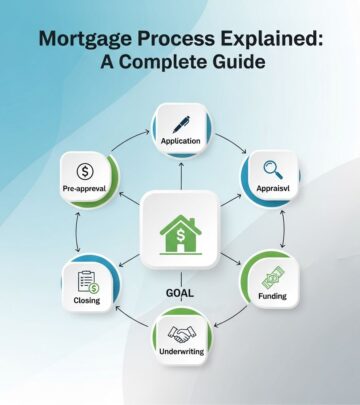
The Mortgage Application Process: Step-by-Step
From the first application to receiving the keys, the mortgage process follows a general sequence. Exact steps and timelines vary by lender, but major stages are similar.
1. Preparing to Apply
- Check your credit reports and scores.
- Gather income documents (pay stubs, tax returns, W-2s or 1099s).
- Collect statements for bank and investment accounts.
- Estimate your budget and preferred price range.
2. Choosing a Lender and Getting Preapproval
Many homebuyers start with a preapproval, where a lender reviews your finances and issues a letter stating the maximum amount it is willing to lend under certain assumptions.
- Preapproval helps show sellers you are a serious buyer.
- You can and should compare offers from multiple lenders before committing.
3. Submitting a Full Application
Once you have found a property, you submit a complete mortgage application. Standard application forms collect details on:
- Type of mortgage and requested loan terms.
- Property address and intended use (primary home, second home, investment).
- Borrower information, employment, income, assets, and debts.
- Details of the transaction, including purchase price and down payment source.
4. Receiving and Reviewing Your Loan Estimate
After you apply, the lender provides a Loan Estimate, usually within three business days, summarizing the key terms of the proposed loan, projected payments, and closing costs.
- Use the Loan Estimate to compare offers from different lenders.
- Check that the interest rate, loan term, and projected monthly payment match your expectations.
- Look carefully at estimated closing costs and whether any costs are paid to affiliates of the lender.
5. Processing and Underwriting
The lender’s team then verifies your information and evaluates risk, a stage known as underwriting.
- Your employment and income are confirmed using pay documents or employer contact.
- Credit reports and public records are reviewed.
- An appraisal is ordered to confirm the property’s value.
- The lender may request additional documentation or explanations.
6. Appraisal and Property Review
The appraiser evaluates the home and issues a report with an estimated market value. Lenders typically require that the property’s appraised value supports the loan amount and meets certain property condition standards.
7. Approval, Conditions, and Rate Lock
- If underwriting is satisfied, the lender issues an approval, often with conditions (such as additional documents or clarifications).
- You may choose to “lock” your interest rate for a set period, which protects you from rate changes during that window, subject to the lender’s policies.
8. Closing Disclosure and Final Review
Before closing, you receive a Closing Disclosure showing your final loan terms, projected monthly payment, and all closing costs. You can compare this form with your original Loan Estimate to see what changed and why.
9. Closing on Your Mortgage
At closing, you sign all required documents and pay any remaining down payment and closing costs (unless they are financed or covered by a credit).
- The closing agent explains key documents.
- Funds are disbursed to the seller and other parties.
- Ownership is transferred and recorded, and you receive the keys to your new home.
Understanding Mortgage Costs and Fees
Your mortgage has several categories of costs, some ongoing and some paid at closing. Being familiar with these helps you budget accurately.
Interest Rate vs. APR
- Interest rate: The cost the lender charges you each year to borrow the principal, expressed as a percentage.
- Annual Percentage Rate (APR): A broader measure that includes the interest rate plus certain fees and charges, giving you a better basis for comparing different loan offers.
Common Closing Costs
- Lender origination or underwriting fees.
- Appraisal, credit report, and verification fees.
- Title search, title insurance, and settlement/closing fees.
- Recording fees and transfer taxes, where applicable.
- Prepaid items, such as interest, property taxes, and homeowner’s insurance.
Ongoing Costs of Homeownership
- Monthly mortgage payments (PITI).
- Utilities and routine maintenance.
- Repairs and replacements for major systems or appliances.
- Homeowners association (HOA) dues, if applicable.
Managing Your Mortgage After Closing
Once you become a homeowner, managing your mortgage responsibly is essential to protect your home and credit.
Making On-Time Payments
- Set up automatic payments or reminders so you do not miss due dates.
- Know your grace period and late fee policies, but avoid relying on them regularly.
- Contact your servicer immediately if you anticipate difficulty making a payment; early communication can open up more options.
Refinancing and Prepayment
- Refinancing replaces your existing mortgage with a new one, which may lower your interest rate, change your term, or both.
- Paying extra toward principal can reduce the total interest you pay and shorten your loan’s life, as long as your loan does not have prepayment penalties.
If You Run Into Trouble
Financial setbacks can make mortgage payments challenging. Federal consumer resources emphasize that you should contact your mortgage servicer as soon as possible to discuss hardship options, such as loan modifications or temporary relief, if they are available.
Frequently Asked Questions (FAQs)
Q: How long does the mortgage process usually take?
A: Timelines vary, but many mortgages close within several weeks once you have a signed purchase agreement, assuming you respond quickly to document requests and there are no significant appraisal or title delays.
Q: Do I need a 20% down payment to buy a home?
A: No. While 20% can help you avoid private mortgage insurance on many conventional loans, some government-backed programs allow significantly lower down payments if you qualify, though you may pay additional insurance premiums or fees.
Q: Should I always choose a 30-year fixed-rate mortgage?
A: A 30-year fixed-rate loan offers lower monthly payments and stable costs, which many borrowers value. However, shorter terms, such as 15 years, may suit those who can afford higher payments and want to pay less total interest, while adjustable-rate mortgages can be an option for borrowers who expect to move or refinance before the adjustment periods.
Q: How many lenders should I talk to before choosing a mortgage?
A: Consumer protection agencies encourage borrowers to request Loan Estimates from several lenders so they can compare rates, fees, and features and choose the most suitable offer for their situation.
Q: What happens if my home appraises for less than the purchase price?
A: If the appraisal is lower than the agreed price, the lender may limit the loan amount based on the appraised value. You might renegotiate the price, increase your down payment, or, in some cases, cancel the purchase if your contract allows it.
References
- Your Step-By-Step Mortgage Guide: From Application to Closing — Freddie Mac / Federal Housing Finance Agency. 2016-06-01. https://sf.freddiemac.com/docs/pdf/update/step_by_step_mortgage_guide_english.pdf
- Step-by-Step Mortgage Guide: From Application to Closing — Federal Housing Finance Agency (FHFA). 2016-06-01. https://www.fhfa.gov/mortgage-translations/document/step-by-step-mortgage-guide-from-application-to-closing
- Your Home Loan Toolkit: A Step-by-Step Guide — Consumer Financial Protection Bureau (CFPB). 2023-03-28 (last updated booklet). https://files.consumerfinance.gov/f/documents/cfpb_your-home-loan-toolkit.pdf
- Designing a Quick, Helpful Guide to the Complicated Mortgage Process — Consumer Financial Protection Bureau (CFPB). 2015-10-01. https://cfpb.github.io/articles/your-home-loan-toolkit/
Similar Articles








Read full bio of medha deb