Complete Guide to Securing Renters Insurance
Protect your belongings and financial security with renters insurance coverage

Understanding Why Renters Insurance Matters
When you rent an apartment, house, or condominium, many tenants operate under the mistaken assumption that their landlord’s insurance will protect their personal belongings. This is a critical misunderstanding that can lead to significant financial losses. Landlord insurance exclusively covers the building structure and the property itself—not the items you own. Your furniture, electronics, clothing, and other possessions remain completely unprotected under your landlord’s policy if they are damaged, destroyed, or stolen.
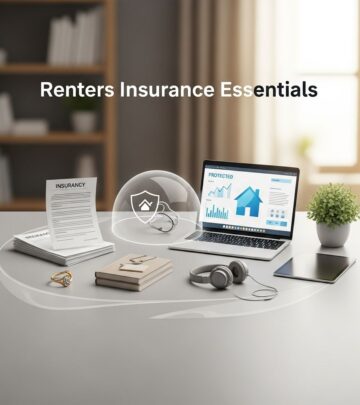
Renters insurance exists specifically to fill this protection gap. It provides financial security for your personal property while also offering liability protection and coverage for additional living expenses if your rental becomes temporarily uninhabitable. For most renters, this coverage represents one of the most cost-effective ways to safeguard accumulated assets and maintain financial stability during unexpected events.
The Three Core Components of Renters Insurance
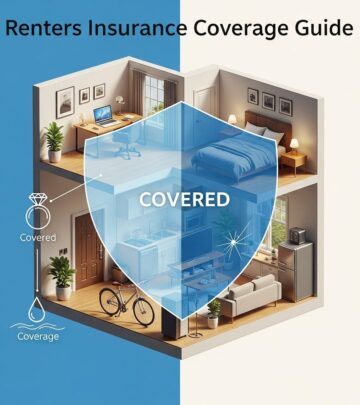
A comprehensive renters insurance policy typically encompasses three distinct types of financial protection, each serving a unique purpose in your overall coverage strategy.
Personal Property Protection
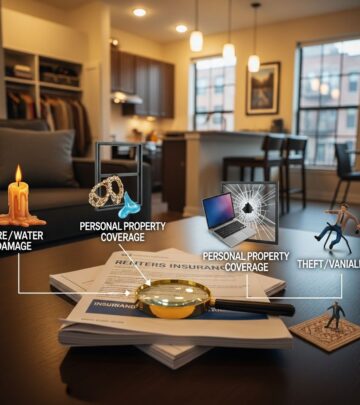
This is the foundational element of any renters insurance policy. Personal property coverage reimburses you for damage to or loss of your belongings caused by covered events such as fire, lightning, windstorms, theft, vandalism, and explosions. The coverage applies to items throughout your rental unit, including furniture, electronics, clothing, kitchen appliances, books, sporting equipment, and countless other household goods.
An important consideration when evaluating personal property coverage involves understanding whether your policy offers actual cash value or replacement cost coverage. Actual cash value coverage reimburses you for the depreciated worth of your items at the time of loss. For example, if your television is five years old when it is stolen, you receive payment based on its current market value, not the original purchase price. Replacement cost coverage, conversely, reimburses the full expense of purchasing a brand-new item to replace what was lost, without accounting for depreciation.
Personal property coverage typically starts at coverage limits around $15,000 to $30,000, though you can adjust these limits based on your actual possessions. Higher limits are available if you require additional protection for valuable items.
Liability Coverage
The second critical component of renters insurance is liability protection. This coverage protects your finances if you are held legally responsible for someone else’s injuries or property damage. Liability scenarios in rental situations might include a guest slipping on your wet floor and sustaining an injury, a fire in your apartment spreading to a neighbor’s unit, or accidental damage to your landlord’s property while in your care.
Most standard renters insurance policies include a minimum of $100,000 in liability coverage, though higher amounts are available for those who desire additional protection. Liability coverage addresses both the injured party’s medical expenses and any legal costs associated with defending yourself against claims. This component of your policy serves as a crucial financial safeguard against potentially devastating liability judgments.
Additional Living Expenses
When a covered disaster renders your rental unit temporarily uninhabitable—such as due to fire damage, severe water damage, or other insured perils—additional living expenses (ALE) coverage assists you financially during relocation and repair periods. This coverage typically pays for temporary hotel accommodations, meals, and other reasonable costs incurred while your apartment is being repaired or you locate alternative housing.
Without ALE coverage, you would bear the full financial burden of these temporary expenses yourself, which can accumulate rapidly during extended repairs. This component of renters insurance provides valuable peace of mind during stressful recovery periods.
What Renters Insurance Does Not Cover
Understanding the limitations of renters insurance is equally important as knowing what it covers. Several significant perils fall outside the scope of typical renters insurance policies, and renters in vulnerable areas should address these gaps through supplemental coverage.
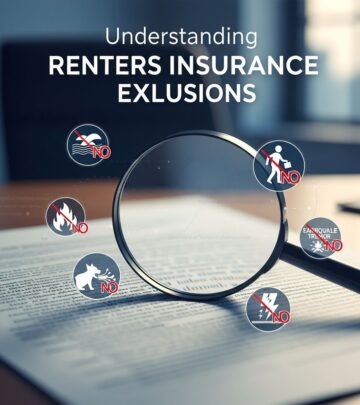
Flood damage represents the most notable exclusion from standard renters insurance policies. Whether caused by heavy rainfall, burst pipes, or overflowing waterways, flood-related damage requires separate flood insurance purchased through the National Flood Insurance Program or private insurers. Renters living in flood-prone areas or low-lying regions should prioritize obtaining this additional coverage.
Similarly, earthquake damage is typically excluded from standard renters policies. Renters in seismically active regions must purchase separate earthquake insurance to protect their belongings from seismic events. Additionally, standard policies do not cover damage from pest infestations, intentional acts, or property damage to your roommate’s belongings unless they are specifically listed on your policy.
Evaluating Your Coverage Needs
Determining the appropriate coverage amount requires honest assessment of your possessions and living situation. Begin by conducting a comprehensive inventory of your belongings, estimating their replacement value. This inventory process often reveals that seemingly modest collections of personal items accumulate to thousands of dollars when calculated collectively.
Walk through every room of your rental unit, opening closets, drawers, and storage areas. List furniture, electronics, clothing, kitchen items, sporting equipment, hobby supplies, and any other possessions you own. For each item, estimate its current replacement cost through online searches or retail comparisons. This detailed inventory serves dual purposes: it determines your appropriate coverage limit and provides documentation for claim purposes if loss occurs.
Beyond calculating total asset value, consider your geographic and living circumstances. Renters in areas prone to severe weather such as hurricanes, hailstorms, or tornadoes should evaluate whether their policy specifically addresses storm-related damage. Similarly, if you own particularly valuable items such as fine jewelry, art collections, musical instruments, or high-end electronics, you may require additional coverage or endorsements for these specific items.
Understanding Cost Structures and Affordability
One of the most compelling reasons renters often delay purchasing insurance stems from cost concerns—concerns that are largely unfounded. Renters insurance is remarkably affordable, with average monthly premiums ranging from $10 to $30. Annual premiums typically fall between $120 and $360, representing a minimal investment for comprehensive financial protection.
This low cost reflects the relatively low claims frequency for renters insurance compared to other insurance types. Most renters experience no claims during their policy period, resulting in lower overall risk for insurers and therefore lower premiums for policyholders.
Finding and Comparing Renters Insurance Policies
Obtaining renters insurance requires engaging with a licensed insurance agent or company. You should obtain your renters insurance exclusively through licensed, reputable insurance providers. Begin by contacting your current insurance company if you maintain other policies such as auto insurance. Many insurers offer multi-policy discounts that can significantly reduce your overall insurance costs.
When comparing quotes from multiple insurers, extend your review beyond premium price alone. Read policy fine print carefully, comparing coverage limits, deductibles, and specific inclusions for each quote. Two policies with identical monthly premiums may offer substantially different coverage levels and benefits.
Leveraging Discounts and Rate Reductions
Insurance companies recognize that certain tenant behaviors and apartment features reduce risk, and they reward these protective measures through premium discounts. Common discounts include those for installing fire alarms, burglar alarms, deadbolts on exterior doors, fire extinguishers, and sprinkler systems.
Beyond property security features, insurers often discount premiums for bundling multiple policies with the same carrier, paying your policy in full rather than monthly installments, paying your premium early, or maintaining multiple policy periods without lapses. Some companies also offer discounts for completing home safety courses or maintaining excellent credit scores. Always inquire about available discounts when obtaining quotes, as these reductions can materially lower your annual expenses.
The Claims Process and Policy Maintenance
Understanding how to file a claim and maintaining your policy appropriately ensures you receive maximum benefit when loss occurs. Most insurers provide multiple claim filing options including online portals, phone systems, and in-person agents. You will typically need to provide documentation of the loss, including photographs, receipts, or other proof of ownership and damage.
Maintaining accurate records supports successful claims. Keep receipts for valuable purchases, photograph valuable items, and update your inventory if you acquire significant new possessions. This documentation accelerates claim processing and helps establish the value of lost or damaged items.
Special Considerations for Specific Rental Situations
Certain rental circumstances warrant additional coverage considerations. Renters in shared housing situations should clarify that only their personal belongings are covered, unless roommates are specifically added to the policy. If you operate a home-based business, standard renters insurance may exclude business-related property or liability, necessitating separate business coverage.
Renters with particularly valuable collections—whether art, jewelry, musical instruments, or specialized equipment—should discuss endorsements or scheduled personal property coverage that specifically protects high-value items at agreed-upon values rather than relying on standard coverage limits.
Making Your Final Decision
The decision to purchase renters insurance ultimately involves weighing minimal monthly costs against substantial potential financial protection. For most renters, this calculation strongly favors obtaining comprehensive coverage. The relatively low premium cost, combined with broad coverage of personal property and liability protection, makes renters insurance one of the most cost-effective insurance products available.
Begin by assessing your situation, obtaining multiple quotes from licensed insurers, comparing coverage options carefully, and asking about available discounts. Within hours, you can secure comprehensive protection for your belongings and financial security, achieving peace of mind for a modest monthly investment.
References
- Renting Your Home? Protect Your Belongings with Renters Insurance — National Association of Insurance Commissioners. 2024. https://content.naic.org/article/consumer-insight-renting-your-home-protect-your-belongings-renters-insurance
- A Beginner’s Guide to Renters Insurance — Freddie Mac. 2024. https://myhome.freddiemac.com/blog/rental-housing/beginners-guide-renters-insurance
- Renters Insurance 101: What Every Apartment Renter Should Know — NWR Living. 2024. https://nwrliving.com/renters-insurance-101-what-every-apartment-renter-should-know/
- How Much Renters Insurance Do I Need? — Travelers Insurance. 2024. https://www.travelers.com/resources/renters/how-much-renters-insurance-do-i-need
- Your Renters Insurance Guide — Insurance Information Institute. 2024. https://www.iii.org/article/your-renters-insurance-guide
- Your Complete Guide To Renter’s Insurance — Hanscom Veterans Community Union. 2024. https://www.hvcu.org/learning-center/your-complete-guide-to-renter%E2%80%99s-insurance/
- Tenant Guide to Renters Insurance — United States Marine Corps. 2024. https://www.mcrdsd.marines.mil/Portals/3/Tenant%20Guide%20to%20Renters%20Insurance.pdf
Similar Articles








Read full bio of medha deb