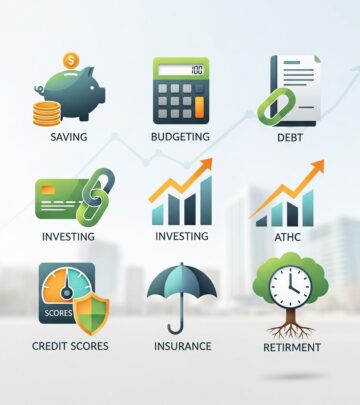
Financial Literacy: The Complete Guide To Money Basics
Understanding why your aging dog coughs: From kennel cough to heart disease.

Financial literacy is the foundation of economic security and personal well-being. It encompasses the knowledge and skills necessary to make informed financial decisions, manage money effectively, and build long-term wealth. In today’s complex financial landscape, understanding basic money management principles is essential for achieving your financial goals, whether you’re saving for retirement, buying a home, or simply living within your means.
What Is Financial Literacy?
Financial literacy refers to the ability to understand and apply various financial skills to manage personal finances effectively. This includes knowledge about budgeting, saving, investing, borrowing, and protecting your financial assets. Financial literacy empowers individuals to make better decisions about their money, avoid costly mistakes, and work toward financial independence.
The importance of financial literacy cannot be overstated. Research shows that individuals with higher financial literacy tend to have better credit scores, lower debt levels, and greater accumulated wealth. Financial literacy education helps people understand complex financial products and services, making it easier to identify scams and make choices aligned with their long-term goals.
Understanding Budgeting Fundamentals
A budget is a detailed plan for how you will spend and save your money. Creating and maintaining a budget is one of the most critical components of financial literacy. It allows you to see exactly where your money goes each month and helps you make intentional spending decisions.
Steps to Create an Effective Budget:
- Track Your Income: Calculate your total monthly income from all sources, including salary, side gigs, and passive income
- List Your Expenses: Document all regular and irregular expenses, from rent and utilities to entertainment and subscriptions
- Categorize Spending: Organize expenses into categories such as housing, transportation, food, and entertainment
- Set Goals: Determine how much you want to allocate to savings, debt repayment, and investments
- Monitor and Adjust: Review your budget regularly and make adjustments based on changing circumstances
The 50/30/20 budgeting rule is a popular framework where 50% of after-tax income covers necessities, 30% goes to discretionary spending, and 20% is allocated to savings and debt repayment. However, this ratio should be adjusted based on individual circumstances and financial goals.
Building Emergency Savings
An emergency fund is a critical component of financial security. It provides a financial cushion for unexpected expenses and helps prevent reliance on high-interest debt during difficult times. Financial experts recommend maintaining an emergency fund equivalent to three to six months of living expenses in a liquid, easily accessible account.
Building an emergency fund should be a priority before making other investments. Start by setting aside a small amount each month, even if it’s just $25 to $50, and gradually increase contributions as your financial situation improves. Keep this fund in a separate account, such as a high-yield savings account, to avoid the temptation to spend it on non-emergencies.
Understanding Credit and Debt Management
Credit is essential for major financial transactions like buying a home or car. Understanding how credit works and managing debt responsibly is vital for financial literacy. Your credit score, typically ranging from 300 to 850, reflects your creditworthiness and affects your ability to borrow money and the interest rates you’ll receive.
Key Factors Affecting Your Credit Score:
- Payment History (35%): Your track record of paying bills on time
- Credit Utilization (30%): The percentage of available credit you use
- Length of Credit History (15%): How long you’ve had credit accounts open
- Credit Mix (10%): Variety of credit types (credit cards, loans, mortgages)
- New Credit Inquiries (10%): Recent applications for credit
To build good credit, pay all bills on time, keep credit card balances low, and avoid applying for unnecessary credit. Review your credit report annually to identify errors and fraudulent activity. Under federal law, you’re entitled to one free credit report annually from each of the three major credit bureaus.
Introduction to Investing
Investing is how your money grows beyond savings alone. While saving is important, investing helps combat inflation and build substantial wealth over time. Financial literacy includes understanding basic investment concepts and the various vehicles available to grow your money.
Common Investment Types:
- Stocks: Ownership shares in companies, offering growth potential but with higher volatility
- Bonds: Loans to governments or corporations, providing fixed income and lower risk
- Mutual Funds: Professionally managed portfolios of stocks, bonds, and other securities
- Exchange-Traded Funds (ETFs): Funds tracking indexes with lower fees than mutual funds
- Real Estate: Tangible assets providing rental income and appreciation potential
- Retirement Accounts: Tax-advantaged accounts like 401(k)s and IRAs
Before investing, understand your risk tolerance, time horizon, and financial goals. Diversification—spreading investments across different asset types—helps minimize risk. For beginners, low-cost index funds and ETFs offer a simple way to start investing with minimal capital.
Planning for Retirement
Retirement planning is essential for ensuring financial security in your later years. Starting early allows compound interest to work in your favor, significantly increasing your retirement savings. Understanding available retirement accounts and contribution limits is crucial for maximizing tax advantages.
Popular Retirement Accounts:
- 401(k): Employer-sponsored plans with employer matching contributions and tax-deductible contributions
- Traditional IRA: Individual retirement accounts with tax-deductible contributions and tax-deferred growth
- Roth IRA: Individual accounts with after-tax contributions but tax-free withdrawals in retirement
- SEP-IRA: Simplified Employee Pension plans for self-employed individuals and small business owners
The earlier you begin saving for retirement, the more time compound growth has to work. Even small monthly contributions can accumulate substantially over decades. If your employer offers a 401(k) match, aim to contribute enough to capture the full match—it’s essentially free money.
Understanding Insurance
Insurance protects against significant financial losses from unexpected events. Financial literacy includes understanding different insurance types and determining adequate coverage. Without proper insurance, a single catastrophic event could devastate your finances.
Essential Insurance Coverage:
- Health Insurance: Protects against medical expenses and is often required by law
- Auto Insurance: Mandatory coverage for vehicle-related accidents and damages
- Homeowners/Renters Insurance: Protects property and liability for home-related incidents
- Life Insurance: Provides financial protection for dependents if you pass away
- Disability Insurance: Replaces income if you become unable to work
Review your insurance policies regularly to ensure adequate coverage. As your circumstances change—buying a home, starting a family, or changing jobs—adjust your insurance accordingly. Comparing quotes from multiple providers can help you find better rates.
Tax Fundamentals and Planning
Understanding taxes is integral to financial literacy. Taxes significantly impact your income, investments, and overall wealth accumulation. Knowledge of tax-advantaged accounts and strategies helps you keep more of your earnings.
Key tax concepts include gross income (total earnings), adjusted gross income (AGI, income after certain deductions), and taxable income (amount subject to taxation). Tax deductions reduce your taxable income, while tax credits directly reduce taxes owed. Utilizing tax-advantaged accounts like 401(k)s and IRAs can substantially lower your tax burden.
Building Financial Goals
Setting clear financial goals provides direction and motivation for your money management efforts. Goals should be specific, measurable, achievable, relevant, and time-bound (SMART). Different goals have different time horizons and may require different strategies.
Types of Financial Goals:
- Short-term Goals (1-3 years): Emergency funds, vacation savings, or paying off credit cards
- Medium-term Goals (3-10 years): Down payment on a home, education savings, or vehicle purchase
- Long-term Goals (10+ years): Retirement, college education for children, or wealth accumulation
Track progress toward your goals regularly and celebrate milestones. Adjust goals as needed based on life changes and evolving priorities.
Avoiding Common Financial Mistakes
Financial literacy helps you recognize and avoid costly mistakes. Common errors include living beyond your means, carrying high-interest debt, failing to build an emergency fund, and making emotional investment decisions.
Other mistakes include neglecting insurance, underestimating expenses, and failing to plan for taxes. Understanding these pitfalls and implementing preventive strategies protects your financial health and accelerates wealth building.
Resources for Financial Education
Improving financial literacy is an ongoing process. Numerous resources are available to enhance your knowledge:
- Online courses and webinars from reputable financial institutions
- Personal finance books and publications
- Financial planning software and budgeting apps
- Certified financial advisors and planners
- Government resources and educational programs
- Community workshops and seminars
Frequently Asked Questions
Q: How can I improve my financial literacy?
A: Start by reading reputable financial books, taking online courses, listening to finance podcasts, and consulting with financial advisors. Practice implementing budgeting and saving strategies in your daily life to reinforce learning.
Q: What’s the best age to start investing?
A: The best time to start investing is as early as possible. Even small contributions in your 20s can grow substantially by retirement due to compound interest. Time is your greatest advantage in investing.
Q: How much should I keep in emergency savings?
A: Most experts recommend three to six months of living expenses. This amount should cover essential expenses like housing, food, and utilities without relying on income or credit.
Q: Why is a credit score important?
A: Your credit score determines your ability to borrow money and the interest rates you’ll receive. A higher score saves money on mortgages, car loans, and credit cards, potentially saving thousands over your lifetime.
Q: What is the difference between stocks and bonds?
A: Stocks represent ownership in companies with higher growth potential but greater volatility. Bonds are loans to entities offering steady income with lower risk. A balanced portfolio typically includes both.
Q: Should I invest if I have debt?
A: Generally, pay off high-interest debt first. However, if your employer offers a 401(k) match, capture that benefit while paying down debt. Once high-interest debt is eliminated, increase investment contributions.
References
- Financial Literacy and Financial Behavior — Board of Governors of the Federal Reserve System. 2023. https://www.federalreserve.gov/econresdata/feds/2023/files/202306r1.pdf
- Get Your Free Credit Report — Annual Credit Report. 2024. https://www.annualcreditreport.com
- Publication 17: Your Federal Income Tax — Internal Revenue Service. 2024. https://www.irs.gov/publications/p17
- MyRetirement.gov – Retirement Savings Planning — U.S. Department of Labor. 2024. https://www.myretirement.gov
- Investing Basics — U.S. Securities and Exchange Commission. 2024. https://www.sec.gov/investor/basics.htm
Similar Articles








Read full bio of medha deb