Competitive Advantage: 3 Strategies That Work
Master cost leadership, differentiation, and focus strategies to build sustainable competitive advantage.
Understanding Competitive Advantage
Competitive advantage is the foundation of business success in today’s dynamic marketplace. It refers to the unique attributes, capabilities, or strategies that allow a company to outperform its competitors and create superior value for customers. Without a clearly defined competitive advantage, a business risks becoming just another option in an overcrowded market, struggling to differentiate itself and maintain profitability.
A competitive advantage encompasses anything that gives a company an edge over its rivals—whether that’s the ability to produce goods at lower costs, offer unique products that customers cannot find elsewhere, or serve a specific market segment better than anyone else. This advantage must be something that competitors cannot easily replicate, as this exclusivity is what creates lasting value and sustainable growth.
The importance of establishing a competitive advantage cannot be overstated. Companies with strong competitive advantages enjoy higher profit margins, better customer retention, lower churn rates, and improved investor confidence. These benefits translate into increased capital availability, better creditworthiness, and ultimately, greater long-term success. Whether you’re a startup or an established corporation, understanding and leveraging competitive advantage is essential for thriving in your industry.
Why Competitive Advantage Matters for Your Business
In an increasingly competitive business environment, having a clear competitive advantage is no longer optional—it’s essential for survival and growth. Here’s why competitive advantage matters:
Market Differentiation: Your product or service must stand out by offering unique features, superior quality, or innovative solutions that competitors cannot easily replicate. This differentiation is what makes customers choose your business over alternatives.
Premium Pricing Power: When you offer something competitors cannot easily replicate, you can command premium prices, which boosts profit margins and increases overall profitability.
Customer Loyalty: A strong competitive advantage helps attract and retain customers, creating a loyal customer base that provides repeat business and positive word-of-mouth referrals. When customers recognize your unique value proposition, they develop emotional connections to your brand.
Talent Attraction: Employees are drawn to innovative, successful companies that offer growth opportunities and demonstrate clear market leadership. A strong competitive advantage signals career growth potential.
Investor Confidence: Investors are more likely to fund companies with clear competitive advantages, as these indicate higher potential for long-term success and sustainable profitability.
Michael Porter’s Three Generic Strategies
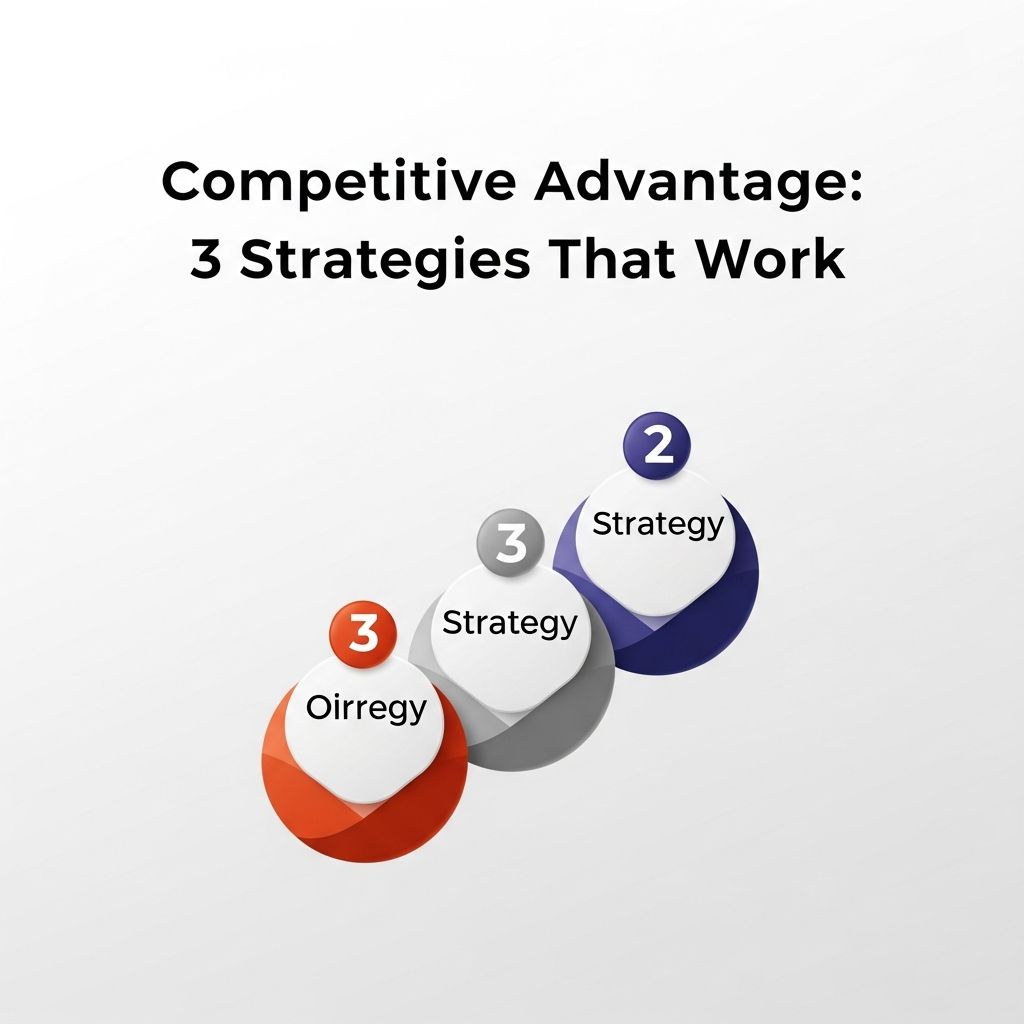
Renowned Harvard Business School professor Michael Porter identified three fundamental strategies for establishing and maintaining competitive advantage. These strategies have become the foundation for competitive strategy development across industries and remain relevant today. Understanding these three approaches allows businesses to choose the strategy that best aligns with their capabilities, market position, and customer base.
1. Cost Leadership Strategy
The cost leadership strategy focuses on becoming the lowest-cost manufacturer or provider of a good or service within the industry. Companies pursuing this strategy do not necessarily compete on quality alone; rather, they produce goods or services at standard quality levels while charging significantly lower prices than competitors.
How Cost Leadership Works: Firms employing cost leadership combine low profit margins per unit with large sales volumes to maximize overall profit. The strategy relies on operational efficiency, streamlined supply chains, waste reduction, and economies of scale. Companies like Walmart and Amazon have famously used cost leadership to dominate their respective markets, leveraging their massive scale to negotiate better supplier prices and pass savings to customers.
Implementation Tactics: Cost leaders typically invest in manufacturing efficiency, automate processes where possible, optimize logistics networks, and minimize administrative overhead. They seek the best alternatives in producing goods or offering services and actively advertise this cost advantage to make it difficult for competitors to replicate their pricing structure.
Advantages of Cost Leadership: This strategy attracts price-sensitive customers and creates barriers to entry for new competitors who cannot achieve similar scale or efficiency. It also provides a cushion during economic downturns when price becomes the primary purchasing factor.
Challenges: However, cost leadership can be vulnerable to price wars, may limit pricing flexibility, and requires continuous investment in maintaining operational efficiency. The strategy is also susceptible to disruption by new technologies that leapfrog existing cost structures.
2. Differentiation Strategy
The differentiation strategy involves developing unique goods or services that are significantly different from what competitors offer. Rather than competing on price, differentiation focuses on creating distinct value propositions that justify premium pricing and attract customers willing to pay more for superior quality, features, or experience.
Building Differentiation: Companies employing differentiation must consistently invest in research and development to maintain and improve key product or service features. This investment is what sets them apart and keeps competitors from easily copying their offerings. Differentiation can come from superior product quality, innovative features, exceptional brand image, outstanding customer service, or unique design.
Creating Unique Value: By offering a unique product with a distinctive value proposition, businesses can convince consumers to pay premium prices, resulting in higher profit margins. This strategy works particularly well in markets where customers value innovation, quality, or brand prestige over price.
Examples of Differentiation: Apple differentiates through design and ecosystem integration. Tesla differentiates through electric vehicle technology and innovation. Luxury brands differentiate through heritage, craftsmanship, and exclusivity. SaaS companies often differentiate by developing unique features that address specific customer pain points and by focusing on customer-centricity.
Sustainability: Differentiation strategies tend to be more sustainable than cost leadership because genuine innovation and brand value are harder for competitors to replicate quickly. However, maintaining differentiation requires ongoing innovation investment and strong brand management.
3. Focus Strategy
The focus strategy takes a different approach by identifying the specific needs of a niche market segment and developing products or services tailored to that particular audience. Rather than trying to serve the entire market, focus strategies target a specific customer segment, geographic area, or product category where the company can excel.
Two Variants of Focus Strategy: The focus strategy has two distinct variants that companies can pursue:
Cost Focus: This variant combines the focus approach with cost leadership. Companies using cost focus target a specific market segment with lower prices than competitors serving that same segment. For example, a budget airline might focus on serving cost-conscious travelers on specific routes, offering no-frills service at rock-bottom prices.
Differentiation Focus: This variant combines focus with differentiation. Companies using differentiation focus serve a niche market with highly specialized, unique products or services that competitors do not offer to that specific segment. For instance, a company might focus on premium, handcrafted products for environmentally conscious consumers willing to pay premium prices.
Advantages of Focus Strategies: Focus strategies allow smaller companies to compete effectively against larger competitors by dominating a specific niche. They enable deeper understanding of target customer needs and often result in loyal customer communities. Focus strategies also allow for more efficient resource allocation since the company concentrates on a defined market segment.
Implementing Your Competitive Advantage Strategy
Choosing a competitive advantage strategy is only the first step. Successful implementation requires several critical components:
Identify Your Value Proposition: To build a competitive advantage, you must clearly identify what value your company delivers that target markets seek and that competitors cannot easily replicate. This value proposition should be specific, measurable, and aligned with customer needs.
Know Your Market: Conduct thorough market analysis to understand customer needs, competitor offerings, market trends, and emerging opportunities. Use tools like SWOT analysis to evaluate your strengths, weaknesses, opportunities, and threats.
Assess Competitive Landscape: Understand who your competitors are, what advantages they possess, and where gaps exist in the market. Identify areas where you can differentiate or compete more effectively.
Align Resources: Ensure your company has the resources, capabilities, and organizational structure needed to execute your chosen strategy. If pursuing differentiation, invest in R&D and talent. If pursuing cost leadership, invest in operations and efficiency.
Monitor and Adapt: Competitive advantage is not static. Continuously monitor market changes, competitor actions, and customer preferences. Be prepared to adapt your strategy while maintaining your core competitive advantage.
Sustainable Competitive Advantage
While any competitive advantage provides benefit, a sustainable competitive advantage is what drives long-term success. Sustainable competitive advantage refers to unique assets, characteristics, or capabilities that are difficult for competitors to replicate and allow your business to meet customer demands better than rivals over an extended period.
Without sustainable competitive advantage, your business risks becoming just another option in the marketplace. Sustainable advantages might include proprietary technology, patents, distinctive brand identity, deeply embedded customer relationships, specialized talent, or unique business processes that have been refined over years.
The key to sustainability is ensuring that your competitive advantage cannot be quickly or easily copied. This might be achieved through intellectual property protection, continuous innovation, strong brand equity, or operational excellence that takes years to develop.
Evaluating Your Current Position
Before implementing a competitive advantage strategy, evaluate where your company currently stands:
Excellence in Primary Strategy: Excelling in at least one of the three categories—cost, differentiation, or focus—while remaining competitive in the other two puts your company in a strong position. The key is not trying to be equally strong in all areas, but rather choosing your primary strategy and executing exceptionally while maintaining adequate performance elsewhere.
Average Performance Risk: If your company achieves only average performance across all three categories, it will not stand out in the marketplace. This middle-ground positioning often leads to underperformance and potential business failure.
Identifying Competitive Gaps: Map out how you deliver value to customers, who your target market is, and who else operates in your space. Your competitive advantage lies in identifying the most engaging benefit for your target audience and delivering it in a way no other business can.
Common Sources of Competitive Advantage
Competitive advantages can stem from various internal and external sources:
Product Differentiation: Unique product attributes, superior quality, innovative features, or design that competitors cannot match.
Intellectual Property: Patents, trademarks, proprietary technology, or trade secrets that provide legal protection against replication.
Technology: Access to unique technology or production methods that enable better products or lower costs than competitors.
Talent and Team: Exceptional employees with specialized skills, experience, and capabilities that drive innovation and execution.
Customer Service: Superior customer experience, responsiveness, and support that build loyalty and differentiation.
Brand Value: Strong brand recognition, reputation, and emotional connection that influences purchasing decisions.
Operational Efficiency: Streamlined processes, waste reduction, and supply chain optimization that reduce costs and improve quality.
Customer Access: Established relationships, distribution channels, or market position that provide customer access advantages.
Frequently Asked Questions
What is the difference between competitive advantage and sustainable competitive advantage?
Competitive advantage is any edge that helps a company outperform competitors. Sustainable competitive advantage goes further—it’s an advantage that is difficult to replicate and maintains effectiveness over time. Sustainable advantages are based on unique assets, capabilities, or strategies that competitors cannot quickly copy, such as patents, brand equity, or proprietary processes.
Can a company have multiple competitive advantages?
Yes, companies can have multiple competitive advantages. However, most successful companies focus on excellence in one primary strategy while maintaining competitiveness in others. Attempting to excel equally in cost leadership and differentiation, for example, often leads to mediocre performance in both.
How often should a company reassess its competitive advantage?
Companies should continuously monitor their competitive position and conduct formal reassessments annually or whenever significant market changes occur. Technology disruption, new competitors, or shifting customer preferences may require strategic adjustments to maintain competitive advantage.
Is cost leadership always about lowering prices to customers?
Not necessarily. While cost leaders do typically offer lower prices, the primary focus is on achieving lower costs than competitors through operational efficiency. Some cost leaders use these savings to invest in other areas rather than immediately passing all savings to customers.
Can small businesses compete against large corporations using these strategies?
Absolutely. The focus strategy is particularly effective for small businesses, as it allows them to target specific market niches where they can achieve excellence without competing directly on price or resources with larger corporations. Small businesses can also succeed through differentiation by offering specialized products or superior service.
What role does innovation play in maintaining competitive advantage?
Innovation is critical, especially for differentiation strategies. Companies must continually innovate to maintain advantages, as competitors constantly work to narrow the gap. Even cost leaders must innovate in operational processes to maintain their cost advantage over time.
References
- What is Competitive Advantage? — Corporate Finance Institute. 2025. https://corporatefinanceinstitute.com/resources/management/competitive-advantage/
- What is a Competitive Advantage — Business Development Bank of Canada. 2025. https://www.bdc.ca/en/articles-tools/entrepreneur-toolkit/templates-business-guides/glossary/competitive-advantage
- What Is Competitive Advantage? Definition, Examples & Identification — Airfocus. 2025. https://airfocus.com/glossary/what-is-competitive-advantage/
- 5 Sources of Competitive Advantage to Drive Growth — Harvard Business School Online. 2025. https://online.hbs.edu/blog/post/sources-of-competitive-advantage
- Competitive Advantage – Definition and Explanation — Oxford Review. 2025. https://oxford-review.com/the-oxford-review-dei-diversity-equity-and-inclusion-dictionary/competitive-advantage-definition-and-explanation/
Similar Articles








Read full bio of medha deb