Compare Personal Loan Offers Online: 7 Key Factors For 2025
Learn how to compare personal loan rates, fees, and terms so you can confidently choose the right lender and keep borrowing costs low.
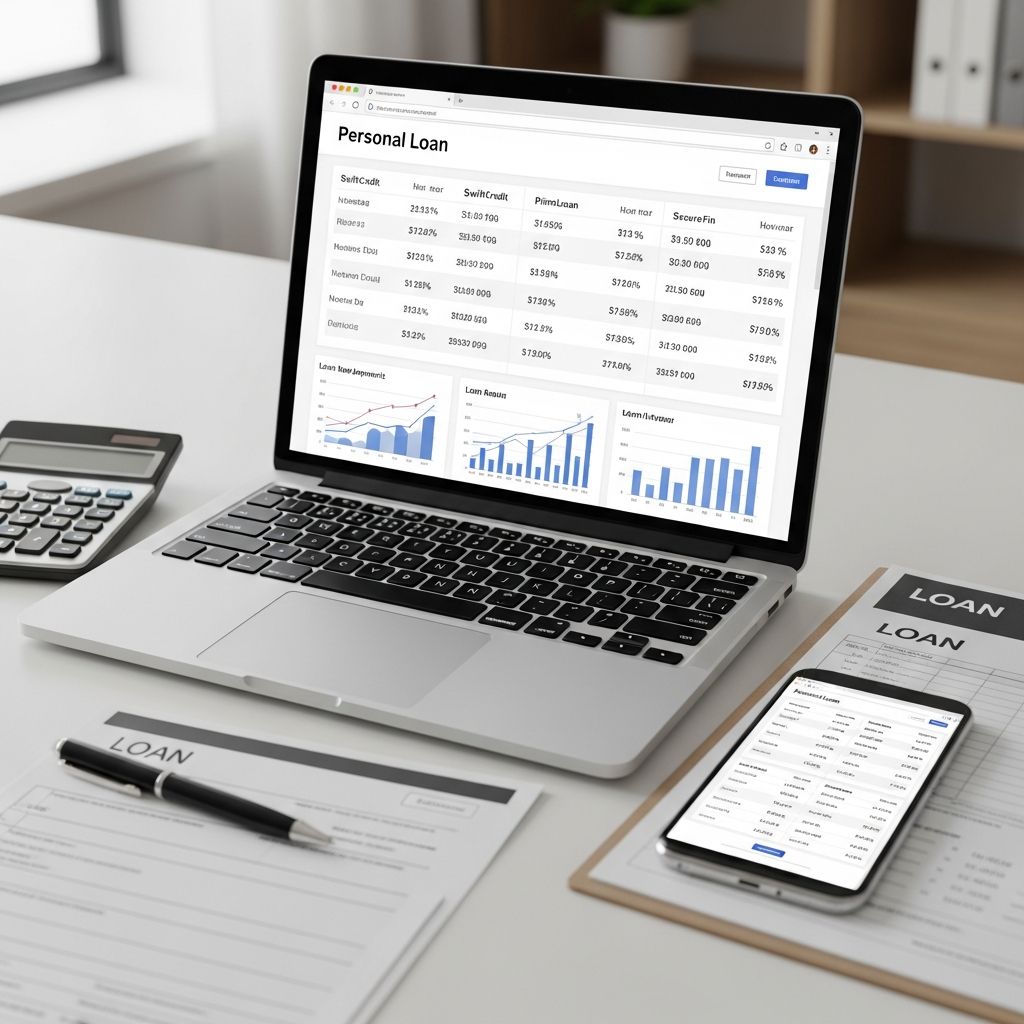
Comparing personal loan offers online lets you see rates, terms, and fees from multiple lenders in one place, helping you find an affordable loan that fits your financial goals. Online marketplaces and direct lenders now make it possible to pre-qualify within minutes, often without affecting your credit score, so you can shop around confidently before committing to a loan.
What Is a Personal Loan?
A personal loan is typically an unsecured installment loan you repay over a fixed term with equal monthly payments. Lenders deposit a lump sum into your bank account, and you use the funds for a variety of purposes such as debt consolidation, home improvements, medical expenses, moving costs, or large purchases.
Because personal loans are usually unsecured, lenders rely on your credit profile, income, and existing debts to decide whether to approve your application and at what annual percentage rate (APR). Borrowers with higher credit scores and stable incomes generally receive lower rates and better terms than those with weaker credit.
Typical Personal Loan Rates, Terms, and Fees
Personal loan pricing varies by lender and borrower profile, but there are common ranges that can guide your expectations. Many online lenders and marketplaces show APR ranges upfront so you can quickly assess which offers may fit your budget.
| Feature | Typical Range | What It Means |
|---|---|---|
| APR | Approx. 5.99% – 35.99% | Includes interest and some mandatory fees; varies by credit score and lender underwriting. |
| Loan Amount | About $1,000 – $100,000 | Smaller loans suit emergencies or minor expenses; larger loans are used for big projects or consolidating multiple debts. |
| Repayment Term | 12 – 84 months (1–7 years) | Shorter terms mean higher monthly payments but less total interest; longer terms reduce the payment but increase total cost. |
| Origination Fee | 0% – 12% of loan amount | Deducted from your loan proceeds before funds are disbursed; some lenders charge no origination fee. |
| Prepayment Penalty | Often $0 | Many modern online lenders do not charge penalties for repaying early, but you must verify this in the loan agreement. |
Representative Loan Example
Personal loan sites often provide examples so you can estimate monthly payments and total costs. For instance, a $5,000 loan with a 36-month term at 10% APR would have a monthly payment of around $161.34, with total repayment of $5,808.24 and total interest of $808.24. These examples are illustrative; your actual rate and payments depend on your credit profile, income, and loan purpose.
How Online Comparison Helps You Find the Right Loan
Online comparison tools and marketplaces allow you to view multiple personal loan offers side by side, rather than visiting each lender separately. Many platforms let you check pre-qualified offers with a soft credit inquiry, which does not affect your credit score, before you formally apply.
According to the Consumer Financial Protection Bureau (CFPB), shopping among several lenders and comparing APRs and fees is one of the most effective ways to lower the total cost of borrowing. Using a comparison site can streamline this process, especially when you are unfamiliar with different lenders.
Key Benefits of Comparing Personal Loans Online
- Time savings: Submit one set of basic details and receive multiple offers within minutes.
- Better pricing: Lenders compete for your business, which can help you secure a lower APR or better terms.
- Transparency: See estimated rates, fees, and monthly payments in advance.
- No-obligation quotes: You can often walk away without accepting an offer if it does not meet your needs.
- Credit score protection: Pre-qualification usually involves only a soft credit check; a hard inquiry occurs when you formally apply.
Main Factors to Compare Between Personal Loan Offers
Not all personal loans are alike, even when APRs look similar. To find the best overall value, you should review several features in combination, not just the headline rate.
1. APR (Annual Percentage Rate)
APR is the most important number to compare among personal loans because it reflects the interest rate plus certain required fees, expressed on a yearly basis. A lower APR generally means the loan is cheaper if all other factors (such as term length) are equal. Be sure to distinguish between introductory marketing rates and the actual APR you are pre-qualified for.
2. Total Cost of the Loan
Two loans with the same APR can still have different total costs depending on the term length. To estimate the full cost, consider:
- Total of all monthly payments over the life of the loan
- Origination fee and any other upfront fees
- Potential late fees or returned payment fees
Some comparison platforms display total repayment amounts for each offer, which can simplify this evaluation.
3. Loan Term and Monthly Payment
Shorter terms mean higher monthly payments but less interest paid overall. Longer terms reduce the payment but can substantially increase total interest paid. According to the Federal Reserve, term length is a major driver of total borrowing cost across consumer installment loans. Try to choose the shortest term with a monthly payment you can realistically maintain.
4. Fees and Penalties
Common personal loan fees include:
- Origination fee: A percentage of the loan amount (for example, 5% on a $10,000 loan equals $500), often deducted from the amount you receive.
- Late payment fee: Charged if you miss or delay a monthly payment.
- Returned payment fee: Charged if your bank rejects a payment.
Many modern lenders do not charge prepayment penalties for paying off your loan early, but you must verify this in the disclosures.
5. Eligibility Requirements
Lenders publish minimum criteria such as credit score ranges, income thresholds, and maximum debt-to-income (DTI) ratios. Some lenders target borrowers with excellent credit, while others accept fair or even poor credit at higher APRs. Reading these criteria before applying can help you avoid unnecessary hard inquiries.
6. Funding Speed
Many online lenders provide quick decisions and fast funding, sometimes within one to three business days after approval, once verification is complete. If you need money urgently for an emergency or time-sensitive purchase, look for lenders that explicitly advertise same-day or next-day funding, and verify cut-off times.
7. Lender Reputation and Customer Service
Beyond raw pricing, consider how each lender treats borrowers. Independent reviews, complaint data, and regulatory actions can provide insight. The CFPB’s complaint database and state attorney general websites can help you check for patterns of consumer problems. Features such as clear online dashboards, mobile apps, and responsive support lines can improve your experience during the life of the loan.
Common Uses for Personal Loans
Personal loans are flexible and can be used for many legal purposes, though some lenders restrict certain uses such as postsecondary education or investing. Typical use cases include:
- Debt consolidation: Combine several high-interest credit card balances into a single fixed-rate payment, often at a lower APR.
- Home improvements: Finance remodeling, repairs, or energy-efficiency upgrades without tapping home equity.
- Medical expenses: Spread the cost of planned procedures or unexpected bills over time.
- Major purchases: Fund appliances, furniture, or other large items while avoiding revolving credit card debt.
- Relocation and moving costs: Cover security deposits, movers, and travel expenses when changing jobs or cities.
For debt consolidation, the key is to secure a lower APR than your current debts and avoid running up new balances on old accounts after consolidation. Research from the Federal Reserve shows that high credit card rates can significantly increase total interest costs, so a lower-rate installment loan may provide savings if used carefully.
Step-by-Step: How to Compare Personal Loans Online
Following a structured approach will help you get accurate offers and select the best one for your circumstances.
Step 1: Clarify Your Goal and Borrowing Amount
- Define the purpose of the loan (for example, debt consolidation, home project, medical bill).
- Calculate the exact amount you need, plus a small cushion if appropriate.
- Avoid borrowing more than necessary, since higher loan amounts increase total interest costs.
Step 2: Check Your Credit Profile
Before applying, review your credit reports from the major credit bureaus and check your credit score. U.S. consumers are entitled to free credit reports from each major bureau every 12 months through the official AnnualCreditReport.com service, which is authorized by federal law. Correcting errors or paying down high credit card balances before applying can help you qualify for better rates.
Step 3: Use a Comparison Site or Marketplace
- Enter basic information such as your desired loan amount, estimated credit range, and loan purpose.
- Review the pre-qualified offers, including APR ranges, estimated monthly payments, origination fees, and term lengths.
- Filter offers by key criteria (for example, no origination fees or no prepayment penalties) if the platform allows it.
Step 4: Narrow Down to a Shortlist of Lenders
- Compare APRs and total repayment amounts for similar term lengths.
- Read lender overviews and customer reviews from independent sources when available.
- Eliminate offers with high fees, unfavorable terms, or poor customer feedback.
Step 5: Read the Fine Print
Before applying, carefully review each lender’s disclosures and sample loan agreements. Pay close attention to:
- Whether rates are fixed or variable
- Fee schedule, including late and returned-payment fees
- Conditions for any advertised discounts (such as autopay or loyalty discounts)
- State-specific limitations on loan amounts or terms
Step 6: Submit Your Application
Once you select a lender, you will complete a full application, which typically includes:
- Personal details and contact information
- Employment status and income documentation
- Consent to a hard credit inquiry
After approval, review the final terms again before signing. Once you accept the loan, funds are usually deposited directly into your bank account, often within one to three business days.
Tips for Getting Better Personal Loan Offers
Small adjustments to your financial profile or application strategy can improve the personal loan offers you receive.
- Improve your credit score: Pay all bills on time, reduce credit card balances, and avoid new hard inquiries before applying. The Federal Reserve notes that borrowers with higher credit scores consistently qualify for lower consumer loan rates.
- Lower your debt-to-income ratio (DTI): Paying down existing debts or increasing income can make you appear less risky to lenders.
- Consider a co-borrower: Some lenders allow a co-applicant with stronger credit, which can lead to better terms.
- Choose a shorter term: If you can afford a somewhat higher monthly payment, a shorter term may reduce your APR and total interest cost.
- Use autopay: Many lenders offer small rate discounts for enrolling in automatic payments, as disclosed in their rate information.
Risks and Pitfalls to Avoid
While personal loans are useful tools, they also carry risks if used improperly.
- Overborrowing: Taking more than you need increases monthly payments and interest costs, and can strain your budget.
- Rolling unsecured debt repeatedly: Consolidating credit card balances without changing spending habits may lead to higher total debt.
- Ignoring fees: A low advertised rate can be offset by high origination fees or other charges.
- Variable budgets: Failing to account for future income changes can make fixed payments difficult to sustain.
- Predatory terms: Be wary of loans with extremely high APRs, aggressive marketing, or pressure tactics; consult the CFPB and state regulators if you suspect unfair practices.
Frequently Asked Questions (FAQs)
Q: Does checking personal loan offers online hurt my credit score?
A: Most comparison sites and lenders use a soft credit inquiry for pre-qualification, which does not affect your credit score. Your score is typically impacted only when you submit a full application and the lender performs a hard inquiry.
Q: What credit score do I need to qualify for a personal loan?
A: Lenders have different minimum score requirements, but many online lenders offer their best APRs to borrowers with good to excellent credit (often around 690 and above), while some accept borrowers in the fair or poor ranges at higher rates.
Q: How fast can I receive funds from an online personal loan?
A: After approval and final verification, many online lenders deposit funds in one to three business days, and some may offer same-day or next-day funding depending on the time of day and your bank.
Q: Is it better to choose a longer term with lower payments or a shorter term with higher payments?
A: A shorter term typically reduces total interest paid and may come with a lower APR, but it increases your monthly payment. A longer term makes payments more affordable but increases total borrowing cost. The best option balances affordability with minimizing interest, based on your budget.
Q: Can I repay my personal loan early without penalties?
A: Many modern online lenders do not charge prepayment penalties, allowing you to pay off your loan early and save on interest, but you must confirm this in the loan agreement and fee schedule before signing.
References
- Compare Personal Loan Offers Online | Top Lenders & Rates — BestMoney.com. 2025-2025 (accessed). https://www.bestmoney.com/personal-loans-shopping/compare
- Our Top 10 Personal Loans — BestMoney.com. 2025-04-22. https://www.bestmoney.com/personal-loans/compare-personal-loans
- Shopping for a loan — Consumer Financial Protection Bureau. 2021-06-28. https://www.consumerfinance.gov/ask-cfpb/what-should-i-look-for-when-shopping-for-a-loan-en-241/
- Compare Top 5 Personal Loan Lenders of 2026 — BestMoney.com. 2025-01-30. https://www.bestmoney.com/personal-loans/learn-more/top-personal-loans
- Consumer Credit – G.19 Statistical Release — Board of Governors of the Federal Reserve System. 2024-11-07. https://www.federalreserve.gov/releases/g19/current/
- Free credit reports — Federal Trade Commission. 2023-04-03. https://consumer.ftc.gov/articles/free-credit-reports
Similar Articles








Read full bio of medha deb