Comparative Advantage: Definition and Economic Impact
Understanding how individuals and nations gain economic benefits through specialization.

What Is Comparative Advantage?
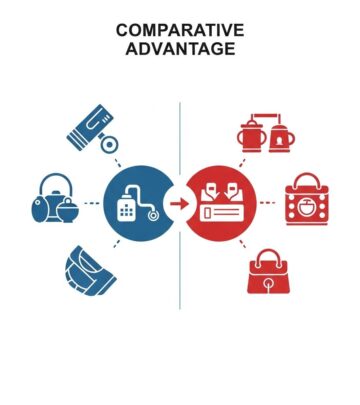
Comparative advantage is an economic principle that describes the ability of an individual, company, or country to produce a good or service at a lower opportunity cost than another entity. This concept, rooted in classical economic theory, explains why specialization and trade create mutual economic benefits even when one party can produce everything more efficiently than another.
The term “opportunity cost” is central to understanding comparative advantage. Opportunity cost refers to the value of the next best alternative that must be forgone when making a choice. Unlike absolute advantage—which simply means being better at producing something—comparative advantage focuses on efficiency relative to what is sacrificed.
Comparative Advantage vs. Absolute Advantage
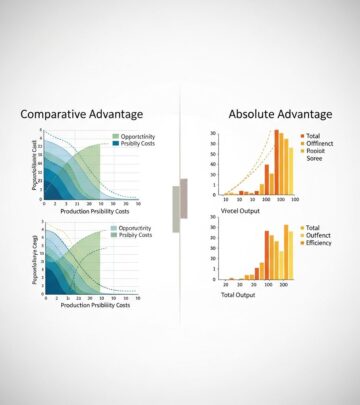
A critical distinction exists between comparative advantage and absolute advantage. Absolute advantage occurs when one producer can create more output using the same resources, or the same output using fewer resources, compared to another producer. While absolute advantage might seem like the more important concept, comparative advantage is actually more useful in determining trade patterns and economic specialization.
Consider two workers: Worker A can produce 10 units of Product X or 5 units of Product Y in one day. Worker B can produce 6 units of Product X or 3 units of Product Y in one day. Worker A has an absolute advantage in producing both products. However, this doesn’t necessarily mean Worker A should produce both items. By examining opportunity costs, we can determine which worker should specialize in which product to maximize total output.
Understanding Opportunity Cost in Specialization
For Worker A, producing one unit of Product X requires forgoing 0.5 units of Product Y. For Worker B, producing one unit of Product X requires forgoing 0.5 units of Product Y as well. In this scenario, they have equal opportunity costs for Product X. However, for Product Y, Worker A sacrifices 2 units of Product X per unit of Product Y, while Worker B also sacrifices 2 units. In this hypothetical scenario, neither has a clear comparative advantage, so specialization wouldn’t provide obvious benefits. In real-world scenarios, opportunity costs differ, creating the foundation for beneficial specialization and trade.
How Comparative Advantage Works in Practice
To illustrate comparative advantage effectively, consider a practical example involving two individuals engaged in a fundraising bake sale. David can bake six chocolate cakes and three pecan pies daily, earning $30 for each item. Lawrence can bake four cakes and three pies daily, also earning $30 per item. Without specialization, David produces 9 treats daily (earning $270) while Lawrence produces 7 treats (earning $210), generating $480 combined.
By analyzing opportunity costs, David sacrifices 0.5 pecan pies for each additional cake, while Lawrence sacrifices 0.75 pies. David has a comparative advantage in cakes. Conversely, David sacrifices 2 cakes per pie, while Lawrence sacrifices only 1.33 cakes. Lawrence has a comparative advantage in pies.
When they specialize accordingly—David focuses exclusively on cakes while Lawrence concentrates on pies—David produces 12 cakes ($360) and Lawrence produces 6 pies ($180), totaling $540. This represents a $60 increase from their combined output without specialization, demonstrating the tangible economic benefits of leveraging comparative advantage.
Comparative Advantage in International Trade
The principle of comparative advantage extends beyond individuals to nations engaged in international commerce. Countries benefit from focusing production efforts on goods and services where they possess lower opportunity costs, then trading for items they produce less efficiently.
For example, a nation with abundant agricultural land and favorable climate conditions possesses a comparative advantage in agricultural products. Another nation with advanced technology and skilled labor might have a comparative advantage in manufacturing electronics. Through trade, both nations can consume more total goods than they could produce independently, increasing overall economic welfare.
This principle underlies much of modern international trade policy and explains why countries specialize in specific industries. Nations don’t necessarily abandon all other industries; rather, they concentrate resources where comparative advantages are greatest, allowing trade partners to supply other needs more efficiently.
Comparative Advantage for Businesses and Industries
Companies apply comparative advantage principles when deciding which products to manufacture, which services to provide, and which activities to outsource. A technology company might recognize its comparative advantage in software development while outsourcing hardware manufacturing to specialized suppliers. This specialization allows the software company to focus resources on its core competency, improving overall efficiency and profitability.
Industries often cluster geographically based on comparative advantages. Silicon Valley dominates technology due to accumulated expertise and infrastructure. Hollywood leads entertainment production. These clusters emerge because comparative advantages compound—skilled workers migrate to areas with opportunities, suppliers locate nearby, and knowledge spreads through the community, reinforcing competitive advantages.
Key Factors Creating Comparative Advantage
Several factors determine comparative advantage for individuals, companies, and nations:
- Natural Resources: Geographic endowments including minerals, climate, and fertile land create comparative advantages in resource-based industries.
- Labor Skills and Education: Highly educated workforces create comparative advantages in knowledge-intensive sectors like technology and finance.
- Capital and Infrastructure: Advanced technology, transportation networks, and industrial facilities enable comparative advantages in manufacturing and services.
- Technological Innovation: Cutting-edge research and development capabilities create comparative advantages in advanced products and services.
- Cost Structure: Lower labor costs or efficient production methods create comparative advantages in cost-sensitive industries.
- Institutional Quality: Strong legal systems, stable governments, and efficient markets support comparative advantages across multiple sectors.
Limitations and Criticisms of Comparative Advantage
While comparative advantage provides valuable insights, economists recognize several limitations. The theory assumes factors of production can move freely between industries, which rarely occurs in practice. Workers cannot instantly retrain, capital investments take time to reallocate, and workers suffer during transitions between industries.
Geographic limitations also constrain pure specialization. Most nations maintain diverse economies for security, employment, and political reasons rather than complete specialization. Transportation costs, trade barriers, and tariffs can offset theoretical gains from specialization.
Additionally, comparative advantage models often assume perfect competition and rational actors, conditions rarely found in real economies. Monopolies, government intervention, and information asymmetries complicate outcomes. The theory also struggles to account for technology transfer, learning-by-doing effects, and dynamic competitive advantages that change over time as capabilities evolve.
Dynamic Comparative Advantage and Development
Contemporary economic analysis recognizes that comparative advantages are not static. Countries can develop new comparative advantages through investment in education, research, and infrastructure. This concept, called dynamic comparative advantage, explains how nations can move up value chains over time.
Countries that were historically known only for agricultural or resource extraction have developed advanced manufacturing and service sectors through deliberate policy and investment. Singapore transformed from a trading port into a global financial center. South Korea evolved from low-wage manufacturing to technology leadership. These transformations occurred by building new capabilities and comparative advantages.
Comparative Advantage in the Modern Global Economy
In today’s interconnected world, comparative advantage remains relevant but operates more complexly. Global supply chains fragment production across multiple countries, with each stage performed where comparative advantages exist. A smartphone might contain components from numerous nations, assembled in another, and sold globally.
Services, previously considered non-tradeable, now move internationally through technology. Indian companies provide software development and business services to American corporations. Comparative advantages in labor costs and specialized skills drive this trade. Artificial intelligence and automation are reshaping comparative advantages by reducing the importance of low-cost labor while increasing the value of technological capabilities.
Frequently Asked Questions
Q: Can a country have a comparative advantage in everything?
A: No. By definition, comparative advantage is relative. If one country is more efficient at everything, it has absolute advantages everywhere, but it must still have comparative advantages in some goods and comparative disadvantages in others based on opportunity costs.
Q: How does comparative advantage differ from competitive advantage?
A: Comparative advantage is an economic principle based on opportunity costs and efficiency in production. Competitive advantage refers to specific strengths a company possesses that allow it to outperform rivals in the marketplace through superior products, service, or pricing.
Q: Can comparative advantage explain wage differences between countries?
A: Partially. Comparative advantage based on labor availability explains some wage differentials, but other factors including skill levels, productivity, capital availability, and institutional quality also significantly influence international wage gaps.
Q: Does outsourcing reflect comparative advantage principles?
A: Yes. Outsourcing often occurs when companies recognize that external suppliers have lower opportunity costs for specific functions, allowing companies to focus resources on core competencies where they possess comparative advantages.
Q: How can individuals apply comparative advantage in their careers?
A: Individuals benefit by developing skills and expertise where they have comparative advantages relative to potential collaborators. This might involve specializing in particular areas while delegating or outsourcing other responsibilities to maximize overall productivity and income.
Conclusion
Comparative advantage remains one of economics’ most powerful and enduring principles, explaining why specialization and trade create mutual benefits. By focusing on activities where opportunity costs are lowest, individuals, companies, and nations can produce more efficiently and achieve higher overall prosperity than through attempting self-sufficiency.
Understanding comparative advantage helps explain international trade patterns, business strategies, and economic development trajectories. While real-world complications prevent perfect specialization, the principle continues guiding effective economic decisions. As technology evolves and global interconnections deepen, comparative advantage adapts but retains its fundamental relevance for explaining economic organization and growth.
References
- Investopedia Video: Explaining Comparative Advantage — Investopedia. 2014-01-27. https://www.youtube.com/watch?v=jNESLIbM8Ns
- Comparative Advantage — MIT OpenCourseWare Economics. https://ocw.mit.edu/courses/14-04-intermediate-microeconomics-fall-2020/
- Ricardo, David. On the Principles of Political Economy and Taxation — Dover Publications. https://www.gutenberg.org/ebooks/33513
- International Trade and Comparative Advantage — World Bank. https://www.worldbank.org/
- Opportunity Cost in Economics — Khan Academy. https://www.khanacademy.org/economics-finance-domain/microeconomics
Similar Articles








Read full bio of Sneha Tete