Communism: Definition, History, and Economic System
Comprehensive guide to communism: ideology, principles, history, and comparison with capitalism.

What Is Communism?
Communism is an economic and political ideology that emerged in the 19th century as a response to industrial capitalism. Developed primarily through the works of Karl Marx and Friedrich Engels, communism advocates for a classless society in which all property is collectively owned and individuals receive compensation based on their contributions and needs. Rather than operating through market mechanisms and private ownership, communist systems theoretically organize production and distribution through centralized state control to eliminate exploitation and create equality among all citizens.
In a true communist society, the state theoretically owns all means of production, including land, factories, resources, and capital. The ideology proposes that by removing private ownership and competition, society can eliminate class divisions, reduce economic inequality, and ensure that all members’ basic needs are met. However, in practice, communist governments have typically concentrated significant power in the hands of state leaders and bureaucratic apparatus.
Core Principles of Communism
Communist ideology rests on several fundamental principles that distinguish it from other economic systems:
- Collective Ownership: All means of production are owned collectively by the state or community rather than by individuals or private corporations.
- Elimination of Class Distinctions: Communism aims to abolish the traditional class system that divides society into wealthy owners and working laborers.
- Distribution According to Need: Resources and goods are distributed based on individual needs rather than market value or individual contribution.
- Centralized Planning: A central authority plans economic production and distribution to serve societal needs rather than profit motives.
- Community Over Individual: The collective welfare of society takes precedence over individual economic freedoms and personal accumulation.
- Absence of Money in Final Stage: Marx envisioned that in the final communist stage, currency and exchange would become unnecessary as resources flow freely according to need.
Historical Development and Key Figures
Karl Marx and Friedrich Engels are the primary architects of communist theory. Their seminal work, “The Communist Manifesto” (1848), outlined the fundamental principles of communism and called for workers to unite and overthrow capitalist systems. Marx analyzed capitalism’s internal contradictions and predicted that it would eventually collapse, to be replaced by socialism and eventually communism.
The first successful communist revolution occurred in Russia in 1917 under Vladimir Lenin, establishing the Soviet Union as the world’s first communist state. This marked a significant shift from theoretical communism to practical implementation, though many argue the Soviet system deviated substantially from Marx’s original vision. Other notable communist leaders include Mao Zedong in China, Fidel Castro in Cuba, and Kim Il-sung in North Korea, each adapting communist principles to their respective national contexts.
Communism vs. Capitalism: Key Differences
Understanding communism requires comparing it with capitalism, the dominant alternative economic system. These two ideologies represent fundamentally different approaches to organizing economies and societies:
| Aspect | Communism | Capitalism |
|---|---|---|
| Property Ownership | Collectively owned by the state or community | Privately owned by individuals and corporations |
| Economic Incentive | Based on social need and duty to society | Based on profit motive and personal gain |
| Market Mechanism | Centrally planned economy with state control | Free market driven by supply and demand |
| Class System | Aims to eliminate class distinctions | Perpetuates class divisions based on wealth |
| Government Role | Extensive control over all economic aspects | Limited interference in economic affairs |
| Wealth Distribution | According to need and ability | According to contribution and market value |
| Individual Freedom | Subordinate to collective interests | Prioritized over social obligations |
| Innovation and Competition | Reduced due to lack of market competition | Encouraged through competitive markets |
Advantages of Communism
Proponents of communist ideology identify several theoretical advantages:
- Universal Basic Needs Met: In theory, communism ensures that all citizens have access to food, housing, healthcare, and education regardless of their economic contribution.
- No Class Division: By eliminating private property ownership, communism theoretically removes the basis for class conflict and social stratification.
- Equal Access to Services: Employment, healthcare, and social services are distributed equally rather than based on ability to pay.
- Elimination of Exploitation: Without private ownership of production means, workers cannot be exploited for surplus labor value.
- Cooperative Society: Communism promotes collective cooperation and community solidarity rather than competitive individualism.
Disadvantages of Communism
Critics highlight several significant challenges and drawbacks:
- Limited Economic Growth: Central planning and lack of market competition often result in slower innovation and economic development compared to capitalist systems.
- Reduced Personal Freedom: Centralized state control typically restricts individual liberties, including freedom of speech, movement, and economic choice.
- Inefficient Resource Allocation: Without price signals from markets, central planners often fail to efficiently allocate resources according to actual demand.
- Bureaucratic Corruption: Concentration of power in state hands creates opportunities for corruption and abuse by government officials.
- Lack of Incentives: Without profit motives or personal wealth accumulation, individuals may have reduced motivation to work efficiently or innovatively.
- Implementation Challenges: Historical attempts at implementing communism have consistently failed to achieve the theoretical ideals, instead producing authoritarian regimes.
Mixed Economies and Practical Implementation
In practice, no country operates as pure communism or pure capitalism. Most modern economies are mixed economies that incorporate elements of both systems. A mixed economy typically features:
- Protection of private property rights while allowing government intervention for public welfare
- Predominantly market-driven production with some state-owned industries considered essential
- Social safety nets and public services funded through taxation
- Regulations preventing monopolistic practices while preserving competitive markets
- Public ownership of utilities, healthcare, education, or transportation in some sectors
Countries like Germany, Canada, and the Scandinavian nations exemplify mixed economies that balance capitalist markets with substantial social welfare programs and state involvement in key sectors.
Communist and Capitalist Nations Today
Currently, few nations operate under strictly communist systems. Countries that formally identify as communist include China, Vietnam, Cuba, North Korea, and Laos, though each has adapted communist principles with varying degrees of market mechanisms. China, in particular, has introduced significant capitalist elements while maintaining Communist Party political control, creating what some describe as “socialism with Chinese characteristics.”
Highly capitalist economies include Singapore, New Zealand, Australia, Switzerland, and Ireland, which emphasize private enterprise, market competition, and minimal government intervention in economic affairs. The United States and United Kingdom represent predominantly capitalist systems with selective social programs.
Communism vs. Socialism: Understanding the Distinction
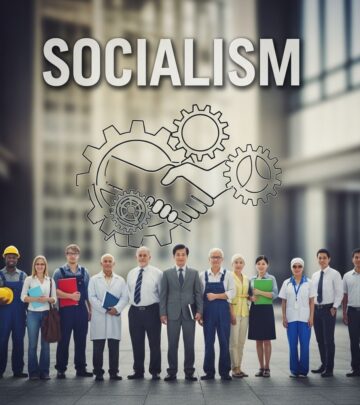
Communism and socialism are often confused, but they represent distinct concepts. Socialism is typically viewed as a transitional stage toward communism, where the state owns production means but maintains some market mechanisms and government structures. Workers receive compensation based on their contribution rather than pure need. Socialism permits greater individual freedoms and typically features democratic governance, whereas communism seeks to eliminate the state entirely and distribute resources purely by need.
Economic Development and Innovation Under Communism
Capitalism’s emphasis on profit incentives and market competition has historically driven rapid innovation and technological advancement. The competitive environment rewards entrepreneurs who develop new products and services, leading to accelerated industrial and technological progress. Conversely, state-controlled communist economies often experience slower innovation rates due to reduced individual incentives, bureaucratic inefficiency, and lack of competitive pressure. This difference partially explains why capitalist nations have generally achieved higher standards of living and more rapid technological development than communist counterparts.
Income Inequality and Social Mobility
Capitalism frequently results in significant income disparity, with wealth concentrating among relatively few individuals and corporations while others remain in poverty. This wealth concentration can hinder social mobility and perpetuate intergenerational poverty. Communism attempts to address this fundamental problem through centralized wealth redistribution to achieve greater equality. However, critics argue that communist systems achieve equality by reducing overall prosperity rather than lifting all citizens to higher living standards. Additionally, historical communist regimes have developed new forms of inequality based on political connections rather than economic ownership.
Frequently Asked Questions
What is the main goal of communism?
The primary goal of communism is to create a classless, stateless society where all property is collectively owned and resources are distributed according to need. Marx believed this would eliminate exploitation, reduce inequality, and allow human flourishing through cooperation rather than competition.
How does communism differ from socialism?
Socialism is generally considered a transitional system between capitalism and communism. While socialists advocate state ownership of production means, they maintain government structures and distribute goods based on individual contribution. Communism seeks to eventually eliminate the state and distribute resources purely by need.
Why has communism failed in practice?
Communist systems have struggled due to several factors: centralized planning inefficiencies, lack of price signals for resource allocation, reduced work incentives, concentration of power leading to authoritarianism, and inability to match capitalist innovation rates. Most communist experiments have deviated significantly from Marx’s theoretical vision.
Can communism and capitalism coexist?
Pure communism and capitalism cannot coexist in the same system, but mixed economies successfully blend elements of both. Most modern nations incorporate capitalist markets with communist-inspired social programs like public healthcare, education, and welfare systems.
Which countries currently practice communism?
China, Vietnam, Cuba, North Korea, and Laos officially identify as communist states, though most have incorporated significant market elements. China particularly has introduced extensive capitalist mechanisms while maintaining Communist Party political control.
Is communism theoretically possible?
Marx’s theoretical communism remains debated among economists and philosophers. While the theory addresses legitimate critiques of capitalism, implementing communism at scale has consistently encountered practical obstacles, leading to authoritarian governments rather than stateless, classless societies.
References
- The Communist Manifesto — Karl Marx and Friedrich Engels. 1848. Original foundational text outlining communist theory and principles.
- Capital (Das Kapital) — Karl Marx. 1867. Comprehensive analysis of capitalist economics and critique of capitalism.
- A History of Soviet Russia — Edward Hallett Carr. Oxford University Press. 1950-1978. Authoritative historical analysis of communist implementation in the Soviet Union.
- The Economist: Understanding Economics — The Economist Intelligence Unit. 2024. Contemporary analysis of global economic systems and their characteristics.
- World Bank Open Data — World Bank. 2024. https://data.worldbank.org/ Statistical data on economic systems and development across nations.
- Communism and Its History — Stanford Encyclopedia of Philosophy. Stanford University. 2023. https://plato.stanford.edu/ Philosophical analysis of communism as political and economic theory.
Similar Articles








Read full bio of medha deb