Commodity Futures: Definition, Types, and How They Work
Master commodity futures trading: Learn types, mechanisms, hedging strategies, and risk management fundamentals.
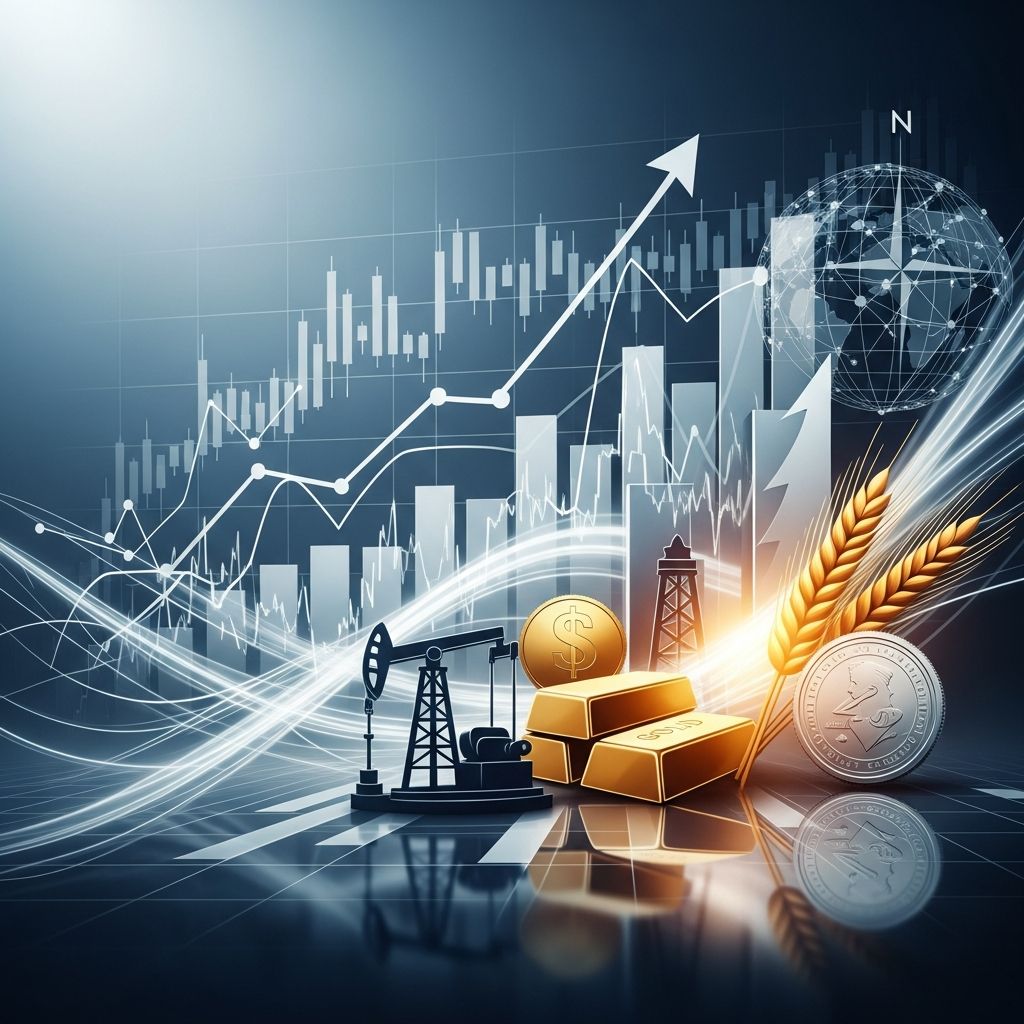
Commodity futures represent one of the most important financial instruments in global markets, enabling businesses to manage price risk and investors to seek profit opportunities. A commodity futures contract is a legally binding agreement to buy or sell a specific quantity of a commodity at a predetermined price on a designated future date. These contracts are standardized and traded on regulated futures exchanges, providing transparency and liquidity to market participants worldwide. Understanding how commodity futures function is essential for anyone involved in trading, investing, or managing commodity-related business risks.
What Are Commodity Futures?
At their core, commodity futures are derivative contracts that obligate buyers and sellers to exchange a specific commodity at a set price at an agreed-upon date in the future. Unlike purchasing a physical commodity, futures contracts allow traders to speculate on price movements or hedge against unfavorable price changes without ever taking physical possession of the underlying asset. The contracts are standardized by the exchange on which they trade, which means the quantity, quality, and delivery specifications are uniform across all contracts of that type.
Futures contracts serve a dual purpose in financial markets. For businesses and producers, they provide a mechanism to lock in prices and manage risk. For speculators and investors, they offer leveraged trading opportunities that can generate significant returns if price predictions prove accurate. Most commodity futures contracts never result in physical delivery; instead, they are closed out through offsetting transactions or cash settlement before the expiration date.
Categories of Commodity Futures
Commodity futures fall into four primary categories, each serving distinct markets and purposes. Understanding these categories helps traders identify which contracts align with their investment objectives and risk tolerance.
Agricultural Futures
Agricultural futures represent some of the oldest and most actively traded commodity contracts. These include contracts for staple crops such as corn, wheat, soybeans, and rice, as well as livestock and soft commodities like coffee, sugar, and cotton. Farmers use agricultural futures to lock in selling prices for their harvests, protecting themselves against price declines. Conversely, food processors and manufacturers use these contracts to secure predictable input costs. For example, a cereal manufacturer concerned about rising grain prices can purchase corn or wheat futures to establish a fixed purchase price, ensuring cost stability for production planning.
Agricultural futures are particularly important for global food security. When a farmer sells futures contracts against their upcoming crop, they guarantee a selling price per bushel or per pound. This allows farmers to plan financially with certainty, even if market prices fluctuate dramatically between the contract date and harvest.
Energy Futures
Energy futures contracts cover crude oil, natural gas, heating oil, and gasoline. These are critical for energy producers and consumers worldwide. Oil refineries, airlines, and transportation companies rely heavily on energy futures to manage their exposure to fuel price volatility. An oil producer concerned about falling crude prices can sell energy futures to lock in revenue, while a natural gas processor concerned about rising input costs can buy futures to secure predictable expenses.
Energy futures are physically delivered contracts, meaning the exchange specifies where and how the commodity must be delivered. However, traders typically close their positions before the delivery date. Individual investors can speculate on crude oil and natural gas prices by establishing long or short positions in these contracts, and e-mini or micro contracts provide options for those seeking smaller position sizes with cash settlement rather than physical delivery.
Metals Futures
Metals futures include contracts for precious metals like gold and silver, as well as industrial metals such as copper. Mining companies use these contracts to hedge against falling metal prices, securing a sale price per troy ounce for precious metals or per pound for industrial metals. Manufacturers using metals as inputs, such as jewelry makers or construction companies, can purchase metals futures to lock in costs and protect against price increases.
Metals futures are particularly important in inflationary environments, as metals often serve as inflation hedges. Precious metals futures also attract investors seeking portfolio diversification and alternative assets beyond traditional stocks and bonds.
Livestock Futures
Livestock futures cover contracts for live cattle and lean hogs, serving ranchers, meat processors, and agricultural businesses. These contracts help producers and buyers manage protein costs and production expenses. Ranchers can sell livestock futures to secure selling prices for their herds, while meat processors can buy these contracts to lock in input costs for meat production.
How Commodity Futures Contracts Work
Commodity futures contracts operate on several key mechanisms that standardize trading and protect market participants from default risk.
Contract Specifications
Each futures contract specifies standardized terms established by the exchange, including the grade and quantity of the underlying commodity, the unit pricing and minimum price fluctuation (tick size), and the expiration date and delivery location. For example, a single corn futures contract typically represents 5,000 bushels. These standardizations ensure that all market participants understand exactly what they are buying or selling, eliminating ambiguity and facilitating efficient price discovery.
Margin Requirements and Leverage
One of the most distinctive features of futures trading is the use of margin, which allows traders to control large contract values with relatively small cash deposits. Initial margin requirements typically range from 3% to 12% of a contract’s notional value, depending on the commodity and current market volatility. This leverage amplifies both gains and losses. For instance, a corn futures contract worth $25,000 might require only $750 to $3,000 in initial margin.
Margin calls occur when a trader’s account balance falls below the maintenance margin level. When this happens, the trader must deposit additional funds to bring the account back to the required level, or the broker will liquidate positions to cover the shortfall.
Mark-to-Market Daily Settlement
To mitigate default risk, futures contracts are marked to market daily. This means the exchange recalculates the value of each position based on the current market price and adjusts account balances accordingly. The variation margin, or difference between the previous day’s settlement price and the current day’s price, is transferred between the accounts of profitable and losing positions. This daily cash flow ensures that losses never accumulate beyond what a trader’s margin can cover, significantly reducing counterparty default risk.
Consider this example: If a futures contract with a $100 delivery price is worth $88 on day 50 and $90 on day 51, the mark-to-market calculation would require the holder of a short position to pay $2 to adjust their margin. This daily reconciliation is a fundamental protection mechanism for all futures market participants.
Contract Expiration and Settlement
Most commodity futures contracts expire on specific dates set by the exchange, after which trading ceases. The contract month cycles typically follow patterns like December, March, June, and September for many commodities. As one contract approaches expiration, volume typically shifts to the next contract month. Most traders close their positions before the delivery date rather than taking or making physical delivery. When a contract expires, the difference between the opening price and closing price is cash-settled, with the holder of the profitable position receiving the gain and the losing position paying the loss.
Hedging With Commodity Futures
Hedging is one of the primary uses of commodity futures, allowing businesses to reduce risk by locking in prices. This practice benefits producers and consumers across various industries.
Producer Hedging
Producers of commodities use futures to protect against falling prices. An oil producer concerned about crude prices declining can sell futures contracts against the oil they extract. A farmer worried about corn prices falling at harvest can sell corn futures to guarantee a selling price per bushel. By establishing these positions, producers transfer price risk to speculators willing to assume it in exchange for potential profits.
Consumer Hedging
Businesses that consume commodities as inputs use futures to protect against rising costs. A cereal manufacturer can buy wheat or corn futures to lock in grain prices. An airline can purchase energy futures to secure predictable fuel costs. Oil refiners and natural gas processors use energy futures to manage their exposure to volatile input prices. These hedges allow businesses to budget accurately and protect profit margins from commodity price swings.
Hedging Example
A practical example demonstrates how hedging works: A corn producer harvests approximately 5,000 bushels and is concerned about falling prices before selling. In September, the producer sells one December corn futures contract at $5.00 per bushel, establishing a contract value of $25,000. As harvest approaches, if corn prices drop to $4.50 per bushel, the producer purchases (buys back) the December contract at that lower price, securing a gain of $0.50 × 5,000 = $2,500. This profit offsets the lower cash price received for the physical corn.
Speculation and Price Discovery
While hedging reduces risk, speculation amplifies it but serves important market functions. Speculators take positions based on their predictions of future price movements, providing liquidity and helping establish fair market prices.
Speculators who predict price increases can establish long positions (buy contracts), while those expecting price declines can establish short positions (sell contracts). These traders have no intention of delivering or taking delivery of the commodity; they aim only to profit from price fluctuations. When speculators’ predictions prove correct, their profits can be substantial due to the leverage provided by margin requirements.
Commodity futures prices also serve important price discovery functions. Traders and market experts analyze commodities continuously, incorporating breaking news and information into futures prices immediately. For example, news that a major oil-producing region might close a critical shipping strait would cause crude oil futures to rise sharply, reflecting the market’s expectation of supply disruption. This real-time price adjustment helps producers and consumers make informed decisions about their commodity strategies.
Benefits and Risks of Commodity Futures
Benefits
Commodity futures offer several advantages to market participants. They enable effective price risk management through hedging, provide leveraged trading opportunities for speculators, ensure transparent price discovery through open market competition, and offer high liquidity for active contract months. The standardized nature of contracts eliminates ambiguity, and the regulated exchange structure protects against counterparty default through clearing mechanisms.
Risks
Despite their benefits, commodity futures involve significant risks. Leverage amplifies losses just as it amplifies gains; a small adverse price movement can exceed a trader’s entire margin deposit, resulting in total loss or even losses exceeding the initial investment. Market volatility can trigger margin calls requiring additional deposits, and prices can move dramatically on unexpected news or events. Traders can also suffer losses from incorrect price predictions, and the complexity of futures strategies can lead to costly mistakes for inexperienced traders.
Frequently Asked Questions
Q: What is the difference between commodity futures and commodity options?
A: A commodity futures contract is an obligation to buy or sell at a specific price on a future date, while a commodity option gives the purchaser the right (but not the obligation) to buy or sell a futures contract at a specified price before a certain date. Options provide more flexibility but typically cost a premium.
Q: Can individual investors trade commodity futures?
A: Yes, individual investors can trade commodity futures through registered brokers on regulated exchanges, though commodity futures and options must be traded through registered persons and firms regulated by the CFTC (Commodity Futures Trading Commission). However, futures trading carries substantial risk and is suitable primarily for experienced or risk-tolerant investors.
Q: Why would I choose commodity futures over investing in physical commodities?
A: Commodity futures offer several advantages: they require less capital upfront due to margin requirements, provide easier liquidity through exchange trading, eliminate storage and insurance costs associated with physical commodities, and allow speculation on price movements without physical possession. Most investors find futures more practical and accessible than purchasing and storing physical commodities.
Q: How does pricing work in commodity futures markets?
A: Futures prices are determined through supply and demand on the exchange, influenced by expectations of future spot prices. When commodities are in plentiful supply, arbitrage mechanisms help set prices. When supply is limited or the commodity doesn’t yet exist (such as crops before harvest), futures prices reflect current market expectations of future value.
Q: What determines margin requirements for commodity futures?
A: Margin requirements vary based on the specific commodity and current market volatility. For example, gold futures margins can range from 2% to 20% depending on spot market volatility. The exchange sets maintenance and initial margin levels and adjusts them periodically based on market conditions.
Getting Started With Commodity Futures
For those interested in trading commodity futures, the process involves several steps: first, educate yourself on the fundamentals of futures markets and the specific commodities you want to trade; second, choose a reputable broker registered with the CFTC; third, develop a clear trading strategy with defined risk management rules; fourth, research specific contracts and their characteristics; and finally, practice with simulated trading before risking real capital.
Commodity futures remain essential tools in global financial markets, serving both the practical purpose of risk management and the speculative purpose of profit-seeking. Whether you’re a producer seeking price certainty or an investor seeking returns, understanding how commodity futures work is crucial to making informed decisions in these complex but important markets.
References
- Commodity Futures — Tastytrade. 2025. https://tastytrade.com/learn/trading-products/futures/commodity-futures/
- Commodity Futures – Meaning, Benefits and Steps to Trade — Groww. 2025. https://groww.in/p/what-is-commodity-futures
- Futures contract — Wikipedia contributors. 2025. https://en.wikipedia.org/wiki/Futures_contract
- What Are Futures? How Futures Contracts Work — Charles Schwab. 2025. https://www.schwab.com/learn/story/basics-trading-futures-contracts
- Basics of Futures Trading — Commodity Futures Trading Commission (CFTC). 2025. https://www.cftc.gov/LearnAndProtect/AdvisoriesAndArticles/FuturesMarketBasics/index.htm
Similar Articles








Read full bio of medha deb