Commodities Trading Overview: Markets, Strategies & Guide
Master commodities trading: Learn markets, strategies, risks, and how to get started.
Commodities Trading Overview
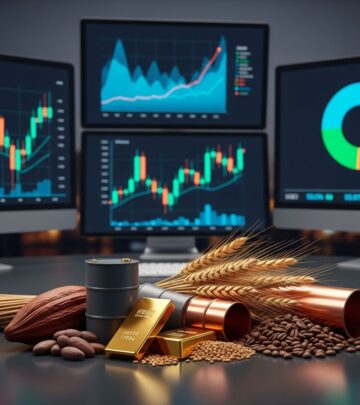
Commodities trading represents one of the oldest and most fundamental forms of commerce in human history. From ancient spice routes to modern energy markets, commodities have served as the backbone of global trade and economic activity. Today, commodities trading encompasses a vast array of physical goods including agricultural products, metals, energy resources, and more. Understanding how commodity markets function, what instruments are available, and how to develop effective trading strategies is essential for investors seeking exposure to these dynamic markets.
What Are Commodities?
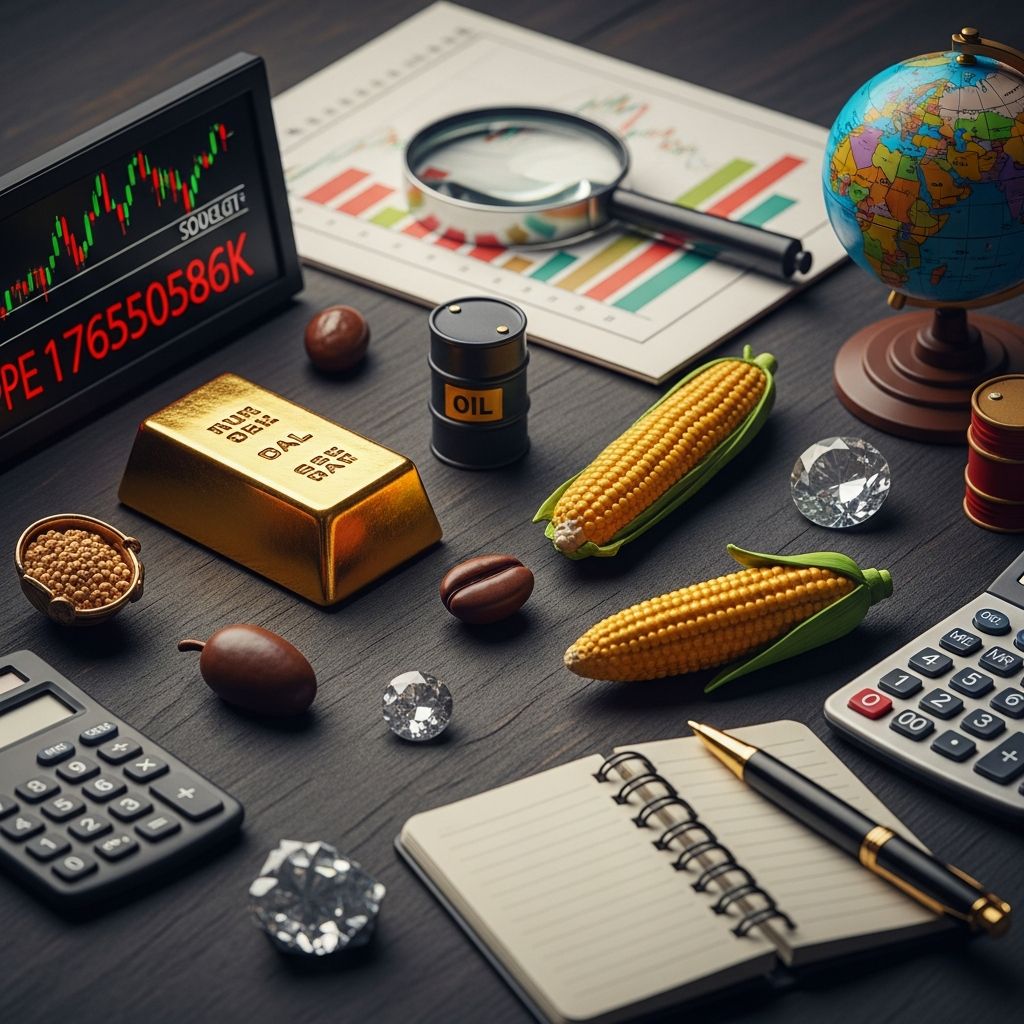
Commodities are basic goods or raw materials that are interchangeable with other identical commodities of the same type. These tangible assets form the foundation of global commerce and include physical products such as crude oil, natural gas, gold, silver, wheat, corn, soybeans, and coffee. The key characteristic that defines a commodity is its fungibility—meaning one unit is essentially identical and interchangeable with another unit of the same commodity. This uniformity allows for standardized contracts and efficient market trading across global exchanges.
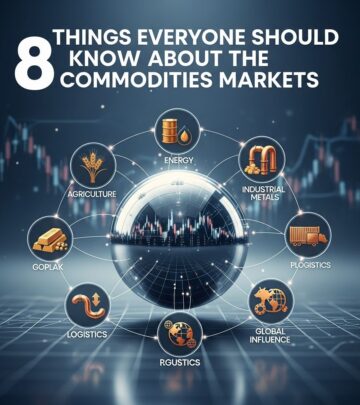
Commodities can be broadly categorized into four main groups:
- Energy: Crude oil, natural gas, heating oil, and gasoline that power industrial and consumer activities worldwide
- Metals: Precious metals like gold and silver, as well as industrial metals including copper, aluminum, and nickel used in manufacturing and construction
- Agriculture: Grains, oilseeds, livestock, and soft commodities such as wheat, corn, soybeans, cattle, and coffee
- Other Materials: Rare earth elements, fertilizers, and emerging commodities that serve specialized industrial purposes
Understanding Commodity Markets
Commodity markets operate through complex global networks of producers, consumers, intermediaries, and speculators. These markets are characterized by supply and demand dynamics that directly influence prices. Factors affecting commodity prices include geopolitical events, weather conditions, currency fluctuations, technological innovations, and macroeconomic trends. The commodity market is typically divided into spot markets, where physical goods are traded for immediate delivery, and futures markets, where contracts for future delivery are negotiated.
The primary exchanges for commodities trading include:
- The Chicago Mercantile Exchange (CME) for agricultural and energy futures
- The Intercontinental Exchange (ICE) for energy and soft commodities
- The London Metal Exchange (LME) for industrial metals trading
- The NYMEX division of CME for crude oil and natural gas contracts
Commodity Trading Instruments
Investors and traders have multiple instruments available for gaining exposure to commodities. Each instrument offers different risk profiles, liquidity characteristics, and transaction costs. Understanding these instruments is crucial for developing an appropriate trading strategy aligned with your investment objectives and risk tolerance.
Futures Contracts
Futures contracts are standardized agreements to buy or sell a specific quantity of a commodity at a predetermined price on a future date. These contracts are highly leveraged, meaning traders can control large positions with relatively small capital requirements. Futures offer significant liquidity and price transparency, but they also carry substantial leverage risk. Most commodity futures traders never intend to take physical delivery; instead, they close positions before contract expiration or roll positions forward into later-dated contracts.
Options Contracts
Options provide traders with the right, but not the obligation, to buy or sell commodities at specified prices. Call options grant the right to purchase, while put options grant the right to sell. Options allow traders to define maximum losses upfront through the premium paid, making them valuable hedging tools. However, options typically require more sophisticated knowledge and understanding of Greeks (delta, gamma, vega, theta) that measure how options respond to price and time changes.
Exchange-Traded Funds (ETFs) and Exchange-Traded Notes (ETNs)
Commodity ETFs and ETNs track the price movements of underlying commodities or commodity indexes. These instruments offer convenient exposure to commodities through a brokerage account without requiring futures trading experience. ETFs and ETNs are ideal for long-term investors seeking simplified commodity exposure. However, these instruments may have tracking errors relative to physical commodities, and some are subject to daily rebalancing costs that can affect returns over extended holding periods.
Stocks and Mutual Funds
Indirect commodity exposure can be gained through investing in companies involved in commodity production, processing, or distribution. Mining companies, oil producers, agricultural cooperatives, and commodity-focused mutual funds provide alternative ways to participate in commodity markets. This approach allows investors to benefit from commodity price increases while also benefiting from company management expertise and operational efficiency.
How Commodities Trading Works
Commodity trading begins with opening an account at a brokerage firm authorized to handle commodity transactions. Traders must complete regulatory requirements and documentation, including financial suitability assessments. The trading process itself follows these general steps:
- Account Setup: Establish a commodity trading account with minimum deposit requirements typically ranging from $2,000 to $10,000 depending on the brokerage and commodity
- Platform Access: Obtain access to trading platforms that provide real-time quotes, charts, news, and order execution capabilities
- Market Analysis: Conduct technical and fundamental analysis to identify trading opportunities
- Order Placement: Execute buy or sell orders through the brokerage platform
- Position Management: Monitor positions, manage risks through stop-loss orders, and take profits at target levels
- Position Exit: Close positions before contract expiration through offsetting trades or roll positions into later contracts
Commodity Trading Strategies
Successful commodity traders employ various strategies tailored to market conditions, risk tolerance, and time horizons. The main trading strategies include:
Trend Following
This strategy involves identifying and trading in the direction of established price trends. Traders use technical indicators such as moving averages, MACD, and trend lines to identify uptrends and downtrends. Trend-following strategies work well in commodity markets characterized by strong directional moves driven by supply disruptions, geopolitical events, or macroeconomic changes.
Mean Reversion
Mean reversion strategies assume that commodity prices will eventually return to historical average levels. Traders identify overbought or oversold conditions using oscillators like the Relative Strength Index (RSI) and Stochastic indicators. When prices deviate significantly from historical means, traders take positions expecting price normalization. This strategy works particularly well in range-bound markets with no strong directional bias.
Spread Trading
Spread trading involves simultaneously taking long and short positions in related commodities or contract months of the same commodity. Calendar spreads trade price differences between near-term and distant futures contracts. Crush spreads compare soybean prices to soybean meal and oil prices. These strategies reduce directional risk and focus on relative price relationships rather than absolute price movements.
Hedging
Companies and investors use commodity futures and options to hedge against adverse price movements. Agricultural producers hedge crop price risk, energy companies hedge petroleum prices, and airlines hedge jet fuel costs. Hedging reduces uncertainty but typically involves trading off potential gains to ensure price protection. Effective hedging requires understanding the specific price risks and selecting appropriate instruments.
Risks in Commodity Trading
Commodity trading carries substantial risks that traders must carefully manage. Understanding and respecting these risks is essential for long-term trading success and capital preservation.
Market Risk
Commodity prices are inherently volatile, driven by supply and demand imbalances, geopolitical events, weather patterns, and macroeconomic conditions. Price movements can be sudden and severe, leading to rapid account losses. The high leverage available in futures trading amplifies both gains and losses. Traders can lose more than their initial investment, especially when trading leveraged instruments.
Liquidity Risk
While major commodity contracts enjoy substantial liquidity, less popular contracts or nearby expiration months may have wider bid-ask spreads and limited trading volume. Poor liquidity makes it difficult to enter or exit positions at desired prices, potentially locking traders into unfavorable price levels. Illiquid contracts may also experience sudden, extreme price moves on minimal volume.
Operational Risk
Technical failures, connectivity issues, platform malfunctions, or broker failures can prevent execution of critical trading orders. Operational risks are often overlooked but can have significant financial consequences. Traders should select reputable brokers with strong technology infrastructure and appropriate regulatory oversight.
Geopolitical and Regulatory Risk
Unexpected geopolitical events such as wars, trade sanctions, or political instability can dramatically impact commodity supplies and prices. Changes in regulations governing commodity trading, environmental policies, or commodity production can also significantly affect markets. These risks are difficult to predict and manage through traditional risk management techniques.
Leverage Risk
The leverage available in commodity futures trading is both an advantage and a danger. While leverage magnifies profits during favorable price movements, it equally magnifies losses during adverse moves. Traders using excessive leverage can lose their entire trading capital rapidly. Prudent risk management requires limiting leverage and maintaining adequate capital reserves.
Getting Started with Commodities Trading
Beginning a commodity trading career requires careful preparation and realistic expectations. Here are essential steps for newcomers:
- Education: Study commodity markets, trading strategies, technical and fundamental analysis, and risk management principles thoroughly before risking capital
- Practice: Use paper trading or demo accounts to test strategies and build trading skills without financial risk
- Start Small: Begin with small position sizes in highly liquid contracts while building experience and confidence
- Develop a Plan: Create a comprehensive trading plan including specific entry and exit criteria, position sizing rules, and risk management protocols
- Keep Records: Maintain detailed trading records to track performance, identify patterns, and continuously improve your trading approach
- Manage Risk: Use stop-loss orders consistently, never risk more than 1-2% of account capital on a single trade, and maintain adequate reserves
Advantages and Disadvantages of Commodities Trading
Advantages
- Portfolio diversification benefits through low correlation with stocks and bonds
- Inflation hedge characteristics as commodity prices typically rise with inflation
- High liquidity in major commodity contracts enabling easy position entry and exit
- Leverage availability allowing control of large values with modest capital
- Diverse opportunities across energy, metals, and agricultural commodities
Disadvantages
- High volatility and leverage can result in rapid, substantial account losses
- Complex market dynamics requiring significant knowledge and experience
- Emotional challenges as leveraged trading can trigger fear and greed responses
- Time-intensive monitoring and analysis requirements for successful trading
- Regulatory restrictions in some jurisdictions limiting commodity trading access
Frequently Asked Questions
Q: What is the minimum amount of capital needed to start commodity trading?
A: While minimum deposit requirements vary by broker, most commodity brokers require initial deposits between $2,000 and $10,000. However, successful traders typically recommend starting with significantly more capital to accommodate margin requirements and account volatility. A realistic minimum for serious traders would be $5,000 to $10,000, with many professionals suggesting $25,000 or more for adequate risk management.
Q: Can I trade commodities with a regular brokerage account?
A: Regular brokerage accounts cannot trade commodity futures directly. You need a specialized commodity trading account with a broker registered with the Commodity Futures Trading Commission (CFTC). However, you can gain commodity exposure through ETFs, ETNs, and stocks of commodity-related companies using a standard brokerage account.
Q: Is commodity trading suitable for beginners?
A: Commodity futures trading is generally not recommended for complete beginners due to its complexity and risks. However, beginners can gain commodity exposure through ETFs and mutual funds. Before trading futures, newcomers should invest considerable time in education, paper trading practice, and gradual capital deployment with conservative position sizing.
Q: How are commodity trading profits taxed?
A: Futures contracts are taxed under Section 1256 rules in the United States, with 60% of gains taxed as long-term capital gains and 40% as short-term capital gains, regardless of holding period. This favorable treatment differs from regular securities taxation. Consult a tax professional to understand your specific tax situation.
Q: What role do macroeconomic factors play in commodity trading?
A: Macroeconomic factors significantly influence commodity prices. Economic growth increases demand for commodities, interest rate changes affect storage costs and carrying costs, currency fluctuations impact international competitiveness, and inflation expectations influence commodity valuations. Successful traders monitor economic indicators and central bank policies closely.
Q: How can I manage risk in commodity trading?
A: Effective risk management includes using stop-loss orders on every trade, limiting position size to 1-2% of account capital, maintaining adequate account reserves, avoiding excessive leverage, and diversifying across multiple commodities and strategies. Additionally, hedging strategies and options can provide defined risk profiles.
References
- Commodity Futures Trading Commission (CFTC) — Overview and Mission — U.S. Commodity Futures Trading Commission. 2024. https://www.cftc.gov/about
- Chicago Mercantile Exchange (CME) — Products and Markets — CME Group. 2024. https://www.cmegroup.com/markets.html
- Understanding Commodity Markets and Trading — International Organization of the Petroleum Exporting Countries (OPEC). 2024. https://www.opec.org/opec_web/en/about_us/24.htm
- Investopedia — Commodities Trading Overview — Investopedia Editorial Team. 2024. https://www.investopedia.com/investing/commodities-trading-overview/
- Federal Reserve Economic Data — Commodity Price Indices — Federal Reserve Bank of St. Louis. 2024. https://fred.stlouisfed.org/
Similar Articles








Read full bio of medha deb