Commodities For Inflation Protection: 2025 Expert Guide
Discover proven commodity strategies to safeguard your wealth from rising prices and preserve purchasing power effectively.
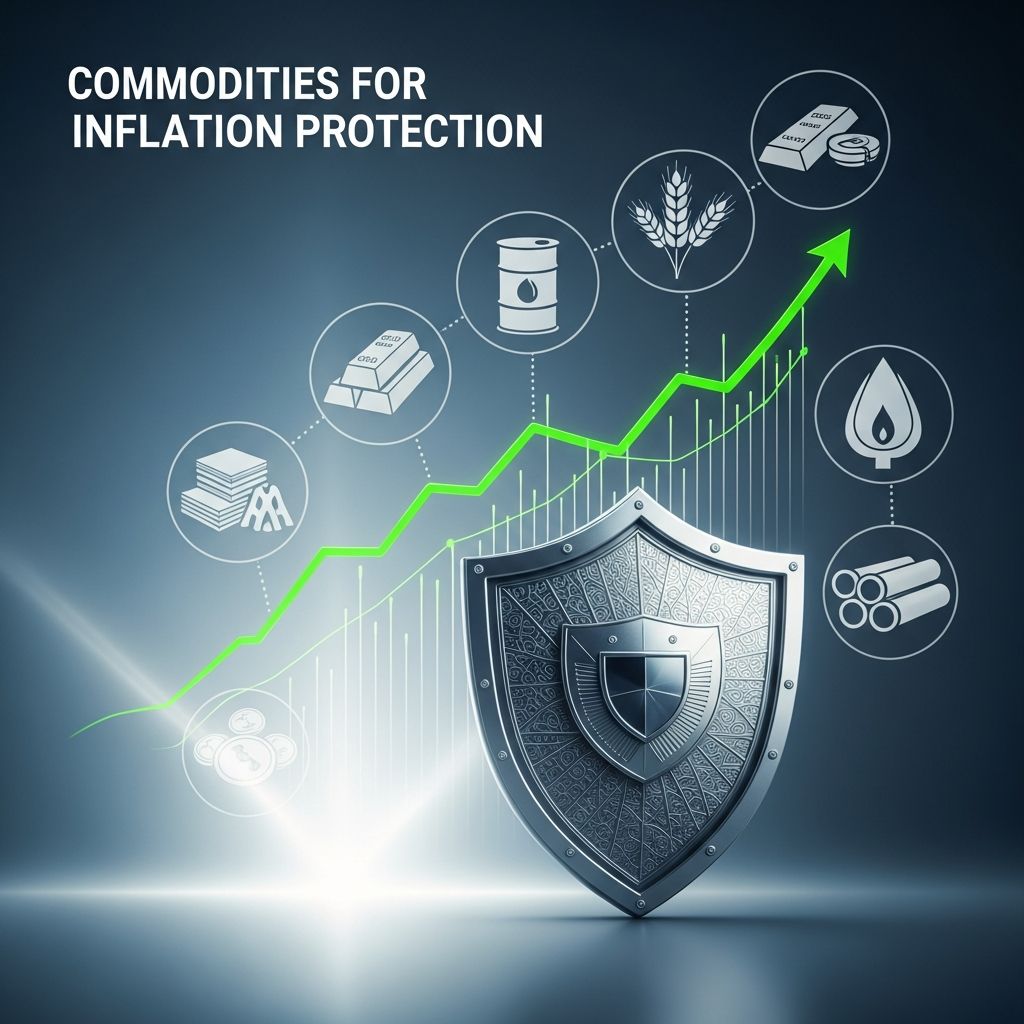
Inflation erodes the purchasing power of money over time, making it essential for investors to seek assets that maintain value during periods of rising prices. Commodities have historically served as reliable hedges because their prices often rise in tandem with inflation, driven by real-world demand and supply dynamics.
Why Commodities Outperform During Inflationary Periods
Commodities represent physical goods such as metals, energy sources, and agricultural products, which are fundamental to economic activity. When inflation accelerates, typically due to increased demand or supply disruptions, the costs of these essentials climb, pushing commodity prices higher. This direct linkage provides a natural counterbalance to declining currency value.
Unlike stocks or bonds, which can suffer when central banks raise interest rates to combat inflation, commodities often benefit from these environments. For instance, supply-driven inflation—stemming from shortages in oil or grains—prompts price surges that benefit holders of these assets. Research indicates that commodities rally not only during negative supply shocks but also when economic growth boosts demand, offering dual protection mechanisms.
| Inflation Trigger | Commodity Response | Portfolio Benefit |
|---|---|---|
| Supply Shocks (e.g., oil disruptions) | Price spikes | Hedges bond/stock declines |
| Demand Growth | Sustained rises | Enhances overall returns |
| Central Bank Policy Shifts | Geopolitical boosts (e.g., gold) | Preserves wealth |
Gold: The Timeless Safe Haven Asset
Gold stands out as a premier inflation hedge due to its role as a store of value, particularly when trust in fiat currencies wanes. During inflationary episodes, investors flock to gold, driving its price upward. Goldman Sachs analysis highlights gold’s superiority in hedging both inflation and geopolitical risks, outperforming other commodities in volatile times.
To gain exposure, investors can opt for physical gold, though storage and security pose challenges. More practical avenues include gold ETFs, which track the metal’s spot price via futures or holdings in mining companies. These funds offer liquidity and diversification without the hassles of direct ownership.
- Physical Bullion: Coins or bars for long-term holding, ideal for high-net-worth individuals.
- ETFs (e.g., GLD): Track gold prices efficiently with low fees.
- Mining Stocks: Amplify gains through operational leverage but add company-specific risks.
Historical data from periods like 2021-2022 shows gold’s resilience amid supply chain issues and energy crises, underscoring its protective qualities.
Oil and Energy: High-Impact Inflation Fighters
Oil, as a cornerstone of global energy, reacts sharply to inflationary pressures from geopolitical tensions or production cuts. Its price appreciation during inflation provides substantial hedging potential, often outpacing broader markets.
Investors can access oil through futures contracts, which allow betting on future price levels, or ETFs that mirror oil benchmarks like WTI crude. Energy mutual funds offer broader exposure to producers and infrastructure, blending oil with related assets for stability.
Key strategies include:
- Futures Contracts: Direct exposure for active traders, enabling precise hedging.
- ETFs (e.g., USO): Simplified entry with daily liquidity.
- Sector Funds: Diversified bets on energy giants, reducing single-asset volatility.
Monitoring tools like real-time order flow platforms help time entries, ensuring adjustments align with market shifts.
Agricultural Commodities: Steady Inflation Shields
Agricultural products such as wheat, corn, and soybeans provide consistent hedges, as food prices invariably rise with inflation. Weather events and trade policies amplify their volatility, creating opportunities for gains.
These assets correlate strongly with headline inflation spreads, where unexpected price hikes in food contribute to overall CPI increases. Broad commodity indices like the GSCI include significant agricultural weight, balancing portfolios against pure energy or metal bets.
Metals Beyond Gold: Industrial Powerhouses
Copper and other base metals serve dual roles: industrial demand drivers and inflation barometers. As economies expand amid inflation, construction and manufacturing boost consumption, elevating prices.
ETFs targeting industrial metals offer accessible exposure, often outperforming during growth-fueled inflation while hedging supply-constrained scenarios.
Implementing Strategic Allocation Frameworks
Effective hedging requires blending commodities into portfolios thoughtfully. Academic models advocate core-driven allocations, using inflation forecasts to weight commodities optimally. Strategic approaches set fixed exposures based on expected headline-core spreads, while tactical methods adjust dynamically to pass-through cycles.
For supply-driven inflation, trend-following CTAs with commodity tilts excel, capturing upward momentum. Vanguard research supports commodities for goals-based inflation protection within diversified portfolios.
| Approach | When to Use | Example Allocation |
|---|---|---|
| Strategic | Persistent spreads, no pass-through | 10-15% commodities |
| Tactical | Cycle shifts, rising pass-through | Dynamic 5-20% based on signals |
| Trend-Following | Supply shocks | CTA funds with 40%+ commodities |
Diversified ETFs and Indices for Broad Coverage
Broad commodity ETFs simplify hedging by spanning energy, metals, and agriculture. Indices like GSCI-TR demonstrate low correlation to traditional assets, enhancing risk-adjusted returns.
These vehicles track futures rolls, mitigating contango risks while capturing inflation premiums paid by hedgers.
Risks and Mitigation Tactics
Commodity investing carries volatility from weather, geopolitics, and roll yields. Diversification across sectors and pairing with TIPS reduces drawdowns.
Trend programs counterbalance by shorting overextended moves, profiting from mean reversion.
Building Your Inflation-Resistant Portfolio
Start with 5-10% commodity allocation, scaling based on inflation outlook. Combine gold for stability, oil for growth sensitivity, and agriculture for breadth. Regular rebalancing ensures alignment with macro signals.
Frequently Asked Questions
What makes commodities effective against inflation?
They rise with real economic costs, preserving value unlike depreciating cash.
Are commodity ETFs better than futures for beginners?
Yes, ETFs provide liquidity and ease without futures’ complexity.
How much should I allocate to commodities?
Typically 5-15%, depending on risk tolerance and inflation expectations.
Does gold always hedge inflation?
It excels in high-uncertainty scenarios but pairs well with other commodities.
Can I hedge with commodities in a retirement account?
Many ETFs are IRA-eligible, enabling tax-advantaged exposure.
References
- An Inflation Hedging Strategy with Commodities: A Core Driven Approach — Amundi Research Center. 2023. https://research-center.amundi.com/files/nuxeo/dl/0066e305-f6f5-4571-8250-3a72b6a3b6dd?inline=
- How to hedge against inflation — IG. 2021-06-18. https://www.ig.com/en-ch/trading-strategies/how-to-hedge-against-inflation-210618
- Which commodities are the best hedge for inflation? — Goldman Sachs. 2024. https://www.goldmansachs.com/insights/articles/which-commodities-are-the-best-hedge-for-inflation
- How Commodities Like Oil and Gold Drive Inflation Hedging Strategies — Bookmap. 2024. https://bookmap.com/blog/how-commodities-like-oil-and-gold-drive-inflation-hedging-strategies
- Investing in commodities as an inflation hedge? — Transtrend. 2022-04. https://www.transtrend.com/media/documents/Commodities_inflation_hedge_APR22.17ac0c.pdf
- Commodity investing and its role in a portfolio — Vanguard. 2023. https://corporate.vanguard.com/content/dam/corp/research/pdf/commodity_investing_and_its_role_in_a_portfolio.pdf
Similar Articles








Read full bio of Sneha Tete