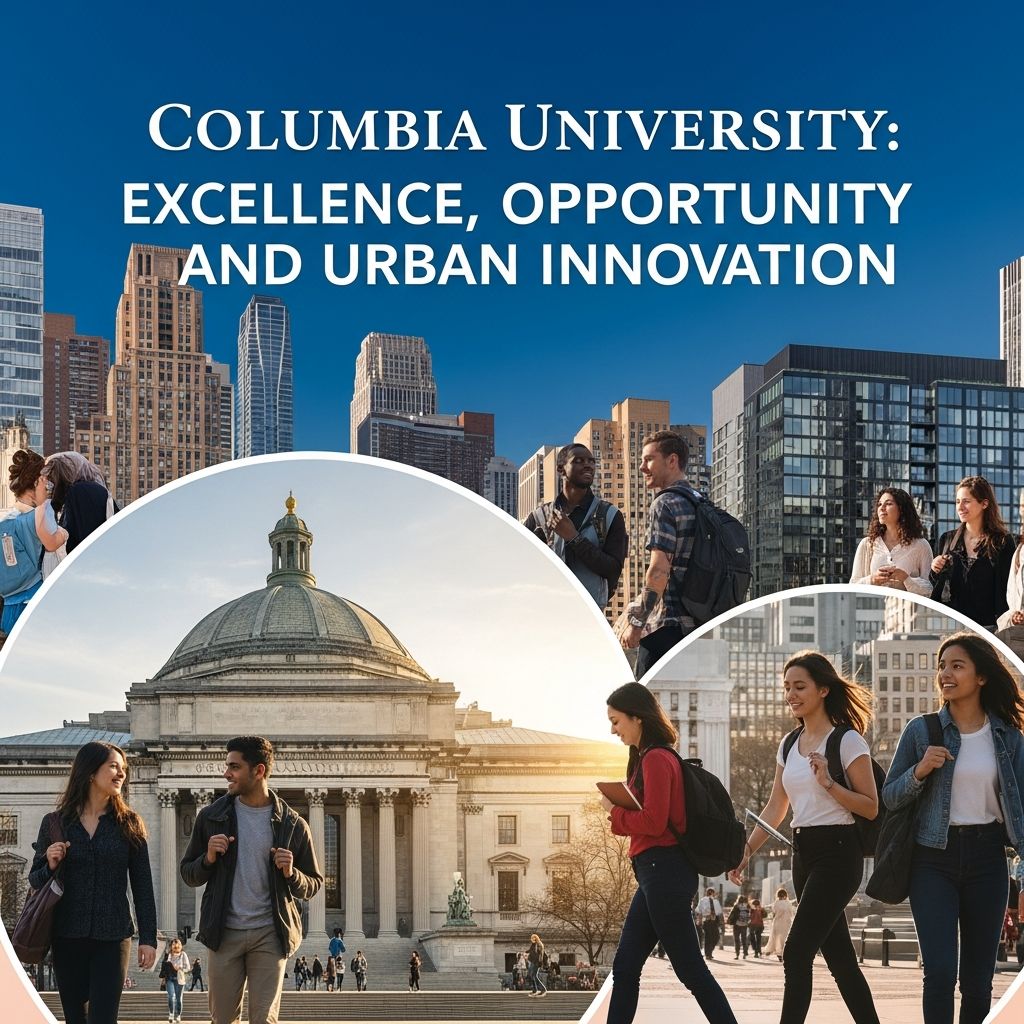
Columbia University: Excellence, Opportunity, and Urban Innovation
Discover Columbia University's academic excellence, prestigious programs, and vibrant NYC campus experience.
Columbia University: A Premier Institution in the Heart of New York City
Columbia University stands as one of America’s most prestigious Ivy League institutions, offering an unparalleled educational experience in the vibrant heart of Manhattan. Founded in 1754 as King’s College, Columbia has evolved into a world-class research university that combines intellectual rigor with the dynamic opportunities of urban life. With approximately 28,000 students comprising roughly 8,500 undergraduates and predominantly postgraduates, the university maintains its commitment to excellence across twenty schools, including three undergraduate schools and sixteen graduate schools. The institution’s prime location in the Morningside Heights neighborhood provides students with unique access to New York City’s cultural, professional, and intellectual resources.
Academic Excellence and Distinctive Programs
Columbia’s academic reputation rests on its rigorous curricula, world-class faculty, and commitment to intellectual growth. The university offers more than 100 areas of study through multiple undergraduate colleges, including Columbia College and the School of Engineering and Applied Science, alongside comprehensive graduate and professional programs. One of Columbia’s most distinctive features is the Core Curriculum, a foundational program that ensures all undergraduates develop critical thinking skills and broad knowledge across literature, philosophy, history, science, and art.
Undergraduate Education
Columbia’s undergraduate programs provide a comprehensive liberal arts education combined with specialized training in students’ chosen fields. The Core Curriculum represents a unique pedagogical approach that fosters intellectual coherence and interdisciplinary thinking. Students benefit from rigorous academic standards while maintaining flexibility to pursue their academic interests through diverse majors and concentrations across humanities, social sciences, natural sciences, and engineering disciplines.
Graduate and Professional Programs
Beyond undergraduate education, Columbia offers advanced degrees through its graduate schools and professional programs. These programs combine academic rigor with practical exposure, producing leaders across law, business, journalism, medicine, engineering, and numerous other fields. The emphasis on real-world problem-solving skills ensures graduates are prepared for immediate professional impact.
Research and Innovation Infrastructure
Columbia’s commitment to research excellence is demonstrated through its extensive network of more than 200 research centers and laboratories. The university maintains several flagship research institutions that advance knowledge across multiple disciplines. The Lamont-Doherty Earth Observatory conducts groundbreaking environmental research, while the Zuckerman Mind Brain Behavior Institute pushes forward understanding in neuroscience and cognitive science. Additionally, the Goddard Institute for Space Studies contributes significantly to climate and space research, and Columbia operates accelerator laboratories in partnership with major technology firms including Amazon and IBM.
Students have exceptional opportunities to collaborate with esteemed faculty members on research projects that contribute to advancements across numerous fields. This hands-on research experience, combined with access to cutting-edge facilities like the Jerome L. Greene Science Center and Columbia Nano Initiative, equips students with practical skills and knowledge essential for innovation and discovery.
Campus Infrastructure and Facilities
Columbia’s Morningside Heights campus occupies approximately six city blocks in Manhattan, housing iconic academic facilities and residential spaces. The neo-classical Butler Library stands as one of the largest buildings on campus and serves as a symbol of the university’s commitment to intellectual pursuit. The campus features nearly two dozen undergraduate dormitories, providing on-campus housing for students. Recent significant expansions have transformed the Manhattanville campus, introducing major facilities including the Zuckerman Mind Brain Behavior Institute (ZMBBI), the Lenfest Center for Engineering and the Forum, enhancing research and collaborative learning spaces.
Location Advantages and Urban Integration
Columbia’s strategic position in New York City creates unmatched opportunities for experiential learning and professional development. The city serves as a living laboratory where students engage with leading institutions, industries, and cultural organizations. Access to internships in finance, media, arts, publishing, technology, and other sectors provides invaluable professional experience during academic studies.
The Manhattan location offers students exposure to diverse perspectives, networking with professionals across industries, and participation in cultural events that enrich academic learning. However, this urban environment also presents challenges, including high living costs, limited campus space, and the intense pace of city life that some students find overwhelming when transitioning from quieter environments.
Diversity and Inclusive Community
Columbia cultivates a vibrant, multicultural environment welcoming students, faculty, and researchers from over 100 countries. This diversity enriches classroom discussions and fosters a global outlook essential for leadership in an interconnected world. The university’s commitment to inclusion is demonstrated through dedicated initiatives like the Office of Multicultural Affairs and Global Centers that promote cross-cultural understanding and dialogue.
The diverse student body brings varied perspectives, experiences, and backgrounds that enhance the intellectual environment. Over 500 student organizations provide platforms for cultural expression, academic exploration, and social engagement, ensuring students can find community and pursue their interests throughout their time at Columbia.
Global Engagement and Study Abroad
Columbia maintains Global Centers in strategic international locations including Paris, Nairobi, and other major cities, enabling students to engage in cross-cultural learning and international research partnerships. These centers facilitate study abroad programs, international internships, and collaborative research projects that prepare students for global careers and leadership roles. Students can conduct research, complete internships, and study in diverse cultural contexts while maintaining affiliation with Columbia’s academic community.
Strengths and Academic Advantages
| Academic Advantage | Description |
|---|---|
| Extensive Research Opportunities | Access to over 200 research centers and laboratories with world-class faculty mentorship across disciplines |
| Leading-Edge Programs | Journalism, business, medicine, engineering, and other programs combining academic rigor with practical exposure |
| Interdisciplinary Focus | Centers like the Earth Institute and Data Science Institute enabling cross-disciplinary problem-solving |
| World-Class Faculty | Distinguished scholars and practitioners across all disciplines providing mentorship and research opportunities |
| Strong Alumni Network | Notable alumni including Barack Obama offering mentorship, career opportunities, and lifelong professional connections |
| Global Study Programs | Centers worldwide enabling cross-cultural learning, international internships, and global research partnerships |
Student Life and Campus Engagement
Beyond academics, Columbia provides a vibrant campus culture with over 500 student organizations covering academic, cultural, athletic, and social interests. Annual traditions like the Varsity Show showcase student creativity and foster community bonding. The university’s active campus life ensures students balance rigorous academics with meaningful social connections and personal development.
Environmental and Sustainability Commitment
Columbia demonstrates institutional commitment to environmental stewardship through initiatives like The Green Fund and sustainability-focused curricula across programs. These efforts prepare students to lead in climate-conscious industries and address global environmental challenges. The university’s establishment of the Columbia Climate School reflects its dedication to addressing climate change through education, research, and leadership development.
Considerations and Challenges
While Columbia offers exceptional opportunities, prospective students should consider several factors when evaluating the institution:
Cost and Financial Considerations
Columbia’s tuition and living expenses rank among the highest globally, with New York City’s high cost of living contributing to significant financial burden for many students. Despite comprehensive financial aid programs, substantial student debt remains a concern for many graduates. Families should carefully evaluate financial aid packages and explore scholarship opportunities.
Competitive Environment
The Ivy League rigor and high academic standards create a competitive atmosphere that, while motivating for many students, can contribute to stress and burnout. Students should be prepared for academic intensity and consider their capacity for managing demanding coursework and expectations.
Campus Space Limitations
Columbia’s Manhattan location restricts campus expansion, resulting in crowded facilities, limited housing availability, and constrained recreational areas. This limitation affects the traditional residential campus experience some students anticipate. Off-campus housing, while necessary for many students, adds financial burden and involves long commutes.
Urban Environment Adaptation
New York City’s sensory intensity, noise levels, and fast pace can overwhelm students from quieter environments, potentially affecting mental health and academic concentration. The seasonal winters may trigger seasonal affective disorder in some individuals. Students should honestly assess their comfort with urban living before committing to attendance.
Admissions and Financial Aid
Columbia maintains highly selective admissions standards, evaluating applicants holistically across academic achievement, extracurricular engagement, personal qualities, and life experiences. The university meets full demonstrated financial need for admitted students through need-based financial aid packages, though institutional aid does not cover the full cost of attendance for most families.
Prospective students should begin the admissions process early, prepare thoroughly for standardized tests, engage in meaningful extracurricular activities, and craft compelling application essays. International students follow similar processes but face additional considerations regarding visa requirements and international student financial aid availability.
Career Outcomes and Alumni Success
Columbia graduates pursue diverse career paths across law, medicine, business, finance, technology, arts, public service, and academic fields. The university’s strong alumni network facilitates mentorship and professional connections throughout graduates’ careers. Notable alumni achievements span politics, business, arts, academia, and social impact sectors, reflecting the breadth of opportunities Columbia provides.
The location in New York City provides immediate access to employers and professional networks across major industries. Internship experiences during undergraduate and graduate years facilitate career development and often lead to full-time employment opportunities.
Strategic Initiatives and Future Direction
Columbia’s recent strategic initiatives demonstrate its commitment to continuous improvement and addressing emerging challenges. The university’s $5 billion capital campaign reflects confidence in expanding research capabilities, improving facilities, and enhancing the student experience. Initiatives like the Knight First Amendment Institute and Columbia World Projects position the institution at the forefront of addressing global challenges and advancing free inquiry.
Frequently Asked Questions
Q: What makes Columbia University unique compared to other Ivy League schools?
A: Columbia’s Manhattan location provides unparalleled access to industries and cultural institutions, while its Core Curriculum creates intellectual cohesion across disciplines. The combination of rigorous academics, extensive research opportunities, diverse student body, and urban integration creates a distinctive educational experience.
Q: How selective is Columbia’s admissions process?
A: Columbia maintains highly selective admissions with acceptance rates typically below 3 percent. The university evaluates applicants holistically, considering academic achievement, standardized test scores, extracurricular involvement, essays, and personal qualities.
Q: What financial aid does Columbia offer?
A: Columbia meets full demonstrated financial need for admitted U.S. citizens and permanent residents through need-based financial aid packages. International students receive need-aware admission consideration and limited institutional aid. Students should review detailed financial aid information and understand the true out-of-pocket cost before committing.
Q: What is the Core Curriculum?
A: The Core Curriculum is a distinctive undergraduate program requiring all students to complete courses in literature, philosophy, history, science, and art. This interdisciplinary approach ensures students develop critical thinking skills and broad intellectual foundations regardless of their major.
Q: How difficult is it to find housing at Columbia?
A: Housing is limited due to the Manhattan campus constraints. Columbia provides dormitory housing for first-year students and guarantees on-campus housing for select upperclass students. Many students live off-campus, which increases housing costs and may involve longer commutes.
Q: What research opportunities exist for undergraduate students?
A: Columbia offers extensive research opportunities through its 200+ research centers and laboratories. Undergraduates can work with faculty on research projects, participate in summer research programs, and access state-of-the-art facilities across multiple disciplines.
Q: Does Columbia offer study abroad programs?
A: Yes, Columbia maintains Global Centers in multiple international locations including Paris and Nairobi, enabling students to study abroad, conduct international research, and complete overseas internships while maintaining affiliation with the university.
Q: How large are undergraduate classes at Columbia?
A: Class sizes vary significantly, with introductory courses sometimes enrolling hundreds of students, while upper-level seminars may have fewer than twenty students. Some students report that large class sizes limit one-on-one faculty interaction, particularly in early years.
References
- 20 Pros & Cons of Columbia University [2025] — DigitalDefynd. 2025. https://digitaldefynd.com/IQ/columbia-university-pros-cons/
- Columbia University — Wikipedia. Last updated 2025. https://en.wikipedia.org/wiki/Columbia_University
- Columbia University Rankings, Fees & Courses Details — Top Universities. 2025. https://www.topuniversities.com/universities/columbia-university
- Exploring Excellence: A Guide to Columbia University in the City of New York — Storage Scholars. 2025. https://www.storagescholars.com/blog/guide-to-columbia-university-in-the-city-of-new-york
- Columbia University — Official Columbia University Website. 2025. https://www.columbia.edu
- Columbia University – Niche — Niche. 2025. https://www.niche.com/colleges/columbia-university/
Similar Articles








Read full bio of medha deb