Collision vs Comprehensive Coverage
Discover the essential differences between collision and comprehensive auto insurance to select the right protection for your vehicle and budget.
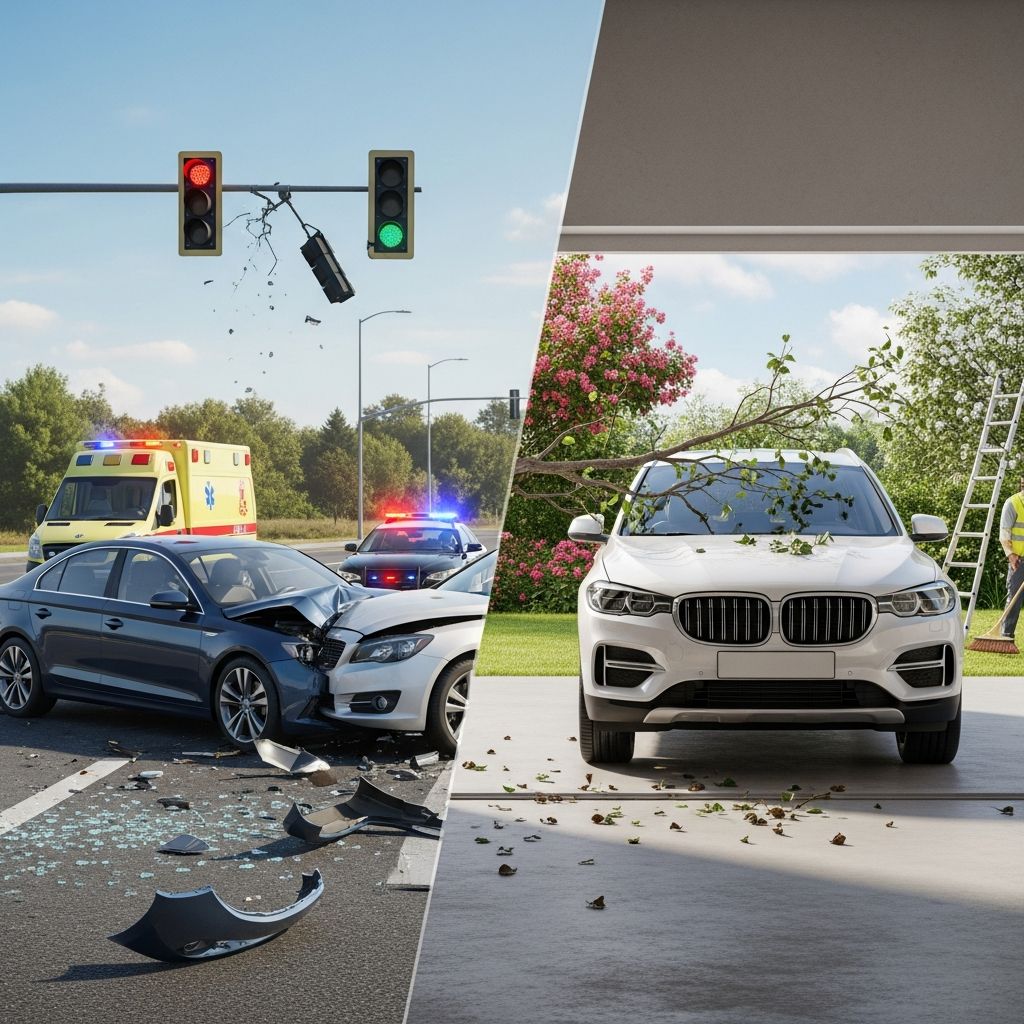
Collision and comprehensive insurance are vital optional add-ons to basic auto policies that safeguard your vehicle from various damages. While both fall under physical damage coverage, they address distinct risks, influencing your premiums, deductibles, and overall protection level. Understanding these helps drivers make informed decisions, especially when financing a car or aiming for full coverage.
Defining Collision Insurance
Collision coverage handles repairs or replacement for your vehicle following a crash with another car, object, or rollover, irrespective of fault. This includes scenarios like rear-ending another driver, swerving into a guardrail, or flipping during a single-car accident. Insurers pay the actual cash value of your car minus your chosen deductible, typically covering costs up to that value.
For instance, if you cause an accident totaling $5,000 in repairs with a $500 deductible, you pay $500, and your insurer covers the rest. This protection proves crucial in at-fault incidents where the other party’s liability insurance falls short.
Defining Comprehensive Insurance
Comprehensive coverage protects against non-collision perils outside your control, such as theft, vandalism, fire, falling objects, weather events like hail or floods, and collisions with animals. It applies when your car suffers damage without driver involvement in a crash, like a tree branch smashing the windshield during a storm or a deer striking the hood.
Payouts follow the same principle: actual cash value minus deductible. This coverage ensures financial relief for unpredictable events that liability alone cannot address.
Key Distinctions in Coverage Scenarios
The primary divide lies in the damage cause: collision for impact-related incidents, comprehensive for everything else. Here’s a breakdown:
| Scenario | Collision Coverage | Comprehensive Coverage |
|---|---|---|
| At-fault crash with another vehicle | Yes | No |
| Hit a pothole or guardrail | Yes | No |
| Vehicle rollover | Yes | No |
| Theft or vandalism | No | Yes |
| Animal strike (e.g., deer) | No | Yes |
| Hail, flood, or fire damage | No | Yes |
| Falling tree or object | No | Yes |
This table highlights how collision focuses on driver-controlled accidents, while comprehensive tackles external hazards.
Cost Analysis: Which is More Expensive?
Collision premiums generally exceed comprehensive due to higher claim frequency and severity. Data shows collision averaging around $290 to $814 annually, while comprehensive ranges from $134 to $367, making collision roughly 40-122% pricier. Factors like vehicle value, location, driving history, and deductible choice drive these variances.
Comprehensive often costs less because events like theft or weather occur infrequently compared to crashes. For stored or low-mileage vehicles, skipping collision while retaining comprehensive makes sense, as non-collision risks persist.
Deductibles and Their Impact
Both coverages feature deductibles—the out-of-pocket amount before insurer payment—typically $100-$2,000. Higher deductibles lower premiums but raise claim costs. Average collision claims hit $4,822, versus $1,284 for comprehensive, per the National Association of Insurance Commissioners, justifying lower deductibles for comprehensive (e.g., $100-$500) and higher for collision ($1,000+).
- Tip: Align deductibles with your savings; lower for likely, cheaper claims like comprehensive.
- Some states mandate minimums; check local rules.
- Adjusting deductibles can save hundreds yearly without sacrificing protection.
Legal and Lender Requirements
No state mandates these optional coverages, relying instead on minimum liability. However, lenders for financed or leased vehicles usually require both to protect their investment until paid off. Dropping them post-payoff is common if risks are low.
What Constitutes Full Coverage?
Full coverage isn’t a policy type but a term for state-minimum liability plus comprehensive and collision, often with extras like uninsured motorist or medical payments. It provides broad protection but costs more—ideal for newer, valuable cars or high-risk areas.
Alternatives include liability-only for older vehicles with low value, balancing cost against risk.
Choosing the Right Combination for You
Evaluate based on car value, driving habits, location, and budget:
- New/expensive cars: Both for maximum safeguard.
- Older/cheaper cars: Comprehensive alone or liability if value under $4,000.
- High-theft areas: Prioritize comprehensive.
- Urban driving: Collision essential for crash likelihood.
Tools like insurance calculators help compare quotes. Review annually as circumstances change.
Common Exclusions and Limitations
Neither covers other vehicles’ damages—that’s liability’s role. Limits cap at actual cash value, depreciating over time. Exclusions include wear/tear, mechanical breakdowns, or intentional acts. Read policy fine print for specifics.
Filing a Claim: Process Overview
Report promptly: note details, photos, police if needed. Insurer assesses, applies deductible, repairs via preferred shops or reimburses. Multiple claims may hike rates, so weigh minor damages against premiums.
Strategies to Lower Premiums
Bundle policies, seek discounts (good driver, multi-car), raise deductibles, or install anti-theft devices. Shop multiple insurers for best rates.
Frequently Asked Questions
Does comprehensive cover hitting a pothole?
No, potholes fall under collision as object impacts.
Is collision needed for leased cars?
Yes, lenders typically require both.
Can I drop collision on a paid-off car?
Yes, if affordable to replace, but comprehensive protects against theft/weather.
How does actual cash value work?
Payout reflects market value minus depreciation and deductible.
What’s cheaper: collision or comprehensive?
Comprehensive, due to lower risk/frequency.
Final Thoughts on Protection Balance
Selecting collision, comprehensive, or both hinges on personal risk tolerance and vehicle worth. Comprehensive suits uncontrollable events; collision tackles crashes. Together, they form robust defense, but tailor to avoid overpaying. Consult agents for personalized advice.
References
- Collision vs. Comprehensive Insurance – Progressive — Progressive. 2023. https://www.progressive.com/answers/comprehensive-vs-collision-insurance/
- Comprehensive vs. Collision Coverage: What’s the Difference? — AutoInsurance.com. 2023. https://www.autoinsurance.com/coverage/comprehensive-vs-collision/
- Comprehensive vs. Collision Insurance | Bankrate — Bankrate. 2024-01-15. https://www.bankrate.com/insurance/car/comprehensive-vs-collision/
- Comprehensive vs. Collision Insurance: What is the difference? — Nationwide. 2023. https://www.nationwide.com/lc/resources/auto-insurance/articles/difference-between-comprehensive-and-collision
- Difference Between Comprehensive and Collision Insurance — LA Insurance. 2024. https://lainsurance.com/blog/what-is-the-difference-between-collision-and-comprehensive-insurance
- Collision vs. Comprehensive Insurance – State Farm® — State Farm. 2023. https://www.statefarm.com/simple-insights/auto-and-vehicles/collision-vs-comprehensive-insurance
Similar Articles








Read full bio of medha deb