College of the Holy Cross: Premier Jesuit Liberal Arts Education
Discover Holy Cross: A leading Jesuit liberal arts college forming ethical leaders since 1843.
College of the Holy Cross: Excellence in Jesuit Liberal Arts Education
The College of the Holy Cross stands as a beacon of academic excellence and Jesuit values in American higher education. Founded in 1843 in Worcester, Massachusetts, Holy Cross represents a unique position among American colleges as the nation’s only exclusively undergraduate, liberal arts, Jesuit, and Catholic institution. This distinctive identity has shaped the college’s mission for nearly two centuries, creating an educational environment dedicated to forming intellectually rigorous and ethically grounded leaders.
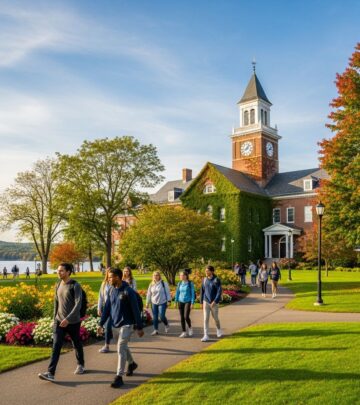
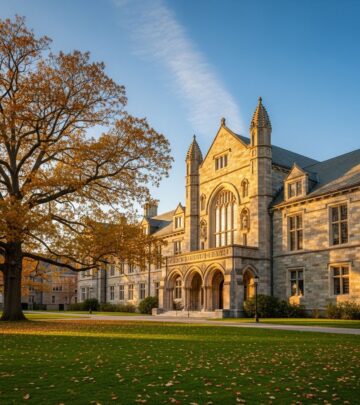
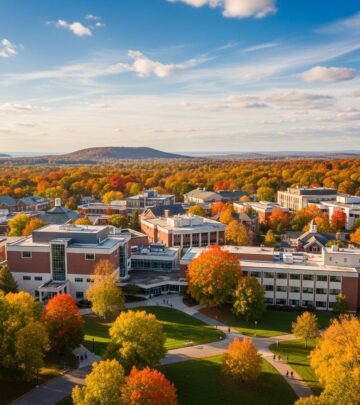
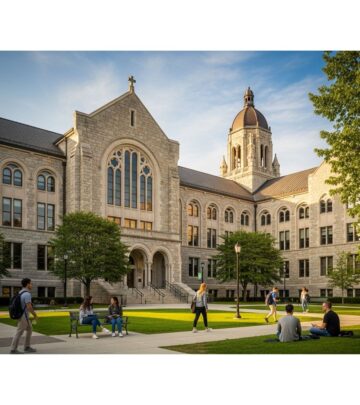
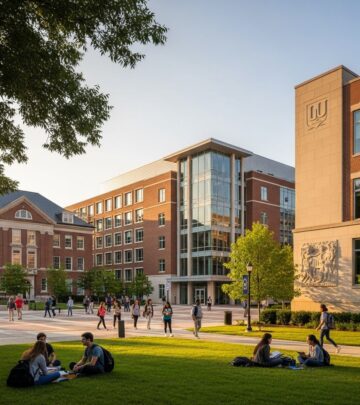
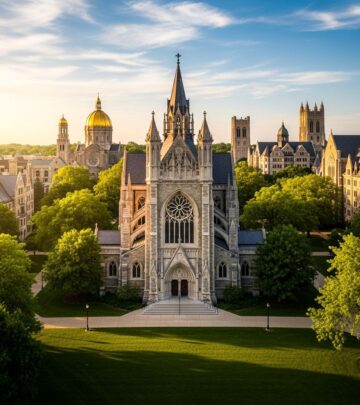
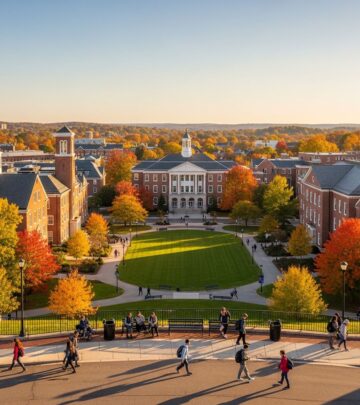
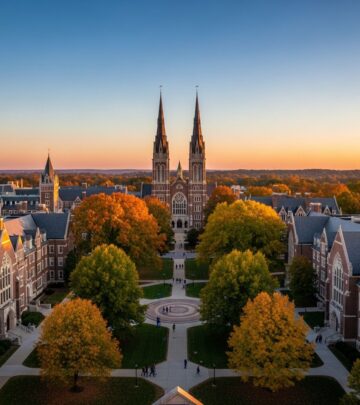
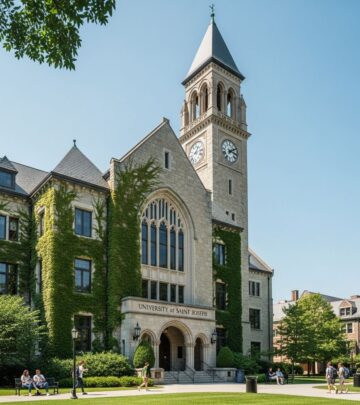
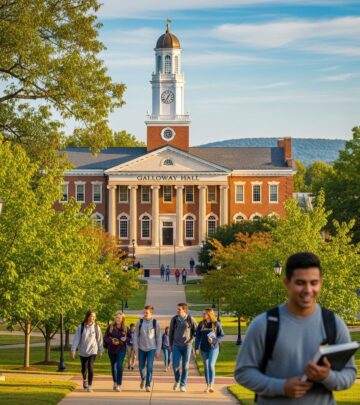
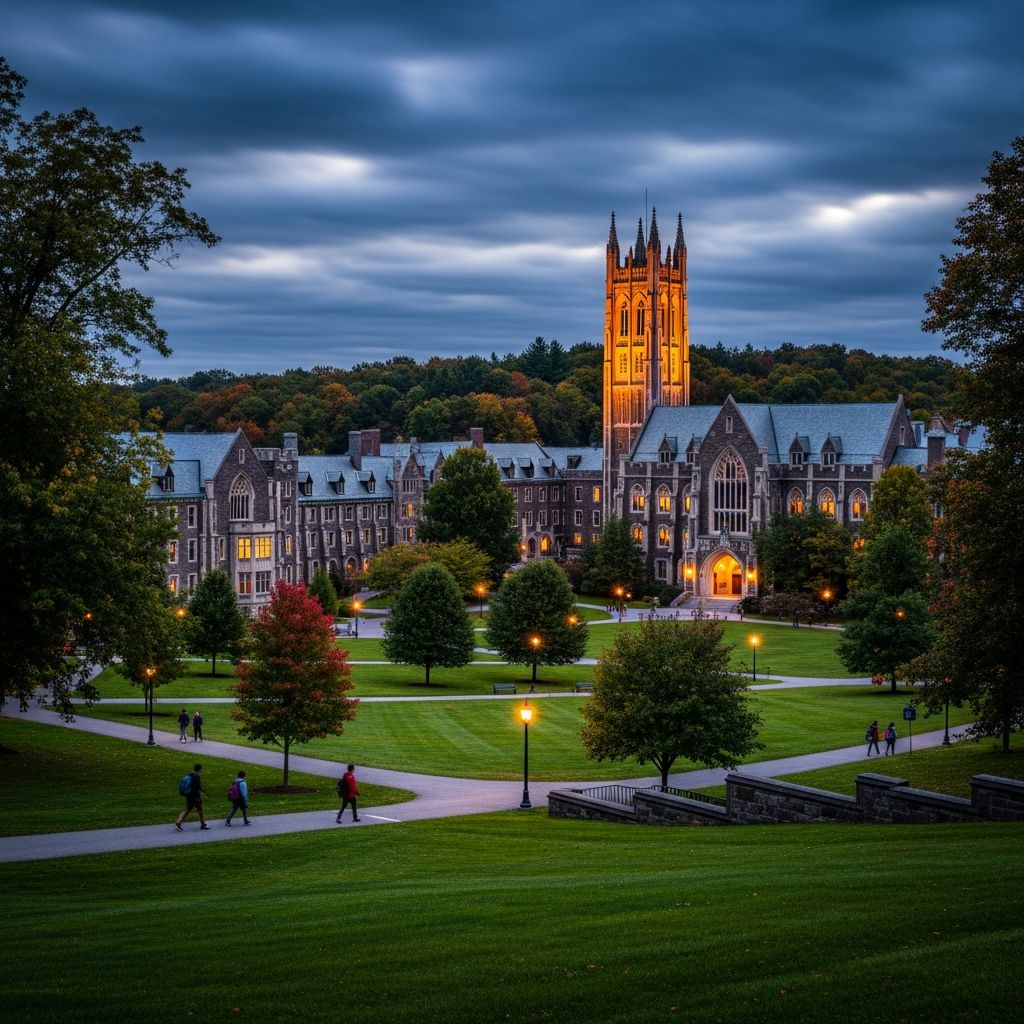
As a private liberal arts college with approximately 3,000 undergraduate students, Holy Cross maintains an intimate learning community that prioritizes personalized education and meaningful faculty-student relationships. The college’s 174-acre campus, situated on a hill overlooking the Blackstone River, provides students with a picturesque setting conducive to both academic pursuits and personal development.
Historical Foundation and Jesuit Mission
Holy Cross was established by Benedict Joseph Fenwick, the second Bishop of Boston, as the first Catholic college in New England. Fenwick’s vision emerged from the growing need to serve the burgeoning Catholic population, particularly Irish American immigrants arriving after 1830. Unable to establish a Catholic college in Boston due to Protestant civic resistance, Fenwick relocated his efforts to Worcester, where Holy Cross was founded under the auspices of the Society of Jesus.
The Jesuit educational tradition that defines Holy Cross emphasizes intellectual rigor paired with moral and spiritual development. As outlined in the college’s mission statement, Holy Cross is dedicated to forming individuals who seek truth, foster justice, and serve others with compassion and humility. This commitment extends beyond the classroom, encompassing the entire student experience and shaping how graduates engage with the world.
Academic Programs and Rigorous Curriculum
Holy Cross offers 28 academic majors within a liberal arts framework, with all students earning the Bachelor of Arts degree. The college’s curriculum is renowned for strengths in political science, economics, chemistry, classics, and literature, while also maintaining excellent programs in sociology, psychology, mathematics, philosophy, and religious studies. This breadth of offerings reflects the liberal arts philosophy of comprehensive intellectual development.
All Bachelor of Arts candidates must successfully complete 32 semester courses over eight semesters of full-time study. Core curriculum requirements ensure that every graduate encounters essential areas of human knowledge and experience. Students must complete one course each in arts, literature, religion, philosophy, history, and cross-cultural studies, along with two courses in language studies, social science, and natural and mathematical sciences. By 2021, the most popular majors were economics (131 graduates), psychology (102), political science and government (88), English language and literature (54), biology and biological sciences (52), and history (46).
The college employs 328 faculty members who teach 3,142 undergraduate students, maintaining a remarkable 10:1 student-to-faculty ratio. Notably, 96 percent of full-time faculty hold terminal degrees in their respective fields, ensuring that students benefit from instruction by leading scholars and researchers in their disciplines.
The Montserrat Program: Innovative First-Year Experience
One of Holy Cross’s most distinctive curricular innovations is the Montserrat program, which creates a transformative first-year experience for all incoming students. This interdisciplinary initiative places first-year students into one of six thematic clusters: Contemporary Challenges, Core Human Questions, Divine, Global Society, Natural World, and Self. Each cluster examines profound themes through the lens of different academic disciplines.
What sets Montserrat apart is its integration of classroom learning with residential life. Students in the same cluster live together in designated residence halls while taking coordinated courses taught by faculty from different departments. This approach transcends the traditional separation between academic and residential experiences, creating what students describe as a personalized learning community where “you’re more than just a number in the classroom and on the field.” The program cultivates meaningful peer relationships while exposing students to interdisciplinary perspectives on fundamental questions.
Commitment to Social Justice and Public Service
Holy Cross has earned recognition as a leader in social justice education and volunteerism among American colleges. In 2010, the college achieved the highest ranking among 28 U.S. Jesuit institutions in the percentage of graduates serving in the Jesuit Volunteer Corps. This commitment reflects the college’s embrace of liberation theology and contemporary social justice movements as integral to its Catholic Jesuit mission.
The college’s historical contributions to progressive causes are substantial. In 1974, Time magazine referred to Holy Cross as the “cradle of the Catholic Left” because it educated Philip Berrigan and Michael Harrington, author of the influential poverty analysis The Other America. This legacy of engaging students with pressing social questions and encouraging active participation in justice work continues to define the Holy Cross experience.
The college’s dedication to public service extends beyond classroom discussion. Service learning opportunities, volunteer initiatives, and partnerships with community organizations enable students to translate their values into concrete action. This orientation toward others, captured in the Jesuit motto “men and women for and with others,” permeates the Holy Cross educational philosophy and shapes student outcomes.
Academic Rankings and Institutional Reputation
Holy Cross enjoys exceptional standing among American liberal arts colleges across multiple prestigious ranking systems. U.S. News & World Report ranked Holy Cross tied for 27th among liberal arts colleges nationally for 2023, while also recognizing the institution as the highest-ranking Catholic college among the top 30 liberal arts schools on its list. The college was further recognized as 41st in best undergraduate education, 89th in best value schools, and tied for 59th in top performers on social mobility.
Money magazine ranked Holy Cross as the 5th best liberal arts college in the U.S. as of 2022, reflecting the institution’s strong balance of academic quality, affordability, and student outcomes. Forbes magazine’s 2025 rankings placed Holy Cross 103rd among all colleges and universities nationally and 27th among liberal arts colleges specifically, underscoring its position among America’s leading educational institutions.
Beyond these quantitative measures, Holy Cross is recognized as a top producer of Fulbright scholars, having graduated 182 recipients as of 2023. Washington Monthly’s 2020 rankings recognized Holy Cross as 18th among liberal arts colleges based on its contribution to the public good as measured by social mobility, research, and promotion of public service.
Campus Life and Residential Experience
Holy Cross maintains a strong residential culture, with the vast majority of students living on campus throughout their four years. The 174-acre campus provides an attractive setting for both academic and social activities. In 2016, the college expanded its residential and retreat infrastructure with the opening of the Thomas P. Joyce ’59 Contemplative Center, a $22 million facility in West Boylston, Massachusetts, comprising 52 acres designed to provide retreat spaces for student reflection and community building.
The college’s commitment to residential life extends to support for student organizations, cultural events, and spiritual opportunities. The campus supports diverse student media, including journals and newspapers that provide outlets for student expression and engagement with current issues.
Athletic Traditions and Patriot League Competition
Holy Cross joined the Patriot League in 1986, where athletic teams compete under the Crusaders name in NCAA Division I. The college’s athletic programs reflect the institution’s commitment to character development, teamwork, and excellence across multiple dimensions of student life. Athletic participation complements the academic and residential experience, fostering school spirit and community connections.
Financial Endowment and Institutional Stability
Holy Cross maintains one of the largest financial endowments of any liberal arts college in the United States, providing financial stability and resources to support the college’s ambitious mission. This substantial endowment enables the college to invest in cutting-edge facilities, attract distinguished faculty, and maintain generous financial aid policies that ensure socioeconomic diversity within the student body. The robust financial position reflects decades of alumni support and careful institutional stewardship.
Admissions and Student Profile
Holy Cross is a highly selective institution that attracts academically accomplished and intellectually curious students from across the United States and internationally. The college’s commitment to need-blind admissions and generous financial aid packages makes Holy Cross accessible to talented students regardless of financial background. As a QuestBridge partner institution, Holy Cross actively recruits and supports high-achieving students from low-income backgrounds.
The student body at Holy Cross represents geographic, cultural, and socioeconomic diversity. The college’s commitment to building an inclusive community is reflected in admissions policies and ongoing support for student success across all demographics.
Alumni Network and Engagement
Holy Cross maintains an active and engaged alumni community of over 40,000 living graduates. As of 2024-2025, the college had 13,021 alumni donors contributing $11.475 million to the annual fund, demonstrating sustained commitment to the institution. The college supports 25 active alumni clubs, enabling graduates to maintain connections with fellow Holy Cross alumni and the institution across geographic locations and professional fields.
Accreditation and Academic Standards
Holy Cross maintains accreditation through the New England Commission of Higher Education, affirming the institution’s commitment to academic excellence and continuous improvement. The college’s rigorous academic standards, combined with its emphasis on ethical formation and service to others, position Holy Cross graduates for success in competitive professional and graduate programs.
Frequently Asked Questions
Q: What makes Holy Cross different from other liberal arts colleges?
A: Holy Cross is the nation’s only exclusively undergraduate, liberal arts, Jesuit, and Catholic institution. This unique identity combines rigorous academics with explicit commitment to ethical formation, social justice, and spiritual development within a residential community.
Q: What is the Montserrat program?
A: Montserrat is an innovative first-year program that places students into interdisciplinary clusters addressing six thematic areas. Students in the same cluster take coordinated courses and live together, integrating classroom learning with residential life in a personalized community.
Q: How selective is Holy Cross in admissions?
A: Holy Cross is highly selective, attracting academically accomplished students from diverse backgrounds. The college practices need-blind admissions and offers generous financial aid to ensure socioeconomic diversity.
Q: What is the student-to-faculty ratio at Holy Cross?
A: Holy Cross maintains a 10:1 student-to-faculty ratio, enabling personalized attention and meaningful faculty-student relationships central to the liberal arts experience.
Q: Does Holy Cross have a strong emphasis on social justice?
A: Yes. Social justice and service to others are core to the Jesuit mission. Holy Cross leads among Jesuit colleges in percentage of graduates serving in volunteer programs and has a distinguished history of progressive engagement.
Q: What are the most popular majors at Holy Cross?
A: Popular majors include economics, psychology, political science and government, English language and literature, biology and biological sciences, and history, though the college offers 28 majors total.
Q: How large is the Holy Cross campus?
A: The main campus spans 174 acres overlooking Worcester and the Blackstone River. The college also operates the Thomas P. Joyce Contemplative Center on 52 additional acres in West Boylston.
Q: What is the size of the Holy Cross endowment?
A: Holy Cross maintains one of the largest endowments among liberal arts colleges, providing financial stability and resources to support the institutional mission and student support services.
References
- College of the Holy Cross – About Holy Cross — College of the Holy Cross Official Website. 2025. https://www.holycross.edu/about-holy-cross
- Holy Cross at a Glance: Facts and Figures — College of the Holy Cross Official Website. 2024-2025. https://www.holycross.edu/about-holy-cross/at-a-glance
- College of the Holy Cross Overview — College of the Holy Cross Official Website. 2025. https://www.holycross.edu
- College of the Holy Cross — The Princeton Review. 2025. https://www.princetonreview.com/college/college-holy-cross-1023599
- College of the Holy Cross — QuestBridge Official Partners. 2025. https://www.questbridge.org/partners/college-partners/college-of-the-holy-cross
- College of the Holy Cross — Wikipedia. 2025. https://en.wikipedia.org/wiki/College_of_the_Holy_Cross
Similar Articles








Read full bio of medha deb