How to Read College Financial Aid Letters
Demystify your college financial aid award letter to maximize savings and make informed decisions about funding your education.
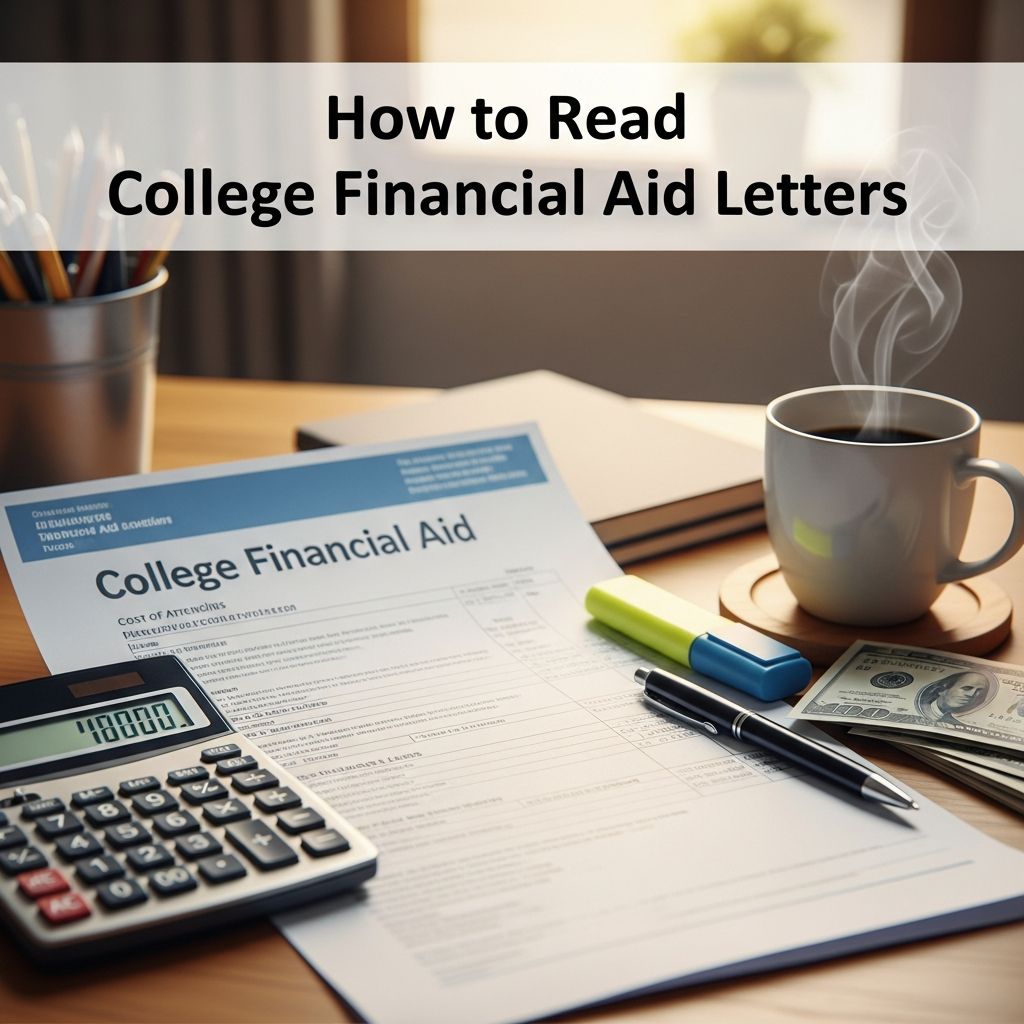
College acceptance letters bring excitement, but the financial aid award letter determines affordability. These documents outline grants, scholarships, loans, and work-study, yet confusing formats often leave families puzzled. Understanding your award is crucial to avoiding debt traps and securing the best deal.
What Is a Financial Aid Award Letter?
A financial aid award letter, also called a financial aid offer or package, details the funding a college provides after reviewing your FAFSA or CSS Profile. It lists aid types, amounts, and totals toward your cost of attendance (COA), which includes tuition, fees, room, board, books, and personal expenses.
Issued after admission, these letters arrive via email, portal, or mail. Unlike acceptances, they focus solely on money. The Student Aid Index (SAI), replacing the Expected Family Contribution (EFC), calculates need: COA minus SAI equals demonstrated need. Federal law standardizes some elements, but formats vary.
Key Components of a Financial Aid Award Letter
Scan for these essentials to grasp your package quickly:
- Cost of Attendance (COA): Total estimated yearly cost. Verify against the college’s net price calculator.
- Student Aid Index (SAI): Number from FAFSA used to gauge family ability to pay. Lower SAI means more need-based aid.
- Net Price: COA minus all aid (grants + scholarships). This is your out-of-pocket cost.
- Gifts (Free Money): Grants and scholarships not repaid.
- Self-Help Aid: Loans and work-study requiring repayment or work.
Tables clarify breakdowns. Official FAFSA Submission Summary previews SAI before letters arrive.
Types of Financial Aid Explained
Federal and Institutional Grants
Grants are free aid based on need. Pell Grants max $7,395 for 2024-25 (adjusts yearly), SAI-based, no repayment. Fill FAFSA early for priority. Institutional grants from college endowments supplement federal aid.
Scholarships
Merit or need-based, from colleges, states, or private sources. Unlike grants, often renewable with GPA maintenance. Check for stacking rules.
Work-Study
Federal program offering part-time jobs, typically $15-20/hour. Earnings offset COA; up to SAI-determined amount. Apply via FAFSA; colleges assign positions.
Loans
Subsidized federal loans (need-based, government pays interest in school); unsubsidized (all students); PLUS for parents. Private loans last resort, higher rates. Award letters list accepted amounts—decline unnecessary ones.
| Aid Type | Repayment? | Example Amount | Eligibility |
|---|---|---|---|
| Pell Grant | No | Up to $7,395 | Need-based via SAI |
| Work-Study | Via work | $2,000-$5,000 | FAFSA filer |
| Subsidized Loan | Yes, post-grad | $3,500 freshman | Need-based |
| Unsubsidized Loan | Yes | $5,500 freshman | All |
How to Compare Financial Aid Offers
Multiple acceptances? Line up packages apples-to-apples. Ignore totals; focus on net price and free aid percentage.
- List COA for each school.
- Subtract gifts only for true net cost.
- Calculate free aid %: (grants + scholarships) / COA.
- Factor 4-year costs using net price calculators.
Example: School A: $60K COA, $40K gifts/loans = $20K net. School B: $50K COA, $30K gifts/loans = $20K net—but B cheaper long-term. Use spreadsheets:
| School | COA | Gifts | Loans/Work | Net Price | Free Aid % |
|---|---|---|---|---|---|
| A | $65,000 | $25,000 | $20,000 | $20,000 | 38% |
| B | $55,000 | $20,000 | $15,000 | $20,000 | 36% |
| C | $70,000 | $35,000 | $25,000 | $10,000 | 50% |
Prefer higher free aid % and lower net price. Adjust for program quality.
Common Mistakes When Reading Aid Letters
- Confusing Gross vs. Net: Total aid looks great but includes loans you’ll repay.
- Ignoring Renewal Terms: Aid often not guaranteed yearly; check GPA/GPA requirements.
- Overlooking Deadlines: Accept/decline by dates, or lose aid.
- Not Verifying SAI: Errors in FAFSA Submission Summary affect awards.
- Assuming All Aid Free: Read fine print on work-study, loans.
Families miss $2.5B in aid yearly from FAFSA inaction.
Appealing and Negotiating Your Aid Package
Not thrilled? Appeal professionally. Colleges have discretion, especially with competing offers.
- Gather Docs: New financial info (job loss, medical bills), rival offers.
- Contact Aid Office: Email politely: “We appreciate the offer but recent changes warrant review.”
- Be Specific: Request more grants, not loans.
- Follow Up: 60% success rate with evidence.
Private colleges more flexible than publics. Timing: soon after receipt.
FAFSA Basics: Foundation of Your Aid Letter
FAFSA (studentAid.gov) unlocks all federal aid. Available Oct. 1; file ASAP for priority. Needs FSA ID, tax info (IRS import), family finances. CSS Profile for privates adds home equity, etc..
2026-27 form for July 2026-June 2027; state/school deadlines vary. SAI on Submission Summary guides expectations.
Frequently Asked Questions (FAQs)
What if my aid letter doesn’t match my FAFSA SAI?
Review Submission Summary for errors; correct promptly. Colleges use processed SAI.
Can I get aid without acceptance?
File anytime, but need enrollment to disburse. Early filing clarifies options.
Do all colleges use the same letter format?
No, but federal rules require COA, SAI disclosure. Use net price tools.
Should I accept all loans offered?
No—borrow only needed. Decline excess unsubsidized.
How to maximize aid?
File FAFSA early, appeal changes, seek scholarships via platforms like Going Merry.
Next Steps After Receiving Your Letter
1. Accept offer online/portal.
2. Complete entrance counseling, Master Promissory Note for loans.
3. Explore scholarships.
4. Budget based on net price.
Track renewals yearly—refile FAFSA annually.
References
- The Only College Financial Aid Guide You’ll Ever Need — Going Merry. 2024. https://goingmerry.com/blog/ultimate-financial-aid-guide/
- How to Complete the FAFSA — BigFuture, College Board. 2025-01-10. https://bigfuture.collegeboard.org/pay-for-college/get-help-paying-for-college/fafsa/how-to-complete-the-fafsa
- How To Apply — Columbia Financial Aid. 2025. https://cc-seas.financialaid.columbia.edu/howtoapply
- The FAFSA Process — Federal Student Aid Toolkit, U.S. Dept. of Education. 2025-12. https://financialaidtoolkit.ed.gov/tk/learn/fafsa.jsp
- FAFSA 2026-27 – How to Apply for Financial Aid — Sallie Mae. 2025. https://www.sallie.com/financial-aid/fafsa
- Apply for Financial Aid — Federal Student Aid, U.S. Dept. of Education. 2026-01. https://studentaid.gov/h/apply-for-aid
Similar Articles








Read full bio of medha deb