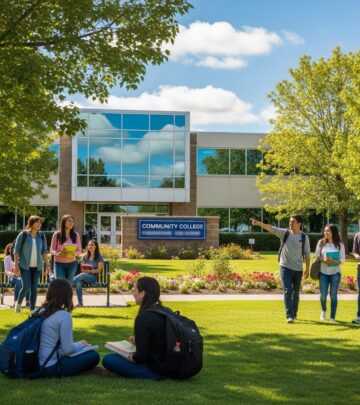
Is a College Degree Worth It? 6 Key Reasons
Explore the financial reality of college degrees and discover whether higher education is the right investment for your future.

Is a College Degree Worth It? 6 Key Reasons to Consider
The decision to pursue a college degree represents one of the most significant financial investments many people make in their lifetime. With tuition costs climbing steadily and student loan debt reaching unprecedented levels, prospective students and their families are asking a critical question: Is a college degree actually worth it? According to recent data, only 22% of US adults consider a college degree worth the investment when loans are required, yet research continues to show that a bachelor’s degree still provides substantial long-term financial benefits for many graduates.
The Current State of College Value
The landscape of higher education has shifted dramatically over the past two decades. Public confidence in colleges and universities has declined amid rising tuition prices, mounting student loan debt, and concerns about job market outcomes. Universities are now compelled to demonstrate their value proposition to prospective students and families more than ever before. A recent analysis by the Strada Education Foundation reveals that 70% of recent public university graduates can expect a positive return on investment within 10 years, meaning their earnings over a decade will exceed those of a typical high school graduate by more than the cost of their degree. However, this varies significantly by state, ranging from 53% in North Dakota to 82% in Washington, D.C.
Reason 1: Long-Term Earning Potential
One of the most compelling reasons to pursue a college degree is the substantial difference in lifetime earnings between college graduates and those with only a high school diploma. Research consistently demonstrates that bachelor’s degree holders earn significantly more over their careers. The earnings advantage extends well into retirement years, making the initial investment worthwhile for many individuals. A wide body of research indicates that a bachelor’s degree still pays off, at least on average and in the long run. While not all degrees lead to equally high salaries, most degree holders eventually see returns that exceed their educational costs.
Reason 2: Job Market Competitiveness
In today’s competitive job market, a college degree increasingly serves as a baseline requirement for many professional positions. Employers frequently screen candidates based on educational credentials, and lacking a degree can significantly limit career advancement opportunities. Even in fields where degrees aren’t strictly required, graduates often have access to better positions and higher starting salaries. The diploma signals to employers that candidates have developed critical thinking skills, discipline, and subject matter expertise. For career-focused individuals, this competitive advantage can translate into better job security and more opportunities for upward mobility throughout their careers.
Reason 3: Career Flexibility and Options
A college degree provides flexibility in career choices and the ability to pivot between different professional paths more easily than those without degrees. Many career fields explicitly require degrees, including healthcare, engineering, law, accounting, and education. Even graduates who don’t work in their major field of study often benefit from the broader skill set and knowledge base developed during their undergraduate years. This flexibility becomes increasingly valuable as the job market evolves and individuals consider career changes or advancement opportunities throughout their working lives.
Reason 4: Professional Network Development
College provides invaluable opportunities to build professional networks that can benefit careers for decades. Universities connect students with professors, peers, and industry professionals who can provide mentorship, job referrals, and collaborative opportunities. Alumni networks often create lasting connections that lead to job opportunities and professional advancement. These relationships frequently prove more valuable than any single course or credential, opening doors that might otherwise remain closed and providing ongoing support throughout one’s career.
Reason 5: Personal Development and Skills
Beyond financial considerations, college fosters personal growth and develops skills that enhance quality of life and career satisfaction. The college experience cultivates critical thinking, communication, problem-solving, and leadership abilities. Students learn to analyze complex information, articulate ideas effectively, and work collaboratively with diverse groups. These soft skills are increasingly valued by employers and contribute to success across all career fields. The intellectual stimulation and exposure to diverse perspectives often lead to greater career satisfaction and personal fulfillment.
Reason 6: Considerations Against College Investment
Despite the benefits, several factors make the college decision more complex for some individuals. Rising tuition costs have made the debt burden substantial, particularly at private institutions. Not all degree programs offer strong job prospects or return on investment. Some graduates end up in jobs that don’t require their degree, limiting the financial advantage of their education. The job market for recent graduates remains challenging in many sectors, with employers increasingly seeking experience alongside credentials. Additionally, alternative paths such as trade schools, apprenticeships, and vocational programs can lead to lucrative careers without the debt associated with four-year degrees. Some students and families find these alternatives more practical and financially sensible.
The Growing Recognition of Varying Returns
A critical development in the college value debate is the growing recognition that not all degrees provide equal returns. Fields like applied mathematics and business tend to generate higher returns at major universities, while some graduate degrees in psychology and foreign languages often don’t. The earnings outcomes vary significantly based on the institution, field of study, and post-graduation career path. This variability has prompted increased transparency efforts, including the Federal College Scorecard, which provides earnings data for specific degree programs at different institutions. Students and families are increasingly using this data to make more informed decisions about which degrees and institutions offer the best value.
Cost Considerations and Financial Planning
The cost of college has become a primary concern for prospective students and their families. Public two-year degrees average $11,600 per year, while four-year degrees cost approximately $38,270 annually on average. Americans now carry more than $1.7 trillion in student loan debt collectively. When evaluating whether college is worth it, families must consider:
- Total cost of attendance at specific institutions
- Expected earnings in your chosen field
- Time required to break even financially
- Available scholarships and financial aid
- Student loan repayment options and timelines
- Personal financial situation and debt capacity
Maximizing College Value
For students committed to pursuing higher education, several strategies can maximize return on investment. Attending more affordable institutions without sacrificing academic quality can significantly reduce debt burden. Selecting majors aligned with strong job market demand improves employment prospects. Gaining practical experience through internships and work-study positions enhances marketability. Completing degrees efficiently without unnecessary credit hours reduces time and expense. Utilizing scholarships and grants minimizes reliance on loans. These strategies help ensure that the college investment generates meaningful financial and professional returns.
Alternative Paths to Career Success
It’s important to recognize that college isn’t the only path to career success and financial stability. Trade schools and apprenticeships offer practical training in high-demand fields such as plumbing, electrical work, HVAC systems, and construction. These programs typically cost significantly less than four-year degrees and lead to well-paying careers in shorter timeframes. Some students benefit from starting at community colleges to complete general education requirements at lower cost before transferring to four-year institutions. Others find that entering the workforce immediately and gaining experience provides better long-term financial outcomes than pursuing formal education.
The Importance of Individual Circumstances
Whether a college degree is worth it ultimately depends on individual circumstances, goals, and financial situations. For some students, particularly those with strong academic records and clear career goals in high-demand fields, college represents an excellent investment. For others, the debt burden and opportunity cost may outweigh the benefits. Factors including family income, available scholarships, chosen field of study, and personal career aspirations all influence the equation. Prospective students should carefully evaluate their specific situation rather than assuming that college is universally the best choice for everyone.
Frequently Asked Questions
Q: What percentage of college graduates see positive returns on their education?
A: According to recent data from the Strada Education Foundation, 70% of recent public university graduates can expect a positive return within 10 years, though this varies significantly by state and institution.
Q: How much debt do Americans carry in student loans?
A: Americans collectively carry more than $1.7 trillion in student loan debt, making education financing a significant national concern.
Q: What’s the average cost of a four-year degree?
A: The average cost of a four-year degree is approximately $38,270 per year, though this varies substantially based on institution type and location.
Q: Are there degree programs that don’t provide good returns?
A: Yes, earnings outcomes vary significantly by field of study. Some graduate degrees in psychology and foreign languages often don’t provide strong returns compared to degrees in applied mathematics and business.
Q: Should I consider alternatives to a four-year degree?
A: Absolutely. Trade schools, apprenticeships, and vocational programs can lead to well-paying careers with lower debt burden and shorter completion times.
Q: How can I find information about specific program earnings?
A: The Federal College Scorecard provides earnings data for specific degree programs at different institutions, helping you make informed decisions about educational investments.
Q: What’s the most important factor in determining college value?
A: The return on investment depends on multiple factors including the institution, field of study, job market conditions, and your personal career goals and financial situation.
Q: Can I get financial aid to reduce college costs?
A: Yes, students should complete the FAFSA to access grants, loans, scholarships, and work-study opportunities that can significantly reduce education costs.
References
- Is College Worth the Cost? Universities Work to Show the Return on Investment of a Degree — WSLS 10. 2025-10-16. https://www.wsls.com/news/politics/2025/10/16/is-college-worth-the-cost-universities-work-to-show-the-return-on-investment-of-a-degree/
- Strada Education Foundation Analysis — Strada Education Foundation. 2025. https://www.stradaeducation.org/
- How to Save for College, No Matter Your Child’s Age — The Penny Hoarder. https://www.thepennyhoarder.com/save-money/how-much-to-save-for-college/
- 6 Reasons a College Degree May (or May Not) Be Worth It — The Penny Hoarder. https://www.thepennyhoarder.com/save-money/college-degree-worth-it/
- Skip College? Still Not a Safe Money Bet — Jacksonville Journal-Courier. https://www.myjournalcourier.com/news/article/Skip-college-Still-not-a-safe-money-bet-16355276.php
- Federal Student Aid (FAFSA) — U.S. Department of Education. https://studentaid.gov/
- College Scorecard — U.S. Department of Education. https://collegescorecard.ed.gov/
Similar Articles








Read full bio of medha deb