College Application Fee Waiver: 6 Ways To Apply For Free
Unlock free college applications: Discover eligibility, processes, and tips to waive fees and save hundreds on your college journey.
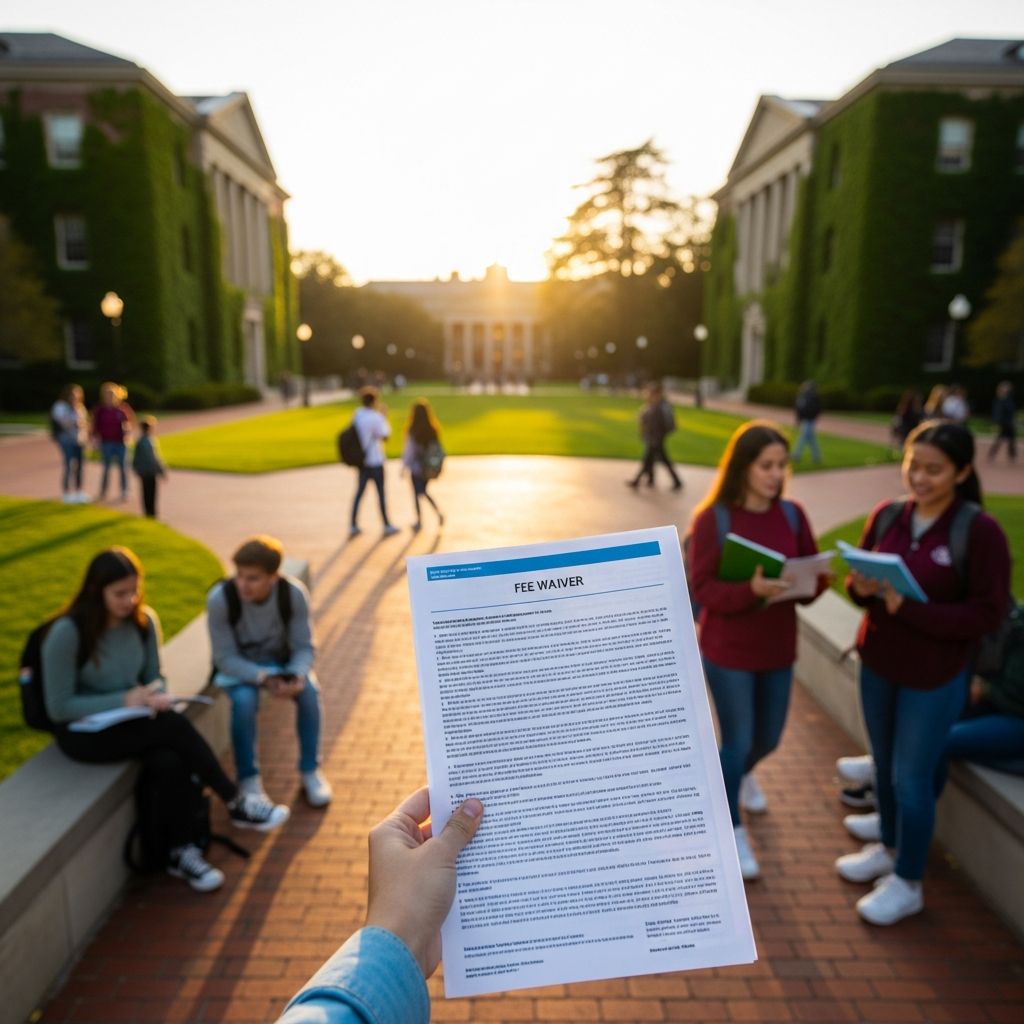
Applying to college can cost hundreds of dollars in fees alone, with average fees around $50 per school and some exceeding $100. For low-income students, college application fee waivers eliminate these barriers, allowing applications to multiple schools at no cost. Over 2,000 colleges participate in waiver programs through platforms like Common App, Coalition, and NACAC, plus more than 100 U.S. schools charge no fees at all. This guide covers eligibility criteria, step-by-step processes, and tips to maximize your savings.
What Is a College Application Fee Waiver?
A college application fee waiver is a program that excuses eligible students from paying application fees based on demonstrated financial need. These waivers are offered by testing organizations (SAT/ACT), application platforms (Common App, Coalition App), NACAC, and individual colleges. They ensure economic barriers do not prevent qualified students from applying. Eligibility often ties to public assistance, free/reduced lunch programs, or family income thresholds set by federal guidelines like USDA Food and Nutrition Service standards.
Waivers do not impact admissions decisions and can cover multiple applications—up to four per term for some systems like CSU. International students and non-traditional applicants may also qualify with proper documentation.
Who Qualifies for a College Application Fee Waiver?
Qualification is primarily need-based, with common criteria including:
- Enrollment in federal free or reduced-price lunch programs.
- Receipt of public assistance, SSI, Medicaid, or SNAP benefits.
- Family income at or below 200% of federal poverty guidelines (e.g., $62,400 for a family of four in 2025).
- Homelessness, foster care, or ward of the state status.
- Existing SAT/ACT fee waivers, Pell Grant eligibility, or TRIO program participation.
- Verification by a school counselor, community leader, or authorized official.
Requirements vary by provider. For instance, Coalition App uses a self-reported questionnaire with no documentation needed, while NACAC requires an authorized official’s signature. Always check specific program rules, as colleges may have additional policies.
How to Get a College Application Fee Waiver: 6 Ways
Several pathways exist to secure waivers. Start with your SAT/ACT status, then explore platforms and direct college requests.
1. Use Your SAT or ACT Fee Waiver
If you received a fee waiver for SAT or ACT—granted to over 300,000 students annually—you automatically qualify for waivers at participating colleges. Criteria mirror application waivers: free lunch, public assistance, low income, homelessness, or orphan/ward status. Access your waiver codes via your College Board or ACT account and submit them directly to schools or platforms. This unlocks free apps to 2,000+ colleges via College Board programs.
2. Common App Fee Waiver
The Common App, used by 950+ schools, offers automatic waivers. Indicate eligibility in the profile section (e.g., SAT waiver receipt or financial need). Your counselor verifies via nomination. No extra docs needed if SAT-waived. International students check college-specific policies.
3. NACAC Application Fee Waiver
NACAC’s form allows waivers to NACAC-member colleges. Complete the “Economic Need” section explaining your situation, signed by a school official, community leader, or professional (e.g., social worker). Limit to four schools. International and non-traditional students qualify via “Other Request” with justification. Submit directly to colleges.
4. Coalition App (Scoir) Fee Waiver
Coalition members waive fees with no documentation: answer yes/no questions in your Scoir profile (free lunch, SAT/NACAC/ACT waiver, Pell eligibility, TRIO, subsidized housing, foster care, etc.). Qualifying unlocks free apps to listed schools. Contact admissions for extras.
5. Contact Colleges Directly
Many schools waive fees upon request. Email or call admissions, referencing SAT waivers or need. California State University auto-assesses via Cal State Apply for CA residents (up to four campuses/term). Check websites first.
6. Apply to No-Fee Colleges
Skip fees entirely at 100+ schools like University of Dayton, Case Western, or Saint Louis University. Lists update yearly; prioritize based on fit.
College Application Fee Waiver Eligibility Table
| Provider | Key Eligibility Criteria | Documentation Needed? | Max Schools |
|---|---|---|---|
| SAT/ACT Waiver | Free lunch, public aid, low income, homeless | No (use code) | 2,000+ |
| Common App | SAT waiver or counselor verify need | Counselor nomination | Unlimited eligible |
| NACAC | Economic need form + official signature | Yes | 4 recommended |
| Coalition/Scoir | Questionnaire (Pell, TRIO, foster, etc.) | No | Member schools |
| Direct College | Varies (often SAT-based) | Case-by-case | 1 per school |
This table summarizes options for quick comparison.
Step-by-Step: Applying for Your First Waiver
- Check SAT/ACT Status: Log into College Board/ACT for waiver codes.
- Gather Proof: Free lunch letter, tax forms, or counselor note.
- Select Platform: Common/Coalition for multiples; NACAC for targeted schools.
- Complete Form: Answer eligibility questions accurately.
- Get Verified: Counselor or official signs.
- Submit: To platform or college; track status (e.g., CSU’s “Check My Fee Waiver”).
- Follow Up: Email if no confirmation.
Avoid errors like incomplete apps or non-resident status for state systems.
Benefits and Potential Savings
Waivers save $200–$1,000+ for 4–10 apps. They signal initiative without harming chances. Programs like College Board’s expand access, with 80% of eligible students utilizing them. Pair with CSS Profile waivers for FAFSA aid.
Common Mistakes to Avoid
- Assuming ineligibility—many qualify via broad criteria.
- Not verifying counselor nomination on Common App.
- Exceeding NACAC’s four-school limit without need.
- Forgetting international policies vary.
- Ignoring no-fee schools on your list.
Frequently Asked Questions (FAQs)
Can international students get fee waivers?
Yes, via Common App (college-dependent), NACAC (with justification), or direct requests. Explain barriers in “Other” sections.
Do fee waivers affect admissions?
No, they solely address financial need and do not influence decisions.
How many waivers can I get?
Unlimited via SAT/Coalition/Common for eligibles; NACAC limits to four.
What if I’m ineligible for SAT but need a waiver?
Use Coalition questionnaire, NACAC form, or college requests.
Are waivers available for grad school?
Focus is undergrad; check specific programs.
Next Steps for 2026 Applicants
Start early: Secure SAT waiver by fall, prep counselor letters. Research your dream schools’ policies. Tools like BigFuture or Scoir simplify. Waivers democratize access—don’t let fees stop you.
References
- How to Get a College Application Fee Waiver — BestColleges. 2024. https://www.bestcolleges.com/resources/how-to-get-college-application-fee-waiver/
- College Application Fee Waiver FAQ — College Board BigFuture. 2025. https://bigfuture.collegeboard.org/plan-for-college/apply-to-college/college-application-fee-waiver-faq
- Application Fee Waivers — Coalition for College Access. 2025. https://www.coalitionforcollegeaccess.org/fee-waiver
- Application Fee Waiver — California State University. 2025. https://www.calstate.edu/apply/paying-for-college/pages/fee-waiver.aspx
- Fee Waivers — National Association for College Admission Counseling (NACAC). 2024. https://www.nacacnet.org/student/fee-waivers/
Similar Articles








Read full bio of Sneha Tete