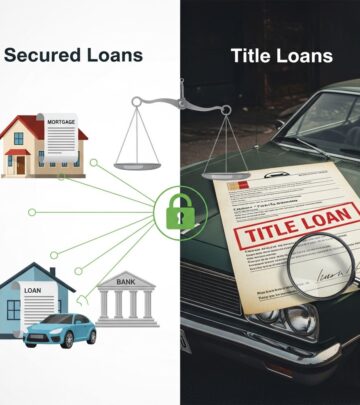
Collateral: Definition, Types, and How It Works
Understanding collateral: securing loans and reducing lending risk through asset pledges.

What Is Collateral?
Collateral is a borrower’s pledge of specific property or assets to a lender to secure repayment of a loan. In essence, it serves as a safety net for lenders, providing them with recourse if the borrower fails to meet the terms of the lending agreement. When you pledge collateral, you are giving the lender the right to seize and sell that asset if you default on your loan obligations.
The concept of collateral has been fundamental to lending practices for centuries. It transforms an unsecured lending relationship into a secured one, fundamentally altering the risk profile of the transaction. By having a tangible asset backing the loan, lenders can feel more confident extending credit, particularly to borrowers with limited credit histories or uncertain financial situations.
How Collateral Works
When you borrow money using collateral, you and the lender enter into a secured lending agreement. The lender typically conducts a valuation of your proposed collateral to determine its fair market value. This valuation is crucial because it establishes the maximum amount the lender is willing to lend against that asset.
Once the loan is approved and disbursed, the lender places a lien on the collateral. A lien is a legal claim that gives the lender the right to seize the asset if you default. If you successfully repay the loan according to the terms of your agreement, the lien is released, and you regain full ownership of the asset without any encumbrances.
If you fail to make payments as agreed, the lender can initiate a legal process to take possession of the collateral. The specifics of this process vary depending on the type of collateral and the jurisdiction, but the outcome is the same: the lender seizes the asset to recover their losses.
Types of Collateral
Collateral comes in many forms, and the type accepted often depends on the specific loan product and the lender’s policies.
Real Estate
Real property, including residential homes, commercial buildings, and land, represents one of the most common and widely accepted forms of collateral. In mortgage transactions, the property being purchased with the borrowed funds automatically serves as collateral. If the borrower defaults, the lender can foreclose on the property through a legal process and sell it to recover the loan amount.
Vehicles
Auto loans rely on the vehicle being purchased as collateral. The lender typically holds the title to the vehicle until the loan is fully repaid. If the borrower defaults, the lender can repossess the vehicle and sell it to recoup their losses. The value of vehicles depreciates over time, which is why lenders typically only lend a percentage of the vehicle’s current market value.
Financial Assets
Marketable collateral includes stocks, bonds, mutual funds, and other liquid securities. Financial institutions frequently accept these assets as collateral for loans. The advantage of financial assets is their liquidity—they can be quickly converted to cash if necessary. However, their values fluctuate with market conditions, creating risk for both lenders and borrowers.
Intellectual Property
Increasingly, intellectual property such as patents, copyrights, trademarks, and royalty streams from licensing agreements are being used as collateral in specialized financing arrangements. This type of collateral is particularly valuable for technology companies and creative businesses that may have significant IP assets but limited tangible property.
Agricultural Assets
Agricultural collateral can include equipment, livestock, and even unharvested crops. Some specialized agricultural lenders accept these assets to support farming operations and seasonal financing needs.
Unusual Collateral Examples
Some lenders accept unconventional collateral. For example, certain Italian banks have accepted aging wheels of Parmigiano Reggiano cheese as collateral, even providing storage facilities for the cheese as it ages and appreciates in value. Pawnbrokers are well-known for accepting diverse items—from jewelry and electronics to musical instruments and collectibles—as collateral for short-term loans.
Collateral vs. Unsecured Loans
The presence or absence of collateral significantly impacts loan terms and conditions. Lenders face considerably higher risk when extending unsecured loans, meaning loans without any collateral backing. To compensate for this increased risk, unsecured lenders charge substantially higher interest rates.
| Factor | Secured Loans (With Collateral) | Unsecured Loans (No Collateral) |
|---|---|---|
| Interest Rates | Lower rates (typically 2-8%) | Higher rates (typically 8-36%) |
| Approval Likelihood | Higher approval rates | Stricter credit requirements |
| Loan Amount | Often larger amounts available | Generally smaller amounts |
| Credit Score Requirement | More flexible with lower scores | Requires stronger credit history |
| Default Risk | Lower for lender | Higher for lender |
The difference in interest rates can be substantial. A borrower with poor credit might face an annual percentage rate of 25-30% on an unsecured personal loan, while the same borrower might qualify for a secured loan at 8-12% APR. This reduction of several percentage points directly reflects the lender’s reduced risk when collateral is available.
Benefits of Collateral
Collateral provides several important advantages in the lending process:
Lower Interest Rates
The primary benefit for borrowers is access to significantly lower interest rates. By reducing the lender’s risk exposure, collateral allows lenders to offer more competitive pricing, making borrowing more affordable over the life of the loan.
Improved Approval Odds
Borrowers with less-than-perfect credit histories may struggle to qualify for unsecured loans. Collateral can bridge this gap, allowing individuals with damaged credit or limited credit history to obtain financing they might not otherwise access.
Larger Loan Amounts
Lenders are typically willing to extend larger loan amounts when collateral is available. The collateral provides confidence that the lender has a way to recover their funds even in a worst-case scenario.
Lender Protection
For lenders, collateral provides substantial protection against default risk. In the event of borrower default, the lender has a tangible asset to recover losses, significantly reducing potential losses compared to unsecured lending.
Risks Associated with Collateral
While collateral benefits both parties, certain risks must be understood:
Asset Seizure Risk
The most obvious risk to borrowers is the potential loss of the collateralized asset. If you fail to make payments, you could lose valuable property, including your home or vehicle. This makes defaulting on secured loans particularly serious.
Collateral Value Decline
For loans secured by marketable collateral such as stocks or bonds, significant market declines can reduce the asset value below the outstanding loan amount. This creates a situation called being “underwater” on the loan, where you owe more than the collateral is worth. Financial institutions closely monitor collateral values and may require additional collateral or demand immediate payment if values drop below predetermined loan-to-value ratios.
Depreciation Risk
Physical assets like vehicles and equipment depreciate over time. This depreciation means the collateral value decreases, potentially creating a gap between the loan amount and the asset’s current value.
Collateral Requirements and Regulations
Regulatory frameworks govern how lenders handle collateral. In the United States, banking regulations limit the amount a bank can lend to a single borrower. Specifically, a bank’s total outstanding loans and credit extensions to one borrower cannot exceed 15 percent of the bank’s capital and surplus, with an additional 10 percent permitted if the bank meets certain qualifying conditions.
For marketable collateral, most financial institutions require that the collateral value equal or exceed 100 percent of the loan amount or credit extension. This requirement ensures that if the collateral must be liquidated, the proceeds will be sufficient to cover the outstanding debt.
Specific Types of Secured Loans
Mortgages
A mortgage is the classic example of a secured loan. The real estate property being purchased serves as collateral. In the event of default, the lender initiates foreclosure proceedings to take ownership of the property and sell it to recover the loan balance.
Auto Loans
Auto loans are secured by the vehicle being purchased. The lender holds the title until the loan is repaid. If you fail to make payments, the lender can repossess the vehicle without going through foreclosure proceedings.
Secured Credit Cards
Secured credit cards require a cash deposit as collateral. The deposit typically serves as your credit limit. These cards help individuals with poor credit build their credit history.
Logbook Loans
A logbook loan is secured by your vehicle’s registration document (logbook). This type of loan allows you to borrow money while retaining possession of your vehicle, though the lender holds the logbook and can repossess the vehicle if you default.
Multiple Mortgages and Collateral Priority
When a property has multiple mortgages, the priority of claims matters significantly. A primary mortgage is repaid first in case of foreclosure. After the primary mortgage is satisfied, any remaining funds are used to satisfy secondary mortgages or other liens. This priority system means second mortgage holders face greater risk, which typically results in higher interest rates for second mortgages.
Marketable Collateral and Market Risk
When stocks, bonds, or other financial securities serve as collateral, market fluctuations create significant risk. A loan-to-value (LTV) ratio is established at the time of the loan, typically requiring collateral value to be at least 100-110 percent of the loan amount. If the market value of the collateral falls below this threshold, the lender may demand additional collateral or require immediate repayment of a portion of the loan. This process is called a margin call in securities lending.
Choosing the Right Collateral
When offering collateral for a loan, consider these factors:
Asset Stability
Choose collateral with stable or appreciating value rather than assets that depreciate quickly. Real estate generally holds value better than vehicles or equipment.
Liquidity Considerations
Understand how quickly the lender could liquidate your collateral if necessary. Highly liquid assets like stocks can be converted to cash within days, while real estate may take months to sell.
Importance of the Asset
Avoid pledging assets essential to your daily life or business operations if possible. Losing critical equipment or your residence could severely disrupt your situation.
Collateral Requirements
Different loans accept different types of collateral. Auto loans require vehicles, mortgages require real estate, and personal loans secured by marketable collateral require financial assets. Ensure your intended collateral aligns with the loan product.
Frequently Asked Questions
Q: What happens if my collateral loses value?
A: If collateral values decline significantly, particularly with financial assets, lenders may issue a margin call requiring you to provide additional collateral or make an immediate payment to restore the loan-to-value ratio to acceptable levels.
Q: Can I use the same collateral for multiple loans?
A: Typically, no. Once you pledge collateral for a loan, the lender places a lien on it, preventing you from using the same asset as collateral elsewhere. However, after repaying the first loan, the lien is released, and you can use the asset for another loan.
Q: What is cross-collateralization?
A: Cross-collateralization occurs when multiple assets serve as collateral for a single loan, or when one asset secures multiple loans. This arrangement gives the lender additional security but increases your risk of losing multiple assets if you default.
Q: How is collateral value determined?
A: For real estate, lenders typically order professional appraisals. For vehicles, they use market guides like Kelly Blue Book. For financial assets, current market prices are used. For unusual collateral, specialized appraisers may be required.
Q: Can I get my collateral back after repaying my loan?
A: Yes. Once you fully repay your loan, the lender removes the lien from your collateral, and you regain complete ownership and control of the asset. The lender returns any physical documents like vehicle titles.
Q: What is a security interest?
A: A security interest is the legal claim a lender has on your collateral. It’s formally documented and gives the lender the right to seize and sell the asset if you default on the loan.
References
- Collateral (Finance) — Wikipedia. Accessed 2025-11-30. https://en.wikipedia.org/wiki/Collateral_(finance)
- Consumer Compliance Handbook: Regulation Z (Truth in Lending) — Federal Reserve Board. Updated 2024. https://www.federalreserve.gov/compliance/publications/consumer-compliance-handbook.htm
- National Credit Union Administration (NCUA) Lending Regulations — NCUA. 2024. https://www.ncua.gov/regulation-supervision/regulations
- Secured vs. Unsecured Loans: Understanding the Differences — Consumer Financial Protection Bureau. 2024. https://www.consumerfinance.gov/
- Intellectual Property Finance and Security Interest — World Intellectual Property Organization. 2023. https://www.wipo.int/portal/en/index.html
Similar Articles








Read full bio of medha deb