Clearing Collections from Your Credit Reports
Discover proven strategies to challenge and eliminate collection accounts from your credit reports without unnecessary payments or prolonged waits.

Collection accounts can severely damage your credit score and limit access to loans, rentals, and jobs. Fortunately, federal laws like the Fair Credit Reporting Act (FCRA) empower consumers to challenge and remove these entries if they are inaccurate, unverifiable, or past their reporting limits. This guide outlines actionable steps to address collections across all three major bureaus—Experian, Equifax, and TransUnion—without always needing to pay the debt.
Understanding the Time Limits for Collections
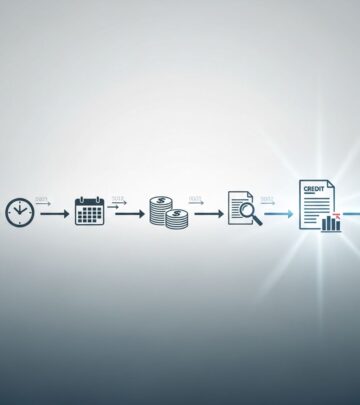
The FCRA mandates that most negative items, including collections, stay on your credit report for no more than seven years from the date of first delinquency (DOFD)—the moment you first missed a payment and never caught up. This clock does not restart if the debt is sold, charged off, or sent to collections. For instance, if you missed payments starting January 1, 2019, the account must vanish by January 1, 2026, regardless of subsequent activity.
Exceptions exist for certain public records like bankruptcies (up to 10 years), but standard collections follow the seven-year rule strictly. Collectors sometimes attempt to “re-age” debts by reporting incorrect dates, which violates FCRA and provides grounds for removal. Always verify the DOFD listed on your report, as it’s the legal anchor point.
Step-by-Step Guide to Reviewing Your Credit Reports
Start by obtaining free weekly credit reports from AnnualCreditReport.com, a service authorized by federal law. This allows you to scrutinize entries from all three bureaus simultaneously.
- Pull reports from Experian, Equifax, and TransUnion: Note any discrepancies, such as collections appearing on one bureau but not others.
- Locate the DOFD: Found in the account details; calculate if it’s over seven years old.
- Document details: Record creditor names, balances, account numbers, and status (open, paid, etc.) for disputes.
Regular checks reveal errors like duplicate accounts or mistaken identities, which occur due to mixed files or data entry mistakes.
Filing Effective Disputes with Credit Bureaus
Disputing is the primary tool for removal. Each bureau must investigate within 30 days under FCRA. If the furnisher (e.g., debt collector) can’t verify the account, it must be deleted.
Online vs. Mail Disputes: Use bureau websites for speed, but mail certified letters with evidence (e.g., old statements proving DOFD) for a stronger record.
| Bureau | Online Dispute Link | Mail Address |
|---|---|---|
| Experian | experian.com/dispute | P.O. Box 4500, Allen, TX 75013 |
| Equifax | equifax.com/personal/dispute-credit-report | P.O. Box 740256, Atlanta, GA 30374 |
| TransUnion | transunion.com/credit-disputes/dispute-your-credit | P.O. Box 2000, Chester, PA 19016 |
Include a clear explanation: “This collection exceeds seven years from DOFD of [date]; remove per FCRA Section 605.” Attach proof. Bureaus notify furnishers, who must respond or face deletion.
Handling Paid Collections and Goodwill Requests
Paying a collection updates it to “paid” but doesn’t erase it immediately. It remains for seven years from DOFD. Request a goodwill deletion post-payment, politely explaining circumstances (e.g., job loss) and your payment history. Collectors aren’t obligated but may comply to maintain relations.
Sample Goodwill Letter Structure:
- Reference account details.
- Confirm payment.
- Explain hardship.
- Request full removal as goodwill.
Send via certified mail; follow up if no response in 30 days.
Negotiating Pay-for-Delete Agreements
For unpaid valid debts, propose a pay-for-delete: pay in exchange for written agreement to delete from all three bureaus. Get this in writing before paying. Not all collectors participate, as it contradicts FCRA verification duties, but smaller agencies often agree.
Caution: Avoid partial payments without agreement, as they may restart statutes of limitations or re-age debts in some states.
Escalating to Regulators When Needed
If disputes fail, file complaints with the Consumer Financial Protection Bureau (CFPB) at consumerfinance.gov or Federal Trade Commission (FTC) at reportfraud.ftc.gov. Provide dispute IDs and evidence. These agencies enforce FCRA compliance and can pressure non-compliant entities.
Success rates rise with documentation; regulators often mediate removals.
Common Errors Triggering Removals
- Inaccurate DOFD: Extends reporting illegally.
- Mixed files or fraud: Accounts not yours.
- Wrong balance/status: E.g., unpaid after payoff.
- FDCPA violations: Harassment or false reporting.
Impact of Collections on Your Financial Life
Collections can drop scores by 100+ points, blocking mortgages (FICO requires paid status) and apartments. Removal boosts scores rapidly, as recent positive history weighs heavily. Monitor via free tools like Credit Karma for changes.
Preventing Future Collections
- Pay bills promptly or set autopay.
- Negotiate directly with creditors before collections.
- Build emergency funds for 3-6 months expenses.
- Freeze credit to prevent fraud-related collections.
Frequently Asked Questions (FAQs)
Do I need to dispute with all three bureaus separately?
Yes, as they maintain independent reports. A removal from one doesn’t auto-update others.
Can paying a collection improve my score?
It marks as paid (positive), but full removal is better. Wait seven years otherwise.
What if the collector ignores my dispute?
Bureaus must delete unverified items after 30 days. Escalate to CFPB.
Are medical collections treated differently?
Post-2022 rules paid medical debts under $500 or 1-year-old don’t report, but others follow standard rules.
How long until score improves after removal?
Immediately upon update, often 30-45 days.
Long-Term Credit Rebuilding Strategies
After clearance, secure a secured card, keep utilization under 30%, and avoid new delinquencies. Scores can recover to 700+ in 12-18 months with discipline.
References
- How to Remove a Collections Account from Your Credit Report After Seven Years — WS Law. 2025-10-01. https://www.wslaw.com/blog/2025/october/how-to-remove-a-collections-account-from-your-credit-report-after-seven-years/
- Remove Collections Without Paying? What To Know — APFSC. 2024-01-15. https://apfsc.org/can-you-remove-collections-from-your-credit-report-without-paying/
- How to Legally Remove Collections from Your Credit Report After Paying Off Debt — Rapa Legal. 2023-11-20. https://rapalegal.com/resources/blog/how-to-legally-remove-collections-from-your-credit-report-after-paying-off-debt/
- How to Get a Collection Removed from Your Credit Report — Quicken Loans. 2024-05-10. https://www.quickenloans.com/learn/get-a-collection-removed-from-credit-reports
- How to REMOVE Collections from Credit Report FAST (2026) — YouTube (Irvin). 2026-01-01. https://www.youtube.com/watch?v=3wyS_oDGGTE
- How Do I Get a Paid Collection off My Credit Report? — Experian. 2025-03-15. https://www.experian.com/blogs/ask-experian/how-do-i-get-a-paid-collection-off-my-credit-report/
- Can Debt Collectors Remove Items From Credit Reports? — Nolo. 2024-08-22. https://www.nolo.com/legal-encyclopedia/getting-debt-collectors-remove-negative-information-from-your-credit-report.html
(Word count: 1678)
Similar Articles








Read full bio of medha deb