Clean Energy for All: White House Initiative
Discover how the White House's Clean Energy for All initiative can lower your energy bills and promote sustainable living for every American household.
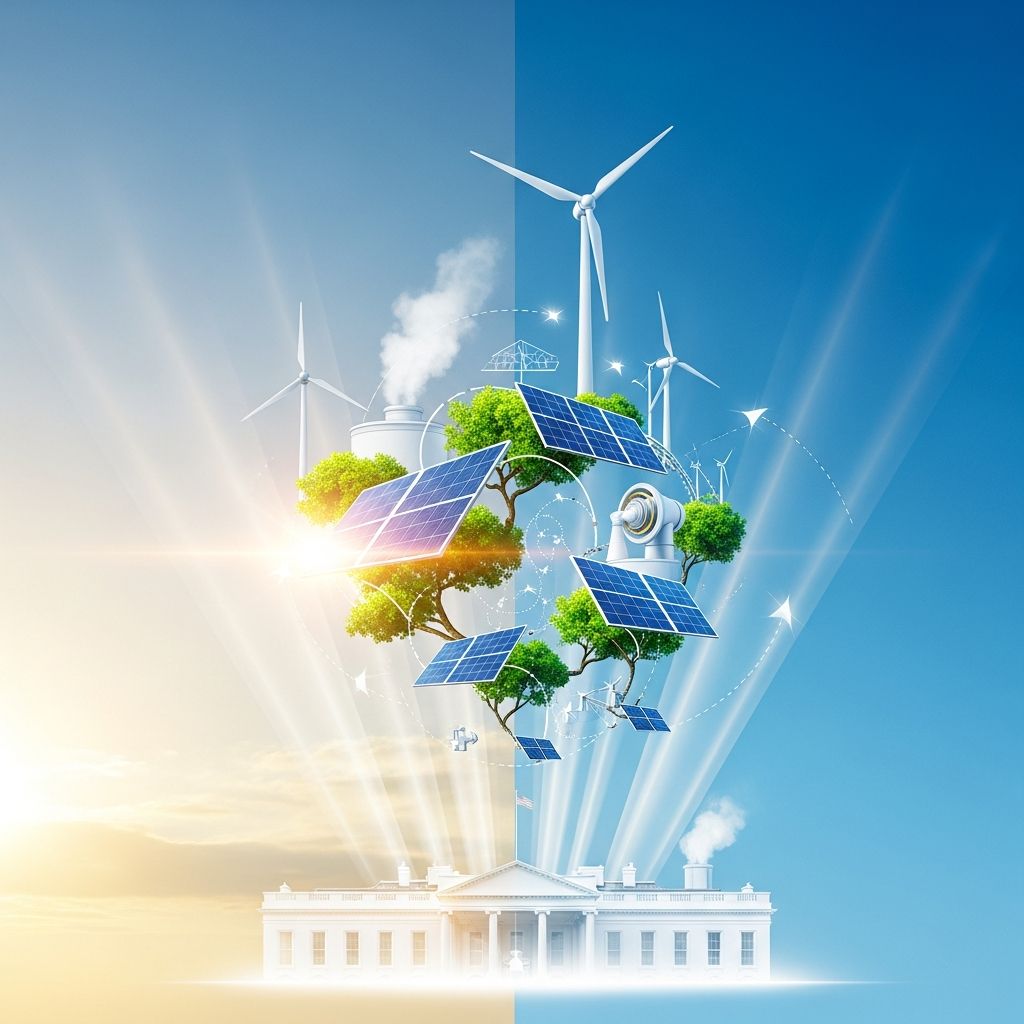
The White House’s
Clean Energy for All
program aims to make renewable energy accessible to every American household, promising significant savings on energy bills while advancing national sustainability goals. Launched under previous administrations, this initiative provided billions in funding for clean energy projects, though recent policy changes have led to cuts in several programs.What Is Clean Energy for All?
Clean Energy for All is a comprehensive federal effort to democratize access to renewable energy sources like solar, wind, geothermal, and energy-efficient technologies. The program targets low- and moderate-income households, offering rebates, tax credits, and low-interest loans to install solar panels, heat pumps, energy-efficient windows, and more. By reducing reliance on fossil fuels, it lowers monthly utility costs and combats climate change.
Key components include the Home Energy Rebate programs from the Inflation Reduction Act (IRA), which allocated up to $8.8 billion for residential efficiency upgrades. Families could receive up to $14,000 in rebates for electrification and efficiency improvements, making green upgrades affordable even for renters and low-income groups.
How to Save Money with Clean Energy Rebates
Switching to clean energy isn’t just good for the planet—it’s a smart financial move.
Average households can save $500–$1,500 annually
on energy bills through these incentives. Here’s how:- Solar Panels: Federal Investment Tax Credit (ITC) covers 30% of installation costs through 2032, dropping to 26% in 2033 and 22% in 2034.
- Heat Pumps: Up to $2,000 in rebates for efficient heating and cooling systems.
- Energy-Efficient Appliances: Rebates up to $1,400 for electric stoves, dryers, and insulation.
- EV Chargers: 30% credit up to $1,000 for home charging stations.
States like California and New York have additional incentives, stacking federal benefits for maximum savings. Use the U.S. Department of Energy’s website to check eligibility.
Recent Changes: Trump Administration Cuts to Clean Energy Funding
In a significant shift, the Trump administration announced the cancellation of nearly
$7.6 billion in clean energy grants
targeting projects in 16 Democrat-leaning states, including California, New York, and Illinois. These cuts affect battery plants, hydrogen hubs, grid upgrades, and carbon-capture initiatives funded by the Department of Energy (DOE).The DOE reviewed Biden-era awards post-election, terminating 223 projects deemed not economically viable or insufficiently advancing energy needs. For instance, California’s $1.2 billion hydrogen hub, which promised 200,000 jobs and private sector matching of $10 billion, was axed. Energy Secretary Chris Wright stated the moves protect taxpayer dollars and prioritize affordable, reliable energy.
Critics, including the Natural Resources Defense Council (NRDC), argue these cuts hinder innovation, raise future energy costs, and eliminate jobs. Governor Gavin Newsom called it ‘vindictive,’ emphasizing clean hydrogen’s role in job creation and health cost savings.
State-by-State Impact of Funding Cuts
The affected states are:
| State | Key Projects Affected | Estimated Impact |
|---|---|---|
| California | Hydrogen hub | 200,000 jobs at risk |
| New York | Grid upgrades, battery storage | Billions in investments paused |
| Illinois | Carbon capture | Energy innovation stalled |
| Colorado | Renewable energy demos | Local job losses |
| Others (CT, DE, HI, etc.) | Various clean tech | Increased energy costs |
Despite cuts, core IRA rebates remain intact for individuals, though implementation may slow in affected regions.
Benefits of Clean Energy for Households
Beyond rebates, clean energy adoption yields long-term gains:
- Lower Bills: Solar owners save ~$1,500/year; heat pumps cut heating costs by 50%.
- Energy Independence: Reduces vulnerability to fossil fuel price swings.
- Property Value Boost: Homes with solar sell for 4.1% more, per Lawrence Berkeley National Lab.
- Health Improvements: Fewer emissions mean cleaner air, reducing asthma and heart disease risks.
For renters, programs like community solar allow bill credits without installations.
Steps to Access Clean Energy Incentives
- Check Eligibility: Use ENERGY STAR’s rebate finder or state energy offices.
- Get a Home Energy Audit: Free or low-cost assessments identify upgrades (up to $150 rebate).
- Apply for Rebates: Through state programs; processing takes 4–6 weeks.
- Install Qualified Systems: Use certified contractors from DOE lists.
- Claim Tax Credits: File IRS Form 5695 with your return.
Low-income households qualify for 100% rebates up to $14,000 via HOMES and HEAR programs.
Overcoming Common Barriers to Adoption
Many hesitate due to upfront costs, but incentives cover 50–100%. Myths like ‘solar doesn’t work in cloudy areas’ are debunked—modern panels generate power on cloudy days. Financing options like solar loans have 0% interest through some nonprofits.
Future of Clean Energy Under New Policies
While federal grants face scrutiny, private investment surges. Companies committed $10 billion to California’s hydrogen efforts alone. States are stepping up with their own funds, and bipartisan support for energy dominance persists. The administration’s focus on ‘reliable energy’ may pivot to nuclear and natural gas alongside renewables.
Experts predict resilience: IRA’s $370 billion in clean energy funding is largely locked in, with $100+ billion already deployed.
Frequently Asked Questions (FAQs)
Is the Clean Energy for All program still active after recent cuts?
Core household rebates from the IRA remain available, but large-scale demo projects in certain states have been canceled. Check DOE for updates.
How much can I save on solar panels?
With 30% ITC, a $25,000 system costs $17,500 out-of-pocket, paying back in 6–8 years via $1,500 annual savings.
Do renters qualify for rebates?
Yes, through portable incentives, community solar, or landlord-tenant split programs in many states.
What if my state lost funding?
Federal tax credits are nationwide; explore state alternatives or private financing.
Are heat pumps worth it?
Absolutely—they’re 3x more efficient than gas furnaces, qualifying for $2,000 rebates and slashing bills.
Conclusion: Act Now to Secure Your Savings
Despite policy shifts, clean energy offers unmatched savings and security. Start with a free audit today and leverage remaining incentives before they evolve.
References
- Trump administration cuts nearly $8B in clean energy projects in blue states — Associated Press via Bangor Daily News. 2025-10-02. https://www.bangordailynews.com/2025/10/02/nation/trump-administration-cuts-nearly-8b-in-clean-energy-projects-in-blue-states/
- Inflation Reduction Act Guidebook — U.S. Department of Energy. 2024-06-15. https://www.energy.gov/policy/articles/inflation-reduction-act-guidebook
- Home Energy Rebates — U.S. Department of Energy. 2025-01-10. https://www.energy.gov/save
- Solar Energy Technologies Office Overview — U.S. Department of Energy. 2025-09-20. https://www.energy.gov/eere/solar/solar-energy-technologies-office
- Residential Clean Energy Credit — Internal Revenue Service. 2025-12-31. https://www.irs.gov/credits-deductions/residential-clean-energy-credit
Similar Articles








Read full bio of medha deb