Classical Economics: Foundation of Modern Market Theory
Understanding classical economics: The foundational theory of free markets and the invisible hand.

Classical Economics: Definition and Overview
Classical economics represents a foundational school of economic thought that emerged during the late 18th century and flourished primarily in Britain through the mid-19th century. This economic philosophy emphasizes the self-regulating nature of free markets and advocates for minimal government intervention in economic affairs. At its core, classical economics revolutionized how societies understand wealth creation, market dynamics, and the optimal organization of economic systems.
The classical school of thought operates on the principle that competitive markets naturally tend toward equilibrium, with resources being allocated efficiently through the interactions of supply and demand. This framework fundamentally transformed economic policy and theory, moving away from mercantilist approaches that had dominated for centuries. Classical economics became the intellectual foundation upon which modern capitalism developed, influencing economic policies worldwide and shaping contemporary market-based systems.
The Invisible Hand and Market Self-Regulation
One of the most enduring concepts in classical economics is Adam Smith’s metaphor of the “invisible hand,” which describes how individuals pursuing their own self-interest inadvertently contribute to the greater economic good. This concept suggests that when market participants act rationally in their own interests, competition among them naturally leads to efficient outcomes that benefit society as a whole. The invisible hand operates as a guiding force that coordinates the actions of countless independent actors without requiring centralized planning or government mandates.
In this framework, prices serve as the critical mechanism through which the invisible hand coordinates economic activity. When consumers demand a product, prices tend to rise, signaling to producers that increased production would be profitable. Conversely, when demand decreases, prices fall, discouraging production. This natural price mechanism eliminates the need for government bureaucrats to direct economic resources, as the profit motive inherently guides businesses toward producing what consumers desire. Classical economists believed this self-regulating mechanism was far more efficient than any government-directed alternative.
Key Principles of Classical Economics
Classical economic theory rests upon several fundamental principles that distinguish it from other schools of economic thought:
Free Markets and Competition
Classical economics advocates for minimal government intervention in markets, allowing competition to flourish among businesses. This competition forces companies to innovate, improve quality, and reduce costs to attract rational consumers seeking the best value. Only the most efficient businesses survive in such competitive environments, driving continuous improvement across industries.
Rational Economic Actors
The theory assumes that consumers and producers behave rationally, always seeking to maximize their economic well-being. Consumers aim to obtain the highest quality at the lowest price, while producers strive to maximize profits through efficient production. This rationality ensures that markets function effectively without external guidance.
Supply and Demand Dynamics
Classical economics emphasizes that market prices are determined by the interaction between supply and demand. When supply exceeds demand, prices decline. When demand outpaces supply, prices increase. This fundamental relationship became central to classical theory and remains core to modern economic analysis.
Division of Labour
Classical economists recognized that productivity increases dramatically when workers specialize in specific tasks. This division of labour, combined with accumulated capital, enables societies to produce vastly more wealth. Smith illustrated this principle through his famous example of pin manufacturing, demonstrating how specialization multiplies output per worker.
Major Theorists and Their Contributions
Classical economics was developed and refined by several brilliant thinkers whose insights shaped economic thought for generations:
Adam Smith (1723-1790)
Adam Smith, a Scottish philosopher and economist, is widely regarded as the father of classical economics. His seminal work, An Inquiry into the Nature and Causes of the Wealth of Nations, published in 1776, established the intellectual foundation for the entire classical school. Smith revolutionized economic thinking by arguing that national wealth derived not from accumulated precious metals, as mercantilists believed, but from productive labour and efficient capital allocation. He demonstrated how free competition and free trade, unfettered by government restrictions, would promote economic growth far more effectively than mercantilism had achieved.
David Ricardo (1772-1823)
David Ricardo built upon Smith’s framework and developed sophisticated theories of distribution and economic growth. Ricardo recognized that prices, while fluctuating based on short-term supply and demand, tend toward natural prices determined by production costs. He developed the theory of comparative advantage, explaining how nations benefit from international trade even when one nation is more efficient at producing everything. Ricardo also analyzed how national income is distributed among wages for labour, profits for capital owners, and rents for landlords.
John Stuart Mill (1806-1873)
John Stuart Mill synthesized and extended classical economic principles while introducing nuance regarding government’s role. Mill acknowledged that while markets generally function efficiently, certain areas like education and infrastructure might require government involvement. He also articulated the concept of a “steady-state economy,” believing that eventually societies would reach a state of constant population and capital stock that would be both inevitable and desirable.
Other Notable Contributors
Jean-Baptiste Say developed Say’s Law, which posited that supply creates its own demand. Thomas Robert Malthus contributed theories on population growth and its economic implications. These thinkers collectively developed a comprehensive economic framework explaining how market economies function as self-regulating systems governed by natural laws of production and exchange.
Opposition to Mercantilism
Classical economics emerged explicitly as a critique of mercantilism, the dominant economic philosophy that had prevailed in Britain and Europe since the 16th century. Mercantilism emphasized government regulation of trade, protection of domestic industries through tariffs, and accumulation of precious metals as measures of national wealth. Mercantilist policies created monopolies, restricted competition, stifled innovation, and resulted in market stagnation.
Classical economists demonstrated that mercantilism’s restrictive practices harmed economic growth by preventing competition and efficient resource allocation. They argued compellingly that free trade and competition would generate far greater prosperity than protectionist policies. This intellectual challenge to mercantilism coincided with the Industrial Revolution and the rise of capitalist systems, making classical economics profoundly influential in shaping economic policy during a transformative historical period.
Value Theory and Price Determination
Classical economists developed sophisticated theories about how prices are determined and how value should be understood in economic systems. William Petty introduced a crucial distinction between market price and natural price. Market prices fluctuate based on transient factors—tastes, technology, and endowments—that are difficult to predict or model. Natural prices, by contrast, represent the long-term equilibrium prices determined by production costs.
Classical value theory emphasized that value derives from labour. Adam Smith argued that the amount of labour required to produce a good fundamentally determines its value. This labour theory of value became a defining characteristic of classical economics and influenced subsequent economic schools, including Marxian economics. The theory explained how wages, profits, and rents were distributed among different classes in society based on their contributions to production.
Evolution and Legacy of Classical Economics
Classical economics dominated economic thought in Britain until approximately 1870, when it gradually evolved into neoclassical economics. The neoclassical school maintained classical emphasis on free markets and competition while incorporating new analytical tools, particularly marginal analysis, which examines how small changes in quantity affect total values. Classical economic principles evolved into supply and demand theory, which remains fundamental to modern economics.
During the late 20th century, classical economics experienced a resurgence through the new classical economics movement. New classical economists applied classical principles—developed to explain individual business and consumer interactions—to macroeconomic analysis of entire national economies. This development sought to reconcile classical microeconomic insights with modern macroeconomic concerns about inflation, employment, and growth.
Challenges and Criticisms
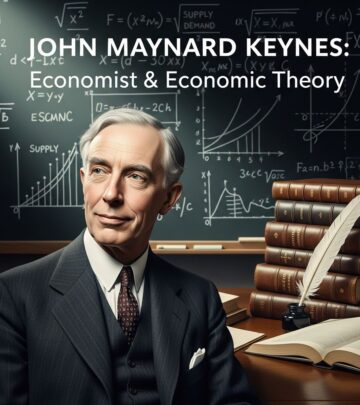
Despite its profound influence, classical economics has faced significant challenges from competing schools of thought. Most notably, Keynesian economics, developed by John Maynard Keynes, questioned classical assumptions about market self-correction. Keynes argued that free markets do not automatically move toward full employment, particularly during recessions and depressions. He advocated for active government intervention through fiscal and monetary policy to stimulate demand and reduce unemployment during economic downturns.
The Great Depression of the 1930s particularly challenged classical orthodoxy, as persistent unemployment seemed inconsistent with classical predictions of automatic market clearing. Keynesian economics gained considerable influence as governments adopted interventionist policies to combat depression and recession. This theoretical debate between classical and Keynesian perspectives continues to influence economic policy discussions today, with different schools emphasizing different roles for government intervention.
Classical Economics and Modern Capitalism
The economic system established by classical theory became the foundation of modern capitalism. The principles of private property ownership, competitive markets, profit incentives, and minimal government interference remain central to capitalist economies worldwide. Classical economic theory provided the intellectual justification for market-based systems and continues to influence contemporary economic policy, particularly among advocates of deregulation and limited government.
However, even classical economists acknowledged that markets have limitations. Adam Smith recognized that certain activities serving the common good—such as national defence, courts, and public works—might require government provision. Classical theory thus represents a sophisticated perspective recognizing both market efficiency and legitimate government roles, rather than absolute laissez-faire ideology.
Frequently Asked Questions
Q: What is the main difference between classical economics and Keynesian economics?
A: Classical economics assumes markets self-correct to full employment through price flexibility, while Keynesian economics argues that markets can remain in persistent disequilibrium with involuntary unemployment, requiring government intervention to restore full employment.
Q: Why is Adam Smith’s “invisible hand” important to classical economics?
A: The invisible hand metaphor explains how individuals pursuing self-interest through market competition inadvertently produce outcomes benefiting society. This concept justified minimal government intervention by showing how decentralized decision-making coordinates economic activity efficiently.
Q: How did classical economics differ from mercantilism?
A: Classical economics advocated free trade and competition, arguing that national wealth derived from productive labour rather than precious metal accumulation. Mercantilism emphasized government regulation, protectionism, and monopolies, which classical economists showed restricted growth.
Q: What is the labour theory of value in classical economics?
A: Classical economists argued that the amount of labour required to produce a good fundamentally determines its value. This theory explained price determination and income distribution among workers, capitalists, and landlords.
Q: How does supply and demand determine prices in classical theory?
A: When supply exceeds demand, prices fall, discouraging production. When demand exceeds supply, prices rise, encouraging increased production. This mechanism automatically coordinates production with consumer preferences without requiring central planning.
References
- Classical Economics — EBSCO Research Starters. Accessed 2025. https://www.ebsco.com/research-starters/economics/classical-economics
- Classical Economics: Adam Smith, Supply & Demand — Britannica. 2024. https://www.britannica.com/money/classical-economics
- Classical Economics — Wikipedia. Last updated 2025. https://en.wikipedia.org/wiki/Classical_economics
- An Inquiry into the Nature and Causes of the Wealth of Nations — Adam Smith. 1776. Original foundational text establishing classical economic principles.
- The General Theory of Employment, Interest, and Money — John Maynard Keynes. 1936. Influential critique of classical economics proposing government intervention.
Similar Articles








Read full bio of Sneha Tete