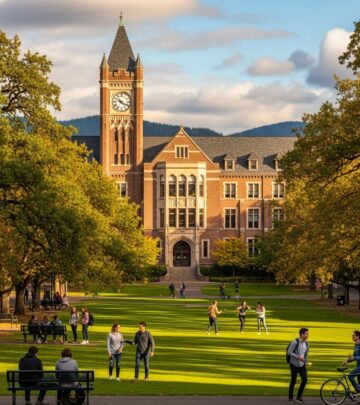
Claremont McKenna College: Leadership & Liberal Arts
Discover CMC: A premier liberal arts college preparing leaders in business, government, and public affairs.
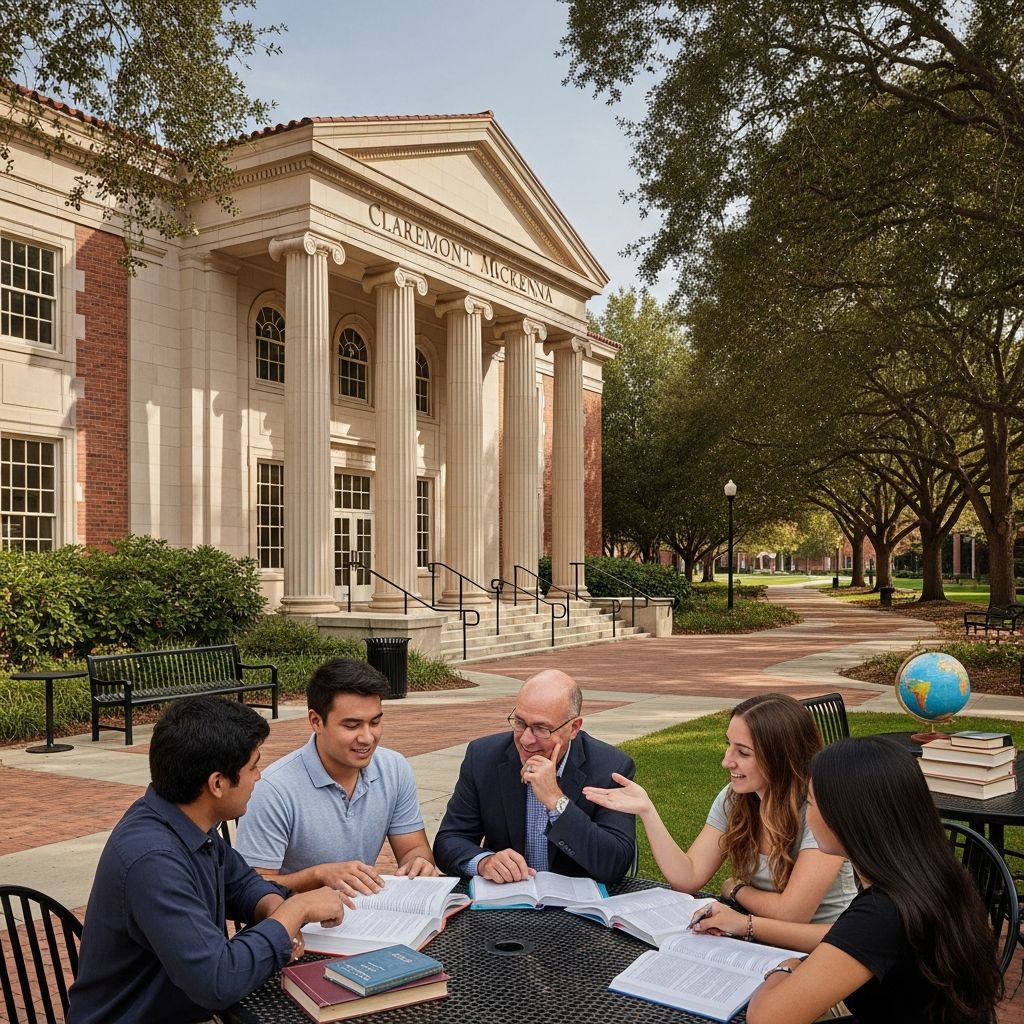
Claremont McKenna College: A Premier Institution for Future Leaders
Claremont McKenna College (CMC) stands as a highly selective, independent liberal arts institution located in Claremont, California, just 30 miles east of Los Angeles. Established in 1946 with a mission to prepare students for thoughtful and productive lives and responsible leadership in business, government, and the professions, CMC has evolved into one of the nation’s most respected undergraduate colleges. The institution’s curricular emphasis on government, economics, public affairs, finance, and international relations positions it uniquely among liberal arts colleges to develop leaders prepared for complex global challenges.
With an undergraduate population of approximately 1,377 full-time students, CMC maintains an intimate academic community that emphasizes close faculty-student relationships while providing access to the extensive resources of the Claremont Colleges consortium. The college’s need-blind admissions policy and focus on developing leadership accomplishments ensure a student body that is exceptionally diverse and accomplished both academically and beyond the classroom.
Academic Excellence and Rigorous Curriculum
CMC offers a challenging yet rewarding liberal arts education that combines intellectual rigor with practical application. The college operates on a semester system and provides 33 major programs and 11 academic sequences, allowing students to customize their educational experience based on their interests and career aspirations. The college’s curriculum structure emphasizes breadth and depth, requiring all students to complete at least two humanities courses and three social science courses outside their major, along with a comprehensive senior thesis.
Popular Majors and Areas of Study
The most sought-after majors at CMC reflect the college’s distinctive strengths in social sciences and professional preparation. Students frequently pursue degrees in economics, government, psychology, international relations, and the unique Philosophy, Politics, and Economics (PPE) program. Additional popular majors include neuroscience, biology, history, and science management, demonstrating that while the college excels in liberal arts and social sciences, it also maintains strong STEM offerings through its partnership with the Keck Science Department.
One of CMC’s standout academic programs is the Oxford-style tutorial Philosophy, Politics, and Economics major, which features two tracks limited to 14 students each, allowing for intensive one-on-one engagement with faculty. This program exemplifies the college’s commitment to innovative pedagogy and personalized education, offering weekly debates and paper exchanges that challenge students to develop sophisticated analytical and communication skills.
Innovative Teaching Methods
CMC faculty members employ innovative pedagogical approaches that extend beyond traditional lecture formats. Economics courses utilize digital simulators that allow students to explore economic concepts through interactive, game-like interfaces. The Philosophy, Government, and Economics programs dedicate three courses to weekly one-on-one tutorials with faculty, fostering deep intellectual engagement and critical thinking development. This commitment to experiential and interactive learning ensures that students develop both theoretical knowledge and practical problem-solving abilities.
Faculty and Academic Support
The college employs 172 full-time faculty members, 99% of whom hold doctoral or terminal degrees in their respective fields. With a student-to-faculty ratio of 8 to 1, CMC ensures that professors can provide meaningful mentorship and intellectual guidance to each student. Faculty members are known for their accessibility and willingness to engage students outside the classroom, creating an environment conducive to intellectual growth and personal development.
CMC professors demonstrate particular commitment to facilitating thoughtful discussions and supporting student development. Students consistently report that faculty are flexible in their expectations while maintaining high academic standards, motivating students to achieve excellence. This balance between support and rigor creates an environment where students feel challenged to grow intellectually while receiving the guidance necessary for success.
The Athenaeum: Bringing World Leaders to Campus
One of CMC’s most distinctive features is the Athenaeum, a program that brings prominent speakers and leaders to campus multiple times weekly to share their expertise and perspectives with students. The program is regarded as among the most impressive speaker series at any liberal arts college, regularly hosting individuals of national and international prominence. As one student notes, speakers at CMC’s Athenaeum often possess the stature that would qualify them for commencement addresses at other institutions, yet they appear on campus during regular academic weeks, creating unparalleled access to intellectual diversity and real-world perspectives.
Experiential Learning and Research Opportunities
Experiential learning forms a cornerstone of CMC’s educational philosophy, with extensive opportunities for students to engage in research, internships, and off-campus study programs. According to the 2024-2025 data, 62% of students conduct research with faculty members, gaining firsthand experience in their disciplines and contributing to scholarly advancement. Additionally, 89% of students participate in internship programs, providing practical experience in their fields of interest. These high participation rates reflect both the college’s commitment to experiential education and students’ enthusiasm for applying classroom learning to real-world contexts.
The Soll Center for Student Opportunity plays a crucial role in facilitating these experiences, providing comprehensive career services, scholar communities, and coordinating sponsored internships and experiences. This dedicated support system ensures that students can translate academic preparation into meaningful career advancement and professional networks.
Research Institutes and Centers
CMC maintains 11 research institutes and centers that create opportunities for student-faculty collaboration and contribute to intellectual vitality on campus. These centers support research across diverse disciplines and often address pressing policy issues, allowing students to engage with real-world challenges while developing research capabilities. The breadth of research opportunities available through these institutes enables students to explore specialized interests and develop expertise in niche areas of study.
The Claremont Colleges Advantage
As one of seven member institutions of the Claremont University Consortium, CMC students benefit from access to an extended academic community encompassing Harvey Mudd College, Pitzer College, Pomona College, Scripps College, Claremont Graduate University, and the Keck Graduate Institute. Together, these institutions cover over 300 acres and enroll more than 6,000 students with access to over 2,500 courses and extensive academic resources. This consortium structure allows CMC students to tailor their education by accessing majors and specialized courses not offered at CMC while maintaining the intimate community environment of a small liberal arts college.
The cross-registration opportunities available through the consortium significantly expand educational possibilities. Students can pursue specialized programs and access faculty expertise across all seven institutions, creating educational flexibility that rivals large research universities while preserving the close mentoring relationships characteristic of small colleges.
Career Development and Professional Success
CMC has established a strong reputation for career development and professional success, particularly in fields such as economics, business, finance, and consulting. The Robert Day School of Economics and Finance, established in 2007, offers a Master of Arts in Finance and provides scholarships, mentorship, and comprehensive preparation for professional advancement. The Career Services Center at CMC is highly regarded for connecting students with professional and research opportunities, ensuring that graduates are prepared for leadership roles in their chosen fields.
The college’s emphasis on practical skills development, combined with its distinguished alumni network, positions graduates well for success in competitive professional environments. Approximately 95% of CMC students graduate, and the college boasts strong placement rates in leading firms and organizations across industries.
Student Life and Community
CMC maintains a vibrant residential community that fosters intellectual engagement, personal growth, and lasting friendships. The full-time, first-time freshman retention rate of 98% indicates exceptionally high student satisfaction and sense of belonging. With approximately 1,400 undergraduates, the college provides a community large enough to offer diverse perspectives and opportunities while remaining small enough for meaningful personal connections.
Beyond the classroom, students engage in an impressive array of activities and organizations. The college supports top-tier NCAA Division III athletic programs, with CMC sports winning 28 SCIAC Team Championships since fall 2021, reflecting both athletic excellence and school spirit. Additionally, with access to over 2,200 classes and activities through the Claremont Colleges consortium, students can pursue diverse interests from club sports and arts to community service and professional development organizations.
Admissions and Selectivity
Admission to CMC is highly competitive, with an acceptance rate of 11%, reflecting the college’s reputation and the demand for places in its rigorous programs. The college employs need-blind admissions and emphasizes the demonstration of leadership accomplishments, ensuring that admitted students possess not only strong academic credentials but also evidence of character development and potential for meaningful contribution to society. This selective admissions process creates a cohort of exceptionally talented and motivated peers, enhancing the educational environment for all students.
Academic Programs and Degrees
CMC awards Bachelor of Arts degrees in undergraduate programs and offers a Master of Arts in Finance through the Robert Day School of Economics and Finance. The college is accredited by the Western Association of Schools and Colleges Senior College and University Commission (WSCUC), ensuring that its degrees meet rigorous standards for quality and educational effectiveness.
Location and Amenities
Located in Claremont, California, CMC benefits from a pleasant Southern California climate and proximity to Los Angeles, offering students access to cultural, professional, and recreational opportunities while maintaining the academic focus of a residential college community. The campus provides modern facilities, including the recently completed Robert Day Sciences Center, which enhances student research capabilities and scientific education. The 30-mile proximity to Los Angeles ensures that students can access internship opportunities, cultural events, and professional networking with major companies and organizations headquartered in the region.
Frequently Asked Questions
Q: What is CMC’s acceptance rate?
A: Claremont McKenna College has an acceptance rate of 11%, making it one of the most selective liberal arts colleges in the United States.
Q: What are the most popular majors at CMC?
A: The most popular majors include Economics, Government, Psychology, International Relations, and Philosophy, Politics, and Economics (PPE). These programs reflect the college’s distinctive strength in social sciences and professional preparation.
Q: How does the Claremont Colleges consortium benefit CMC students?
A: Students benefit from cross-registration opportunities, access to over 2,500 courses, and specialized programs offered at other consortium institutions, all while maintaining the intimate community of a small liberal arts college.
Q: What percentage of students participate in internships?
A: Approximately 89% of CMC students participate in internship programs, providing practical experience in their fields of interest.
Q: What research opportunities are available to undergraduates?
A: CMC offers extensive research opportunities through 11 research institutes and centers on campus, with 62% of students conducting research with faculty members. Additionally, the college provides opportunities for students to work on research projects in campus research centers.
Q: Is CMC need-blind in admissions?
A: Yes, admission to CMC is need-blind, meaning financial circumstances do not influence admissions decisions. The college is committed to making education accessible to qualified students regardless of financial background.
Q: What is the student-to-faculty ratio at CMC?
A: CMC maintains an 8 to 1 student-to-faculty ratio, ensuring that students receive meaningful mentorship and can develop close relationships with faculty members.
Q: Does CMC offer graduate programs?
A: Yes, CMC offers a Master of Arts in Finance through the Robert Day School of Economics and Finance, established in 2007 to provide advanced education in finance and business.
References
- Fact Sheet 2024-2025 — Claremont McKenna College. 2024. https://www.cmc.edu/institutional-research/fact-sheet/2024-2025
- Claremont McKenna College (CMC) – The Princeton Review — The Princeton Review. 2025. https://www.princetonreview.com/college/claremont-mckenna-college-1023694
- Claremont McKenna College — Wikipedia. 2025. https://en.wikipedia.org/wiki/Claremont_McKenna_College
- Claremont McKenna College – Niche — Niche. 2025. https://www.niche.com/colleges/claremont-mckenna-college/
Similar Articles








Read full bio of Sneha Tete