Cities Facing Sharpest Credit Card Debt Surges
Discover which U.S. cities are seeing the fastest growth in credit card balances and why residents are struggling more with debt.
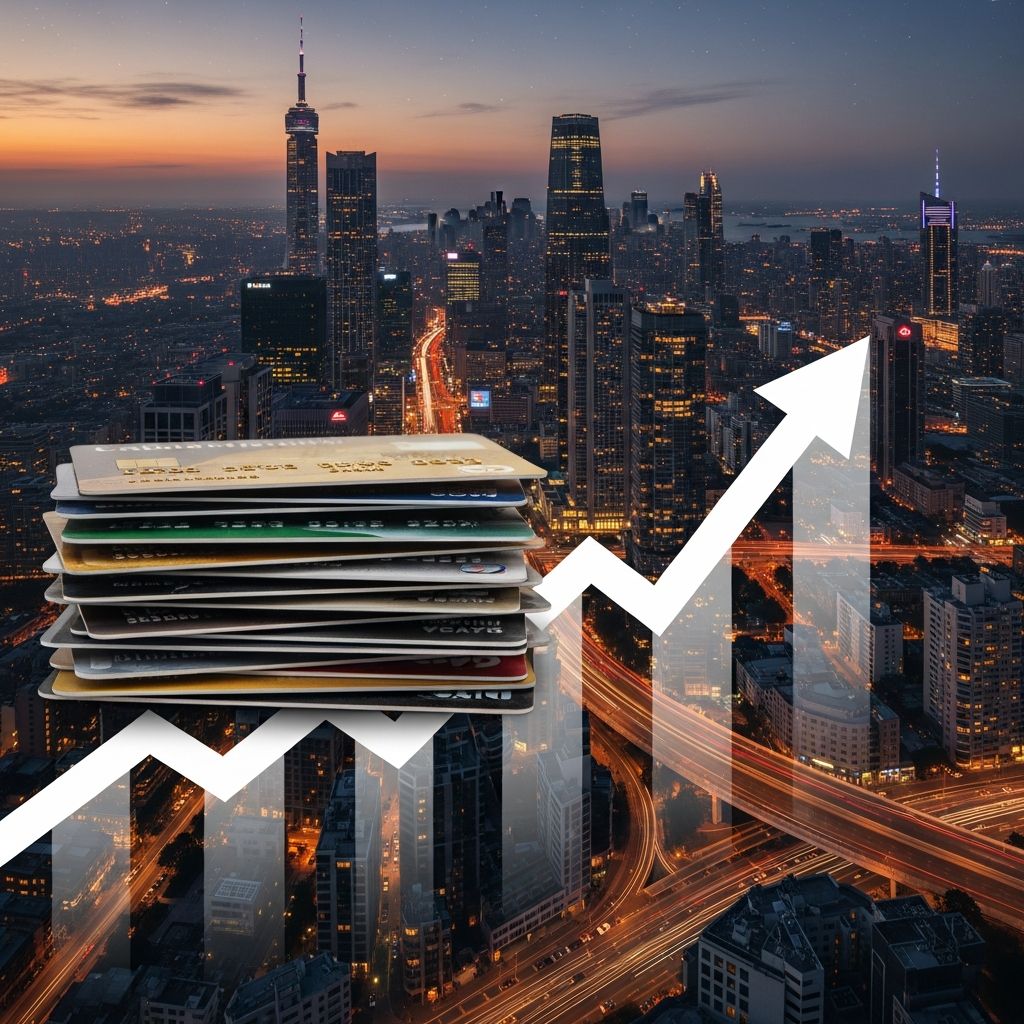
Credit card debt across the United States has reached unprecedented levels, with total balances hitting $1.277 trillion by the fourth quarter of 2025, according to Federal Reserve figures analyzed by financial experts. This surge is not uniform, as certain cities and states experience far steeper increases than others, driven by local economic conditions, cost-of-living pressures, and spending habits. Understanding these hotspots reveals broader patterns in consumer behavior and financial health.
National Overview of Credit Card Debt Growth
The average credit card balance for cardholders carrying unpaid debt stood at $7,886 in the third quarter of 2025, marking a 2.8% rise from the prior year. This national uptick reflects broader affordability challenges, where over half of cardholders—roughly 111 million Americans—carry balances month-to-month at high interest rates. In total, about 227 million adults, or more than four in five, hold some form of credit card debt totaling around $1.27 trillion.
Factors fueling this growth include persistent inflation, stagnant wages in some sectors, and increased reliance on credit for everyday expenses. Urban areas, with their higher living costs, often amplify these pressures, leading to disproportionate debt accumulation in specific locales.
States Leading the Charge in Debt Increases
State-level data highlights significant disparities. Eleven states boast average balances exceeding $9,000, with Connecticut topping the list at $9,778, up 4.9% from the previous year. New Jersey follows closely at $9,748 (7.0% increase), and Maryland at $9,630 (9.1% rise). These affluent states paradoxically show high debt due to elevated spending on housing, luxury goods, and services.
| Rank | State | Avg. Debt Q3 2025 | Avg. Debt Q3 2024 | % Change |
|---|---|---|---|---|
| 1 | Connecticut | $9,778 | $9,323 | 4.9% |
| 2 | New Jersey | $9,748 | $9,112 | 7.0% |
| 3 | Maryland | $9,630 | $8,830 | 9.1% |
| 4 | Hawaii | $9,448 | $8,798 | 7.4% |
| 5 | District of Columbia | $9,413 | $9,209 | 2.2% |
| 6 | California | $9,396 | $9,191 | 2.2% |
| 7 | Alaska | $9,261 | $9,040 | 2.4% |
Other notable risers include Washington (11.8% increase to $9,039) and South Dakota (11.7% to $7,223). Declines are rare, seen in states like Wyoming (-0.6%) and New Mexico (-10.3%), possibly due to local economic recoveries or reduced consumer spending.
Urban Centers with Explosive Debt Growth
Drilling down to cities uncovers even sharper trends. Metro areas in high-debt states often mirror or exceed statewide patterns. For instance, cities in Nevada like Henderson stand out not just for high balances but for aggressive card acquisition—residents opened 1.4 new cards per person in Q4 2025, a 19% year-over-year jump, holding 6.2 cards on average.
- Henderson, NV: Leads in new card openings and total cards per resident, surpassing state averages.
- St. Louis, MO: Tops growth in new accounts at 22% increase, with 5.3 cards per person.
- Garland, TX: High overall card ownership contributes to rising balances amid Texas’s modest 0.9% state increase.
These cities reflect a pattern where residents accumulate multiple cards, potentially revolving higher balances as they chase rewards or bridge cash flow gaps. In contrast, cities like Detroit and Newark face delinquency crises, with 15.7% and 15.5% of loans past due, respectively, signaling that rising balances are tipping into unmanageable territory.
Why Are Balances Climbing in These Areas?
Several interconnected factors drive these urban and state surges:
- Cost of Living Pressures: High-rent cities like those in California and New York force reliance on credit for essentials.
- Interest Rate Environment: With rates remaining elevated, carrying balances becomes costlier, trapping users in cycles of minimum payments.
- Consumer Spending Habits: Reward-heavy card usage in affluent areas like Connecticut leads to higher utilization.
- Economic Shifts: Post-pandemic recovery unevenness leaves some metros with job market volatility, prompting debt-funded stability.
In delinquent hotspots like Greensboro (15.5% delinquency rate), 13.7% of total debt balances are overdue, underscoring how initial balance growth evolves into payment struggles.
Comparing Debt Metrics: Balances vs. Delinquency
| City | Avg. Cards per Person | New Cards Growth (Q4 2025) | Delinquency Rate (% Tradelines) | % Debt Past Due |
|---|---|---|---|---|
| Henderson, NV | 6.2 | 19% | N/A | N/A |
| St. Louis, MO | 5.3 | 22% | N/A | N/A |
| Detroit, MI | N/A | N/A | 15.7% | 20.2% |
| Newark, NJ | N/A | N/A | 15.5% | 17.8% |
| Greensboro, NC | N/A | N/A | 15.5% | 13.7% |
This table juxtaposes growth in card ownership with delinquency, showing how proactive card-opening in places like Henderson contrasts with distress in Rust Belt cities.
Demographic Insights into Debt Patterns
Debt surges vary by age, income, and household type. Younger adults in growing metros often carry higher balances due to student loans and entry-level salaries, while higher-income households in states like Maryland use premium cards for travel and dining, inflating averages. Nationally, the shift toward revolving debt affects 40% of adults, exacerbating wealth gaps.
Women and lower-income groups in delinquent cities like Detroit report higher stress, as essential spending dominates card usage.
Strategies to Curb Rising Balances
Residents in high-growth areas can take proactive steps:
- Balance Transfer Offers: Move debt to 0% APR cards to pause interest accrual.
- Budget Tracking Apps: Monitor spending to identify leaks in high-cost urban environments.
- Debt Snowball Method: Pay off smallest balances first for motivational wins.
- Income Boosting: Side gigs are popular in cities like St. Louis to offset rises.
- Credit Counseling: Non-profits offer plans tailored to local economic realities.
Automating payments above minimums prevents delinquency spikes seen in places like Newark.
Future Outlook for Urban Debt Trends
Projections suggest continued pressure if inflation persists, but potential rate cuts could ease burdens. Cities with strong job growth, like those in Washington state, may stabilize faster. Monitoring local unemployment and housing costs provides early warnings for residents.
Frequently Asked Questions (FAQs)
What city has the highest average credit card debt?
While city-specific balance data varies, states like Connecticut lead with $9,778 averages, influencing metros within them.
Why is credit card debt rising nationally?
Affordability issues, high interest, and spending on necessities amid inflation drive the $1.277 trillion total.
Which states saw debt decreases?
Wyoming (-0.6%), New Mexico (-10.3%), and Oklahoma (-0.7%) bucked the trend.
How many Americans carry month-to-month balances?
Over half of cardholders, or 111 million, revolve debt at high rates.
What are delinquency rates in top cities?
Detroit tops at 15.7% of tradelines and 20.2% of balances past due.
References
- 2026 Credit Card Debt Statistics — LendingTree. 2026. https://www.lendingtree.com/credit-cards/study/credit-card-debt-statistics/
- These cities have the most credit cards in 2026, data suggests — LiveNow from FOX. 2026. https://www.livenowfox.com/money/cities-most-credit-cards-2026-wallethub
- These US cities have the highest debt delinquency rates in 2026 — FOX 9 Minneapolis-St. Paul. 2026. https://www.fox9.com/news/debt-delinquency-us-cities-2025-wallethub-analysis
- More Than Half of Credit Cardholders Are Carrying Debt Month-to-Month — Protect Borrowers. 2026-03-17. https://protectborrowers.org/report-more-than-half-of-credit-cardholders-are-carrying-debt-month-to-month-at-crushing-interest-rates-as-trumps-affordability-crisis-worsens/
- Interest Nation: The State of America’s Credit Card Debt Crisis — The Century Foundation. 2026. https://tcf.org/content/report/interest-nation-the-state-of-americas-credit-card-debt-crisis/
Similar Articles








Read full bio of Sneha Tete