Citation vs Ticket: Key Differences
Unravel the confusion between citations and tickets: learn their definitions, impacts on records, insurance, and how to respond effectively as a driver.
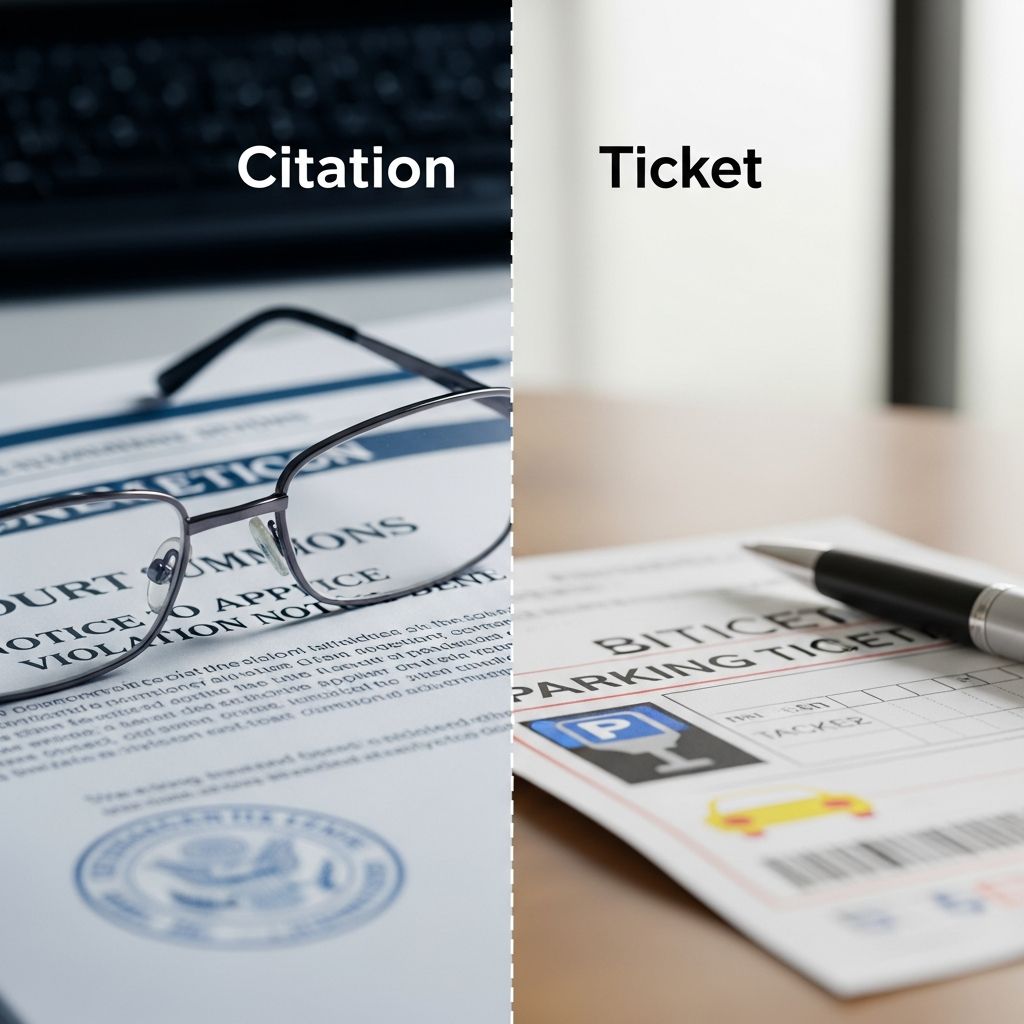
Traffic citations and tickets often spark confusion among drivers due to their interchangeable everyday use, but they carry distinct legal meanings and consequences. A citation serves as a formal written notice for any law violation, encompassing warnings, parking issues, and equipment faults, whereas a ticket typically denotes a moving violation that triggers fines, license points, and potential court mandates.
Defining the Basics: Citation Explained
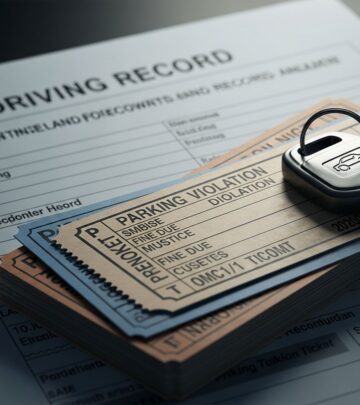
A citation represents an official document from law enforcement detailing a suspected breach of traffic regulations. This broad category includes non-moving infractions like improper parking or faulty vehicle lights, which seldom add points to your driving record. Drivers receive citations for administrative matters too, such as registration lapses, often resolvable through simple corrective measures or minor fees without court involvement.
- Common citation examples: Parking in restricted zones, expired tags, or defective taillights.
- These notices prioritize compliance over punishment, focusing on safety enhancements.
- Unlike tickets, they rarely influence insurance premiums directly.
Upon issuance, a citation lists essential details: violation code, incident date and location, issuing officer’s info, and resolution instructions. Responding promptly prevents escalation to warrants or added penalties.
Understanding Tickets: The Moving Violation Focus
Tickets, or traffic tickets, zero in on dynamic offenses where the vehicle is in motion, such as exceeding speed limits or ignoring stop signs. These infractions demand attention because they introduce demerit points, elevate insurance costs, and might necessitate courtroom defenses.
Authorities classify tickets as civil or criminal based on severity; minor ones incur fines, while grave cases like DUI lead to suspensions or jail time. The document mirrors a citation but emphasizes enforceable penalties, urging drivers to pay, contest, or seek reductions.
| Aspect | Citation | Ticket |
|---|---|---|
| Scope | Any violation notice | Moving violations primarily |
| Points on Record | Rarely | Frequently |
| Court Mandate | Uncommon | Often for serious cases |
| Insurance Effect | Minimal | Significant increase possible |
Legal Ramifications and Driving Records
Citations generally sidestep lasting record stains, vanishing after payment or correction unless appealed unsuccessfully. Tickets, conversely, lodge on DMV files, accumulating points that risk license revocation after thresholds—e.g., 12 in 12 months in some states.
Insurance firms scrutinize these entries during renewals; a single speeding ticket might hike rates by 20-30%, compounding with multiples. Accumulating violations signals risk, prompting providers to adjust premiums accordingly.
- Points decay over time: Typically 2-3 years depending on jurisdiction.
- Serious tickets like reckless driving persist longer, up to 10 years.
- Defensive driving courses can mitigate points in many areas.
Financial Burdens: Fines and Hidden Costs
Fines vary widely: Parking citations might cost $25-$100, while speeding tickets range $100-$500 plus surcharges. Beyond direct payments, tickets spawn court fees, towing expenses, and surged insurance—potentially thousands annually.
Non-response amplifies costs via late fees or default judgments, transforming infractions into collections issues. Proactive handling, like pleading to lesser charges, curbs long-term expenses.
Navigating Responses: Options for Drivers
Upon receiving either, review details meticulously. Pay online or by mail for uncontested minor issues; contest via hearing for disputes. Plea bargains often reduce points or fines, especially first offenses.
- Pay promptly: Admits guilt, settles matter quickly.
- Contest in court: Present evidence, witness testimony, or officer no-shows.
- Seek dismissal: Via traffic school or affidavits for errors.
- Hire counsel: For complex cases like DUI.
State variations apply—e.g., California mandates responses within 21 days. Online portals streamline checks via citation numbers.
State-Specific Variations Across the U.S.
Regulations differ: New York treats most as interchangeable, with points for movers. Nevada views them identically, classifying as civil infractions needing 90-day replies. California distinguishes tickets as citation subsets for road operations.
Federal uniformity lacks; always consult local DMV statutes. Recent 2025 updates in several states eased minor citation resolutions via apps, reducing court burdens.
Preventive Strategies for Safe Driving
Avoidance trumps reaction: Adhere to limits, maintain vehicles, and use apps for zone alerts. Dash cams document encounters, aiding disputes. Regular record audits via DMV portals preempt surprises.
Insurance discounts reward clean histories; bundling policies or loyalty mitigates hikes post-ticket.
Insurance Implications in Depth
Carriers query records triennially; tickets flag high-risk profiles. A DUI citation might double rates for years. Shop competitively post-infraction, as not all penalize equally.
- Minor parking: Negligible impact.
- Speeding: 15-25% rise.
- Multiple: Up to 50%+ escalation.
Common Misconceptions Debunked
Myth: All citations equal tickets. Reality: Citations broader, including warnings. Myth: Ignoring resolves issues. Reality: Warrants ensue. Myth: Points permanent. Reality: They expire.
Frequently Asked Questions
Is a citation the same as a ticket?
Generally yes, but citations encompass warnings and non-movers, while tickets focus on punishable movers.
Does a parking citation affect insurance?
Rarely, unless unpaid and escalated.
How long do ticket points last?
2-10 years by state and severity.
Can I remove a ticket from my record?
Via expungement, school, or age-out.
What if I ignore a citation?
Fees compound, license suspends.
Long-Term Career and Professional Impacts
CDL holders face stricter rules; tickets threaten livelihoods in transport. Background checks for jobs reveal records, underscoring clean driving’s value.
In summary, discerning citations from tickets empowers informed responses, safeguarding records and wallets. Stay vigilant, respond swiftly, and drive responsibly.
References
- Citation vs. Ticket: What is the Difference — Flickitnow. 2023-05-15. https://flickitnow.com/blog/citation-vs-ticket-what-is-the-difference
- What Is the Difference Between a Citation and a Ticket? — Traffic Hearing Lawyer. 2024-02-10. https://traffichearinglawyer.com/news/what-is-the-difference-between-a-citation-and-a-ticket/
- Tickets vs. Citations: What’s the Difference? — Insurify. 2025-01-20. https://insurify.com/car-insurance/knowledge/citation-vs-ticket/
- Citation vs. Ticket: What Every Driver Needs to Know — Southwest Legal. 2024-08-05. https://southwestlegal.com/citation-vs-ticket-what-driver-needs-to-know/
- Citation vs Ticket: What You Need to Know — Ticket Busters. 2023-11-12. https://ticketbusters.com/citation-vs-ticket/
- Is a Citation a Ticket? Understanding the Key Differences — Injury Help NV. 2024-03-18. https://www.injuryhelpnv.com/is-a-citation-a-ticket-understanding-the-key-differences/
Similar Articles








Read full bio of Sneha Tete