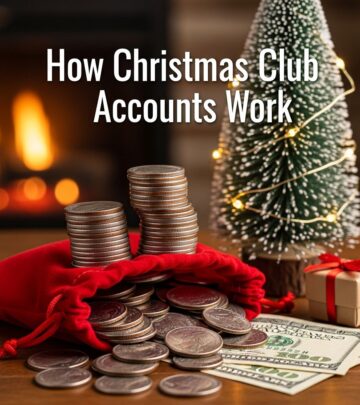
Christmas Club Account: Definition and How It Works
A comprehensive guide to Christmas Club accounts and how they can help you save.

A Christmas Club account is a specialized short-term savings account designed to help individuals accumulate funds specifically for holiday expenses throughout the year. These accounts have a long history in American banking and were first introduced in 1909 at a Pennsylvania bank. The primary purpose of a Christmas Club account is to provide a structured savings mechanism that encourages disciplined money management during the months leading up to the holiday season.
During the most recent holiday season, American consumers spent approximately $964 billion on holiday-related expenses, according to the National Retail Foundation. This staggering figure highlights the importance of planning ahead for the significant financial commitments that come with celebrating the holidays. A Christmas Club account offers one approach to managing these predictable annual expenses without resorting to credit card debt or depleting your regular savings.
What Is a Christmas Club Account?
A Christmas Club account, sometimes referred to as a Holiday Club account, is fundamentally a dedicated savings vehicle with specific withdrawal terms and timelines. Unlike traditional savings accounts that allow unrestricted access to your funds, Christmas Club accounts are designed with built-in restrictions that encourage you to maintain your balance until the holiday season arrives.
The basic concept is straightforward: you open an account, make regular deposits throughout the year, and then withdraw your accumulated funds during a designated withdrawal period, typically occurring in October, November, or December, depending on your financial institution’s specific policies and procedures. The funds are either transferred directly to your regular checking account or provided to you in the form of a check, which you can then use to cover your holiday expenses, from gift purchases and decorations to entertaining and special celebrations.
What distinguishes Christmas Club accounts from standard savings accounts is their structure and purpose. These accounts are specifically tailored for a known, predictable expense that occurs annually, making them fundamentally different from emergency savings or general-purpose savings accounts that serve broader financial goals.
How Christmas Club Accounts Work
Understanding the mechanics of how a Christmas Club account operates is essential before opening one. The process is relatively simple and straightforward, though specific details vary by financial institution.
Opening and Initial Setup
When you decide to open a Christmas Club account, you typically begin by making an initial deposit. The minimum deposit requirement varies significantly among banks and credit unions. Some institutions have no minimum balance requirement at all, while others may require a modest deposit, such as $25, to open an account in person at a branch. Online accounts sometimes have slightly higher minimum requirements, often around $25 as well, depending on the financial institution’s policies.
Regular Contributions
After establishing your account, you determine the amount and frequency of your regular contributions. Many account holders opt for weekly deposits or deposits aligned with their paycheck schedule. For example, you might arrange for $25, $50, or $100 to be automatically transferred from your checking account to your Christmas Club account on a weekly basis or every payday. This automated approach removes the need for manual intervention and helps ensure consistent savings without requiring constant decision-making.
Earning Interest
Most Christmas Club accounts do earn interest, though the rates tend to be lower than what you might find with regular savings accounts, money market accounts, or certificates of deposit. Interest rates on Christmas Club accounts typically range from 1% to 5% annual percentage yield (APY), though most offerings fall on the lower end of this spectrum. The exact rate you receive depends on the financial institution offering the account and current market conditions.
Withdrawal and Access Restrictions
One of the defining characteristics of Christmas Club accounts is their restricted access to funds. Historically, banks have charged fees for withdrawals made before the designated maturity date of the account. These early withdrawal penalties serve as a deterrent designed to encourage account holders to keep their money in the account until the holiday season arrives. This restriction can be problematic if unexpected emergencies occur, such as urgent home repairs or sudden medical expenses. If you need to access your funds before the scheduled withdrawal period and must pay an early withdrawal penalty, the cost can significantly reduce your savings and potentially negate any interest earned.
Key Benefits of Christmas Club Accounts
Despite their limitations, Christmas Club accounts offer several meaningful advantages for certain types of savers.
Forced Savings Discipline
The primary benefit of a Christmas Club account is the forced savings discipline it creates. For individuals who struggle with impulse spending or have difficulty maintaining savings discipline throughout the year, the automatic transfer mechanism and restricted access provide structure. Knowing that funds are locked away until the holidays arrive can help prevent the temptation to raid your savings for non-essential purchases.
Managing Predictable Expenses
Christmas Club accounts excel at helping you manage predictable, known expenses that occur annually. Rather than scrambling in December to find money for holiday shopping, decorations, and entertainment, you can build a dedicated fund throughout the preceding months. This approach allows you to celebrate the holidays without the stress and financial strain that often accompanies the season.
Avoiding Credit Card Debt
By accumulating holiday funds in advance through a dedicated account, you significantly reduce the likelihood of turning to credit cards to finance holiday expenses. This helps you avoid high-interest credit card debt that can take months or even years to pay off after the holidays end.
Beyond Holiday Expenses
While these accounts are specifically designed for holiday savings, they can be effectively used for other recurring annual expenses as well. Parents might use a Christmas Club account to accumulate funds for their child’s summer sleepaway camp, school supplies for the fall academic year, spring break vacation expenses, or any other predictable annual cost.
Where to Find Christmas Club Accounts
Christmas Club accounts are not universally available at all financial institutions. They are most commonly offered by smaller community banks and credit unions rather than large national banks. If you’re interested in opening a Christmas Club account, your best options are typically local and regional credit unions or community-focused banks.
Many of the same institutions that handle payroll direct deposit arrangements also offer Christmas Club accounts as part of their savings products. You can often open a Christmas Club account either in person at a branch or through the bank’s online platform. When searching online, look under the savings accounts section of your bank’s website to locate information about holiday or Christmas club accounts.
Credit unions throughout the country, from institutions in states like Iowa and California to locations across the entire nation, frequently offer these accounts as part of their standard product lineup.
Interest Rates and Earnings
While most Christmas Club accounts do offer interest earnings, understanding the interest rate landscape is important for making informed decisions.
Interest rates on Christmas Club accounts typically range from 1% APY on the lower end to above 4% APY on the higher end. However, accounts offering rates at the higher end of this range often come with conditions such as high minimum balance requirements or maximum deposit caps. These restrictions mean that while the headline rate sounds attractive, the actual benefits may be limited by additional requirements.
Compared to other savings vehicles, Christmas Club interest rates are generally modest. Regular high-yield savings accounts currently offer rates up to 4% APY or higher without the withdrawal restrictions. Money market accounts and certificates of deposit often provide competitive or superior rates as well. This means that from a pure interest-earning perspective, Christmas Club accounts may not be the most efficient savings vehicle available.
Drawbacks and Limitations
While Christmas Club accounts offer benefits, they also come with notable drawbacks worth considering.
Limited Interest Returns: The interest rates offered on Christmas Club accounts are typically lower than alternative savings options available today, making them less efficient for maximizing your returns.
Restricted Access: Early withdrawal penalties discourage you from accessing your money before the designated withdrawal period, which can be problematic during genuine emergencies.
Outdated Approach: While these accounts served an important purpose when savings options were limited, modern banking technology and financial products offer more flexible and rewarding alternatives.
Opportunity Cost: Money held in a low-interest Christmas Club account could potentially earn more in higher-yield alternatives.
Modern Alternatives to Christmas Club Accounts
Today’s savers have several more flexible and potentially more rewarding alternatives to traditional Christmas Club accounts.
High-Yield Savings Accounts
High-yield savings accounts currently offer rates up to 4% APY or higher with complete liquidity and no withdrawal penalties. You can open a dedicated high-yield savings account specifically for holiday expenses, set up automatic monthly transfers from your checking account, and maintain full access to your funds for true emergencies. This approach provides the same savings discipline as a Christmas Club account without sacrificing returns or emergency access.
No-Penalty Certificates of Deposit
No-penalty CDs allow you to earn guaranteed returns while maintaining the ability to withdraw your money before the maturity date without incurring fees. Simply ensure that your CD matures before your intended holiday shopping period begins.
Money Market Accounts
Money market accounts typically offer higher interest rates than traditional savings accounts while providing check-writing privileges and debit card access for added flexibility and convenience.
Automated Savings Applications
Numerous financial technology applications can automatically transfer small amounts from your checking account to savings based on your spending patterns, helping you save without constant conscious effort or decision-making.
Separate Bank Account Strategy
If you struggle with spending temptation, opening a holiday savings account at a different financial institution than your primary bank can create a psychological barrier to spending. This approach provides the discipline of a Christmas Club account without formal withdrawal penalties.
Frequently Asked Questions
Q: What is the history of Christmas Club accounts?
A: Christmas Club accounts were first introduced in 1909 at a Pennsylvania bank as a way to help customers save for holiday expenses. They reached peak popularity in the 1970s.
Q: Do all banks offer Christmas Club accounts?
A: No, Christmas Club accounts are primarily offered by smaller community banks and credit unions rather than large national banks.
Q: What happens if I need to withdraw money early from a Christmas Club account?
A: Early withdrawals typically result in penalties or fees that can significantly reduce your savings and negate earned interest.
Q: Are Christmas Club accounts FDIC insured?
A: Yes, Christmas Club accounts at FDIC-insured banks are protected up to the standard insurance limits.
Q: Can I use a Christmas Club account for expenses other than holiday shopping?
A: Yes, Christmas Club accounts can be used to save for any recurring annual expense, such as summer camp costs, school supplies, or vacation expenses.
Q: How much should I save in a Christmas Club account?
A: The amount depends on your holiday spending plans. Calculate your typical holiday expenses and divide by the number of months until the withdrawal period to determine appropriate monthly contributions.
Q: Are Christmas Club accounts still a good idea in 2025?
A: While they can work for highly disciplined savers, modern alternatives like high-yield savings accounts with automatic transfers typically offer better returns with greater flexibility.
The Bottom Line
Christmas Club accounts represent a traditional approach to holiday savings that can still be effective for individuals who need structured, forced savings discipline and struggle with impulse spending. However, modern financial products and banking technology offer more flexible and potentially more rewarding alternatives.
The most effective holiday savings strategy today involves opening a high-yield savings account, setting up automatic monthly transfers from your checking account on payday, and committing to avoid touching that money until November. This approach provides the same discipline as a Christmas Club account while offering better interest rates, complete liquidity for genuine emergencies, and no penalties.
Whether you choose a traditional Christmas Club account or opt for a modern alternative, the most important step is committing to save for the holidays in advance rather than relying on credit cards or depleting emergency savings when December arrives. With advance planning and consistent contributions throughout the year, you can celebrate the holidays without financial stress or debt.
References
- What Is a Christmas Club Account? — SoFi. 2025. https://www.sofi.com/learn/content/what-is-a-christmas-club-account/
- Are Christmas Club Accounts Still A Good Idea? — Bankrate. 2025. https://www.bankrate.com/banking/savings/are-christmas-club-accounts-still-a-good-idea/
- National Retail Foundation Holiday Spending Data — National Retail Foundation. 2024. Referenced for consumer spending statistics during holiday seasons.
Similar Articles








Read full bio of medha deb