How to Choose the Right Debt Consolidation Loan
Learn how to compare lenders, rates, and terms so your next debt consolidation loan truly saves you money and stress.

High-interest credit card balances and personal loans can be difficult to manage, especially when you are juggling multiple due dates, interest rates, and lenders. A debt consolidation loan can streamline your payments into a single monthly bill and may reduce your interest costs, but only if you select the right product for your situation.
This guide explains how debt consolidation loans work, their pros and cons, the different types of products you can use, and a step-by-step process to compare lenders and choose the best option.
What Is a Debt Consolidation Loan?
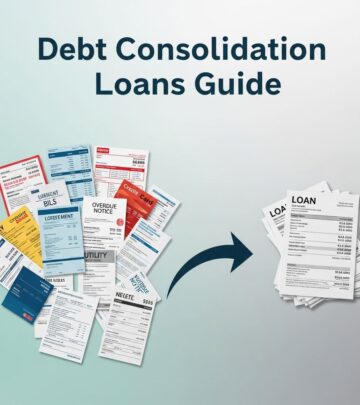
A debt consolidation loan is generally a fixed-rate installment loan you use to pay off multiple existing debts, such as credit cards, store cards, or other personal loans, leaving you with just one new monthly payment.
Instead of paying several creditors separately, you borrow a lump sum from a new lender and use that money to pay off your old balances. In some cases, the new lender can send funds directly to your creditors, which makes the process easier.
Common Uses for Debt Consolidation Loans
- Paying off multiple high-interest credit card balances
- Combining personal loans and credit cards into one payment
- Replacing variable-rate debts with a fixed-rate loan
- Financing a structured payoff plan with a clear end date
Key Features of Debt Consolidation Loans
- Single monthly payment: You replace several payments with one, which simplifies budgeting and reduces the risk of missing a due date.
- Fixed interest rate: Most consolidation loans are fixed-rate, so your payment stays the same for the life of the loan.
- Defined payoff schedule: Terms typically range from about 24 to 72 months or longer, and you know exactly when the loan will be paid off if you make payments as agreed.
How Debt Consolidation Loans Work
Debt consolidation loans operate like other personal loans, but with a specific goal: replacing your existing debts with a new loan that is ideally cheaper and easier to manage.
The Basic Process
- Assess your existing debts: List balances, interest rates, and monthly payments for all debts you plan to consolidate.
- Apply for a consolidation loan: You submit an application with income, employment, and credit information.
- Receive a lump sum or direct payoff:
- Some lenders deposit funds into your bank account so you can pay creditors yourself.
- Others pay your credit card issuers or other lenders directly.
- Begin repaying the new loan: You make a single monthly payment to the new lender until the loan is repaid.
Example: Potential Savings
If you are carrying a credit card balance at an average rate above 20% and roll it into a fixed-rate personal loan at a substantially lower rate, you may save thousands of dollars in interest over several years. For instance, Experian illustrates that consolidating an $11,700 balance from a 23.62% APR credit card into a 14.48% APR consolidation loan over 60 months could save more than $3,500 in interest.
| Scenario | Balance | Interest Rate (APR) | Monthly Payment | Total Paid Over 60 Months |
|---|---|---|---|---|
| High-interest credit card | $11,700 | 23.62% | $334 | $20,041 |
| Debt consolidation loan | $11,700 | 14.48% | $275 | $16,510 |
Illustrative figures, adapted from Experian’s example of potential savings with a consolidation loan.
Pros and Cons of Debt Consolidation Loans
Debt consolidation loans are not a universal solution. Understanding both advantages and drawbacks will help you decide whether they fit your financial plan.
Potential Benefits
- Simplified repayment: A single monthly payment is easier to track than several minimum payments across multiple accounts.
- Lower interest cost: If your new loan rate is lower than the weighted average rate on your current debts, you can reduce overall interest paid and possibly pay off debt faster.
- Predictable payoff date: Fixed terms create a clear timeline for becoming debt-free.
- Possible credit score benefits over time: Paying off revolving card balances and reducing utilization may help your credit profile if you avoid new debt.
Potential Drawbacks
- Risk of higher costs: If you secure only a modestly lower rate but extend the term, you might pay more interest over time.
- Fees: Origination fees or balance transfer fees can offset some of the interest savings.
- Credit risk: Some options require good to excellent credit for the best rates.
- Behavior risk: If you run up new balances after consolidating, you could end up with more total debt.
Types of Debt Consolidation Options
Debt consolidation is a strategy, not just a single product. You can use several tools to consolidate debt, each with different requirements and trade-offs.
1. Unsecured Personal Loans
Personal loans are the most common form of debt consolidation loan. They are typically unsecured, meaning no collateral is required.
- Best for: Borrowers who want a fixed rate, set term, and straightforward repayment.
- Loan amounts: Often from around $1,000 to $50,000 or more, depending on the lender.
- Terms: Typically 2–7 years.
2. Balance Transfer Credit Cards
Balance transfer cards allow you to move existing credit card balances onto a new card, often with an introductory 0% APR period.
- Best for: Borrowers with good credit who can repay the debt within the promotional period.
- Key features:
- Introductory 0% APR for a limited time, often 12–21 months.
- Balance transfer fees, typically 3%–5% of the amount transferred.
3. Home Equity Loans and HELOCs
Homeowners may use home equity loans or home equity lines of credit (HELOCs) to consolidate higher-rate debt.
- Best for: Borrowers with significant home equity and stable finances.
- Potential advantages: Lower interest rates than many unsecured options.
- Major risk: The debt is secured by your home, so missed payments can lead to foreclosure.
4. Peer-to-Peer (P2P) Loans
P2P lending platforms match borrowers with individual investors rather than traditional banks.
- Best for: Borrowers seeking unsecured loans when traditional lenders might not be ideal.
- Loan amounts: Often between $2,000 and $50,000.
5. Debt Management Plans (Through Credit Counseling)
Nonprofit credit counseling agencies may help set up a debt management plan (DMP), where you make one payment to the agency, which then pays your creditors.
- Best for: Borrowers who cannot qualify for affordable consolidation loans or need structured support.
- Key points:
- May secure reduced interest rates or fees from creditors.
- Usually not a new loan; it is a coordinated repayment plan.
How to Evaluate Whether a Debt Consolidation Loan Is Right for You
Before you apply, review your current financial situation in detail.
Step 1: List All Debts and Costs
- Creditor name
- Outstanding balance
- Interest rate (APR)
- Minimum monthly payment
- Expected payoff date at your current payment rate
Calculate the weighted average interest rate of your existing debts to compare with consolidation offers.
Step 2: Check Your Credit Profile
Many consolidation options, particularly personal loans and 0% balance transfer cards, reserve their best rates for borrowers with good to excellent credit. Reviewing your credit reports and scores can help you estimate the sort of terms you may receive.
Step 3: Estimate Potential Savings
Use calculators from reputable financial organizations or lenders to estimate interest savings and payoff time under different scenarios. Compare:
- Total cost of current debts if you continue as is
- Total cost of a new loan, including fees and interest
- Monthly payment differences and impact on your budget
Step 4: Consider Habits and Risk Factors
If you often overspend on credit cards, consolidating without changing your habits may only provide temporary relief. Debt consolidation works best as part of a broader plan that includes budgeting, reduced spending, or increased income.
How to Compare Debt Consolidation Lenders and Offers
Once you decide that consolidation is appropriate, the next step is comparing specific loan offers. Here are key factors to review.
1. Interest Rate (APR)
Look at the annual percentage rate (APR), which includes the interest rate plus certain fees, to determine the true cost of borrowing.
- Compare the APR to your current weighted average rate.
- Check whether the rate is fixed or variable (most personal loans for consolidation are fixed).
2. Fees and Penalties
- Origination fees: Common on personal loans and P2P loans; typically a percentage of the loan amount.
- Balance transfer fees: Often 3%–5% of the balance on credit card transfers.
- Prepayment penalties: Some loans charge a fee if you pay off the balance early; many do not.
- Late payment fees: Understand how much they are and whether there is a grace period.
3. Loan Term and Monthly Payment
Longer terms usually mean lower monthly payments but may result in higher overall interest costs. Shorter terms have higher payments but can reduce total interest and help you become debt-free faster.
4. Loan Amount and Eligibility
- Minimum and maximum loan amounts offered
- Minimum credit score requirements, when disclosed
- Income and debt-to-income (DTI) ratio thresholds
5. Funding Speed and Convenience
Some lenders can approve and fund consolidation loans within a few business days, while others take longer. In addition, some send funds directly to your creditors, simplifying the process.
6. Lender Reputation and Support
- Check independent reviews and ratings from reputable organizations, when available.
- Review customer support options: phone, chat, or in-branch assistance.
- Look for educational tools or hardship programs that may help if your situation changes.
Bank, Credit Union, and Online Lenders: What’s the Difference?
You can obtain a debt consolidation loan from several types of institutions, each with pros and cons.
| Lender Type | Key Advantages | Possible Drawbacks |
|---|---|---|
| Traditional banks | Familiar brands, in-person service, relationship discounts | May have stricter credit standards and fewer flexible options |
| Credit unions | Member-focused, may offer competitive rates and fees | Membership requirements; smaller product lineup in some cases |
| Online lenders & marketplaces | Fast application and funding, easier comparison of offers | Terms and fees vary widely; must review details carefully |
Steps to Apply for a Debt Consolidation Loan
While each lender’s process differs slightly, most applications follow similar steps.
- Pre-qualify when possible: Many lenders let you check potential rates with a soft credit inquiry, which does not impact your score.
- Gather documentation:
- Proof of identity
- Income verification (pay stubs, tax returns, or bank statements)
- List of debts for consolidation
- Complete the full application: Provide personal, employment, and financial details.
- Review and accept the offer: Carefully read the APR, fees, term, and payment schedule before agreeing.
- Use funds to pay off debts: Follow through immediately—either by paying creditors yourself or confirming direct payoff completed by the lender.
- Monitor your accounts: Ensure old balances are reduced to zero and keep records of the transfers.
Best Practices to Make Debt Consolidation Work for You
A successful consolidation strategy includes both the right product and good financial habits.
- Create a realistic budget: Ensure your new monthly payment fits comfortably within your income and expenses.
- Avoid new high-interest debt: Consider limiting card usage or lowering limits while you repay the loan.
- Build an emergency fund: Savings can help you avoid turning to credit cards for unexpected expenses.
- Track progress: Monitor your remaining balance and celebrate milestones to stay motivated.
Frequently Asked Questions (FAQs)
Q: Will a debt consolidation loan hurt my credit score?
A new loan application usually triggers a hard credit inquiry, which may cause a small, temporary dip in your credit score. Over time, however, consolidating high-interest revolving balances into an installment loan and making on-time payments can benefit your credit profile if you avoid taking on new debt.
Q: Is a debt consolidation loan always cheaper than my current debts?
Not necessarily. You will save only if the new loan’s APR, including fees, is lower than the weighted average APR on your existing debts and if you do not extend the term so much that you pay more interest overall. Always compare the total cost of each option.
Q: Should I choose a shorter or longer loan term?
A shorter term usually means higher monthly payments but less total interest, while a longer term lowers the payment but can increase total interest costs. The right choice depends on your budget and how quickly you want to be debt-free.
Q: Can I consolidate debt with bad or fair credit?
Some lenders offer consolidation loans to borrowers with fair or even below-average credit, but interest rates may be higher. In these cases, a nonprofit credit counseling agency and a debt management plan may be worth exploring as an alternative.
Q: Is it better to use a balance transfer card or a personal loan?
Borrowers with strong credit who can pay off debt during a 0% introductory period may save more with a balance transfer card, even after accounting for transfer fees. If you need a longer payoff horizon, prefer fixed payments, or cannot qualify for a top-tier card, a personal loan may be more predictable.
References
- Debt Consolidation Options — MyCreditUnion.gov (National Credit Union Administration). 2023-08-15. https://mycreditunion.gov/manage-your-money/dealing-debt/debt-consolidation-options
- Debt Consolidation Loans — Consumer Financial Protection Bureau (CFPB). 2022-11-03. https://www.consumerfinance.gov/ask-cfpb/what-is-a-debt-consolidation-loan-en-1457/
- Best Debt Consolidation Loans in January 2026 — Credible. 2025-12-20. https://www.credible.com/personal-loan/debt-consolidation-loans
- Best Debt Consolidation Loans for 2026 — Experian. 2025-12-10. https://www.experian.com/loans/debt-consolidation/
- 5 Best Debt Consolidation Options and How To Choose — Bankrate. 2025-10-05. https://www.bankrate.com/loans/personal-loans/debt-consolidation-options/
- How to Consolidate Credit Card Debt: 5 Best Options — NerdWallet. 2025-09-01. https://www.nerdwallet.com/personal-loans/learn/how-to-consolidate-credit-card-debt
Similar Articles








Read full bio of Sneha Tete