Checking vs Savings Accounts: Key Differences
Discover how checking and savings accounts differ in purpose, interest, access, and fees to optimize your banking strategy effectively.

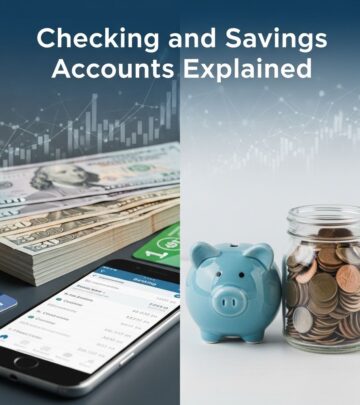
Checking and savings accounts form the foundation of most personal banking strategies, each serving distinct roles in managing finances. Checking accounts handle everyday transactions, while savings accounts focus on growing money over time. Grasping these differences helps individuals allocate funds wisely, avoid unnecessary fees, and build financial stability.
Defining the Core Purposes
A
checking account
acts as the hub for daily financial activities. It supports bill payments, debit card purchases, ATM withdrawals, and check writing without restrictions on transaction volume. This liquidity makes it ideal for immediate needs like groceries, utilities, or unexpected expenses.In contrast, a
savings account
prioritizes accumulation and growth. Designed for short-term goals such as emergency funds, vacations, or home repairs, it encourages restraint by limiting frequent withdrawals. This structure promotes disciplined saving while allowing modest interest earnings.| Feature | Checking Account | Savings Account |
|---|---|---|
| Purpose | Daily spending and transactions | Building savings for goals |
| Access Methods | Debit card, checks, ATMs, transfers | Limited transfers, no debit card typically |
| Transaction Limits | None | Usually 6 per month |
Interest Earnings Compared
Savings accounts stand out for their ability to generate interest, often at higher rates than checking accounts. High-yield savings options can offer competitive
annual percentage yields (APYs)
, helping balances compound over time. For instance, depositing funds regularly into a high-APY savings account accelerates growth compared to low or zero-interest checking options.While some checking accounts now provide interest, rates remain minimal, sometimes below 0.01%. Savings APYs fluctuate with market conditions but generally provide better returns for idle funds. Tools like online calculators demonstrate how even small rate differences yield significant gains over years.
- High-yield savings: APYs often exceed 4-5% in competitive markets.
- Traditional checking: Rarely exceeds 0.05%.
- Variable rates: Banks may adjust APYs, so monitor changes periodically.
Fees and Minimum Balance Requirements
Both account types may incur fees, but they differ in structure. Checking accounts commonly charge monthly maintenance fees, overdraft penalties, and out-of-network ATM costs unless waived by direct deposits or minimum balances. Savings accounts might impose fees for falling below balance thresholds or exceeding withdrawal limits.
Many institutions offer fee-free options by meeting simple criteria, such as maintaining a $1,000 balance or linking accounts. Comparing terms reveals opportunities to minimize costs—prioritize banks with transparent policies and waiver paths.
| Fee Type | Checking Account | Savings Account |
|---|---|---|
| Monthly Maintenance | Common, waivable | Common, often balance-based |
| Overdraft/Excess Withdrawal | High fees possible | Fees for >6 withdrawals |
| ATM Fees | Out-of-network charges | Limited ATM access |
Accessibility and Withdrawal Rules
Checking accounts provide seamless access via debit cards, mobile apps, online transfers, and branch services. This flexibility suits active lifestyles but risks overspending without budgeting.
Savings accounts enforce discipline through federal regulations limiting certain transfers to six per statement cycle (though some banks have relaxed this post-2020). No debit cards reduce impulse access, fostering savings habits. For emergencies, link savings to checking for overdraft protection.
Strategic Ways to Use Both Accounts
Integrating checking and savings creates a robust financial system. Direct income to checking for expenses, then automate transfers to savings post-bills. This ‘pay yourself first’ approach builds reserves effortlessly.
Benefits of bundling include:
- Single app for monitoring spending and savings progress.
- Overdraft coverage from savings to avoid fees.
- Potential perks like higher APYs or waived fees for bundled accounts.
For example, after covering essentials, transfer 20% of income to savings. Over time, this compounds, especially in high-yield environments.
Protection and Safety Features
Funds in FDIC-insured banks or NCUA-insured credit unions are protected up to $250,000 per depositor, per account category. Both account types qualify, offering peace of mind against institutional failure.
Digital tools enhance security: two-factor authentication, transaction alerts, and fraud monitoring safeguard against unauthorized access.
Choosing the Right Accounts for Your Needs
Select based on lifestyle and goals. Frequent travelers might prefer no-foreign-fee checking, while savers seek maximum APY with low minimums. Review:
- APY and compounding frequency.
- Fee waivers and balance requirements.
- Digital features like mobile check deposit.
- Customer service and branch access.
Online banks often lead in rates but lack physical presence; traditional banks offer convenience.
Advanced Options and Alternatives
Beyond basics, consider high-yield checking for modest interest with transaction perks, or money market accounts blending savings rates with limited checks. Certificates of deposit (CDs) lock funds for higher fixed rates but penalize early withdrawal.
Cash management accounts from brokerages mimic checking with savings-like yields and debit access, ideal for tech-savvy users.
Frequently Asked Questions (FAQs)
Can checking accounts earn interest?
Yes, some do at low rates, but savings provide superior yields for growth.
Are there limits on savings withdrawals?
Federal rules cap certain transfers at six monthly, though enforcement varies.
How do I avoid account fees?
Meet balance requirements, set direct deposits, or choose no-fee online banks.
Should I keep both at the same bank?
Often yes, for easy transfers, overdraft protection, and bundled benefits.
What’s a high-yield savings account?
An FDIC-insured savings option with APYs significantly above traditional rates, often 10x higher.
Building Long-Term Financial Habits
Mastering checking and savings lays groundwork for wealth building. Track net worth quarterly, adjust transfers as income grows, and ladder savings across goals (emergency: 3-6 months expenses; short-term: travel; long-term: down payment). Consistency transforms these accounts into powerful tools.
Regular reviews ensure alignment with evolving needs—rates change, life stages shift priorities. Empower yourself with knowledge to navigate banking confidently.
References
- Checking Vs. Savings Accounts: Differences And How To Choose — Bankrate. 2024-10-15. https://www.bankrate.com/banking/checking-vs-savings-accounts/
- Checking vs. Savings: Key Differences Between Bank Account Types Why It Matters — Cornerstone Bank. 2025-07-01. https://www.cornerstone.bank/checking-vs-savings-key-differences-between-bank-account-types-why-it-matters/
- What is the difference between checking and savings accounts? — Bank of America Better Money Habits. 2025-03-20. https://bettermoneyhabits.bankofamerica.com/en/personal-banking/the-difference-between-checking-and-savings-account
- Checking vs. Savings Accounts: The Difference — NerdWallet. 2025-11-10. https://www.nerdwallet.com/banking/learn/checking-vs-savings
- Checking vs Savings Accounts: What’s the Difference? — SouthStar Bank. 2025-02-28. https://southstarbank.com/checking-vs-savings-accounts-whats-the-difference/
- Checking vs Savings Accounts Key Differences and Benefits — Dollar Bank. 2025-07-15. https://dollar.bank/be-dollar-wise/july-2025/checking-vs-savings-accounts-key-differences-and-benefits
Similar Articles








Read full bio of Sneha Tete